Maddy summaryThis House resolution expresses support for designating the week of September 19 through September 26, 2026, as National Estuaries Week to raise public awareness about the importance of these coastal ecosystems. The bill highlights that estuaries support a significant portion of the U.S. population and economy while providing critical services such as flood control, water filtration, and habitat for fish and wildlife. It acknowledges ongoing threats to estuary health, including pollution and sea level changes, and recognizes the efforts of government agencies, organizations, and individuals working to protect and restore these areas.

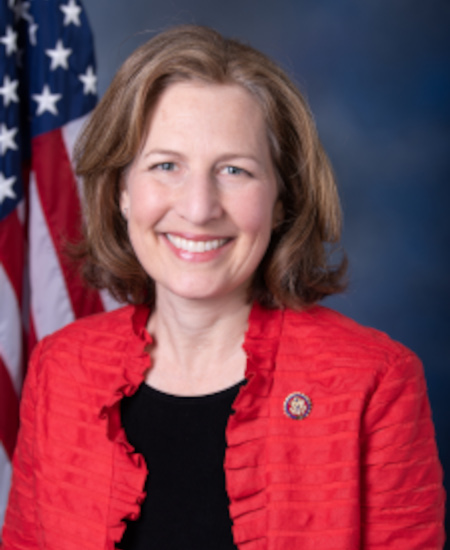
Rep. Kim Schrier
Sponsored bills
Maddy summaryThe 9-8-8 Crisis Response Act expands federal funding for mental health crisis response and broadens Medicaid coverage to include regional lifeline call centers and crisis stabilization facilities. The bill increases the annual budget for the Mental Health Crisis Response Partnership Pilot Program from $10 million to $100 million for fiscal years 2027 through 2029. It also allows states to use Medicaid funds to pay for these new services, with the federal government covering 85 percent of the costs. To qualify, crisis stabilization facilities must provide 24-hour care without rejecting patients based on their ability to pay or other factors, and they must maintain an average patient stay of less than 150 hours.
Maddy summaryThe 9-8-8 Implementation Act of 2026 expands federal funding and mandates insurance coverage for behavioral health crisis services, directly affecting individuals experiencing mental health or substance use emergencies as well as the providers who serve them. The bill authorizes grants to upgrade local lifeline call centers, build new crisis stabilization facilities, and train a larger workforce of behavioral health professionals. It requires Medicare, Medicaid, private group health plans, TRICARE, and other federal insurance programs to cover crisis response services with financial terms no more restrictive than standard medical care. Additionally, the legislation establishes a federal panel to develop training protocols for 9-1-1 dispatchers to better connect callers to appropriate crisis care rather than law enforcement responses.
Maddy summaryThe INSULIN Act of 2026 mandates that group and individual health insurance plans cap out-of-pocket costs for selected insulin products at $35 per 30-day supply, effective for plan years beginning on or after January 1, 2028. This cost limit applies to a variety of insulin types and delivery devices, with the cap set at the lesser of $35 or 25 percent of the negotiated price net of concessions. The bill also prohibits insurers from imposing deductibles or prior authorization requirements for these covered products unless clinically justified for safety reasons. Additionally, the legislation directs the Department of Health and Human Services to fund a resource center and hotline to help uninsured individuals find affordable insulin assistance programs, while requiring the Government Accountability Office to study the demographics of uninsured insulin users. Finally, it creates an expedited review process for biosimilar insulin applications when the Secretary determines there is inadequate competition in the market.
Maddy summaryThe Doctors Not AI Act of 2026 prohibits health insurance plans from using artificial intelligence systems to issue or dictate adverse benefit determinations that involve clinical judgment, such as decisions based on medical necessity or treatment appropriateness. Instead, these determinations must be made by a licensed healthcare professional who conducts an independent evaluation of the patient's specific medical circumstances without deferring to AI outputs. The bill requires insurers to disclose in written notices if any AI system was used during the review process and mandates that detailed documentation regarding the AI's role and outputs be maintained as part of the administrative record, available to patients upon request. Additionally, the legislation classifies the use of AI in utilization review as a treatment limitation for parity purposes, ensuring it is evaluated equally across mental health and medical-surgical benefits under existing federal laws.
Maddy summaryThe Vet CENTERS for Mental Health Act of 2026 requires the Secretary of Veterans Affairs to ensure that every state meets a specific minimum number of mental health treatment centers within one year of enactment. For states in the contiguous United States, this minimum is calculated as the greater of one center per 30,000 square miles of land or one center per 55,000 veterans based on census data. Non-contiguous states and territories must maintain at least one center or match their existing count from January 1, 2020, whichever is higher. To achieve these targets, the Secretary may open new facilities using buildings provided by state, local, or tribal governments, and can establish outstations in place of full centers if multiple additional sites are needed in a single state.
Maddy summaryThe ASSET Act prohibits states from using asset limits to determine eligibility for Temporary Assistance for Needy Families (TANF), the Supplemental Nutrition Assistance Program (SNAP), and the Low-Income Home Energy Assistance Program (LIHEAP). For these programs, households can no longer be denied benefits based on the amount of savings or other financial resources they hold. Additionally, the bill significantly raises the asset cap for Supplemental Security Income (SSI) recipients to $20,000 for individuals and $10,000 for couples starting in 2026. These SSI limits will be adjusted annually for inflation using the Consumer Price Index for Elderly Consumers.
Maddy summaryThe RESCUE Act of 2026 updates how the federal government reimburses ground and air ambulance services by changing the payment schedule and data collection rules. Starting in 2028, the Secretary of Health and Human Services will adjust payment rates every three years based on new data regarding costs, labor, and uncompensated care, while years in between will see payments increase only by the standard inflation rate. The bill also requires air ambulance providers to submit cost information to the government at least once every three years, aligning this process with existing rules for ground ambulance services. Additionally, the law mandates a review by 2029 to gather expert recommendations on whether further changes are needed to ensure ambulance providers are paid appropriately. These changes directly affect ambulance companies and the federal programs that fund emergency medical transport.
Maddy summaryThe Healthy Access for Learning Act requires schools receiving federal education funds to provide students with at least 60 minutes of physical activity time each day. This new requirement includes designated recess periods and physical education classes, aiming to address rising rates of childhood obesity and improve academic performance. The bill amends the Elementary and Secondary Education Act to mandate these activity periods while allowing local school districts to determine the specific methods used to meet the goal. By integrating regular exercise into the school day, the legislation seeks to support student health and learning without reducing instructional time.
Maddy summaryThe Temporary Protected Status Review Act restores the ability of courts to review decisions by the Department of Homeland Security to end Temporary Protected Status (TPS) designations for foreign nationals. Under this bill, the government must publish detailed written findings explaining why a country no longer qualifies for TPS protection, and these decisions would be subject to a legal challenge in federal court. If a TPS designation is terminated, the affected individuals would remain in the United States with their current status and work authorization intact while the legal challenge is pending. Additionally, the legislation requires the government to follow specific administrative procedures, such as considering all available evidence and avoiding bias, before making any termination decisions.