Maddy summaryHR 2306 extends the Adams Memorial Commission's authority until 2032 and authorizes $50 million in federal funds for the memorial, requiring a 1:1 non-federal match and limiting administrative costs to 4% of federal funds. It updates location rules to allow the memorial within a designated area mapped by the Commission. The bill primarily affects the Adams Memorial Commission and entities contributing to the memorial's funding. It makes no new policy changes but adjusts procedural timelines and funding requirements for an existing commemorative project.

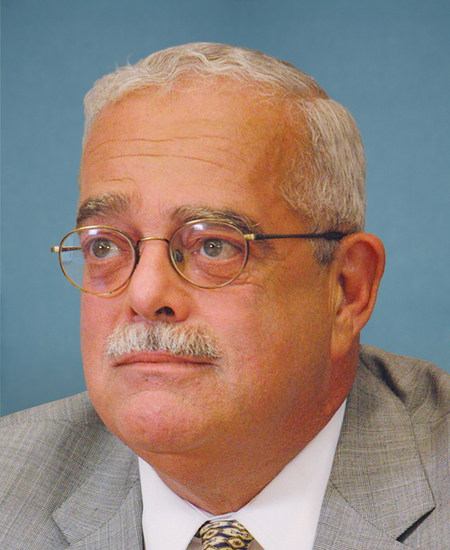
Rep. Gerald E. Connolly
Sponsored bills
Maddy summaryHR 2913, the Ukraine Support Act, provides comprehensive U.S. support for Ukraine in response to Russia's invasion. The bill authorizes security assistance including lend-lease authority for military equipment, establishes a Ukraine Reconstruction Trust Fund for economic recovery, and imposes new sanctions targeting Russian financial institutions, oil companies, and government officials. It also includes provisions to counter Russian disinformation, support Radio Free Europe, and address the kidnapping of Ukrainian children. The legislation directly affects U.S. foreign policy, Ukraine's defense capabilities, and Russia's access to international financial systems. The act aims to strengthen Ukraine's sovereignty while holding Russia accountable for its actions.
Maddy summaryHR 3490, the Gerald E. Connolly Esophageal Cancer Awareness Act of 2025, requires the Government Accountability Office (GAO) to study federal health benefits coverage for esophageal cancer. Specifically, the GAO must report on healthcare spending for federal employees and retirees diagnosed with esophageal cancer and how often high-risk individuals under this program undergo recommended screenings. The bill targets federal employees and retirees covered by the Federal Employees Health Benefits Program who meet specific risk factors (such as age 50+, smoking history, or GERD). It does not create new programs but mandates a study to assess current screening practices and costs. The goal is to inform future policy based on data about screening adherence and healthcare impacts.
Maddy summaryHR 3429 establishes a formal US-Japan-ROK Inter-Parliamentary Dialogue to deepen trilateral cooperation. It creates a US delegation of up to 8 Congress members (2 each from House/Senate leadership, with committee requirements) to meet annually with Japanese and South Korean legislators. The bill mandates annual reports to the Foreign Affairs and Foreign Relations committees and requires the delegation to rotate leadership between House and Senate every two years. This legislation directly affects US congressional members appointed to the delegation and provides a structured mechanism for ongoing policy coordination among the three nations.
Maddy summaryHRES 64 is a non-binding House resolution affirming the U.S.-South Korea alliance. It highlights historical ties (dating to 1882), economic partnerships (including 2023 trade data), and security cooperation (like the 1953 Mutual Defense Treaty), while celebrating Korean American contributions to U.S. society. The resolution formally supports strengthening security, economic, and cultural ties between the two nations and notes the 2025 anniversary of Korean liberation. It does not create new laws or funding, but serves as a symbolic statement of congressional support for the alliance.
Maddy summaryThe Honoring Civil Servants Killed in the Line of Duty Act (HR 3317) increases death gratuity payments for federal employees killed in the line of duty from $800 to $100,000, with annual cost-of-living adjustments based on the Consumer Price Index. The bill establishes a specific order of precedence for recipients, starting with designated beneficiaries, then surviving spouses, children, parents, and finally estate representatives. It modifies related provisions across the U.S. Code to ensure consistent treatment of death benefits for federal employees, including those working for the FAA, TSA, and Veterans Health Administration, and repeals an outdated death gratuity provision. The bill also ensures death benefits are not included in recipients' gross income for tax purposes, applying to deaths occurring on or after the bill's enactment date.
Governing Unaccredited Representatives Defrauding VA Benefits Act or the GUARD VA Benefits Act This bill imposes fines on individuals for soliciting, contracting for, charging, or receiving any unauthorized fee or compensation with respect to the preparation, presentation, or prosecution of any claim for Department of Veterans Affairs benefits. The attempted commission of such offenses is also punishable by fine.
Maddy summaryThis bill requires the military to approve leave for abortion and fertility care without commanders needing to know the specific procedure. It mandates reimbursement for travel, lodging, meals, and transportation costs when care isn't available nearby, and prohibits punishment for using this leave. It directly affects active-duty service members and their dependents who face barriers to reproductive care due to military restrictions or location. The policy change removes command discretion in approving leave for time-sensitive reproductive health services.
Maddy summaryThis bill reforms how the Technology Modernization Fund is used to upgrade outdated federal computer systems. It requires agencies to identify and report high-risk legacy systems to a central office, which then compiles a national inventory and prioritizes the most critical systems for modernization. Agencies that receive funds must repay the fund under specific terms to ensure it remains fully operational until 2032. The bill also blocks funding for projects with fraudulent claims about their technology plans or costs.
Maddy summaryHR 1601, the Defending Ukraine’s Territorial Integrity Act, prohibits U.S. federal funds from being provided to any foreign government that recognizes Russian-occupied Ukrainian territories (including Crimea, Donetsk, Kherson, Luhansk, and Zaporizhzhia) or supports Russia's annexation of Ukraine. The bill requires the Secretary of State to publish a list of such countries on the State Department website and allows limited waivers for national security reasons. It directly affects foreign governments that formally acknowledge Russian control over these regions, restricting their access to U.S. aid. The law aims to uphold U.S. policy against recognizing Russia's territorial claims in Ukraine through concrete funding restrictions.