

In committee Sep 10, 2026
0 co-sponsors
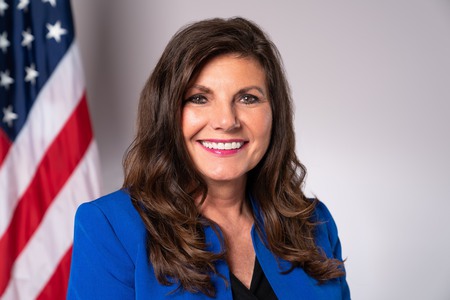
Rep. Diana Harshbarger
Total votes
2,818
all sessions
Attendance
99%
16 missed
Near the chamber average
With party
90%
of cast votes
Lower than 90% of chamber peers
Bipartisan score
5%
crosses aisle rarely
Higher than 89% of chamber peers
Sponsored
941
bills & resolutions
Near the chamber average
Committees
4
assignments
941 bills and resolutions
Sponsored bills
Total
941
Primary
77
Co-sponsor
864
This page
941
matching current filters
Title IX Clarification Act of 2026
Maddy summaryThe Title IX Clarification Act of 2026 amends federal education law to explicitly define the terms "sex," "female," and "male" based on biological characteristics. Specifically, it states that "sex" refers to an individual's biologically determined status as male or female, while "female" and "male" are defined by the presence of specific reproductive systems capable of producing ova or sperm, respectively. These definitions apply to all education programs and activities that receive federal financial assistance starting on the date the bill becomes law. The legislation aims to clarify existing statutes by removing ambiguity around biological sex definitions in the context of Title IX protections.
In committee Sep 8, 2026
1 co-sponsor
Recognizing the 25th anniversary of the terrorist attacks of September 11, 2001, honoring the memory of the victims, recognizing the courage and sacrifice of the heroes who answered the call to serve, acknowledging the charitable organizations that continue to support survivors and victims' families, and reaffirming the enduring commitment of the United States to never forget.
Maddy summaryThis House resolution marks the 25th anniversary of the September 11, 2001 terrorist attacks by formally honoring the memory of the nearly 3,000 victims and recognizing the sacrifices made by first responders, military personnel, and the passengers of United Airlines Flight 93. The bill acknowledges the ongoing health challenges faced by survivors and responders, highlighting the role of the World Trade Center Health Program in providing long-term medical support. It also credits charitable organizations and community groups that have continued to assist victims' families and veterans over the past two decades. Finally, the resolution urges the American public to observe the anniversary with ceremonies and reaffirms Congress's commitment to remembering the events and lessons of that day.
In committee Sep 3, 2026
1 co-sponsor
Honoring the life and legacy of Dolly Parton, a daughter of Tennessee whose extraordinary contributions to music, philanthropy, literacy, education, health, conservation, and culture enriched the lives of countless Americans.
Maddy summaryThis House resolution formally mourns the passing of Dolly Parton and honors her extensive contributions to American music, philanthropy, and public service. It highlights her establishment of key organizations such as Dollywood and the Imagination Library, which have significantly impacted education, health care, and disaster relief in Tennessee. The bill recognizes specific achievements, including her support for pediatric medical research and wildlife conservation efforts. By acknowledging these accomplishments, the resolution aims to celebrate her legacy and encourage continued community service across the United States.
In committee Sep 2, 2026
0 co-sponsors
Automotive National and Economic Security Act of 2026
Maddy summaryThe Automotive National and Economic Security Act of 2026 directs the Secretary of Commerce to conduct a study on commercial partnerships between U.S. automotive manufacturers and entities controlled by foreign adversaries. The bill defines these covered activities to include ownership interests, joint ventures, technology sharing agreements, and investments involving critical hardware or software for vehicles and automated driving systems. The study must assess potential impacts on national security, economic competitiveness, and intellectual property protection, including any involvement of state-directed investment vehicles from adversary nations. Within two years of enactment, the Secretary is required to submit a report to Congress and publish an unclassified summary online while protecting confidential business information and trade secrets.
In committee Sep 1, 2026
0 co-sponsors
Foreign Robocall Elimination Act
Maddy summaryHR 6152, the Foreign Robocall Elimination Act, establishes an interagency task force to address foreign robocalls entering the United States. The task force, composed of the FCC, FTC, DOJ, and private sector representatives, will study the origins, impacts, and potential solutions to foreign robocalls and must submit a report to Congress within 360 days. The bill also modifies existing law to require FCC notices about robocall mitigation every three years instead of annually, and introduces a bond requirement for providers using the Robocall Mitigation Database. This legislation affects telecommunications providers, federal agencies, and all U.S. telephone users who receive unwanted calls. The bill aims to improve coordination between U.S. agencies and foreign countries in combating illegal robocalls through concrete policy changes.
In committee Sep 1, 2026
1 co-sponsor
MAIN Event Ticketing Act
Maddy summaryHR 2713, the MAIN Event Ticketing Act, requires ticket-issuing websites to implement stronger security measures to prevent automated bots from bypassing purchase limits and circumventing online ticketing rules. It directly affects ticket sellers (like major platforms) and their third-party service providers, mandating they establish technical safeguards, report security breaches within 30 days, and address circumvention incidents. Key provisions include requiring access controls to enforce purchase limits, creating a public complaint website for consumers, and imposing civil penalties of up to $10,000 per day for violations. The bill strengthens enforcement by the Federal Trade Commission, which will issue compliance guidance and oversee civil actions for non-compliance.
In committee Sep 1, 2026
0 co-sponsors
Commemorating the 13 United States servicemembers killed at Abbey Gate during and as a result of President Biden's disastrous Afghanistan withdrawal.
Maddy summaryH.Res. 1497 is a House resolution that commemorates the fifth anniversary of the Abbey Gate bombing, in which 13 U.S. servicemembers were killed during the withdrawal from Afghanistan. The bill lists the names of the fallen soldiers and formally condemns the Biden-Harris administration for what it describes as dereliction of duty and the forfeiture of military property to the Taliban. It asserts that the withdrawal was a disastrous failure that ignored security warnings and left Americans at risk, while also criticizing the lack of accountability from officials involved in the decision-making process.
In committee Aug 27, 2026
1 co-sponsor
Freedom to Home Distill Act
Maddy summaryThe Freedom to Home Distill Act would allow individuals to legally produce small amounts of alcohol at home for personal use without paying federal excise taxes or facing criminal penalties. To qualify, a household could distill up to 10 proof gallons per year if it has one adult, or 20 proof gallons if it has two or more adults, provided the spirits are never sold or transferred to others. The bill exempts home distillers from standard business requirements such as registering their equipment and paying taxes, but it mandates that any stills purchased for this purpose must have specific safety features like pressure release valves and a capacity of no more than 50 gallons. These changes would take effect for spirits produced after December 31, 2026.
In committee Aug 27, 2026
0 co-sponsors
SHIELD Act
Maddy summaryThe SHIELD Act would prohibit local school districts that receive federal education funds from allowing organizations that provide abortions to distribute information about those services to students on school grounds or through the district's virtual platforms. This ban specifically covers sharing or reposting such materials on social media on behalf of outside abortion providers. The bill defines "abortion-related service" as any medical, surgical, or support care directly related to terminating a pregnancy.
EducationOpposes EducationThe bill restricts the distribution of health information in schools and limits school district autonomy regarding student access to specific services.
HealthcareOpposes HealthcareThe bill restricts access to information about abortion services in schools, limiting patient education and access to reproductive healthcare options.
In committee Aug 27, 2026
1 co-sponsor
Ask Maddy
·
AI policy assistant
Ask Maddy about Diana Harshbarger
Scope: united-states
Hi! I can help you understand Diana Harshbarger's legislative record. What would you like to know?
Try one of these
i
Maddy answers using official bill text and legislative records. Always verify before sharing.
Sources cited inline