

In committee Sep 10, 2026
0 co-sponsors
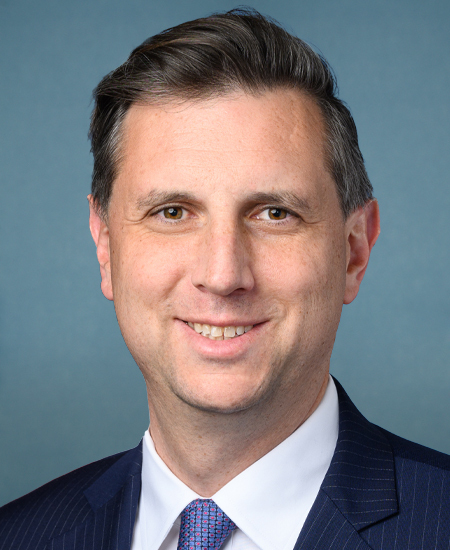
Rep. Seth Magaziner
Total votes
1,860
all sessions
Attendance
93%
137 missed
Near the chamber average
With party
96%
of cast votes
Near the chamber average
Bipartisan score
2%
crosses aisle rarely
Near the chamber average
Sponsored
1,144
bills & resolutions
Higher than 89% of chamber peers
Committees
6
assignments
1,144 bills and resolutions
Sponsored bills
Total
1,144
Primary
47
Co-sponsor
1,097
This page
1,144
matching current filters
Recognizing the 25th anniversary of the terrorist attacks of September 11, 2001, honoring the memory of the victims, recognizing the courage and sacrifice of the heroes who answered the call to serve, acknowledging the charitable organizations that continue to support survivors and victims' families, and reaffirming the enduring commitment of the United States to never forget.
Maddy summaryThis House resolution marks the 25th anniversary of the September 11, 2001 terrorist attacks by formally honoring the memory of the nearly 3,000 victims and recognizing the sacrifices made by first responders, military personnel, and the passengers of United Airlines Flight 93. The bill acknowledges the ongoing health challenges faced by survivors and responders, highlighting the role of the World Trade Center Health Program in providing long-term medical support. It also credits charitable organizations and community groups that have continued to assist victims' families and veterans over the past two decades. Finally, the resolution urges the American public to observe the anniversary with ceremonies and reaffirms Congress's commitment to remembering the events and lessons of that day.
In committee Sep 3, 2026
1 co-sponsor
AI Advertising Disclosure Act
Maddy summaryThe AI Advertising Disclosure Act requires companies operating AI chatbots and generative search features with over 50,000 monthly users to clearly disclose when their responses are influenced by paid partnerships or commercial arrangements. These disclosures must be visible without scrolling, use plain language, and identify the specific nature of the sponsorship, while also prohibiting AI systems from denying they are artificial or hiding sponsored content behind organic-looking answers. The bill grants the Federal Trade Commission authority to enforce these rules and allows state attorneys general and private individuals to sue for violations, with potential penalties including triple damages for willful misconduct.
In committee Aug 24, 2026
0 co-sponsors
Local Communities & Bird Habitat Stewardship Act of 2026
Maddy summaryThe Local Communities & Bird Habitat Stewardship Act of 2025 establishes the Urban Bird Treaty Program, which provides grants and technical assistance to local groups - including cities, nonprofits, community organizations, and academic institutions - to protect and restore urban bird habitats. Key provisions include funding for habitat restoration (e.g., removing invasive species and planting native plants), reducing urban bird hazards, and engaging communities in monitoring and education. The program, administered by the National Fish and Wildlife Foundation, authorizes $1 million annually from 2026 to 2032 for projects focused on conserving urban bird populations through collaborative local efforts. It directly affects communities seeking to enhance green spaces and support bird conservation in populated areas.
In committee Aug 20, 2026
1 co-sponsor
Affordable Pricing for Taxpayer-Funded Prescription Drugs Act of 2026
Maddy summaryThe Affordable Pricing for Taxpayer-Funded Prescription Drugs Act of 2026 requires federal agencies to include reasonable pricing clauses in all research grants and contracts involving biomedical products. Under this provision, U.S. residents cannot be charged more than the median price found in Canada and six other high-income OECD countries for any drug, device, or therapy developed with federal support. The Secretary of Health and Human Services is authorized to establish additional regulations, such as mechanisms to lower prices when revenues exceed targets or costs per health benefit are too high, while retaining the ability to waive these obligations if doing so serves the public interest. To ensure accountability, manufacturers must report clinical trial costs, government subsidies, and annual revenues by county, with all data made publicly available.
In committee Aug 13, 2026
1 co-sponsor
Accelerating Access to Critical Therapies for ALS Reauthorization Act of 2026
Maddy summaryThis bill reauthorizes and expands the Accelerating Access to Critical Therapies for ALS Act through 2031, extending funding for research into treatments for amyotrophic lateral sclerosis. It requires drug manufacturers to share interim clinical trial data with the FDA to better assess the progress of investigational drugs and clarifies that phase 3 clinical trial definitions include combined phase 2/3 trials and planned trials not yet enrolling participants. The legislation also mandates the FDA to publish an updated five-year action plan for ALS and other rare neurodegenerative diseases, including resource needs and coordination strategies with broader disease communities. Additionally, the bill requires the Government Accountability Office to submit a report on the program's implementation four years after enactment.
Passed Jul 23, 2026
1 co-sponsor
Medicaid Dental Benefit Act of 2026
Maddy summaryThe Medicaid Dental Benefit Act of 2026 mandates that Medicaid programs cover a range of dental and oral health services for adults starting in 2027, including dentures, implants, and treatments for pain and emergencies. To help states afford this expansion, the bill provides 100 percent federal funding for these specific services for a 12-quarter period beginning in 2027, while allowing states the option to add extra dental benefits if they choose. In addition to expanding coverage, the legislation requires the federal government to develop standardized quality measures to track adult oral health outcomes and report on disparities based on race, ethnicity, and other demographics. The bill also directs the creation of an outreach program to help eligible adults find care and establishes a timeline for a comprehensive report on access barriers and reimbursement issues.
In committee Jul 22, 2026
1 co-sponsor
American Battlefield Protection Program Amendments Act of 2026
Maddy summaryThis bill reauthorizes and updates the American Battlefield Protection Program through 2036, extending funding for battlefield preservation grants. It increases the maximum grant percentage for battlefield interpretation projects from 50% to 75% and sets $2 million annually for battlefield restoration grants through 2036. The bill also requires the National Park Service to study French and Indian War (1754-1763) and Mexican-American War (1846-1848) sites across the U.S., assessing their significance, threats, and preservation options. These studies must involve state governors, tribal governments, local officials, and historic preservation groups, with a final report due to Congress within two years of funding. The program directly affects federal, state, tribal, and local entities managing historic battlefields.
Passed Jul 21, 2026
1 co-sponsor
To reauthorize the Kay Hagan Tick Act, and for other purposes.
Maddy summaryThis bill reauthorizes federal programs focused on preventing and responding to tick-borne diseases through 2026-2030, extending existing efforts beyond their previous expiration. It updates the National Strategy for Vector-Borne Diseases to emphasize identifying, reporting, preventing, and responding to these illnesses. The bill modifies two sections of the Public Health Service Act to continue funding for health departments working on vector-borne disease control. It directly affects public health programs and state/local health departments managing tick-borne disease prevention and response.
Passed Jul 21, 2026
1 co-sponsor
Accelerating Access to Dementia and Alzheimer’s Provider Training Act
Maddy summaryThe AADAPT Act reauthorizes and expands Project ECHO grants to improve Alzheimer’s and dementia care through technology-enabled training. It specifically funds grants for healthcare providers in rural, frontier, or medically underserved areas to enhance early diagnosis, quality care, and provider retention for dementia patients. The bill authorizes $1 million annually (2027-2032) for these dementia-focused training programs, requiring funds to supplement - not replace - existing resources. This directly supports primary care providers licensed to serve underserved communities, using collaborative online learning to address care gaps.
Passed Jul 21, 2026
1 co-sponsor
Ask Maddy
·
AI policy assistant
Ask Maddy about Seth Magaziner
Scope: united-states
Hi! I can help you understand Seth Magaziner's legislative record. What would you like to know?
Try one of these
i
Maddy answers using official bill text and legislative records. Always verify before sharing.
Sources cited inline