

Maddy summaryHR 82, the Social Security Fairness Act of 2023, repeals two provisions that reduce Social Security benefits for certain government workers. It eliminates the Government Pension Offset (GPO), which cuts spousal or survivor benefits for people with pensions from jobs not covered by Social Security (like federal or state government roles), and the Windfall Elimination Provision (WEP), which lowers retirement benefits for those with similar pensions. The law takes effect for benefits paid after December 2023, requiring the Social Security Administration to adjust benefit calculations to remove these reductions. This change directly affects public-sector employees who previously had their Social Security benefits reduced due to their government pensions.
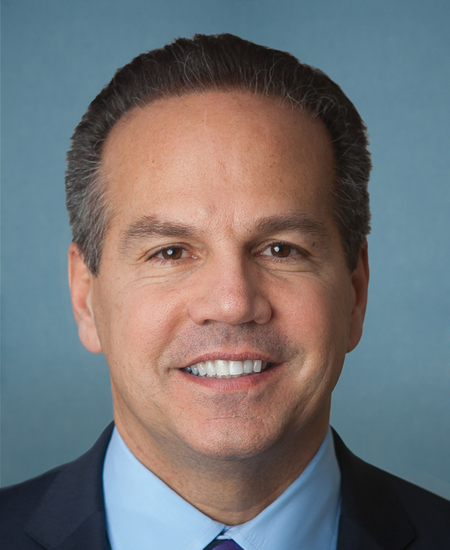
Rep. David N. Cicilline
Sponsored bills
Maddy summaryThe Medicare for All Act would establish a single-payer national health insurance program providing comprehensive coverage to all U.S. residents without cost-sharing. It would replace current private insurance and government programs like Medicare and Medicaid with a unified system covering all medically necessary services including hospital care, prescription drugs, mental health services, reproductive care, long-term care, and preventive services. The bill prohibits private insurers from offering duplicate coverage and requires providers to participate without charging patients for covered services. Implementation would occur over a two-year transition period, with a "Medicare Transition Buy-In" option allowing people to enroll before full implementation.
Maddy summaryThe I CAN Act (Improving Care and Access to Nurses Act) expands healthcare access by removing barriers for nurse practitioners, clinical nurse specialists, physician assistants, certified registered nurse anesthetists, and certified nurse-midwives within Medicare and Medicaid programs. Key provisions include allowing these professionals to provide cardiac and pulmonary rehabilitation services, prescribe certain diabetic shoes, and deliver hospice care without unnecessary physician supervision. The bill also clarifies reimbursement for services provided by certified nurse anesthetists and improves access to home health services through certified nurse-midwives. These changes directly affect Medicare and Medicaid beneficiaries by potentially increasing access to care and healthcare providers by expanding their scope of practice. The bill aims to improve healthcare delivery by leveraging the skills of advanced practice nurses across multiple care settings.
Maddy summaryThe Stop the Wait Act of 2023 eliminates the current 5-month waiting period for Social Security Disability Insurance (SSDI) benefits by phasing it out: applications filed in 2023-2025 would face a 3-month wait, 2026 a 2-month wait, and 2027 a 1-month wait, with full elimination by January 2028. It also changes Medicare rules to allow individuals without minimum essential health coverage to receive Medicare benefits retroactively from the first month of SSDI eligibility, rather than waiting 24 months. This directly affects people under 65 applying for SSDI who lack other health insurance, ensuring they have coverage during the waiting period. The bill amends the Social Security Act to implement these changes, effective January 1, 2028.
Maddy summaryThe EACH Act of 2023 would require federal health programs - including Medicaid, Medicare, the Indian Health Service, and TRICARE - to cover abortion services without restrictions. It repeals a provision in the Affordable Care Act that allowed states to limit abortion coverage in health insurance plans sold through state marketplaces. The bill also prohibits the federal government from restricting abortion coverage in private health insurance plans. This would directly affect millions of people, particularly low-income individuals and people of color, who are disproportionately enrolled in Medicaid and currently face barriers to abortion care due to coverage restrictions.
Maddy summaryThis bill, HR 35 (Close the Medigap Act of 2023), prohibits Medicare supplemental insurance (Medigap) insurers from denying coverage or charging higher premiums based on health status, pre-existing conditions, genetic information, or age. It directly affects Medicare beneficiaries (particularly those with pre-existing conditions) and requires insurers to offer guaranteed issue coverage starting January 1, 2024, with full implementation by 2029. Key mechanisms include banning health-based pricing discrimination, requiring insurers to spend at least 65% of individual policy premiums on healthcare (increasing to align with NAIC recommendations), and improving transparency on the Medicare Plan Finder website. The bill does not change Medicare Part A/B benefits but ensures broader access to supplemental coverage without health-related barriers.
Maddy summaryThe Assuring Medicare’s Promise Act of 2023 directs that taxes collected under the net investment income tax (a tax on investment income for high earners) be added to the Medicare Hospital Insurance Trust Fund, which helps finance Medicare Part A benefits. It modifies the tax code to include certain business income of high-income individuals (with modified adjusted gross income over $400,000 for single filers or $500,000 for joint filers) in the tax base, but includes a phase-in mechanism to limit immediate tax increases. This bill primarily affects high-income taxpayers and aims to strengthen Medicare’s financial stability by increasing trust fund revenue.
Maddy summaryHR 33 would expand Medicare to cover dental, vision, and hearing services for beneficiaries, which are currently not covered under Medicare. The bill provides 100% coverage for preventive dental services in 2024, with basic dental services gradually increasing to 80% coverage by 2027. Vision coverage would include routine eye exams and corrective lenses at 80% coverage, while hearing services would cover hearing exams and hearing aids at 80% coverage. The bill includes specific limitations, such as two dental cleanings per year and one pair of glasses every 24 months, with the Secretary of Health and Human Services having authority to apply additional limitations or modify coverage based on medical recommendations. The changes would take effect on January 1, 2024.
Maddy summaryHR 1083, the Caring for Survivors Act of 2023, increases financial support for surviving spouses of veterans. It amends Title 38 to raise dependency and indemnity compensation from a fixed $1,154 to 55% of the monthly compensation rate under section 1114(j), effective six months after enactment. The bill also modifies eligibility for survivors of veterans who died before 1993, ensuring they receive the greater of their current benefit or the new calculation. Additionally, it reduces the required continuous service rating period for survivors from 10 years to five years when a veteran was totally disabled at death. These changes directly affect surviving spouses, particularly those with veterans who died prior to 1993.
Maddy summaryThis resolution (HRES 149) is a symbolic congressional statement condemning Russia's actions in Ukraine, specifically the forcible transfer and abduction of Ukrainian children. It directly addresses the Russian government, citing evidence including Ukrainian reports of over 2,300 children kidnapped and Russia's policy granting citizenship to children born in occupied territories after February 24, 2022. The resolution formally declares these actions violate the Genocide Convention (Article II(e)) and claims Russia is attempting to erase Ukrainian identity by targeting children. As a non-binding resolution, it holds no legal force but expresses the House's official stance against these practices.