

Maddy summaryThis House resolution marks the 25th anniversary of the September 11, 2001 terrorist attacks by formally honoring the memory of the nearly 3,000 victims and recognizing the sacrifices made by first responders, military personnel, and the passengers of United Airlines Flight 93. The bill acknowledges the ongoing health challenges faced by survivors and responders, highlighting the role of the World Trade Center Health Program in providing long-term medical support. It also credits charitable organizations and community groups that have continued to assist victims' families and veterans over the past two decades. Finally, the resolution urges the American public to observe the anniversary with ceremonies and reaffirms Congress's commitment to remembering the events and lessons of that day.
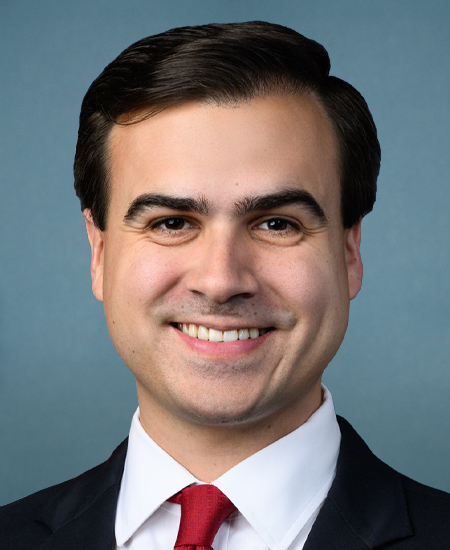
Rep. Pablo José Hernández
Sponsored bills
Maddy summaryThe Puerto Rico Energy Opportunity and Geothermal Assessment Act of 2026 directs the U.S. Geological Survey, in coordination with the Department of Energy and local officials, to conduct geothermal resource assessments for Puerto Rico. These studies must include high-resolution mapping, evaluations of groundwater vulnerability in sensitive terrain, and analyses of seismic risks associated with enhanced geothermal systems. The Secretary of the Interior is required to submit progress reports to Congress annually for the first year and biennially thereafter until the assessment is complete.
Maddy summaryThis bill directs the Joint Committee on the Library to acquire a statue honoring baseball player and humanitarian Roberto Clemente for permanent display in the U.S. Capitol or on its grounds. The legislation requires that artists from diverse backgrounds, including the Puerto Rican community, be considered for the commission, with public announcements made to reach these candidates. Funding for the project is authorized through transfers from the Capitol Preservation Fund, capped at a total of $500,000.
Maddy summaryThe Local Communities & Bird Habitat Stewardship Act of 2025 establishes the Urban Bird Treaty Program, which provides grants and technical assistance to local groups - including cities, nonprofits, community organizations, and academic institutions - to protect and restore urban bird habitats. Key provisions include funding for habitat restoration (e.g., removing invasive species and planting native plants), reducing urban bird hazards, and engaging communities in monitoring and education. The program, administered by the National Fish and Wildlife Foundation, authorizes $1 million annually from 2026 to 2032 for projects focused on conserving urban bird populations through collaborative local efforts. It directly affects communities seeking to enhance green spaces and support bird conservation in populated areas.
Maddy summaryThe Families Deserve to Know Act requires U.S. Immigration and Customs Enforcement (ICE) to notify designated emergency contacts within specific timeframes if an individual in its custody dies or suffers a serious illness or injury. The bill mandates that ICE collect and update contact information at the time of detention, provide notifications in a compassionate manner, and share detailed medical and death information with families and legal counsel. It applies to all government-owned and privately operated detention facilities, imposing strict civil penalties on contractors for failing to comply with these notification requirements. Additionally, the legislation allows affected individuals or their families to sue for damages if ICE violates the act and requires regular reporting to Congress regarding deaths in custody and compliance efforts.
Maddy summaryThe Head Start Expansion and Improvement Act of 2026 broadens eligibility for early childhood education services by including recipients of various public assistance programs, such as food stamps and Medicaid, in the definition of qualifying families. The bill authorizes $36 billion annually from fiscal years 2027 through 2032 to support these expanded operations and creates a separate grant program providing $1 billion per year until 2030 for agencies to repair or upgrade aging facilities with safety hazards. Additionally, the legislation establishes a loan forgiveness program that cancels federal student loans for childcare workers who complete three years of full-time service in Head Start or Early Head Start programs. Finally, it authorizes $6.8 billion annually through 2032 to provide salary supplements to Head Start employees, with funding allocated based on local wage gaps and cost-of-living factors.
Maddy summaryThis bill expands federal election laws to prevent foreign nationals from influencing U.S. elections by tightening restrictions on domestic companies with significant foreign ownership or control. It requires businesses that are at least 50% owned by foreign individuals, or those with specific foreign influence, to file a sworn certification proving they are not foreign-controlled before making any political donations or spending money on election activities. Additionally, the law clarifies that these rules apply to state and local ballot initiatives and mandates that corporate political action funds certify their managers and board members are U.S. citizens or permanent residents. The legislation also prohibits recipients of funds from these businesses from using the money for further political contributions unless they receive and verify the required compliance certification.
Maddy summaryThe Geo POWER Act creates a new milestone-based financing program to support geothermal energy projects in areas with limited or no existing geothermal power generation, including regions near Indian lands. This program awards funding based on the achievement of specific technical and financial milestones rather than upfront capital, aiming to reduce risks for future projects. The initiative prioritizes projects that generate public data to characterize new geothermal resources and require a minimum electricity generation capacity of 30 megawatts. The Department of Energy must award financing to at least three different proposals across three different states, ensuring geographic diversity in project selection.
Maddy summaryThe AADAPT Act reauthorizes and expands Project ECHO grants to improve Alzheimer’s and dementia care through technology-enabled training. It specifically funds grants for healthcare providers in rural, frontier, or medically underserved areas to enhance early diagnosis, quality care, and provider retention for dementia patients. The bill authorizes $1 million annually (2027-2032) for these dementia-focused training programs, requiring funds to supplement - not replace - existing resources. This directly supports primary care providers licensed to serve underserved communities, using collaborative online learning to address care gaps.