

Maddy summaryHR 82, the Social Security Fairness Act of 2023, repeals two provisions that reduce Social Security benefits for certain government workers. It eliminates the Government Pension Offset (GPO), which cuts spousal or survivor benefits for people with pensions from jobs not covered by Social Security (like federal or state government roles), and the Windfall Elimination Provision (WEP), which lowers retirement benefits for those with similar pensions. The law takes effect for benefits paid after December 2023, requiring the Social Security Administration to adjust benefit calculations to remove these reductions. This change directly affects public-sector employees who previously had their Social Security benefits reduced due to their government pensions.
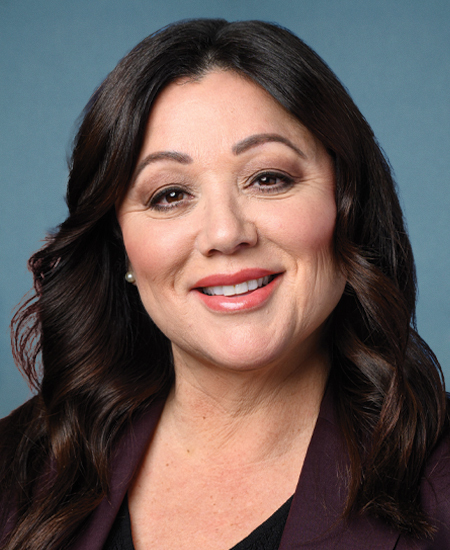
Rep. Lori Chavez-DeRemer
Sponsored bills
Maddy summaryThis bill designates the United States Postal Service facility at 125 South 1st Avenue in Hillsboro, Oregon, as the "Elizabeth Furse Post Office Building." It updates all federal references - such as in laws, maps, and documents - to use this new name for the location. The bill does not change any postal services, operations, or policies; it only modifies the building's official designation.
Maddy summaryThe Women’s Suffrage National Monument Location Act (HR 1318) authorizes the placement of a monument on the National Mall to honor the women’s suffrage movement and the 19th Amendment. The bill specifies that the monument must be located within a designated area on the National Mall known as the "Reserve," bypassing standard requirements for monument locations under existing law. This legislation sets the physical site for a monument already authorized by previous law (Public Law 116-217), without creating new policy or altering commemorative regulations beyond the location.
Maddy summaryThis bill updates federal law to ensure tribal child support enforcement agencies have the same access to tax information as state agencies. It amends the Social Security Act and Internal Revenue Code to explicitly include tribal organizations receiving federal grants under Section 455(f) in provisions allowing the use of tax refund data to collect overdue child support payments. Tribal agencies will now be treated equally with state agencies for accessing tax information and receiving reimbursement for enforcement reports. This change directly affects Native American tribes operating child support programs and the parents and children they serve, enabling more effective collection of overdue support.
Maddy summaryThe Stop Campus Hazing Act requires colleges and universities to publicly report hazing incidents involving student organizations. It defines hazing as intentional acts causing physical or psychological harm during initiation or membership in student groups, including activities like forced substance consumption, sleep deprivation, or sexual acts. Institutions must include hazing statistics in annual security reports and publish a "Campus Hazing Transparency Report" on their websites by July 1, 2025, detailing findings about organizations violating hazing policies. The reports must include organization names, violation descriptions, and key dates while excluding personally identifiable student information. This applies to all colleges participating in federal student aid programs.
Maddy summaryThis bill, HR 1097 (Everett Alvarez, Jr. Congressional Gold Medal Act of 2023), authorizes the award of a Congressional Gold Medal to Everett Alvarez, Jr., in recognition of his service as a U.S. Navy pilot and Vietnam War prisoner of war. It directly honors Alvarez, who was the first U.S. pilot shot down in the Vietnam War, spent over 8.5 years in captivity, and later served in the Peace Corps and Veterans Administration. The bill’s key mechanism is directing the U.S. Mint to strike a gold medal bearing his name and image, with bronze duplicates available for sale to cover costs. It does not create new policies or affect any group beyond the honoree.
Maddy summaryHR 8784, the FREE Act, requires federal agencies to replace slow, discretionary permitting systems with a streamlined "permit by rule" process. Applicants would certify compliance with written requirements, and permits would automatically be approved within 30 days unless the agency proves non-compliance. Agencies must first report on all current permits and identify which could switch to this system, with a deadline of 240 days after enactment. This directly affects federal agencies managing permits and applicants seeking permits, aiming to reduce delays while maintaining enforcement for violations through audits and appeals.
Maddy summaryHR 9516, the Military Families National Parks Access Enhancement Act, amends the Federal Lands Recreation Enhancement Act to expand eligibility for free lifetime national park passes to include immediate family members (such as spouses, children, or parents) of service members who died in the line of duty and whose death qualifies for a death gratuity under federal law. This change directly affects military families who have lost a loved one in active service, providing them with lifelong access to national parks at no cost. The Secretary of the Interior will determine who qualifies as immediate family under this provision. The bill creates a specific policy change by adding this group to the existing list of pass recipients.
Maddy summaryThis bill allows electrical utilities operating on National Forest System land to clear trees and vegetation near power lines without needing a separate timber sale, as long as the work follows existing land management plans and environmental laws. It directly affects utilities managing power infrastructure on federal forest land by streamlining vegetation management to reduce wildfire risks. Utilities must share any money earned from selling cleared vegetation (minus transportation costs) with the Forest Service, though they aren’t required to sell the material. The law focuses on improving safety through routine maintenance while ensuring revenue from vegetation removal benefits federal land management.
Maddy summaryHR 4235 creates a 4-year federal pilot program to test new wildfire prevention and response technologies. It requires federal agencies managing public lands (like the Forest Service and FEMA) to partner with private companies, nonprofits, or universities to test innovations in areas like early detection systems, communication tools, and safety equipment during real wildfire activities. The program prioritizes emerging technologies such as AI, 5G networks, and remote sensing, with agencies reporting annually on tested technologies, costs, and recommendations for wider adoption. The pilot aims to evaluate how these technologies can improve wildfire mitigation efforts across federal land management. The program expires four years after its establishment.