

Maddy summaryThis House resolution formally recognizes suicide as a serious public health problem in the United States and expresses support for designating September 2026 as National Suicide Prevention Month and September 10, 2026, as World Suicide Prevention Day. The bill cites data from the CDC, SAMHSA, and the VA to highlight that suicide is a leading cause of death among young people, veterans, and during the postpartum period, while also noting the significant economic costs associated with it. It declares suicide prevention a national priority and emphasizes that mental health is as important as physical health. The resolution supports the development of strategies to improve access to quality mental health, substance abuse, and suicide prevention services for all communities.
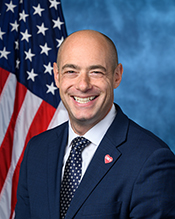
Rep. Greg Landsman
Sponsored bills
Maddy summaryThis House resolution formally recognizes the 25th anniversary of the September 11, 2001, terrorist attacks and designates September 11, 2026, as a National Day of Service and Remembrance. It honors the actions of first responders, recovery workers, volunteers, and military personnel who aided victims in New York, Washington, DC, and Shanksville, PA. The bill urges all Americans to observe this day through personal acts of service, such as volunteering, displaying the flag, or participating in memorial events. It also encourages the public to maintain a spirit of unity and compassion throughout the year in memory of those affected by the attacks.
Maddy summaryThis House resolution marks the 25th anniversary of the September 11, 2001 terrorist attacks by formally honoring the memory of the nearly 3,000 victims and recognizing the sacrifices made by first responders, military personnel, and the passengers of United Airlines Flight 93. The bill acknowledges the ongoing health challenges faced by survivors and responders, highlighting the role of the World Trade Center Health Program in providing long-term medical support. It also credits charitable organizations and community groups that have continued to assist victims' families and veterans over the past two decades. Finally, the resolution urges the American public to observe the anniversary with ceremonies and reaffirms Congress's commitment to remembering the events and lessons of that day.
Maddy summaryThe Doctors Not AI Act of 2026 prohibits health insurance plans from using artificial intelligence systems to issue or dictate adverse benefit determinations that involve clinical judgment, such as decisions based on medical necessity or treatment appropriateness. Instead, these determinations must be made by a licensed healthcare professional who conducts an independent evaluation of the patient's specific medical circumstances without deferring to AI outputs. The bill requires insurers to disclose in written notices if any AI system was used during the review process and mandates that detailed documentation regarding the AI's role and outputs be maintained as part of the administrative record, available to patients upon request. Additionally, the legislation classifies the use of AI in utilization review as a treatment limitation for parity purposes, ensuring it is evaluated equally across mental health and medical-surgical benefits under existing federal laws.
Maddy summaryHR 7294, the "AI for Secure Networks Act," requires the Secretary of Commerce to conduct a study on how artificial intelligence (AI) technology impacts telecommunications network security. The study must examine AI's potential to improve security through real-time threat detection, network resiliency, and energy efficiency, as well as its use with Open RAN and virtualized security technologies, while also assessing associated risks. The Secretary must consult with the Federal Communications Commission and industry stakeholders and submit a report with findings and potential recommendations to Congress within one year of the bill's enactment. This bill does not create new regulations or directly affect businesses or consumers; it is a procedural step to gather information about AI's role in securing telecom networks.
Maddy summaryThe Chip EQUIP Act restricts federal funding for semiconductor manufacturing equipment made by foreign entities designated as security concerns (or their subsidiaries). It prohibits the use of such "ineligible" equipment - defined as completed, fully assembled tools like etching, lithography, or inspection machines - in projects receiving federal financial assistance for 10 years. The bill requires federal agreements to include this ban, with limited waivers allowed only if the equipment is unavailable from U.S. or allied sources, was refurbished by a foreign entity of concern but originally made by a non-concern entity, or meets export rules and national security criteria. This directly affects companies receiving federal funds for semiconductor manufacturing facilities.
Maddy summaryThe Data BRIDGE Act requires the Federal Communications Commission (FCC) to update its national broadband map within 180 days of enactment by adding agricultural areas as a dedicated layer. This change will directly affect the FCC, USDA, state governments, and broadband providers by incorporating agricultural land data into the map used to identify broadband coverage gaps. The bill mandates the FCC to consult with the USDA, Commerce Department, states, and other stakeholders to integrate existing agricultural data into the map. The goal is to improve accuracy in identifying broadband needs in rural farming communities, though it does not directly fund infrastructure.
National Law Enforcement Officers Remembrance, Support and Community Outreach Act. [ sic ] This bill temporarily directs the Department of the Interior to award a grant to the National Law Enforcement Officers Memorial Fund for the expenses associated with operating and enhancing the community outreach, public education, and officer safety and wellness programs of the National Law Enforcement Museum.
Maddy summaryThe Beverage Regulatory Parity Act establishes a federal framework for regulating hemp-derived non-alcoholic beverages containing naturally occurring cannabinoids, such as delta-9 THC and CBD. The bill assigns primary regulatory authority to the Tax and Trade Bureau, which will enforce a three-tiered distribution system requiring separate permits for manufacturers, wholesalers, and retailers, while also setting strict labeling, advertising, and age-restriction requirements modeled after alcohol regulations. Additionally, the Food and Drug Administration will oversee product safety by defining standards for adulteration and misbranding, ensuring that beverages do not contain synthetic cannabinoids or harmful additives like alcohol or nicotine. The legislation imposes a federal excise tax of 8 cents per milligram of intoxicating THC content on these products and explicitly preserves state and local authority to enact more stringent laws or prohibit the sale of such beverages within their jurisdictions.
This bill designates the facility of the United States Postal Service located at 201 East Grant Avenue in Georgetown, Ohio, as the "Ulysses S. Grant Post Office Building".