

Maddy summaryThis House resolution marks the 25th anniversary of the September 11, 2001 terrorist attacks by formally honoring the memory of the nearly 3,000 victims and recognizing the sacrifices made by first responders, military personnel, and the passengers of United Airlines Flight 93. The bill acknowledges the ongoing health challenges faced by survivors and responders, highlighting the role of the World Trade Center Health Program in providing long-term medical support. It also credits charitable organizations and community groups that have continued to assist victims' families and veterans over the past two decades. Finally, the resolution urges the American public to observe the anniversary with ceremonies and reaffirms Congress's commitment to remembering the events and lessons of that day.
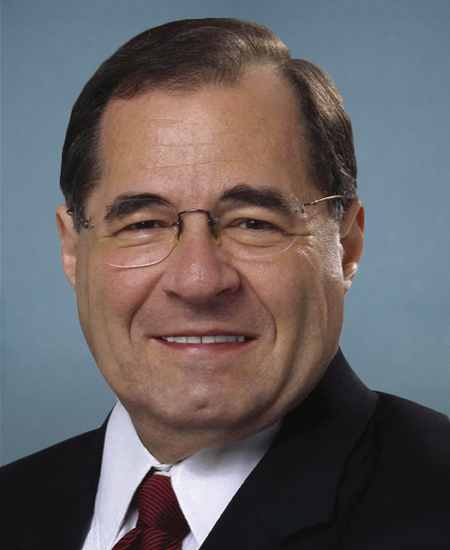
Rep. Jerrold Nadler
Sponsored bills
Maddy summaryThe NDO Fairness Act modifies federal law to establish a new court order process allowing law enforcement to delay notifying individuals when seeking electronic communications data (like emails or messages) under existing warrants or subpoenas. Courts must issue written findings showing specific, serious risks (such as endangering safety or destroying evidence) and limit delays to 90 days (or up to one year for child exploitation cases), with strict requirements for narrow tailoring. The bill mandates annual reports to Congress tracking usage, including how often delays are granted and whether they affect media or First Amendment activities. After delays expire, individuals can request copies of disclosed information within 180 days, though sensitive materials like child exploitation evidence may be redacted.
Maddy summaryThe Green New Deal for Public Housing Act directs the Department of Housing and Urban Development to provide grants to public housing agencies and tribal entities for the comprehensive rehabilitation, energy upgrades, and modernization of public housing stock. These funds are intended to transform properties into zero-carbon homes by installing renewable energy systems, electrifying appliances, and repairing infrastructure, while also establishing workforce development programs that offer training, apprenticeships, and stipends to residents and local low-income workers. The bill mandates strict labor standards, including prevailing wages and the use of U.S.-made materials, and requires agencies to maintain or increase the total number of public housing units while prioritizing resident participation through elected councils and community engagement processes.
Maddy summaryThe Protect American Values Act prohibits the use of federal funds to implement, administer, or enforce a specific Department of Homeland Security rule regarding the "Public Charge" ground of inadmissibility. This legislation directly affects immigrants and mixed-status families by preventing the government from using public benefits as a factor in determining eligibility for lawful permanent resident status. The bill includes a statement of congressional intent arguing that the targeted rule would restrict access to essential services like food, medical care, and housing, while also negatively impacting state and local economies. By cutting off funding for this specific policy, the act aims to maintain current immigration standards and prevent what Congress describes as an unauthorized reversal of long-standing law.
Maddy summaryHR 1706 designates the U.S. Postal Service facility at 1200 William Street, Room 200, in Buffalo, New York, as the "William J. Donovan Post Office Building." The bill updates all federal references in laws, maps, and documents to use this new name for the building. This is a ceremonial naming bill with no policy changes or direct impact on citizens or programs. It solely honors William J. Donovan, a notable historical figure, through official renaming of the post office location.
Maddy summaryThis bill designates the U.S. Postal Service facility at 86 Main Street in Haverstraw, New York, as the "Paul Piperato Post Office Building." It updates all official references - such as maps, documents, and records - to reflect this new name. The change directly affects the postal facility and any official communications or records mentioning its location. No policy changes or new requirements are introduced; it is solely a commemorative naming action.
Maddy summaryThis bill names a U.S. Postal Service facility at 298 Route 292 in Holmes, New York, as the "Sheriff Adrian 'Butch' Anderson Post Office Building." It updates all official references in federal documents, maps, and records to reflect this new name for the location. The bill has no policy provisions or direct impact on constituents beyond commemoration.
Maddy summaryThis bill renames a U.S. Postal Service facility at 80 Prospect Street in Avon, New York, as the "Officer Anthony Mazurkiewicz Memorial Post Office Building" to honor the late officer. It updates all official government references, documents, and records to use the new name. The bill has no policy impact beyond this ceremonial designation, directly affecting only the postal facility's official identification.
Maddy summaryThe No Surprise Bills for New Moms Act updates federal health laws to ensure newborns receive immediate coverage for medical services within 30 days of birth. This legislation directly affects parents enrolled in group health plans, individual insurance policies, or employer-sponsored plans by mandating that these providers cover their newborns without requiring prior enrollment. The bill also requires insurers to offer a special enrollment period lasting at least 60 days after the initial coverage window and to notify parents immediately if a newborn is not enrolled when medical claims are submitted. By amending the Public Health Service Act, the Employee Retirement Income Security Act, and the Internal Revenue Code, the law standardizes these protections across different types of health insurance coverage.
Maddy summaryThe Restoring Justice for Workers Act prohibits employers from forcing workers to agree to arbitration for workplace disputes and bans agreements that prevent employees from joining together to seek legal relief. Under this bill, any contract requiring arbitration before a dispute arises would be invalid, while agreements made after a dispute occurs must be truly voluntary, require plain language explanations, include a 45-day waiting period, and receive explicit written consent from the worker. The legislation also makes it illegal to retaliate against employees who refuse to sign arbitration clauses and ensures that courts, rather than arbitrators, decide whether these arbitration agreements are valid. Additionally, the act amends the National Labor Relations Act to explicitly forbid employers from interfering with employees' rights to engage in collective actions regarding their work. These changes apply to all workers, including independent contractors, and take effect immediately upon enactment.