

Environmental Justice For All Act This bill establishes several environmental justice requirements, advisory bodies, and programs and modifies the scope of environmental review under the National Environmental Policy Act of 1969. The bill sets forth provisions to address the disproportionate adverse human health or environmental effects of federal laws or programs on communities of color, low-income communities, or tribal and indigenous communities. It also prohibits disparate impacts on the basis of race, color, or national origin as discrimination. Aggrieved persons may seek legal remedy when faced with such discrimination. In addition, the bill directs agencies to follow certain requirements concerning environmental justice. For example, agencies must prepare community impact reports that assess the potential impacts of their actions on environmental justice communities under certain circumstances. It also raises coal, oil, and gas royalty rates to create a funding source to support fossil fuel-dependent communities and displaced workers as they transition away from fossil fuel industries. Additionally, the bill creates a variety of advisory bodies and positions, such as the White House Environmental Justice Interagency Council. Among other things, the council must issue an environmental justice strategy. It also establishes requirements and programs concerning chemicals or toxic ingredients in certain products. For example, the bill (1) requires certain products (e.g., cosmetics) to include a list of ingredients or warnings; and (2) provides grants for research on designing safer alternatives to chemicals in certain consumer, cleaning, toy, or baby products that have an inherent toxicity or that are associated with chronic adverse health effects. Finally, it creates a variety of funding programs, such as a grant program to enhance access to park and recreational opportunities in urban areas.
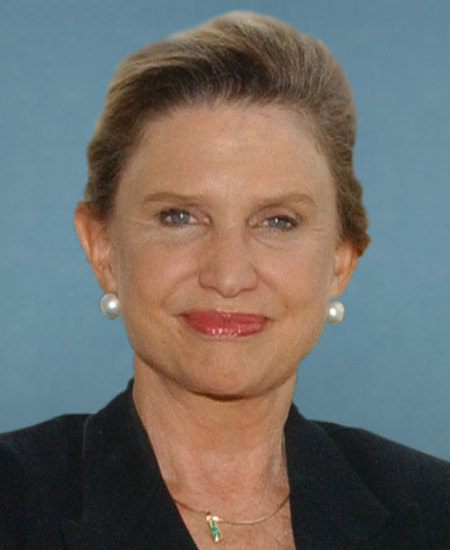
Rep. Carolyn B. Maloney
Sponsored bills
This act designates the facility of the United States Postal Service located at 15 Chestnut Street in Suffern, New York, as the Sergeant Gerald T. "Jerry" Donnellan Post Office.
21st Century President Act This act revises the definition of immediate family for purposes of a criminal offense involving a threat to kill, kidnap, or inflict bodily harm on a former President or a member of the immediate family of a former President. Specifically, it replaces gender-specific references to a former President's wife and widow with the gender-neutral terms spouse and surviving spouse .
This act prescribes that a peer support specialist of the Department of Veterans Affairs (VA) must not be responsible for providing assistance to a veteran regarding a claim for compensation for a covered mental health condition (e.g., post-traumatic stress disorder) based on military sexual trauma (MST) experienced during active service. Such specialists must only provide counseling services, guidance, and support and must not participate in the adjudication of the claim. As part of the forms for claims for compensation for a covered mental health condition based on MST, the VA must include an option for a veteran to elect to be referred to a MST trauma coordinator at the VA facility closest to the veteran's residence. Additionally, the VA must (1) ensure that its peer support specialists receive annual training on providing peer support regarding MST, and (2) provide annual training on the processing of claims for compensation for covered mental health conditions based on MST to its MST coordinators and peer specialists.
This resolution condemns the actions of a White supremacist mob that drove Black residents out of Atlanta, Georgia in 1906 and supports the designation of a national day of remembrance for the victims of forced migrations of Black Americans.
Aviation Funding Stability Act of 20 21 This bill provides continuing appropriations to the Federal Aviation Administration (FAA) from the Airport and Airway Trust Fund if an appropriations bill for the FAA has not been enacted before a fiscal year begins or a joint resolution making continuing appropriations for the FAA is not in effect. The bill provides appropriations at the rate of operations that was provided for the prior fiscal year to continue programs, projects, and activities for which funds were provided in the preceding fiscal year.
Maddy summaryThis resolution (HRES 1530) formally recognizes the 50th anniversary of the National Minority Supplier Development Council (NMSDC), a nonprofit organization founded in 1972. It highlights NMSDC’s role in connecting minority-owned businesses to corporate partners, facilitating over $400 billion in annual economic output. As a ceremonial resolution, it does not create new laws or allocate funds, but instead symbolically acknowledges NMSDC’s work supporting minority business enterprises and promoting economic opportunity. The bill specifically celebrates the organization’s contributions without proposing any policy changes.
Bus Rapid Transit Act This bill directs the Federal Transit Administration (FTA) to establish a grant program to provide grants to state, local, and tribal governments for the design and implementation of bus rapid transit systems, including for the redesign, retrofit, renovation, update, and repair of existing bus systems. As a condition of receiving a grant, eligible entities must certify that fares for riding the bus rapid transit system shall not increase solely due to improvements carried out with grant funds and for any reason for at least one year after completion of a project funded by the bill. In carrying out the program, the FTA must prioritize projects located in economically disadvantaged communities.
Uyghur Forced Labor Prevention Act This bill imposes various restrictions related to China's Xinjiang Uyghur Autonomous Region, including by prohibiting certain imports from Xinjiang and imposing sanctions on those responsible for human rights violations there. Goods manufactured or produced in Xinjiang shall not be entitled to entry into the United States unless U.S. Customs and Border Protection (1) determines that the goods were not manufactured by convict labor, forced labor, or indentured labor under penal sanctions; and (2) reports such a determination to Congress and to the public. The President shall periodically report to Congress a list of foreign entities and individuals knowingly facilitating (1) the forced labor of Uyghurs, Kazakhs, Kyrgyz, and members of other Muslim minority groups in Xinjiang; and (2) efforts to contravene U.S. laws regarding the importation of forced labor goods from Xinjiang. The President shall impose property-blocking sanctions on the listed individuals and entities and impose visa-blocking sanctions on the listed individuals. Securities issuers required to file annual or quarterly reports with the Securities Exchange Commission shall disclose in such reports instances in which the issuer knowingly engaged in certain activities related to Xinjiang, such as working with an entity building detention facilities or surveillance systems there. After such a disclosure, the President shall determine whether to investigate if sanctions or criminal charges are warranted. The Forced Labor Enforcement Task Force and the Department of State shall report to Congress strategies to address forced labor in Xinjiang or any other part of China. The State Department shall also report to Congress a determination of whether the treatment of Muslim groups in Xinjiang constitutes crimes against humanity or genocide under U.S. law.
This resolution affirms that there is well-established authority for the Food and Drug Administration to approve, license, and otherwise regulate reproductive health products under the Federal Food, Drug, and Cosmetic Act and the Public Health Service Act. The resolution also affirms that (1) such federal laws preempt (i.e., supersede conflicting state or local laws) any state or local laws that prohibit or limit access to or use of any reproductive health product, and (2) the Department of Justice has authority to enforce the preemptive effect of such federal laws by suing any state or political subdivision of a state that prohibits or limits access to or use of any reproductive health product.