

Maddy summaryHR 82, the Social Security Fairness Act of 2023, repeals two provisions that reduce Social Security benefits for certain government workers. It eliminates the Government Pension Offset (GPO), which cuts spousal or survivor benefits for people with pensions from jobs not covered by Social Security (like federal or state government roles), and the Windfall Elimination Provision (WEP), which lowers retirement benefits for those with similar pensions. The law takes effect for benefits paid after December 2023, requiring the Social Security Administration to adjust benefit calculations to remove these reductions. This change directly affects public-sector employees who previously had their Social Security benefits reduced due to their government pensions.
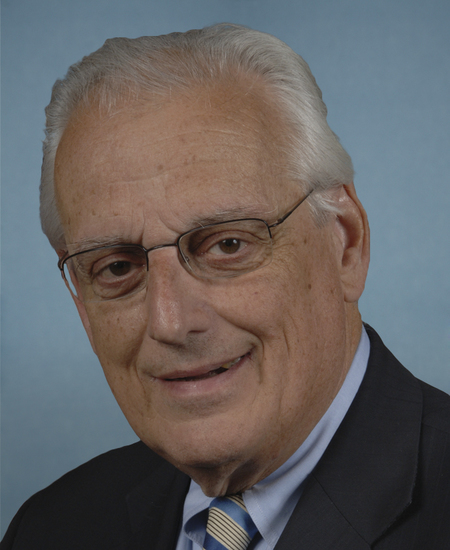
Rep. Bill Pascrell, Jr.
Sponsored bills
Maddy summaryThis bill (HR 7607) renames a specific U.S. Postal Service facility in Cape May County, New Jersey, to honor George Henry White. The building at Block 1025, Lots 18 & 19, at the northeast corner of US Route 9 South and Main Street in Middle Township will officially be called the "George Henry White Post Office Building." All official U.S. government references to this location - such as in laws, maps, or documents - will be updated to reflect the new name. This is a procedural designation with no policy changes, solely updating the building's official title.
Maddy summaryThis bill (HR 7606) designates the U.S. Postal Service facility at 1087 Route 47 South in Rio Grande, New Jersey, as the "Carlton H. Hand Post Office Building." It directly affects the physical postal facility and all official references to it (such as maps, documents, or regulations). The bill updates all federal records to use the new name, with no substantive policy changes or impact on services or residents. It is a ceremonial naming resolution with no fiscal or operational provisions.
Maddy summaryThe Treat and Reduce Obesity Act of 2023 expands Medicare coverage for obesity treatment by allowing a wider range of healthcare providers - including nurse practitioners, dietitians, psychologists, and community-based counseling programs - to deliver intensive behavioral therapy for obesity, provided they coordinate with primary care providers. It also adds Medicare Part D coverage for medications used to treat obesity or for weight loss management in overweight individuals with related health conditions like diabetes or high blood pressure. These changes directly affect Medicare beneficiaries, particularly older adults (65+), who face higher obesity rates and associated costs, including $50 billion annually in Medicare spending for obesity-related care. The bill requires annual reports to Congress on implementation to improve coordination of obesity care across federal health programs.
Maddy summaryThis bill, HR 1097 (Everett Alvarez, Jr. Congressional Gold Medal Act of 2023), authorizes the award of a Congressional Gold Medal to Everett Alvarez, Jr., in recognition of his service as a U.S. Navy pilot and Vietnam War prisoner of war. It directly honors Alvarez, who was the first U.S. pilot shot down in the Vietnam War, spent over 8.5 years in captivity, and later served in the Peace Corps and Veterans Administration. The bill’s key mechanism is directing the U.S. Mint to strike a gold medal bearing his name and image, with bronze duplicates available for sale to cover costs. It does not create new policies or affect any group beyond the honoree.
Maddy summaryThis bill requires Medicare Advantage plans to implement electronic prior authorization systems by 2027 and publish detailed data on their approval and denial rates for medical services by 2026. It directly affects Medicare Advantage plans (private insurers offering Medicare coverage) and their enrollees (seniors 65+), mandating transparency about prior authorization decisions, processing times, and appeal outcomes. Key provisions include requiring plans to report annual statistics on request approvals/denials, average processing times, and use of technology, with this data published publicly by the Centers for Medicare & Medicaid Services. The bill also sets timelines for plan responses to prior authorization requests and mandates reports to Congress on implementation and impacts.
Maddy summaryThe 401Kids Savings Account Act of 2024 establishes automatic savings accounts for every U.S. citizen under age 18, created at birth or naturalization (or when the program starts). These accounts receive annual government deposits of $500 (or $750 for families eligible for the Earned Income Credit) and up to $250 in matching contributions for EIC-eligible families. After age 18, account holders can use funds for education, first-time home purchases, or roll over balances into ABLE accounts or Roth IRAs. The accounts are designed to be disregarded for means-tested benefits like SSI and Medicaid, though balances exceeding $100,000 will count toward eligibility.
Maddy summaryHR 7142 (Alternatives to PAIN Act) requires Medicare Part D plans to cover non-opioid pain management drugs with no deductible and at the lowest copay level starting in 2025. It defines "qualifying non-opioid drugs" as FDA-approved medications that don’t act on opioid receptors (like certain NSAIDs or nerve pain treatments), excluding opioids and schedule I-III drugs. The bill prohibits Medicare plans from forcing patients to try opioids first (step therapy) or requiring prior approval for these non-opioid options. It directly affects Medicare beneficiaries needing pain management, especially those seeking alternatives to opioids for post-surgical or acute pain. The policy change aims to improve access to non-addictive pain treatments while preserving doctors' authority to prescribe medically appropriate care.
Maddy summaryHR 7119, the Fairness in Nursing Home Arbitration Act, prohibits nursing homes and providers of home health or community-based care from requiring residents or patients to sign arbitration agreements before any dispute arises. It directly affects residents of skilled nursing facilities (covered under Medicare) and individuals receiving home health or nursing care (covered under Medicaid), preventing facilities from enforcing such agreements for current or former patients. The key provision bans the use of pre-dispute arbitration agreements entirely, making them invalid and unenforceable, and ensures courts - not arbitrators - decide disputes related to these agreements. The bill applies to all service providers, including their employees and affiliates, and takes effect upon enactment.
Maddy summaryThis bill, HR 6860, protects patients with end-stage kidney disease (ESRD) who require dialysis by preventing health insurance plans from discriminating against them. It amends Medicare rules to prohibit plans from treating dialysis coverage differently than other medical services based on a patient’s ESRD diagnosis, need for dialysis, or any other factor. The bill clarifies that plans can still choose which dialysis providers to include in their networks but cannot deny or limit coverage for dialysis services solely because of the patient’s condition. It ensures Medicare remains the secondary payer for these services as intended, without forcing plans to cover specific providers.