

Maddy summaryThis bill, known as the Ratepayer Protection Act, modifies federal energy laws to ensure that large industrial customers pay for the specific infrastructure upgrades needed to serve their high electricity demands. It directly affects non-residential facilities with a peak power usage of 100 megawatts or more, requiring utilities to charge these customers the full incremental cost of any necessary generation, transmission, or distribution improvements. Under the new rules, large customers must also provide financial guarantees or contributions before such upgrades are made, ensuring utilities can recover costs even if the customer leaves the contract early. State regulators have two years to implement these standards, though the bill exempts utilities in states that have already enacted similar measures or are actively considering them.
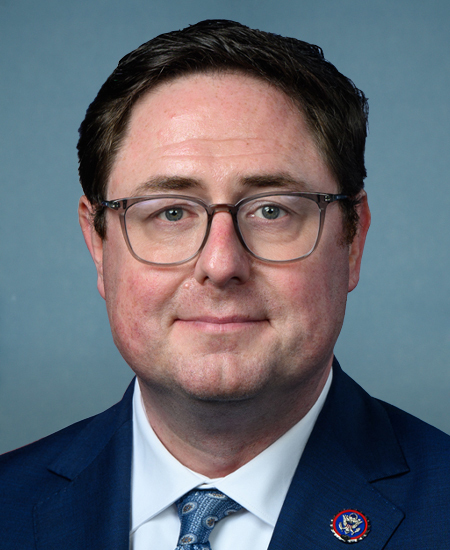
Rep. Mike Flood
Sponsored bills
Maddy summaryHR 5267, the American Franchise Act, clarifies when franchisors can be considered joint employers of franchisee employees under federal labor laws. It defines "substantial direct and immediate control" over essential employment terms like wages, benefits, hours, hiring, and discipline - requiring franchisors to actively set these terms to be deemed joint employers. The bill explicitly excludes routine brand standards, training, or minimal safety requirements from constituting such control. This directly affects franchisors and franchisees by limiting joint employer liability to cases where franchisors exert significant, ongoing influence over core employment decisions. The law applies prospectively to new cases after enactment, not past disputes.
Maddy summaryThe Consumer Financial Protection Accountability and Reform Act of 2026 significantly restructures the Bureau of Consumer Financial Protection by subjecting it to the regular federal appropriations process and establishing an independent Inspector General appointed by the President. The bill restricts the Bureau's supervisory authority over banks and credit unions with assets under $30 billion, allowing these institutions to elect to remain under their existing prudential regulators instead. It also introduces a safe harbor for small-dollar loans of $3,500 or less that meet specific structural requirements, shielding compliant lenders from civil money penalties and private damages. Additionally, the legislation creates federal standards for earned wage access services, requiring providers to offer a no-cost option for early wage access and prohibiting them from treating these services as credit or debt under federal law.
National Law Enforcement Officers Remembrance, Support and Community Outreach Act. [ sic ] This bill temporarily directs the Department of the Interior to award a grant to the National Law Enforcement Officers Memorial Fund for the expenses associated with operating and enhancing the community outreach, public education, and officer safety and wellness programs of the National Law Enforcement Museum.
Maddy summaryThis bill, titled the Uniform Vehicle Safety Standards Act of 2026, aims to standardize how motor vehicle safety rules are applied across the United States. It directly affects vehicle manufacturers and legal proceedings by modifying federal law to explicitly exempt companies from liability when they meet existing safety standards set by the National Highway Traffic Safety Administration. The key provision prevents courts from using common law lawsuits to require vehicles to exceed these established federal safety requirements, thereby reducing legal uncertainty for interstate commerce. By clarifying that compliance with federal standards is sufficient, the legislation seeks to prevent additional lawsuits that could disrupt the national vehicle market.
Maddy summaryHR 7008, the Stop Insider Trading Act, restricts Members of Congress, their spouses, and dependent children from purchasing certain investments like stocks in publicly traded companies. It requires 7-14 days' advance public notice before selling any such investment, including the sale date, description, and number of shares. Exceptions apply for work-related transactions (e.g., employer compensation) and reinvesting dividends. Violations trigger a fee of $2,000 or 10% of the investment’s value (whichever is greater), plus any net gain, paid from personal funds - not congressional allowances or campaign donations. The bill aims to prevent conflicts of interest by increasing transparency around congressional financial dealings.
Maddy summaryThe Protecting Access to Spiritual Treatment and Organized Religion Act of 2026 requires healthcare providers receiving Medicare funding to allow designated clergy members to visit patients upon request starting in 2028. This rule applies to facilities offering Medicare services and mandates that clergy adhere to safety protocols set by the Secretary of Health and Human Services. The provision ensures that individuals can receive spiritual support during their care while maintaining established health and safety standards.
Maddy summaryThe Main Street Capital Access Act reduces regulatory burdens for smaller banks, particularly those with less than $10 billion in assets. Key provisions include a 3-year phase-in period for new banks to meet capital requirements, lower leverage ratio requirements for rural banks (7.5% for the first 2 years), and a 30-day review process for business plan deviations. The bill also establishes an Office of Independent Examination Review, sets specific timelines for examinations (270 days) and reports (90 days), and creates a "least cost exception" for bank resolutions to prevent excessive concentration of the banking system. These changes aim to promote new bank formation, improve regulatory efficiency, and support community banking while maintaining financial stability.
Maddy summaryHR 6213, the Heat Workforce Standards Act of 2025, prohibits the U.S. Department of Labor from finalizing, implementing, or enforcing OSHA's proposed "Heat Injury and Illness Prevention" standard (published August 30, 2024). This bill directly blocks the specific regulatory proposal targeting heat safety in both outdoor and indoor work settings. It does not create new requirements or affect workers; it solely prevents the implementation of the existing OSHA proposal. The bill is procedural, focusing on halting a regulatory action rather than establishing new policy.
Maddy summaryHR 7651, the Chloe Cole Act of 2026, prohibits healthcare providers from performing certain medical interventions on minors under 18 aimed at altering physical development to align with gender identity. These "covered interventions" include puberty blockers, hormone treatments, and specific surgeries, but exclude medically necessary care for conditions like disorders of sexual development or traumatic injuries. The bill creates a federal civil lawsuit right for affected minors or their parents against providers who perform such interventions, allowing claims for damages including emotional distress and punitive awards, with strict liability for providers after the law's enactment. It explicitly allows exceptions for legitimate medical treatments and requires providers to prove such exceptions apply if challenged.