Maddy summaryThe Robo COP Act directs the Federal Trade Commission to update its telemarketing rules within 180 days to ban automated political phone calls to individuals who have registered on the national do-not-call list. This legislation specifically targets outbound calls that play a recorded message rather than connecting to a live person, provided the call is intended to promote or oppose a candidate or issue, or if it mentions a political candidate's name. The law directly affects political campaigns and organizations that use robocalls for fundraising or advocacy by restricting their ability to contact opted-out voters.

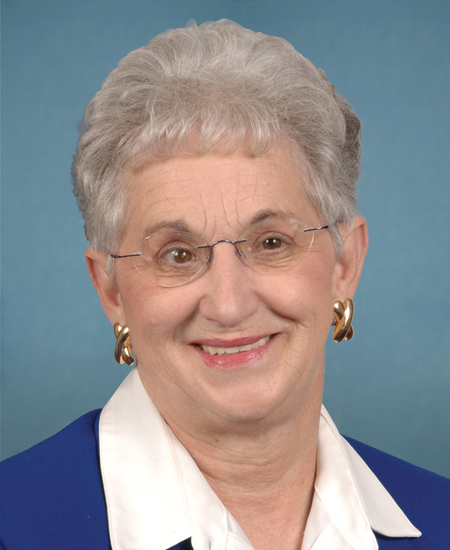
Rep. Virginia Foxx
Sponsored bills
Maddy summaryHR 5267, the American Franchise Act, clarifies when franchisors can be considered joint employers of franchisee employees under federal labor laws. It defines "substantial direct and immediate control" over essential employment terms like wages, benefits, hours, hiring, and discipline - requiring franchisors to actively set these terms to be deemed joint employers. The bill explicitly excludes routine brand standards, training, or minimal safety requirements from constituting such control. This directly affects franchisors and franchisees by limiting joint employer liability to cases where franchisors exert significant, ongoing influence over core employment decisions. The law applies prospectively to new cases after enactment, not past disputes.
Maddy summaryThis bill requires U.S. colleges and universities receiving federal student aid (Title IV) or specific grants (Title VI) to annually certify by July 31 that they will not engage in "nonexpressive commercial boycotts" of countries designated as strategic partners of the U.S. (such as Israel under existing law). The certification must confirm these institutions will permit equal academic exchanges - like study abroad programs, conferences, and research - with strategic partner countries as they do with other nations. Failure to submit the certification results in loss of federal funding eligibility for the following fiscal year. It directly affects all higher education institutions relying on federal financial aid programs.
Maddy summaryH.Res. 1499 is a procedural resolution that establishes specific rules for the House of Representatives to consider four separate legislative measures and a constitutional amendment proposal. It allows for the consideration of H.R. 1501, which would amend the FAST Act to classify certain mineral production activities as covered infrastructure projects, and H.R. 9436, which extends the effective period of regulations concerning North Atlantic right whales. The resolution also provides the framework for debating H.Res. 1490, a measure condemning socialism, and H.R. 4795, which would restrict federal funding for higher education institutions that participate in commercial boycotts of Israel or obstruct student participation in academic programs there. Additionally, it extends debate time to one hour for a joint resolution proposing a constitutional amendment to fix the size of the Supreme Court at nine justices.
Maddy summaryThis bill authorizes the Secretary of the Army to transfer approximately 20 acres of land at Fort Bragg in North Carolina to the state government without charge. The property is intended for the construction of a veterans' home under the jurisdiction of the North Carolina Department of Military and Veterans Affairs. The state is required to pay all costs associated with the transfer, including environmental reviews and administrative fees, with any excess prepayments refunded by the federal government. If the land is no longer used for the designated veterans' facility, ownership may revert to the United States at the Secretary's discretion.
Maddy summaryHR 2555, the Freedom of Association in Higher Education Act of 2025, protects students who join or form single-sex social organizations (like fraternities or sororities) at colleges. It prohibits colleges receiving federal funds from taking negative actions against these students or organizations solely because they limit membership to one sex - such as denying housing, financial aid, leadership roles, or recognition. The bill ensures students can join such groups without coercion and stops colleges from imposing unfair recruitment rules on single-sex organizations compared to others. It does not require colleges to recognize single-sex groups, allow organizations to set their own membership rules, or override Title IX protections.
Maddy summaryThe No Antisemitism in Education Act of 2026 requires schools and universities receiving federal funds to treat antisemitism with the same seriousness as other forms of discrimination prohibited by Title VI of the Civil Rights Act. Under this law, institutions must use the official definition of antisemitism found in a prior presidential executive order to investigate complaints and enforce their own policies. The bill explicitly states that these requirements do not violate free speech rights or override existing state laws, ensuring that Jewish students and staff are protected from harassment and exclusion on campus.
Maddy summaryThis House resolution formally honors the life and legacy of the late Representative Kay Granger from Texas, recognizing her historic achievements in public service. The bill highlights her roles as the first woman elected mayor of Fort Worth, the first Republican woman to represent Texas in the U.S. House, and the first Republican woman to chair the House Committee on Appropriations. It also acknowledges her contributions to national defense, including her work on the F-35 fighter jet program and the naming of a Navy ship for Fort Worth. The resolution expresses sympathy to Granger's family and directs the Clerk of the House to send an official copy of the document to her loved ones.
This resolution provides for the consideration of the bill (H.R. 8800) to authorize appropriations for fiscal year 2027 for military activities of the Department of Defense, for military construction, and for defense activities of the Department of Energy, to prescribe military personnel strengths for such fiscal year, and for other purposes; providing for consideration of the bill (H.R. 8884) to amend title II of the Social Security Act to reauthorize demonstration authority for the disability insurance program; providing for consideration of the concurrent resolution (H. Con. Res. 113) establishing the congressional budget for the United States Government for fiscal year 2027 and setting forth the appropriate budgetary levels for fiscal years 2028 through 2036; providing for consideration of the bill (H.R. 7008) to amend chapter 131 of title 5 to require certain restrictions on stocks for Members of Congress and their spouses and dependents, and for other purposes; providing for consideration of the bill (H.R. 6955) to make improvements to the Federal banking laws, and for other purposes; providing for consideration of the bill (H.R. 9770) making continuing appropriations for fiscal year 2027, and for other purposes; and for other purposes.
Maddy summaryHR 6213, the Heat Workforce Standards Act of 2025, prohibits the U.S. Department of Labor from finalizing, implementing, or enforcing OSHA's proposed "Heat Injury and Illness Prevention" standard (published August 30, 2024). This bill directly blocks the specific regulatory proposal targeting heat safety in both outdoor and indoor work settings. It does not create new requirements or affect workers; it solely prevents the implementation of the existing OSHA proposal. The bill is procedural, focusing on halting a regulatory action rather than establishing new policy.