

Maddy summaryHR 82, the Social Security Fairness Act of 2023, repeals two provisions that reduce Social Security benefits for certain government workers. It eliminates the Government Pension Offset (GPO), which cuts spousal or survivor benefits for people with pensions from jobs not covered by Social Security (like federal or state government roles), and the Windfall Elimination Provision (WEP), which lowers retirement benefits for those with similar pensions. The law takes effect for benefits paid after December 2023, requiring the Social Security Administration to adjust benefit calculations to remove these reductions. This change directly affects public-sector employees who previously had their Social Security benefits reduced due to their government pensions.
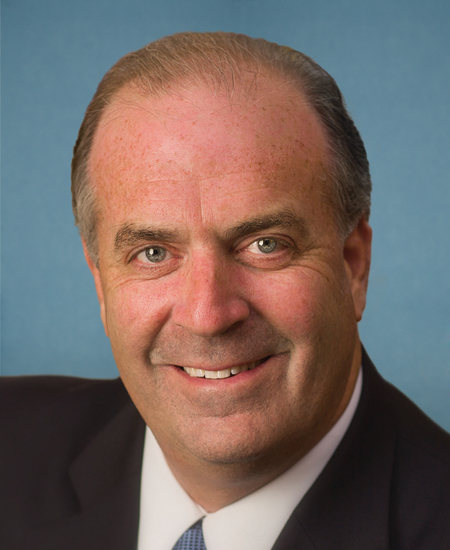
Rep. Daniel T. Kildee
Sponsored bills
Maddy summaryThis bill designates the U.S. Postal Service facility at 3913 Leland Avenue Northwest in Comstock Park, Michigan, as the "Captain Miguel Justin Nava Post Office." It changes the official name of this specific post office location and updates all federal references to it accordingly. The bill has no policy impact or financial implications - it is purely a ceremonial naming designation. It directly affects the postal facility's official identification in government records.
Maddy summaryThe Supporting America's Children and Families Act reauthorizes federal child welfare programs through 2029, with new provisions to improve services for children in foster care and families. It directly affects states, tribes, child welfare agencies, foster youth, and families through requirements to address poverty-related neglect, expand family preservation services, strengthen kinship care support, and improve court technology for remote hearings. Key mechanisms include new funding for regional partnerships addressing parental substance use, streamlined administrative processes, and demonstration projects for maintaining relationships between incarcerated parents and their children in foster care. The bill also strengthens tribal child support enforcement and improves implementation of the Indian Child Welfare Act, aiming to reduce bureaucracy while improving outcomes for children and families.
Maddy summaryThis bill renames the Department of Veterans Affairs community-based outpatient clinic located in Cadillac, Michigan, as the "Duane E. Dewey VA Clinic." It requires that all future references to this specific facility in federal laws, regulations, and documents use the new name.
Maddy summaryThis bill updates federal law to ensure tribal child support enforcement agencies have the same access to tax information as state agencies. It amends the Social Security Act and Internal Revenue Code to explicitly include tribal organizations receiving federal grants under Section 455(f) in provisions allowing the use of tax refund data to collect overdue child support payments. Tribal agencies will now be treated equally with state agencies for accessing tax information and receiving reimbursement for enforcement reports. This change directly affects Native American tribes operating child support programs and the parents and children they serve, enabling more effective collection of overdue support.
Maddy summaryThis bill, HR 1097 (Everett Alvarez, Jr. Congressional Gold Medal Act of 2023), authorizes the award of a Congressional Gold Medal to Everett Alvarez, Jr., in recognition of his service as a U.S. Navy pilot and Vietnam War prisoner of war. It directly honors Alvarez, who was the first U.S. pilot shot down in the Vietnam War, spent over 8.5 years in captivity, and later served in the Peace Corps and Veterans Administration. The bill’s key mechanism is directing the U.S. Mint to strike a gold medal bearing his name and image, with bronze duplicates available for sale to cover costs. It does not create new policies or affect any group beyond the honoree.
Maddy summaryThis bill amends the International Emergency Economic Powers Act to explicitly prohibit the President from using emergency powers to impose import taxes (tariffs), tariff-rate quotas, or other import quotas. It directly affects the President's authority under this law, removing a potential tool for trade restrictions during emergencies. The key provision inserts a new subsection (c) clarifying that the President cannot impose such import barriers through emergency authority. This is a procedural change to existing law, not a new policy affecting specific industries or individuals.
Maddy summaryHR 9061 increases federal funding to support child welfare caseworkers by raising the annual appropriation under the Social Security Act from $345 million to $385 million. It specifically boosts the reserved amount for caseworker recruitment, retention, and training from $20 million to $60 million annually, and adds a requirement to include worker safety and well-being in these efforts. The bill directly affects state child welfare agencies and their caseworkers by providing more resources to address staffing challenges. The changes take effect in the first fiscal year after enactment.
Maddy summaryThe Securing America’s Titanium Manufacturing Act of 2024 temporarily eliminates import duties on titanium sponge (used in defense and aerospace) for most countries starting 30 days after enactment, lasting until December 31, 2031, or earlier if the President terminates the policy. Imports from Belarus, Cuba, North Korea, and Russia remain subject to pre-enactment duties during this period. The President must review U.S. titanium production every three years to determine if domestic supply meets national security needs, with duty-free treatment ending one year after a positive determination. Additionally, the President may adjust duties (within World Trade Organization limits) based on factors like domestic production trends, imports from specific countries, and national security impacts.
Maddy summaryThis bill creates a $5 million annual grant program (2025-2029) to fund independent evaluations of evidence-based child welfare prevention services and kinship navigator programs. Eligible applicants include state agencies, local governments, or community organizations partnering with state child welfare agencies and an external evaluator, but exclude for-profit businesses. Grants prioritize projects addressing gaps in a national clearinghouse of proven practices, requiring grantees to report annually on program outcomes and inclusion in the clearinghouse. The program aims to strengthen the evidence base for child welfare services by systematically assessing which programs work best before expanding them.