

Maddy summaryHR 82, the Social Security Fairness Act of 2023, repeals two provisions that reduce Social Security benefits for certain government workers. It eliminates the Government Pension Offset (GPO), which cuts spousal or survivor benefits for people with pensions from jobs not covered by Social Security (like federal or state government roles), and the Windfall Elimination Provision (WEP), which lowers retirement benefits for those with similar pensions. The law takes effect for benefits paid after December 2023, requiring the Social Security Administration to adjust benefit calculations to remove these reductions. This change directly affects public-sector employees who previously had their Social Security benefits reduced due to their government pensions.
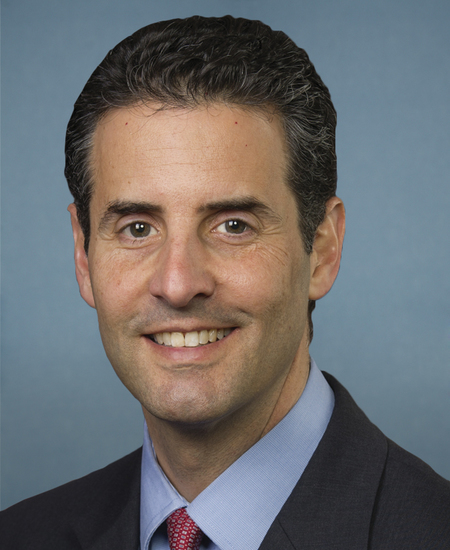
Rep. John P. Sarbanes
Sponsored bills
Maddy summaryThis bill designates the U.S. Postal Service facility at 340 South Loudon Avenue in Baltimore, Maryland, as the "United States Representative Elijah E. Cummings Post Office Building." It updates all federal references in laws, documents, and records to reflect this new name. The bill honors former U.S. Representative Elijah E. Cummings (D-MD), who served from 2007 until his passing in 2019, and became law on January 4, 2025.
Maddy summaryThis bill (HR 6826) renames the visitor and education center at Fort McHenry National Monument in Baltimore, Maryland (located at 2400 E Fort Ave) as the "Paul S. Sarbanes Visitor and Education Center." It directly affects the physical location and all official references to the center in government documents, maps, or regulations. The bill makes no substantive policy changes - its sole purpose is to honor former U.S. Senator Paul S. Sarbanes through this permanent naming designation. The resolution was passed by Congress and signed into law on December 23, 2024.
Maddy summaryThis bill, HR 1097 (Everett Alvarez, Jr. Congressional Gold Medal Act of 2023), authorizes the award of a Congressional Gold Medal to Everett Alvarez, Jr., in recognition of his service as a U.S. Navy pilot and Vietnam War prisoner of war. It directly honors Alvarez, who was the first U.S. pilot shot down in the Vietnam War, spent over 8.5 years in captivity, and later served in the Peace Corps and Veterans Administration. The bill’s key mechanism is directing the U.S. Mint to strike a gold medal bearing his name and image, with bronze duplicates available for sale to cover costs. It does not create new policies or affect any group beyond the honoree.
Maddy summaryThe SERVICE Act reduces the required number of qualifying monthly payments for Public Service Loan Forgiveness from 120 to 96. It expands what counts as a qualifying payment to include certain periods of deferment (like military service, medical treatment, or Peace Corps work) and forbearance, and creates a "buyback" process allowing borrowers to pay to count months of public service employment without making qualifying payments. The bill also adds an online portal for borrowers to track their progress toward loan forgiveness, clarifies treatment of independent contractors as public service workers, and improves the reconsideration process for denied applications. This directly affects borrowers with Federal Direct Loans who work in public service jobs, including those who may have missed payments due to circumstances like military service, medical treatment, or other qualifying deferments. The changes aim to make loan forgiveness more accessible by simplifying the process and expanding eligibility criteria.
Maddy summaryHR 8796, the "Stop Comstock Act," removes outdated restrictions from federal law that previously banned the distribution of materials related to contraception and abortion as "obscene" or "indecent." The bill amends Title 18 and the Tariff Act by deleting references to "indecent," "immoral," "unlawful abortion," and "procuring abortion" from provisions governing obscene materials. It clarifies that the law only prohibits "obscene materials" in commerce, eliminating broad restrictions on reproductive health information. This directly affects internet platforms, healthcare providers, and individuals sharing reproductive health resources by removing legal barriers to their distribution.
Maddy summaryThis bill requires Medicare Advantage plans to implement electronic prior authorization systems by 2027 and publish detailed data on their approval and denial rates for medical services by 2026. It directly affects Medicare Advantage plans (private insurers offering Medicare coverage) and their enrollees (seniors 65+), mandating transparency about prior authorization decisions, processing times, and appeal outcomes. Key provisions include requiring plans to report annual statistics on request approvals/denials, average processing times, and use of technology, with this data published publicly by the Centers for Medicare & Medicaid Services. The bill also sets timelines for plan responses to prior authorization requests and mandates reports to Congress on implementation and impacts.
Maddy summaryThis bill requires Medicare Advantage (MA) plans to report detailed, individual-level data on supplemental benefits (like dental or vision coverage) starting in 2027. MA organizations must submit information on eligibility, benefit types, utilization, payments, and out-of-pocket costs per enrollee to the Centers for Medicare & Medicaid Services (CMS). Beginning in 2028, CMS will make this anonymized data publicly available annually via its website for research and program evaluation. The law aims to improve transparency around supplemental benefits, directly affecting MA plans and indirectly benefiting beneficiaries through better-informed program analysis. It includes strict privacy safeguards to protect individually identifiable information.
Maddy summaryThe Lowering Drug Costs for American Families Act expands Medicare's drug price negotiation program from 20 to 50 drugs, allowing the government to negotiate lower prices for these medications. It requires private health insurance plans and group health coverage to apply these negotiated prices to their members' cost-sharing for covered drugs, with plans able to opt out while publicly disclosing their decision. The bill also extends these negotiated prices to drugs covered by commercial insurance markets, not just Medicare. This would directly affect Medicare beneficiaries and people with private health insurance who take the negotiated drugs.
Maddy summaryThe Social Security 2100 Act would significantly enhance Social Security benefits for millions of Americans by increasing monthly payments for retirees, disabled workers, widows/widowers, and children. Key provisions include raising the minimum benefit for long-term low earners, improving cost-of-living adjustments using a more accurate index, eliminating the 5-month waiting period for disability benefits, and extending child benefits to age 26. The bill also changes how Social Security taxes are calculated by applying them to income above $400,000 and establishes a unified Social Security Trust Fund to manage program finances. Most provisions would apply to benefits payable from 2025 through 2034, affecting all current and future Social Security beneficiaries.