

Maddy summaryThis bill, known as the SAT Streamlining Act, requires the Federal Communications Commission to process certain satellite and telecommunications licensing applications within specific timeframes, such as one year for new applications and 90 days for minor modifications. It directly affects companies and entities seeking to operate nongeostationary orbit and geostationary orbit space stations, along with their associated earth stations, by establishing clearer rules for how quickly the FCC must review and decide on these requests. The legislation also limits the amount of information applicants must provide to the FCC, prevents states from regulating rates for these services, and includes provisions for emergency situations and national security reviews. Additionally, if the FCC fails to decide on an application within the mandated deadline, the application is automatically considered approved.
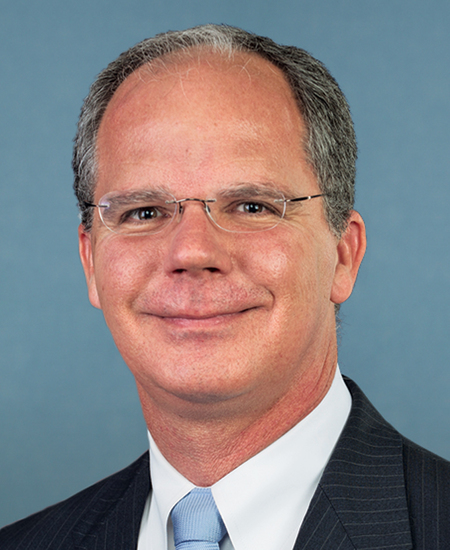
Rep. Brett Guthrie
Sponsored bills
Maddy summaryHR 6332 designates the United States Postal Service facility at 10660 Page Avenue in Fairfax, Virginia, as the "Congressman Gerald E. Connolly Post Office Building." This bill updates all official references in federal documents, maps, and records to use the new name for this specific post office location. It does not create new policies or affect any services; it solely changes the building's official designation to honor Congressman Gerald E. Connolly. The change applies to all federal materials referencing the facility.
Maddy summaryThis bill requires hospitals, clinical laboratories, imaging providers, and ambulatory surgical centers to publicly post detailed price information for their services starting in 2028. It mandates that these facilities display standard charges, discounted cash prices, and negotiated rates in a uniform, machine-readable format that is free to access and includes plain-language descriptions of services. Additionally, the legislation expands cost-sharing transparency for group health plans and insurers by requiring them to provide real-time estimates of patient out-of-pocket costs and publish rate and payment data for providers. The bill also establishes enforcement mechanisms, including civil monetary penalties for non-compliance, while providing waivers for hospitals in rural or underserved areas facing immediate threats to access to care.
Protecting Privacy in Purchases Act This bill prohibits payment card networks from using merchant codes that distinguish firearms retailers from general-merchandise retailers or sporting-goods retailers. The Department of Justice must enforce this bill and report annually on the resulting investigations and cases.
Maddy summaryThe KIDS Act (HR 7757) requires online platforms to implement age verification measures and safety features to protect minors from harmful content and interactions. It mandates platforms to provide parental control tools, limit design features that encourage compulsive use, and prevent access to illegal products like drugs or alcohol. The bill also requires platforms to establish reporting mechanisms for harms to minors and disclose when chatbots are artificial intelligence systems. The law applies to social media platforms, video games, and chatbot providers that meet the definition of a "covered platform" under the bill.
Maddy summaryThe Securing Agriculture's Workforce Act of 2026 modernizes the H-2A visa program by transferring administrative authority to the Department of Homeland Security and introducing a unified online platform to streamline applications for employers and workers. Key provisions include establishing new housing standards with mandatory inspections, creating a system for staggered worker entry and exit, and allowing workers to transfer between employers without losing their status. The bill also defines specific job classifications for wage calculations, expands the scope of covered agricultural activities, and provides legal protections for employers who document the employment of workers seeking visa status. Additionally, it requires agencies to develop a heat illness prevention plan and allows for contract termination due to natural disasters.
Maddy summaryHR 4398, the Veteran Burial Timeliness and Death Certificate Accountability Act, requires Veterans Affairs (VA) physicians or nurse practitioners to certify the death of a veteran who dies of natural causes within 48 hours of learning of the death. This directly affects veterans' families, who previously faced delays of up to eight weeks in burial and access to survivor benefits due to slow death certifications. The bill mandates annual reports to Congress on VA compliance with the 48-hour rule, including statistics on delays and their causes. The key change is establishing a strict timeline for death certification to prevent unnecessary delays in honoring veterans' final arrangements.
Maddy summaryThis bill, the Budgeting for a Better America Act, fundamentally changes how the federal government plans its spending by shifting the congressional budget process from an annual cycle to a biennial one, covering two consecutive fiscal years. It establishes a new National Commission on Fiscal Responsibility and Reform composed of 18 members from both political parties to propose specific policies that would reduce the federal deficit to 3% of the gross domestic product within a decade. The legislation also mandates that any joint resolution implementing the commission's recommendations be given expedited floor consideration in both the House and Senate without the possibility of amendment. Additionally, the bill requires the President to submit supplemental budget estimates annually, mandates a hearing on the nation's fiscal state, and ensures new members of Congress receive budgetary training before taking their seats.
Maddy summaryThis bill redesignates the existing National Parks and Public Land Legacy Restoration Fund as the America's Legacy Restoration Fund to address deferred maintenance on federal lands. It directs revenue from recreation fees and a portion of energy development income into the fund, which must be used primarily for repairing critical infrastructure like roads, trails, and buildings managed by agencies such as the National Park Service and the Forest Service. The legislation establishes strict rules requiring that most funds go toward non-transportation projects, mandates transparency through public dashboards tracking project status, and sets aside a small percentage for matching private donations. Additionally, the bill increases entrance fees for foreign visitors to ensure they contribute to the fund, while prohibiting the use of these specific funds for land acquisition or employee bonuses.
Maddy summaryHR 2978, the GUARD Act, allows state, local, and tribal law enforcement agencies to use existing federal grant funds for investigating elder financial fraud, "pig butchering" investment scams, and general financial fraud. The bill directs these funds toward hiring specialized staff, training on blockchain tools and transnational fraud, purchasing investigative software, improving data collection, and creating financial sector liaisons to coordinate with banks. It requires annual reports from law enforcement on fund usage and outcomes, and mandates federal agencies to submit comprehensive reports to Congress on scam statistics, enforcement actions, and funding allocation. The legislation directly affects law enforcement agencies and aims to strengthen efforts against fraud targeting vulnerable populations, particularly elderly individuals.