

Maddy summaryThis House resolution marks the 25th anniversary of the September 11, 2001 terrorist attacks by formally honoring the memory of the nearly 3,000 victims and recognizing the sacrifices made by first responders, military personnel, and the passengers of United Airlines Flight 93. The bill acknowledges the ongoing health challenges faced by survivors and responders, highlighting the role of the World Trade Center Health Program in providing long-term medical support. It also credits charitable organizations and community groups that have continued to assist victims' families and veterans over the past two decades. Finally, the resolution urges the American public to observe the anniversary with ceremonies and reaffirms Congress's commitment to remembering the events and lessons of that day.
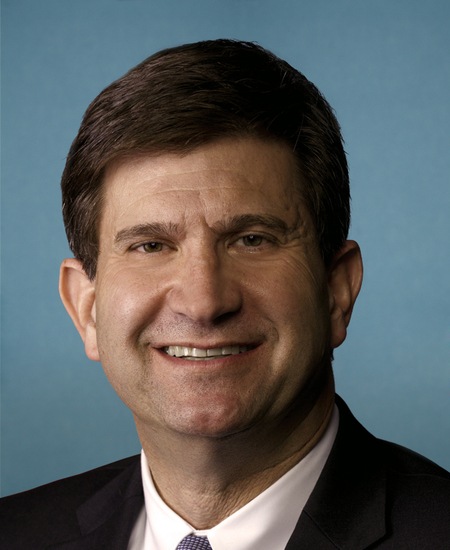
Rep. Bradley Scott Schneider
Sponsored bills
Maddy summaryThe BAD DEAL Act of 2026 repeals Section 338 of the Tariff Act of 1930, which previously allowed the President to impose tariffs on foreign countries that engaged in unfair trade practices. This legislation directly affects importers and businesses by removing the legal authority for these specific duties and invalidating any presidential proclamations issued under that section. The bill requires the President to refund all tariffs or other duties collected before, on, or after the enactment date that resulted from actions taken under the repealed provision.
Maddy summaryThis bill, known as the Presidential Tax Accountability and Audit Integrity Act, prevents the President and their close family members or related business associates from entering into agreements that waive or release federal tax debts while the President is in office. It stops the IRS from honoring any such waivers or orders made during the President's term and requires the agency to publicly report the identities of any taxpayers affected by these instruments within seven days. Additionally, the law ensures that the standard time limits for the government to collect unpaid taxes or sue for collection do not expire until at least three years after the President leaves office. These measures aim to increase transparency and maintain the integrity of the tax system by restricting special treatment for the highest office holder and their connections.
Maddy summaryThis bill designates the U.S. Postal Service facility at 14855 South Van Dyke Road in Plainfield, Illinois, as the "Staff Sergeant Jose Dueñez Jr. Post Office Building." It directly affects the postal facility and all official references to it. The key provision requires that any future law, document, or record referring to the location must use the new name. This is a purely procedural renaming with no funding, policy changes, or impact beyond official nomenclature.
Maddy summaryThis bill names a U.S. Postal Service facility at 1300 East Northwest Highway in Palatine, Illinois, as the "Bernie Bluestein Post Office Building." It updates all official references in federal laws, documents, and records to reflect this new name for the location. The change is purely administrative and affects how the building is identified in government materials. No new policies or funding are involved; it is a ceremonial designation.
Maddy summaryHR 2466 designates the U.S. Postal Service facility at 5225 Harrison Avenue in Rockford, Illinois, as the "Jay P. Larson Post Office Building." The bill updates all federal references - including laws, maps, and official documents - to use this new name for the building. It does not create new policies or affect residents, businesses, or postal services. This is a ceremonial naming bill with no financial or operational changes.
Maddy summaryThe RESCUE Act of 2026 updates how the federal government reimburses ground and air ambulance services by changing the payment schedule and data collection rules. Starting in 2028, the Secretary of Health and Human Services will adjust payment rates every three years based on new data regarding costs, labor, and uncompensated care, while years in between will see payments increase only by the standard inflation rate. The bill also requires air ambulance providers to submit cost information to the government at least once every three years, aligning this process with existing rules for ground ambulance services. Additionally, the law mandates a review by 2029 to gather expert recommendations on whether further changes are needed to ensure ambulance providers are paid appropriately. These changes directly affect ambulance companies and the federal programs that fund emergency medical transport.
Maddy summaryThis bill establishes federal protections and funding to expand access to in vitro fertilization and intrauterine insemination for individuals, military service members, and veterans. It requires most private health plans, Medicaid programs, and Medicare to cover these fertility treatments without imposing higher cost-sharing than other medical services. Additionally, the legislation mandates that the Department of Defense and the Department of Veterans Affairs provide specific fertility preservation and treatment benefits to uniformed service members and eligible veterans. The bill also includes preemption clauses that override state laws restricting these procedures and prohibits discrimination based on marital status, sex, or sexual orientation in the provision of care.
Maddy summaryThis bill reauthorizes and expands the Accelerating Access to Critical Therapies for ALS Act through 2031, extending funding for research into treatments for amyotrophic lateral sclerosis. It requires drug manufacturers to share interim clinical trial data with the FDA to better assess the progress of investigational drugs and clarifies that phase 3 clinical trial definitions include combined phase 2/3 trials and planned trials not yet enrolling participants. The legislation also mandates the FDA to publish an updated five-year action plan for ALS and other rare neurodegenerative diseases, including resource needs and coordination strategies with broader disease communities. Additionally, the bill requires the Government Accountability Office to submit a report on the program's implementation four years after enactment.
Maddy summaryThe HONOR Act prohibits U.S. taxpayers from claiming foreign tax credits for taxes paid to the Russian Federation for a specific period following the law's enactment. This restriction remains in effect until the United States resumes normal trade relations with Russia, at which point standard tariff rates will be restored. The provision explicitly overrides any conflicting international tax treaties to ensure the penalty applies regardless of existing agreements.