

Maddy summaryThis bill, known as the Ratepayer Protection Act, modifies federal energy laws to ensure that large industrial customers pay for the specific infrastructure upgrades needed to serve their high electricity demands. It directly affects non-residential facilities with a peak power usage of 100 megawatts or more, requiring utilities to charge these customers the full incremental cost of any necessary generation, transmission, or distribution improvements. Under the new rules, large customers must also provide financial guarantees or contributions before such upgrades are made, ensuring utilities can recover costs even if the customer leaves the contract early. State regulators have two years to implement these standards, though the bill exempts utilities in states that have already enacted similar measures or are actively considering them.
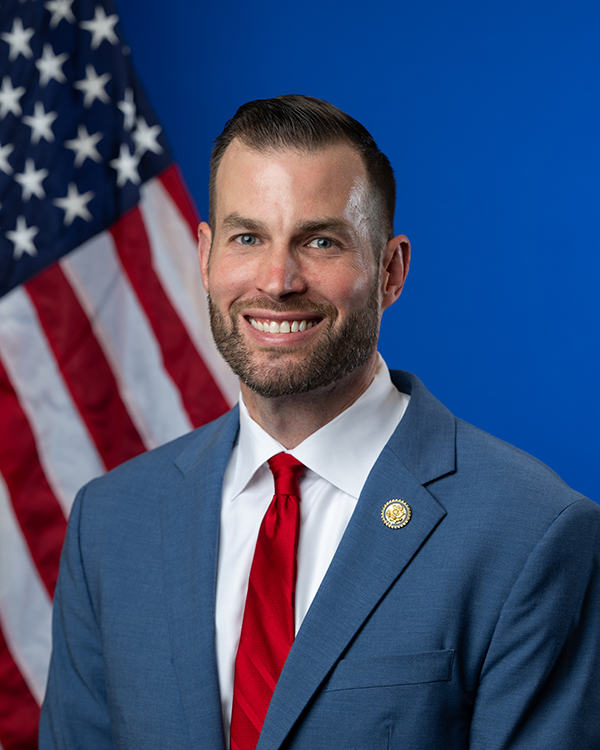
Rep. Clay Fuller
Sponsored bills
Maddy summaryThis House concurrent resolution formally denounces Sharia law and opposes its implementation within the United States. The text argues that Sharia functions as a comprehensive political and legal system that conflicts with the U.S. Constitution, specifically citing differences in criminal justice, gender equality, and individual liberties. It references historical examples of Islamic governance and recent statements by President Trump to support the claim that foreign legal systems incompatible with American values should not be applied domestically. As a concurrent resolution, this measure serves as an official expression of congressional sentiment rather than creating new binding laws or regulations.
Maddy summaryThe NEAUX PROS Act prohibits colleges that receive federal student aid from allowing individuals who hold active professional sports contracts to compete in intercollegiate athletics in the same sport. To enforce this rule, the bill conditions continued eligibility for Title IV federal funding on institutions ensuring they do not permit such dual participation, with violations subject to standard financial aid enforcement actions like suspension or termination of funds. The legislation also creates a new federal criminal offense for athletics officials who knowingly recruit or sign professional athletes, carrying penalties of up to five years in prison, or ten years if the act was done for financial gain or as part of a pattern. Individuals may avoid being classified as professional athletes by rescinding their contracts in writing before receiving any compensation or providing athletic services under those agreements.
Maddy summaryHR 10265 formally authorizes the White House Fellows Program in federal law, establishing a statutory basis for an initiative that has previously operated only under executive order. The bill creates a President's Commission on White House Fellowships, composed of up to 30 nonpartisan members appointed by the President, to oversee the recruitment and selection of 11 to 19 early-career U.S. citizens each year. Selected fellows serve as full-time employees for one year, working alongside senior federal officials and receiving pay consistent with General Schedule rates. The Office of Personnel Management is tasked with providing administrative support, and the Commission must submit annual reports to Congress detailing program activities and expenditures through fiscal year 2031.
Maddy summaryThe American Made Federal Uniforms and Apparel Act of 2026 requires federal agencies to purchase clothing, uniforms, and specific textile products only from sources where all materials are grown, reprocessed, reused, or produced in the United States. This mandate applies broadly to direct purchases, leases, rentals, and items provided through service contracts, while excluding small micro-purchases and items bought for resale in agency gift shops or exchanges. Agencies may bypass these requirements if they determine that domestic products of satisfactory quality and quantity are not available at market prices, or if the procurement is necessary for contingency operations or urgent needs outside the United States. The bill also mandates that the General Services Administration submit annual reports to Congress on compliance and requires the Federal Acquisition Regulatory Council to issue implementing regulations within 180 days of enactment.
Maddy summaryH.Res. 1497 is a House resolution that commemorates the fifth anniversary of the Abbey Gate bombing, in which 13 U.S. servicemembers were killed during the withdrawal from Afghanistan. The bill lists the names of the fallen soldiers and formally condemns the Biden-Harris administration for what it describes as dereliction of duty and the forfeiture of military property to the Taliban. It asserts that the withdrawal was a disastrous failure that ignored security warnings and left Americans at risk, while also criticizing the lack of accountability from officials involved in the decision-making process.
Maddy summaryThe Foreign Propaganda Disclosure Act amends the Foreign Agents Registration Act to explicitly include social media influencers in its regulatory scope. The bill defines a social media influencer as any individual who maintains a monetized account on a social media platform, using an existing definition from the Trafficking Victims Prevention and Protection Reauthorization Act of 2022. By making this addition, the legislation requires these specific digital content creators to comply with the same registration and disclosure obligations currently applied to other foreign agents.
Maddy summaryThis bill, known as the No Leniency for Fentanyl Dealers Act, aims to increase penalties for trafficking fentanyl and other synthetic opioids while enhancing detection efforts by the U.S. Postal Service. It lowers the quantity thresholds required for federal felony charges and mandates that sentencing guidelines be updated to reflect these stricter penalties. Additionally, the legislation directs the Postmaster General to purchase more chemical screening devices and hire scientists to identify illegal drugs in mail shipments, authorizing $9 million in funding to support these interdiction activities.
Maddy summaryThe Stop EU Overreach Act directs the United States Trade Representative to initiate a formal investigation within 30 days of enactment to determine if specific European Union environmental and sustainability regulations unfairly burden American commerce. These targeted measures include rules on corporate sustainability due diligence, reporting, deforestation traceability, and carbon border adjustments that apply to US companies based on their operations or supply chains outside the EU. If the investigation concludes that these foreign practices are unreasonable or discriminatory, the USTR is authorized to take retaliatory actions such as imposing duties on imports from EU member states or suspending trade agreement benefits. The bill includes a sunset provision that terminates its requirements for any specific EU measure once the USTR certifies that the European Union has repealed the rule or entered into a binding agreement to exempt US persons from its extraterritorial obligations.
Maddy summaryThe Tuskegee Airmen Memorial Act of 2026 authorizes the organization Tuskegee Airmen, Inc. to build a commemorative monument on federal land in Washington, D.C., honoring the original Tuskegee Airmen who served in World War II. This legislation allows the group to accept private donations and cover all costs for the project without using federal funds, while requiring any leftover money to be deposited into specific government accounts. The bill also mandates that the memorial be constructed in compliance with existing federal standards for commemorative works.