

Maddy summaryHR 82, the Social Security Fairness Act of 2023, repeals two provisions that reduce Social Security benefits for certain government workers. It eliminates the Government Pension Offset (GPO), which cuts spousal or survivor benefits for people with pensions from jobs not covered by Social Security (like federal or state government roles), and the Windfall Elimination Provision (WEP), which lowers retirement benefits for those with similar pensions. The law takes effect for benefits paid after December 2023, requiring the Social Security Administration to adjust benefit calculations to remove these reductions. This change directly affects public-sector employees who previously had their Social Security benefits reduced due to their government pensions.
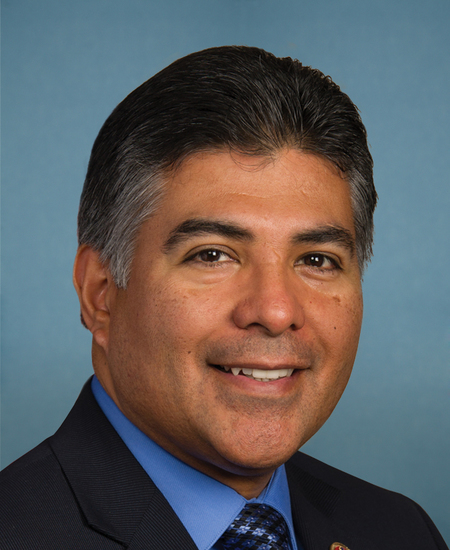
Rep. Tony Cárdenas
Sponsored bills
Maddy summaryThis bill (HR 8641) renames a U.S. Postal Service facility at 401 Main Street in Brawley, California, as the "Walter Francis Ulloa Memorial Post Office Building." It directly affects the postal facility and all federal references to it, changing them to the new name. The bill contains no policy changes or funding provisions - it is solely a commemorative naming resolution honoring Walter Francis Ulloa. The designation became effective upon enactment on January 4, 2025.
Maddy summaryHR 8057 designates the U.S. Postal Service facility at 9317 Bolsa Avenue in Westminster, California, as the "Little Saigon Vietnam War Veterans Memorial Post Office." This bill changes the official name of the post office to honor Vietnam War veterans, specifically recognizing the local Little Saigon community's connection to veterans' service. All federal references to the facility, including laws, maps, and documents, will now use the new name. The bill does not create new funding, services, or policy changes - it solely provides a commemorative designation.
Maddy summaryThis bill designates the U.S. Postal Service facility at 201 East Battles Road in Santa Maria, California, as the "Larry Lavagnino Post Office Building." It updates all official references in federal laws, documents, and records to use this new name for the building. The change affects only the postal facility’s official designation and has no impact on postal operations or services. The bill was enacted on January 4, 2025, following approval by both chambers of Congress.
Maddy summaryThis bill (HR 1555, Public Law 118-211) designates the U.S. Postal Service facility at 2300 Sylvan Avenue in Modesto, California, as the "Corporal Michael D. Anderson Jr. Post Office Building." It directly affects the postal facility and all official references to it, requiring future documents to use the new name. The bill has no policy provisions - its sole purpose is to honor Corporal Michael D. Anderson Jr. through this commemorative naming. It was passed by Congress and signed into law on January 2, 2025.
Maddy summaryThe Treat and Reduce Obesity Act of 2023 expands Medicare coverage for obesity treatment by allowing a wider range of healthcare providers - including nurse practitioners, dietitians, psychologists, and community-based counseling programs - to deliver intensive behavioral therapy for obesity, provided they coordinate with primary care providers. It also adds Medicare Part D coverage for medications used to treat obesity or for weight loss management in overweight individuals with related health conditions like diabetes or high blood pressure. These changes directly affect Medicare beneficiaries, particularly older adults (65+), who face higher obesity rates and associated costs, including $50 billion annually in Medicare spending for obesity-related care. The bill requires annual reports to Congress on implementation to improve coordination of obesity care across federal health programs.
Maddy summaryThis bill creates a 4-year transitional coverage period for Medicare to automatically cover "breakthrough medical devices" - new FDA-prioritized devices approved after March 2021 - as "reasonable and necessary" for treatment. During this period, these devices qualify for additional payments under Medicare's hospital and outpatient payment systems without requiring separate approval. After the 4-year period, Medicare must develop regular coverage based on additional data, with automatic coverage for all approved uses if no action is taken within two years. The bill requires Medicare to assign unique codes for these devices within three months of FDA approval and to update payment systems regularly. It also includes special provisions for "specified breakthrough devices" that lack existing Medicare benefit categories, requiring reports on their impact and cost to Congress.
Maddy summaryThis bill, HR 1097 (Everett Alvarez, Jr. Congressional Gold Medal Act of 2023), authorizes the award of a Congressional Gold Medal to Everett Alvarez, Jr., in recognition of his service as a U.S. Navy pilot and Vietnam War prisoner of war. It directly honors Alvarez, who was the first U.S. pilot shot down in the Vietnam War, spent over 8.5 years in captivity, and later served in the Peace Corps and Veterans Administration. The bill’s key mechanism is directing the U.S. Mint to strike a gold medal bearing his name and image, with bronze duplicates available for sale to cover costs. It does not create new policies or affect any group beyond the honoree.
Maddy summaryThis bill establishes a program to provide grants and rebates for replacing diesel school buses with zero-emission school buses, prioritizing high-need school districts, rural areas, low-income communities, and communities of color. It requires manufacturers to submit "U.S. Jobs Plans" detailing commitments to fair wages, benefits, and hiring from underrepresented groups, and mandates recipients to coordinate with electricity providers for infrastructure. The program authorizes $2 billion annually for 2025-2026 and $3 billion annually for 2027-2032 to fund the transition. Recipients must operate zero-emission buses for at least 5 years and follow manufacturer recommendations for maintenance. The bill also includes requirements for education and outreach to help school districts understand the program and its benefits.
Maddy summaryThe Save Our Sequoias Act establishes a coordinated approach to protect giant sequoia groves in California from wildfires, insects, and drought. It creates a Giant Sequoia Lands Coalition including federal agencies, state governments, and the Tule River Indian Tribe to assess grove health, develop protection projects, and recommend forest management activities. The bill streamlines implementation of certain projects through categorical exclusion from environmental reviews, authorizes $10-40 million annually for conservation efforts, and establishes a fund for philanthropic support of sequoia protection.