

Maddy summaryHR 82, the Social Security Fairness Act of 2023, repeals two provisions that reduce Social Security benefits for certain government workers. It eliminates the Government Pension Offset (GPO), which cuts spousal or survivor benefits for people with pensions from jobs not covered by Social Security (like federal or state government roles), and the Windfall Elimination Provision (WEP), which lowers retirement benefits for those with similar pensions. The law takes effect for benefits paid after December 2023, requiring the Social Security Administration to adjust benefit calculations to remove these reductions. This change directly affects public-sector employees who previously had their Social Security benefits reduced due to their government pensions.
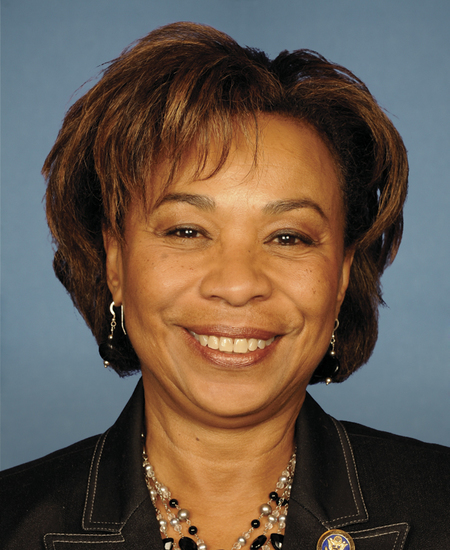
Rep. Barbara Lee
Sponsored bills
Maddy summaryThis bill formally names the Department of Veterans Affairs community-based outpatient clinic in Auburn, California, as the "Louis A. Conter VA Clinic." The legislation honors Lou Conter, a Navy veteran and the last surviving member of the USS Arizona crew at Pearl Harbor, for his decades of military service and post-retirement contributions to veterans' education.
Maddy summaryThis bill (HR 8641) renames a U.S. Postal Service facility at 401 Main Street in Brawley, California, as the "Walter Francis Ulloa Memorial Post Office Building." It directly affects the postal facility and all federal references to it, changing them to the new name. The bill contains no policy changes or funding provisions - it is solely a commemorative naming resolution honoring Walter Francis Ulloa. The designation became effective upon enactment on January 4, 2025.
Maddy summaryHR 8057 designates the U.S. Postal Service facility at 9317 Bolsa Avenue in Westminster, California, as the "Little Saigon Vietnam War Veterans Memorial Post Office." This bill changes the official name of the post office to honor Vietnam War veterans, specifically recognizing the local Little Saigon community's connection to veterans' service. All federal references to the facility, including laws, maps, and documents, will now use the new name. The bill does not create new funding, services, or policy changes - it solely provides a commemorative designation.
Maddy summaryThis bill designates the U.S. Postal Service facility at 201 East Battles Road in Santa Maria, California, as the "Larry Lavagnino Post Office Building." It updates all official references in federal laws, documents, and records to use this new name for the building. The change affects only the postal facility’s official designation and has no impact on postal operations or services. The bill was enacted on January 4, 2025, following approval by both chambers of Congress.
Maddy summaryThe Women’s Suffrage National Monument Location Act (HR 1318) authorizes the placement of a monument on the National Mall to honor the women’s suffrage movement and the 19th Amendment. The bill specifies that the monument must be located within a designated area on the National Mall known as the "Reserve," bypassing standard requirements for monument locations under existing law. This legislation sets the physical site for a monument already authorized by previous law (Public Law 116-217), without creating new policy or altering commemorative regulations beyond the location.
Maddy summaryThis bill (HR 1555, Public Law 118-211) designates the U.S. Postal Service facility at 2300 Sylvan Avenue in Modesto, California, as the "Corporal Michael D. Anderson Jr. Post Office Building." It directly affects the postal facility and all official references to it, requiring future documents to use the new name. The bill has no policy provisions - its sole purpose is to honor Corporal Michael D. Anderson Jr. through this commemorative naming. It was passed by Congress and signed into law on January 2, 2025.
Maddy summaryThe Treat and Reduce Obesity Act of 2023 expands Medicare coverage for obesity treatment by allowing a wider range of healthcare providers - including nurse practitioners, dietitians, psychologists, and community-based counseling programs - to deliver intensive behavioral therapy for obesity, provided they coordinate with primary care providers. It also adds Medicare Part D coverage for medications used to treat obesity or for weight loss management in overweight individuals with related health conditions like diabetes or high blood pressure. These changes directly affect Medicare beneficiaries, particularly older adults (65+), who face higher obesity rates and associated costs, including $50 billion annually in Medicare spending for obesity-related care. The bill requires annual reports to Congress on implementation to improve coordination of obesity care across federal health programs.
Maddy summaryHR 5401, the 9/11 Memorial and Museum Act, provides a one-time federal grant of $5 million to $10 million to the National September 11 Memorial & Museum (operated by the World Trade Center Foundation). The grant funds the museum's operations, security, and maintenance, with specific requirements including free admission for veterans, first responders, and victims' families, dedicated weekly free public hours, and annual financial audits. The museum must also report annually to Congress on how the funds were used. This bill directly affects the museum's financial operations and access policies, not broader legislative changes.
Maddy summaryHRES 1617 is a non-binding resolution expressing the House of Representatives' view that the federal government should dramatically expand and strengthen the care economy. It calls for federal investments to address systemic gaps in care infrastructure, including universal access to affordable childcare, elder care, paid family leave, and mental health services, while prioritizing higher wages and union protections for care workers - particularly women of color and immigrants. The resolution emphasizes repairing historical inequities rooted in exclusion from labor protections and connecting care infrastructure to broader goals like climate justice and economic equity. It does not create new law but urges future legislation to adopt these principles as a foundation for policy. The resolution directly affects millions of care workers, families relying on care services, and communities facing systemic barriers to care access.