

Maddy summaryHR 82, the Social Security Fairness Act of 2023, repeals two provisions that reduce Social Security benefits for certain government workers. It eliminates the Government Pension Offset (GPO), which cuts spousal or survivor benefits for people with pensions from jobs not covered by Social Security (like federal or state government roles), and the Windfall Elimination Provision (WEP), which lowers retirement benefits for those with similar pensions. The law takes effect for benefits paid after December 2023, requiring the Social Security Administration to adjust benefit calculations to remove these reductions. This change directly affects public-sector employees who previously had their Social Security benefits reduced due to their government pensions.
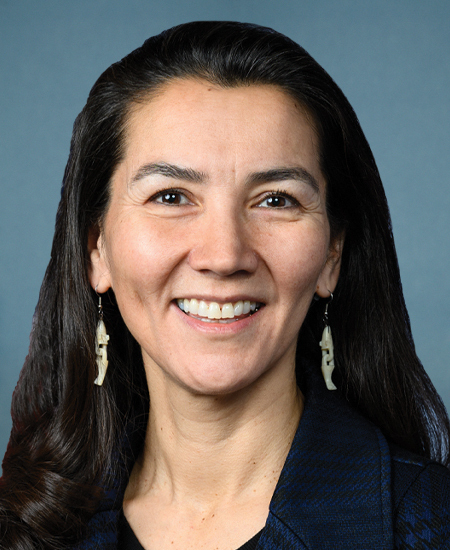
Rep. Mary Sattler Peltola
Sponsored bills
Maddy summary# Summary of the EXPLORE Act Legislative Text This is a comprehensive legislative text (likely the "EXPLORE Act" - Enhancing Recreation Opportunities for People of All Abilities, and Veterans) that establishes several key initiatives to improve outdoor recreation access across Federal lands. ## Key Focus Areas: ### 1. Accessibility for People with Disabilities (Title II - Access America) - Requires comprehensive assessments of outdoor recreation facilities on Federal lands within 5 years - Mandates development of 3 new accessible trails per region for each agency (Forest Service, National Park Service, BLM, USFWS) within 1 year - Requires development of 2 new accessible recreation opportunities per region within 1 year - Requires making accessibility information available on public websites within 7 years - Requires development of accessible features including trail bridges, parking, and restrooms ### 2. Military and Veterans Programs - Requires educational materials for military members/veterans on accessing Federal lands free of charge within 2 years - Establishes Military Veterans Outdoor Recreation Liaisons within relevant agencies within 1 year - Requires a National Strategy for Military and Veteran Recreation within 1 year - Creates a pilot program for veteran employment in conservation positions - Promotes partnerships with organizations providing outdoor recreation for veterans ### 3. Youth Access - Requires a strategy to increase youth recreation visits to Federal lands within 2 years - Extends the "Every Kid Outdoors" program until September 30, 2031 - Focuses on increasing opportunities for underserved youth ### 4. Recreation Permitting Modernization (Title III) - Defines special recreation permits and establishes fee structures - Creates categories for different types of recreation permits - Establishes a process for application and review of permits - Includes provisions for multijurisdictional trips across different Federal lands The legislation aims to improve access to outdoor recreation for people with disabilities, veterans, and youth while modernizing the permitting process for recreational activities on Federal lands. It requires specific timelines for implementation and includes detailed definitions and requirements for each component of the bill.
Maddy summaryThe FISHES Act (HR 5103) streamlines access to emergency disaster funds for fisheries by setting strict deadlines for federal review. It requires the Secretary of Commerce to review and provide notice on spend plans within 10 days of submission and mandates that funds be made available to grantees no later than 90 days after a complete spend plan is received. This directly affects fisheries that have received a formal "fishery resource disaster" determination, ensuring faster disbursement of funds for recovery efforts. The bill also prohibits the Office of Management and Budget from delaying these timelines during concurrent review. The law aims to reduce bureaucratic delays in post-disaster funding without altering the underlying disaster assistance program.
Maddy summaryThe Autism CARES Act of 2024 reauthorizes and enhances federal programs supporting individuals with autism spectrum disorder. It requires the National Institutes of Health to expand research to include more fields like gerontology and psychiatry, and to ensure research reflects the full range of needs of people with autism, including those with co-occurring conditions. The bill mandates regular reports to Congress on progress, mental health needs, and transition services for young adults with autism, while increasing funding for autism-related programs from fiscal year 2025 through 2029. This legislation directly affects individuals with autism, their families, caregivers, and healthcare providers by improving access to evidence-based services and research.
Maddy summaryThis bill, HR 1097 (Everett Alvarez, Jr. Congressional Gold Medal Act of 2023), authorizes the award of a Congressional Gold Medal to Everett Alvarez, Jr., in recognition of his service as a U.S. Navy pilot and Vietnam War prisoner of war. It directly honors Alvarez, who was the first U.S. pilot shot down in the Vietnam War, spent over 8.5 years in captivity, and later served in the Peace Corps and Veterans Administration. The bill’s key mechanism is directing the U.S. Mint to strike a gold medal bearing his name and image, with bronze duplicates available for sale to cover costs. It does not create new policies or affect any group beyond the honoree.
Maddy summaryHR 663, the Native American Child Protection Act, amends the Indian Child Protection and Family Violence Prevention Act to strengthen child protection systems for Native American children. It expands definitions of child abuse to include serious physical injuries (like fractures or burns) and sexual exploitation, and requires culturally appropriate services in grant programs. The bill creates a National Indian Child Resource and Family Services Center, mandates reports on grant usage, and allows tribes, urban Indian organizations, and intertribal consortia to partner in prevention and treatment. These changes directly affect tribal governments, child welfare agencies, and families in tribal communities by improving response systems for child abuse and neglect.
Maddy summaryHR 8784, the FREE Act, requires federal agencies to replace slow, discretionary permitting systems with a streamlined "permit by rule" process. Applicants would certify compliance with written requirements, and permits would automatically be approved within 30 days unless the agency proves non-compliance. Agencies must first report on all current permits and identify which could switch to this system, with a deadline of 240 days after enactment. This directly affects federal agencies managing permits and applicants seeking permits, aiming to reduce delays while maintaining enforcement for violations through audits and appeals.
Maddy summaryHR 8505, the Household Goods Shipping Consumer Protection Act, requires household goods motor carriers, brokers, and freight forwarders to designate a "principal place of business" and disclose recent ownership relationships during registration. It gives states the option to use federal grant funds to enforce federal household goods shipping regulations for both interstate and intrastate transport, if state laws align with federal rules. The bill also ensures states retain fines and penalties collected from shipping companies for violations, rather than forwarding them to the federal government. These changes aim to improve regulatory oversight and accountability in the household goods shipping industry.
Maddy summaryThe Promoting Accessibility on Federal Lands Act of 2024 requires the Secretaries of Agriculture and the Interior to conduct a comprehensive assessment of accessibility for individuals with disabilities at federal trails, campsites, boat docks, and outdoor recreation facilities on National Forest System lands and public lands. Within 180 days of receiving funding, these assessments must be completed and made publicly available on the Department of Agriculture and Department of the Interior websites. Existing accessibility evaluations conducted before the bill's enactment may be incorporated into the required assessment. This legislation establishes a standardized process to document current accessibility conditions without mandating immediate facility modifications.
Maddy summaryThis bill (HR 7516) updates the Indian Health Care Improvement Act to clarify and improve reimbursement for Native American patients who pay out-of-pocket for authorized "purchased/referred care" services through the Indian Health Service (IHS). It requires the IHS to establish procedures within 120 days to reimburse patients within 30 days of receiving documentation (electronically or in-person) for such care. The bill replaces outdated terms like "contract health care" with "purchased/referred care" throughout the law and clarifies that the IHS is not liable to debt collectors for these payments. It directly affects Native American patients who receive IHS-authorized care outside of regular IHS facilities.