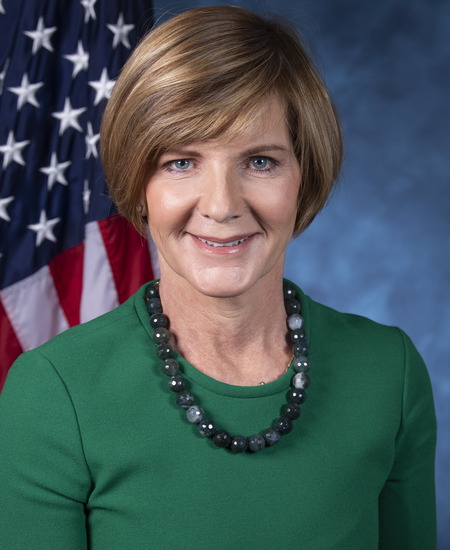
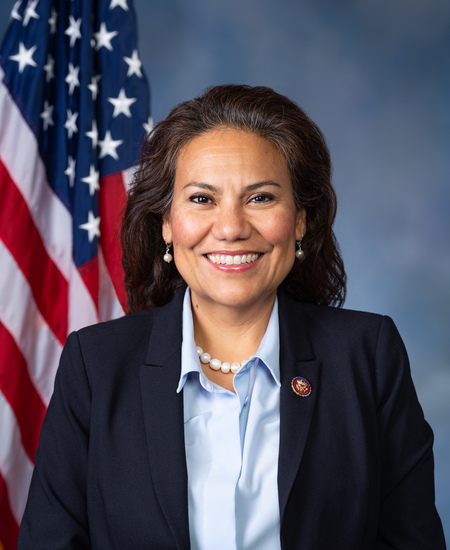
The VISITOR Act authorizes the Department of State to use collected passport and visa fees to fund general consular services, including the protection of U.S. citizens overseas. By allowing these funds to be transferred between specific accounts, the bill aims to provide more resources for processing applications and supporting diplomatic operations. A key provision sets a goal for the Secretary of State to ensure that 80 percent of nonimmigrant visa applicants are interviewed within three weeks of applying. This timeline target includes exceptions for cases where security concerns or the need to assist U.S. citizens abroad require different handling.
National Security, Department of State, and Related Programs Appropriations Act, 2027 This bill provides FY2027 appropriations for national security, the Department of State, and related programs. The bill provides appropriations to the State Department for Administration of Foreign Affairs, International Organizations, and International Commissions. The bill provides appropriations for related programs, including the Asia Foundation, the Center for Middle Eastern-Western Dialogue Trust Fund, the Eisenhower Exchange Fellowship Program, the Israeli Arab Scholarship Program, the East-West Center, and the National Endowment for Democracy. The bill provides appropriations for other commissions, including the Commission for the Preservation of America's Heritage Abroad, the U.S. Commission on International Religious Freedom, the Commission on Security and Cooperation in Europe, the Congressional-Executive Commission on the People's Republic of China, and the U.S.-China Economic and Security Review Commission. The bill provides appropriations to the House Democracy Partnership, the Offices of Inspector General, the State Department and the President for International Security Assistance, and International Financial Institutions for Multilateral Assistance. The bill provides appropriations for bilateral economic assistance, including programs and activities conducted by the President; Independent Agencies, including the Peace Corps, the Millennium Challenge Corporation, and the U.S. Foundation for Natural Security and Counterterrorism, the Department of the Treasury. The bill provides appropriations for export and investment assistance to the Export-Import Bank of the United States, the U.S. International Development Finance Corporation, and the U.S. Trade and Development Agency. The bill sets forth requirements and restrictions for using funds provided by this and other appropriations acts.
The Delivering Priority Legislation Act is a comprehensive bill that amends several existing federal laws to address a wide range of policy areas, including small business innovation, outdoor education, nuclear security, family leave, housing, and national security. It extends funding for small business research programs, reauthorizes the Every Kid Outdoors initiative, and establishes a new National Nuclear Forensics Center to combat nuclear terrorism. The legislation also modifies the Family and Medical Leave Act to allow more flexible leave schedules, creates a tax credit for purchasing hearing aids, and requires an intelligence report on artificial intelligence systems developed in China. Additionally, it adds a criminal penalty for using corporations to hide election contributions from foreign nationals and provides specific funding for various government agencies.
The Stop CHEATERS Act directs the Internal Revenue Service to increase its enforcement efforts against high-income individuals and large corporations by allocating billions of dollars in additional funding for tax audits, criminal investigations, and taxpayer services through fiscal year 2031. A significant portion of this funding is designated for modernizing the IRS's technology and business systems to improve its ability to detect fraud and noncompliance. The legislation also requires the IRS Commissioner to submit regular reports to Congress detailing plans to shift auditing resources toward wealthy taxpayers and analyzing how much unpaid tax is owed by different income groups.
The Water Access Act appropriates $500 million for fiscal year 2027 to the Department of Health and Human Services. These funds are designated to support the Low-Income Household Water Assistance Program, which helps households with limited income pay for their water bills. The legislation directly affects low-income families by providing financial resources to ensure they can afford essential water services. This bill does not create new programs but rather allocates existing funding to continue assistance for eligible households.