HR 8312 United States House · 119th Congress

Fraud Prevention and Accountability Act

The Fraud Prevention and Accountability Act creates a new Office of the Inspector General for Fraud, Accountability, and Recovery within the Department of the Treasury to oversee federal spending and prevent fraud. This new office will have authority to conduct audits and investigations across multiple federal programs, including pandemic relief funds, and will coordinate with other agencies to share data and identify fraudulent activity. The bill also requires federal agencies to screen potential payees against a centralized fraud database and mandates that the Treasury establish a governmentwide data analysis program to detect improper payments. Additionally, the act transfers assets and personnel from the Pandemic Response Accountability Committee to the new office and requires annual reporting to Congress on fraud prevention efforts.
Bill status passed 3 of 5 stages cleared
Introduction
Apr 2026
Committee Review
Jun 2026
House Passage
Jun 2026
Senate Passage
President
Introduced Apr 15, 2026 Last action Jun 11, 2026
Maddy AI version diff · 1 comparison

What changed between versions

Introduced in House Engrossed in House · 9 edits · Jun 10, 2026
MAJOR
The engrossed version significantly narrows the scope of the governmentwide data analysis program from a mandatory requirement to a voluntary one, limits data sharing to confirmed fraud findings (rather than suspected), restricts the program's purpose to fraud detection and improper payment prevention (explicitly excluding policy analysis and enforcement), and removes mandatory screening requirements in favor of voluntary, feasibility-based approaches. These changes substantially reduce the government's ability to proactively detect and prevent fraud across federal programs.
SCOPE

The governmentwide data analysis program was changed from a mandatory program to a 'voluntary governmentwide data analysis program in accordance with applicable law,' fundamentally reducing its reach and enforceability.

A new purpose limitation was added: the program may be used 'for no other purpose including any policy analysis and enforcement action purpose,' explicitly restricting how the data can be used beyond fraud detection and improper payment prevention.

The Inspector General website provision now includes findings from 'financial managers' in addition to agency Inspectors General and State auditors, broadening the sources of oversight information displayed publicly.

ELIGIBILITY

The entities covered were narrowed from 'Federal agencies, States (with respect to any federally funded State-administered programs), and any nongovernmental entity administering or disbursing Federal funds' to 'Federal agencies and any State...and local government responsible for the administration of a federally funded program or the disbursement of Federal funds,' removing nongovernmental entities entirely.

REQUIREMENT

Data sharing was narrowed from requiring agencies to share data on 'known or suspected fraudulent entities and transactions (resulting from internal agency fraud prevention or detection investigations)' to only sharing 'known fraudulent entities and transactions resulting from final adverse action determinations, payment denials, referrals for criminal investigation, or equivalent findings.' This excludes suspected fraud and requires a formal determination before data can be shared.

Mandatory screening requirements were removed. Screening of awardees and payees is now 'as feasible and in accordance with individual program requirements' rather than required prior to every award or payment. Cyber activity screening changed from 'prior to allowing changes' to simply 'to review' changes.

DEFINITION

The emphasis in data standards was reversed: changed from 'fraudulent payment data, to include improper payments' to 'data related to improper payments, to include fraudulent payments,' broadening the category while making fraud a subset rather than the primary focus.

ENFORCEMENT

Inspector General access to Fiscal Service data was changed from a conditional provision (access unless the Secretary determines it is not appropriate and notifies Congress) to simply 'in accordance with applicable law,' removing the specific congressional notification requirement.

TECHNICAL

In the data sharing authority section, the language for private sector engagement was changed from 'memoranda of understanding...and private entities' to 'memoranda of understanding...and agreements with private entities,' distinguishing the legal instrument used for private sector data access.
Floor votes · House Jun 10, 2026

How they voted

240181
Passed · 10 other
Total votes 431
Jun 10, 2026
D Democratic212
28 Yea 181 Nay 3
85% Nay
I Independent1
1 Yea
100% Yea
R Republican218
211 Yea 7
96% Yea
Vote distribution
All Yea All Nay Mixed No data
Full legislative history

Actions timeline

Total actions
17
Key actions
5
Committee
4
Amendments
1
Jun 10, 2026
Lower · Passed
On passage Passed by the Yeas and Nays: 240 - 181 (Roll no. 218). (text of amendment in the nature of a substitute: CR H4065-4069)
lower
Jun 10, 2026
Lower · Passed
Passed/agreed to in House: On passage Passed by the Yeas and Nays: 240 - 181 (Roll no. 218). (text of amendment in the nature of a substitute: CR H4065-4069)
lower
Jun 8, 2026
Lower · Passed
Rules Committee Resolution H. Res. 1345 Reported to House. Rule provides for consideration of H.R. 8312, H.R. 8464, H. Res. 1335 and S. 2. The resolution provides for consideration of H.R. 8312, H.R. 8464, H. Res. 1335, and S. 2 under a closed rule with one hour of general debate on each measure. The resolution provides for a motion to recommit H.R. 8312 and H.R. 8464 and a motion to commit S. 2.
lower
Jun 3, 2026
Lower · Passed
Reported (Amended) by the Committee on Oversight and Government Reform. H. Rept. 119-683.
lower
Apr 29, 2026
Introduced
Ordered to be Reported (Amended) by the Yeas and Nays: 23 - 17.
lower
Apr 29, 2026
Lower · Passed
Committee Consideration and Mark-up Session Held
lower
Apr 15, 2026
Committee
Referred to the House Committee on Oversight and Government Reform.
lower
Apr 15, 2026
Introduced
Introduced in House
lower
1 primary · 1 co-sponsor

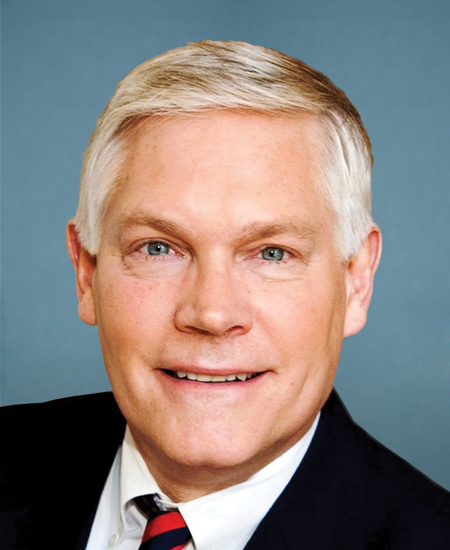
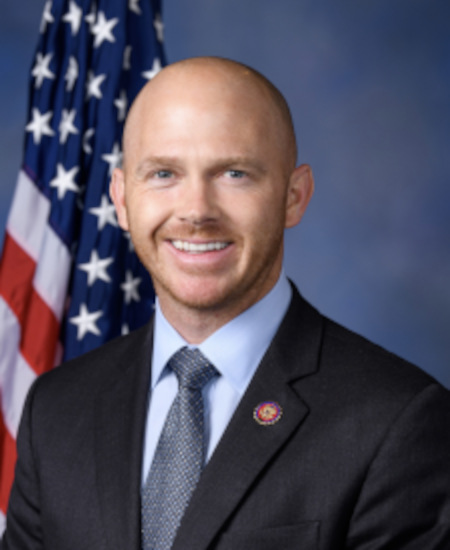
Sponsors