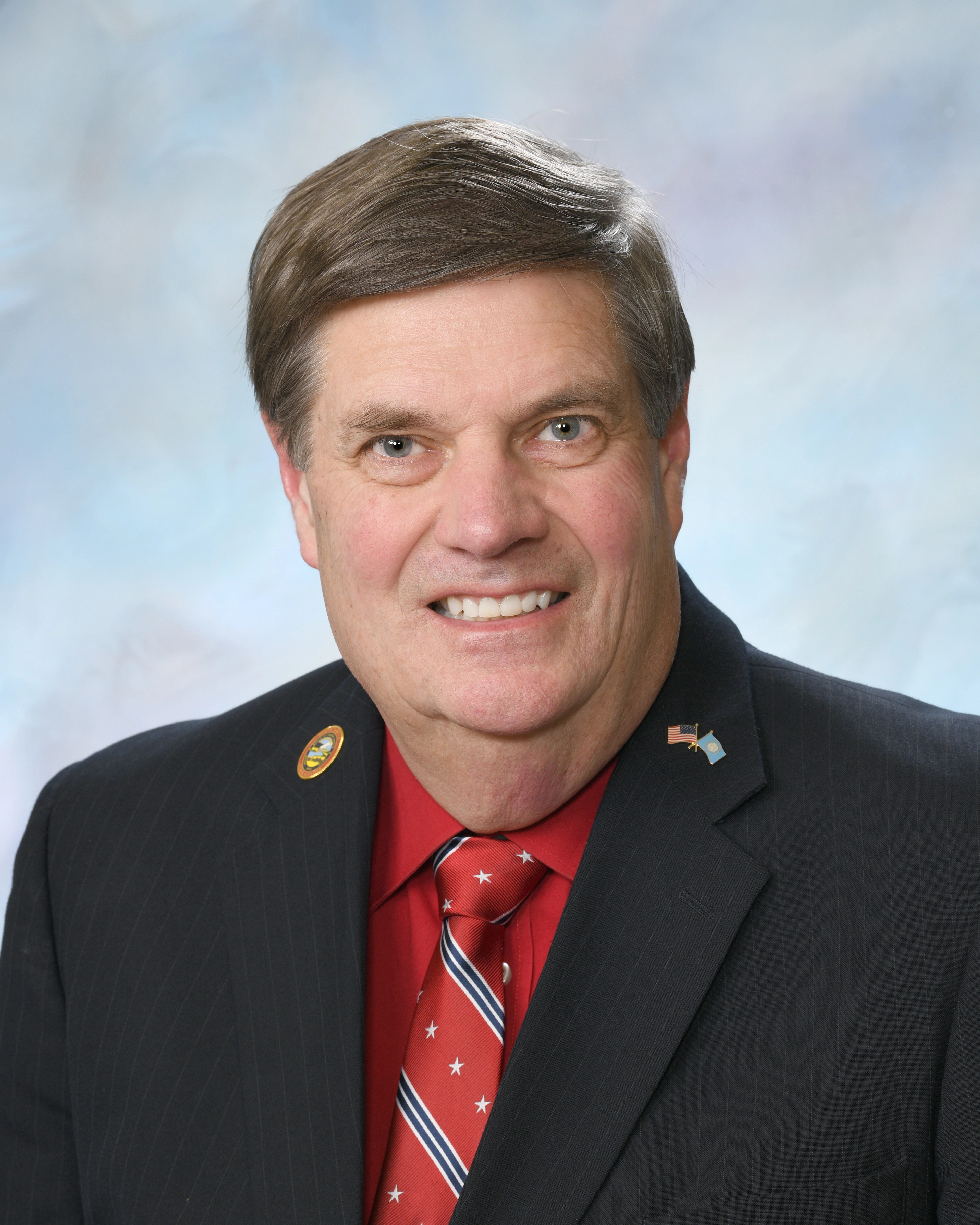
Photo of Glen Vilhauer
R South Dakota Senate · District 5 On the 2026 ballot

Sen. Glen Vilhauer

Compare
Total votes
721
all sessions
Attendance
100%
of floor votes
Higher than 81% of chamber peers
With party
87%
of cast votes
Near the chamber average
Bipartisan score
8%
crosses aisle rarely
Near the chamber average
Sponsored
64
bills & resolutions
Near the chamber average
Committees
5
assignments
64 bills and resolutions

Sponsored bills

Total
64
Primary
64
Co-sponsor
0
This page
64
matching current filters
Primary SB 89
Signed into law · South Dakota Senate · Lead sponsor
create a task force to study the provision of emergency medical services as an essential service and the funding thereof.

Maddy summarySB 89 requires all South Dakota counties and municipalities to ensure a minimum level of emergency medical services (including response times, staffing, and treatment protocols) are available within their boundaries for prehospital care. It directs the state health department to create rules defining these minimum standards, covering aspects like ambulance response and required personnel. The bill also establishes a legislative task force to study funding mechanisms for these services and report recommendations by November 2026. The law would take effect on July 1, 2028, impacting local governments responsible for emergency medical service provision.

Signed into law Mar 30, 2026 0 co-sponsors
Primary SB 132
Signed into law · South Dakota Senate · Lead sponsor
modify provisions related to the South Dakota Veterans Council.

Maddy summarySB 132 amends South Dakota law (§ 1-46A-5) to clarify the composition and consultation process of the South Dakota Veterans Council. The bill specifies that the Council must include one representative each from eight designated veterans organizations, such as the American Legion, Disabled American Veterans, and Veterans of Foreign Wars, plus a representative from Vietnam Veterans of America chapters 1054 and 959. It requires the Department of Veterans Affairs to consult with the Council quarterly on veteran-related matters and mandates the Council provide recommendations on budgets, legislation, policies, and programs affecting veterans and their dependents. This bill directly affects the Council's membership structure and its formal role in advising state veterans' affairs.

Signed into law Mar 30, 2026 0 co-sponsors
Primary HB 1161
Signed into law · South Dakota House · Lead sponsor
amend provisions related to changing rooms, sleeping quarters, and restrooms.

Maddy summaryHB 1161 defines "female" and "male" based on biological reproductive systems and requires state-owned or leased facilities (like schools, government buildings, and public spaces) to designate multi-occupancy changing rooms, restrooms, and sleeping quarters for exclusive use by males or females. The bill specifies that exceptions apply for children under 10 with parents, individuals assisting those with disabilities, emergency personnel, and certain maintenance staff. It also clarifies that gender-specific designations do not apply to rooms used by firefighters, law enforcement, or performers in their professional capacity. The law directly affects public facilities operated by the state or its subdivisions.

Signed into law Mar 30, 2026 0 co-sponsors
Primary HB 1200
Signed into law · South Dakota House · Lead sponsor
make an appropriation for victim services provided by nonprofit organizations.

Maddy summaryHB 1200 appropriates $8 million from South Dakota's general fund to the Department of Public Safety for grants to nonprofit organizations providing specific victim services. It directly supports nonprofits focused on helping children abused or neglected, domestic violence victims, sexual assault victims, or victims of commercial sexual exploitation/trafficking. The bill allows grant funds to cover 24/7 emergency services, counseling, crisis lines, case management, sexual assault nurse examiner training, and child advocacy center services - excluding new programs or legal aid. Nonprofits must apply annually between July 1 and August 31, report on services delivered, and prioritize organizations seeking additional funding. The appropriation becomes effective June 30, 2026.

Signed into law Mar 30, 2026 0 co-sponsors
Primary HB 1082
Signed into law · South Dakota House · Lead sponsor
establish parameters for the reimbursement of school districts that provide free or reduced-price meals to students.

Maddy summaryHB 1082 requires South Dakota school districts to provide free or reduced-price meals to eligible students without charging them, as defined by federal programs (National School Lunch Program and School Breakfast Program) starting January 1, 2026. The bill mandates that the South Dakota Department of Education reimburse school districts for costs incurred on these meals, after subtracting any federal reimbursement received. This directly affects school districts serving students qualifying for federal meal programs and ensures state funding covers the gap between federal support and actual meal costs. The law amends Section 13-35-2 of South Dakota law to clarify these reimbursement parameters.

Signed into law Mar 30, 2026 0 co-sponsors
Primary SB 240
Signed into law · South Dakota Senate · Lead sponsor
make an appropriation for county rural access infrastructure and to declare an emergency.

Maddy summarySB 240 appropriates $5 million from South Dakota's general fund to create a rural access infrastructure fund, directly affecting all counties by providing funding for infrastructure improvements on township and county secondary roads. Funds are distributed to counties based on their proportion of small structures (like bridges or culverts) on these roads relative to the statewide total, calculated using data reported to the Department of Transportation. The bill requires the Department of Revenue to distribute no more than one-third of the funds annually across fiscal years 2026-2028, with unspent funds reverting by June 2031. It declares an emergency to expedite implementation, focusing solely on the concrete funding mechanism and distribution rules without advocating for outcomes.

Signed into law Mar 12, 2026 0 co-sponsors
Primary SB 60
Signed into law · South Dakota Senate · Lead sponsor
restrict ownership of real property interests by certain prohibited entities and to provide for enforcement.

Maddy summarySouth Dakota's SB 60 restricts ownership of land within 10 miles of military bases by entities designated as "prohibited" under state law. It requires these entities to sell any existing property in the "restricted zone" within two years (or three years if inherited) and bans new ownership or control of such property. The law mandates that property buyers sign an affidavit confirming compliance, and the Attorney General can enforce violations through court actions to forfeit non-compliant property. This bill directly affects property owners and investors near military installations, with enforcement focused on compliance rather than new regulations.

Signed into law Mar 12, 2026 0 co-sponsors
Primary SB 130
Signed into law · South Dakota Senate · Lead sponsor
make an appropriation for roadway and related infrastructure improvements required because of construction activity at Ellsworth Air Force Base and to declare an emergency.

Maddy summarySB 130 appropriates $8 million from South Dakota's general fund to the South Dakota Ellsworth Development Authority. The funds must cover public roadway and infrastructure improvements directly needed due to construction at Ellsworth Air Force Base, including road reconstruction, safety upgrades, and traffic studies. The authority must report annually on how funds were used and cannot spend more than 3% of the appropriation on administrative costs. This bill specifically affects infrastructure supporting Ellsworth Air Force Base operations and surrounding public roads.

Signed into law Mar 12, 2026 0 co-sponsors
Primary SB 98
Signed into law · South Dakota Senate · Lead sponsor
prevent virtual currency kiosk fraud.

Maddy summarySB 98 requires operators of virtual currency kiosks in South Dakota to obtain a license under existing financial regulations (Chapter 51A-17). It mandates detailed reporting to the state, including transaction volumes, user complaints, refund requests, and suspicious activity. The bill also requires kiosk operators to provide users with receipts containing transaction details, exchange rates, virtual currency addresses, and refund policies. These provisions directly affect kiosk operators (licensees) and users engaging in virtual currency transactions at these locations. The law aims to increase transparency and accountability in virtual currency kiosk operations.

Signed into law Mar 12, 2026 0 co-sponsors
Primary HB 1092
Signed into law · South Dakota House · Lead sponsor
update provisions pertaining to open records.

Maddy summaryHB 1092 updates South Dakota's open records law by clarifying which government records can be kept private. It exempts specific categories, including student personal information (except directory details), medical records (excluding birth/death records), trade secrets, attorney work product, law enforcement investigation details, property appraisal records, and security plans for buildings or critical infrastructure. The bill explicitly states it does not change existing laws regarding birth/death records or certain law enforcement privileges. This affects public entities like schools, hospitals, police departments, and government agencies that handle these exempt records.

Signed into law Mar 12, 2026 0 co-sponsors
Showing 1 to 10 of 64 bills
1 2 3 7 Next