Maddy summarySB 206 amends Oklahoma law to classify emergency medical services (EMS) provided by public entities - such as municipal, county, or district ambulance services - as "essential services" **solely for eligibility for federal funding**. This change directly affects public EMS providers seeking federal grants, ensuring they meet the federal definition of "essential services" under current funding criteria. The bill does not alter EMS operations or create new requirements but adjusts the legal classification to align with federal funding rules. It was introduced as an emergency measure to take immediate effect upon approval.

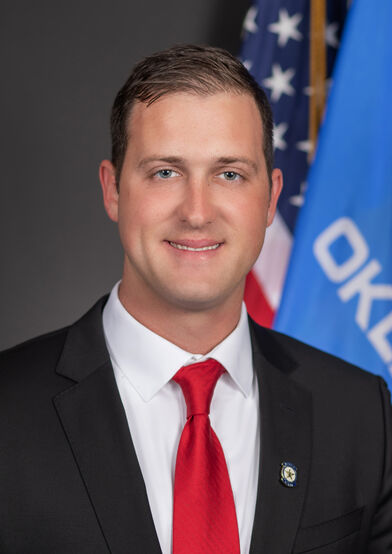
Sen. Tom Woods
Sponsored bills
Maddy summaryHB 2961 waives tuition and fees for spouses and children of Gold Star veterans (those killed in U.S. military service) at Oklahoma's public higher education institutions and career technology schools. It expands existing tuition waivers - previously limited to children of fallen peace officers, firefighters, and law enforcement retirees - to include Gold Star families who meet residency requirements (Oklahoma resident at death or during enrollment). The waiver covers all tuition and fees for up to five years and applies to both the Oklahoma State System of Higher Education and career technology districts. This bill modifies Sections 3218.7-1, 14-134, and 14-134.1 of Oklahoma Statutes, effective July 1, 2026.
Maddy summaryHB 3413 requires Oklahoma state agencies to submit detailed annual budget requests by October 1 each year, including specific data on program needs, contractor details, and consultant reports. Agencies must publicly post final consultant reports on the state purchasing website and provide information on shared financial services costs to identify potential savings. The bill mandates standardized reporting formats covering program outcomes, staffing, revenue estimates, and capital lease debt for the current and next two fiscal years. It directly affects all state agencies (excluding higher education institutions) by increasing transparency in budget planning and spending oversight. The law takes effect November 1, 2026.
Maddy summaryHB 3466 removes a specific petty cash fund for the Corporation Commission's legal division, which previously allowed up to $500 for court costs and legal expenses. The bill directly affects the Corporation Commission by eliminating this fund, while leaving all other agency petty cash funds (like those for hospitals, juvenile centers, or the Health Department) unchanged. The key provision deletes Section 1.C from the existing law, which created and limited the Commission's petty cash fund. The change takes effect November 1, 2026. This is a procedural adjustment with no new policy or funding changes beyond removing this single fund.
Maddy summaryHB 3977 amends Oklahoma's law for the State Veterinarian position, requiring the appointee to hold a current Oklahoma veterinary license, have food animal practice experience, and be appointed by the State Board of Agriculture. This bill directly affects the State Veterinarian role by setting specific qualifications for future appointees. The key provisions replace previous requirements with these new standards, effective November 1, 2026. The bill focuses solely on personnel qualifications, not on new veterinary regulations or public health policies.
Maddy summaryHB 3257 requires Oklahoma state benefits for 100% disabled veterans to align with federal qualification standards under 38 U.S.C. § 1151. This means state benefits must meet the same eligibility criteria used by the federal government for fully disabled veterans. The bill directly affects Oklahoma veterans who receive state-level benefits and ensures consistency with federal rules. It takes effect on November 1, 2026, and codifies this requirement in Oklahoma Statutes. The bill does not change benefit amounts or create new benefits - it standardizes existing state practices to match federal qualifications.
Maddy summaryHB 2947 adds a new provider code in Oklahoma Medicaid for master's and doctoral-level behavioral health clinical interns. These interns - graduate students in nationally accredited programs - can provide services under the direct supervision of licensed behavioral health providers (like LPCs or LCSWs) while following all Medicaid documentation and training requirements. The bill directly affects interns seeking practical experience and licensed supervisors who will oversee their Medicaid-covered services. It expands Medicaid access to behavioral health care by formalizing intern participation in the state's Medicaid plan.
Maddy summaryHB 3648 amends Oklahoma's Governmental Tort Claims Act by clarifying key definitions, primarily expanding who qualifies as a "government employee" for liability purposes. It specifically adds new categories like "charitable health care provider" and "community health care provider" (including federally qualified health centers), while detailing that certain medical professionals - such as physicians in administrative roles at state universities, mental health staff under contract with state agencies, and those treating inmates - count as state employees under the Act. These changes directly affect healthcare providers and state entities by determining which actions may trigger tort claims against the government. The bill makes no new policy provisions but refines existing legal definitions to clarify liability boundaries.
Maddy summaryHB 3056 modifies Oklahoma's Milk and Milk Products Act to allow incidental sales of raw, unpasteurized milk (from cows, goats, sheep, donkeys, or horses) directly to consumers at farms, feed stores, restaurants, farmer's markets, or via farm delivery. It also permits advertising these sales and lets farmers make cheese using milk from their own farm. The bill defines "incidental sales" for goat milk as not exceeding 100 gallons per month on average. This directly affects small-scale dairy farmers and consumers who purchase raw milk directly, effective November 1, 2026.
Maddy summaryHB 3041 prohibits most businesses in Oklahoma from charging customers extra fees (surcharges) for using credit cards, except when the surcharge is capped at 2% of the transaction or the actual processing fee, whichever is lower. Businesses may still offer discounts for cash, check, or debit card payments. The bill requires clear display of any permitted surcharge at entry points and online, and allows money transmitters (like payment processors) to charge different prices based on payment method without violating the rule. It directly affects retailers, service providers, and online sellers operating in Oklahoma who accept credit card payments.