Maddy summaryHB 96 creates a new process for property owners or their authorized representatives to quickly remove "unauthorized persons" (those occupying residential property without legal right, no rental agreement, and no rent paid) from their homes. To use this process, the property owner must complete a sworn affidavit at the courthouse ($25 fee) proving all legal conditions are met, then provide it to local law enforcement. Law enforcement must remove the person within 24 hours of receiving the affidavit. This applies only to residential property and excludes tenants who stayed past their lease term. The bill directly affects property owners, law enforcement agencies, and individuals occupying property without legal authorization.

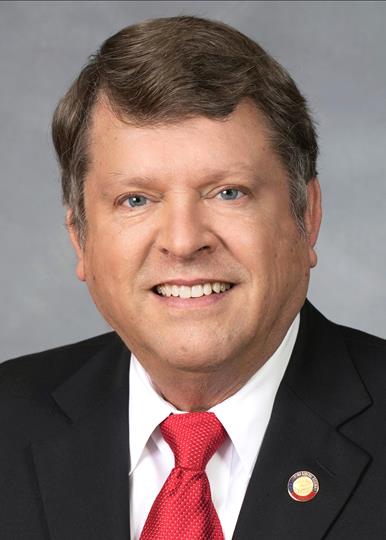
Rep. Larry Strickland
Sponsored bills
Maddy summaryHB 1200, known as the Tax-Free Family Essentials Act, removes the state sales tax on specific items including diapers, baby wipes, over-the-counter children's medication, prenatal vitamins, and feminine hygiene products. The bill directly affects families purchasing these goods by exempting them from the tax, while also clarifying the legal definitions of these items to ensure consistent application. These tax exemptions will take effect on October 1, 2026, and apply to all sales occurring on or after that date.
Maddy summaryHB 34 creates a new criminal offense for stealing or misusing someone else's mail, directly affecting individuals who unlawfully take, control, or transfer mail intended for others. The bill defines "mail" broadly to include letters, packages, or valuable items sent to another person and prohibits two specific actions: stealing mail to deprive the owner, or transferring mail to benefit someone not entitled to it. Punishments range from a Class A1 misdemeanor for first-time, low-value thefts (under $200) to a Class D felony for repeat offenses or high-value thefts (over $2,000). This law, effective December 1, 2025, applies to offenses committed after that date.
Maddy summaryThis House Resolution honors the life and memory of James Michael "Mike" Clampitt, a former member of the North Carolina House of Representatives from District 119. The bill formally recognizes his extensive background in public service, which included decades as a firefighter and deputy sheriff in North Carolina before his election to the state legislature. It expresses the House's appreciation for his legislative work and extends condolences to his family, with a copy of the resolution sent to them.
Maddy summaryHB 171 prohibits North Carolina state agencies from implementing diversity, equity, and inclusion (DEI) programs, including in hiring, employment practices, or training. It defines DEI broadly as any initiative influencing hiring or benefits based on protected characteristics (like race or gender) beyond merit-based processes. The bill mandates state auditor compliance audits, imposes civil penalties up to $5,000 per violation, and allows employees to file lawsuits after submitting a grievance to their agency. It explicitly excludes compliance with existing anti-discrimination laws (such as Title IX and the ADA) and protects First Amendment rights.
Maddy summaryThis House Resolution honors the Carolina Hurricanes hockey team for winning the 2026 Stanley Cup and recognizes their contributions to the state of North Carolina. The bill formally acknowledges the team's historic season, including their record-breaking regular performance and playoff victory, while also praising the owner, management, and coaching staff for their leadership. It directs the Principal Clerk to send a certified copy of the resolution to the team, its owner Tom Dundon, and head coach Rod Brind'Amour. This measure serves as a commemorative gesture rather than establishing new laws or funding.
Maddy summaryHB 315 creates new criminal offenses for wrongfully entering restricted business areas (like secure storage rooms) and for stealing or fraudulently obtaining gift cards. It directly affects businesses (by protecting secure areas), gift card holders (by criminalizing theft of their cards), and individuals who commit these acts. Key provisions include classifying unauthorized building entry as a misdemeanor or felony based on prior offenses, defining gift card theft as a Class 1 misdemeanor for cards under $1,000 (or felony for higher value), and expanding "organized retail theft" to include conspiracy around gift cards with penalties tied to total value stolen. The law takes effect December 1, 2025, and applies to offenses committed after that date.
Maddy summaryThis bill expands tuition waivers at North Carolina community colleges to children of public safety workers who are injured or disabled in the line of duty. It allows children aged 17 to 24 of law enforcement officers, experienced correctional officers, and firefighters to attend classes for free if their parent is permanently and totally disabled due to a traumatic work-related injury. The waiver covers the cost of tuition for the time needed to complete the student's chosen educational program, provided they meet standard admission requirements. The law takes effect with the 2026-2027 academic year.
Maddy summaryThis bill, known as the Mike Clampitt 1st Responder Tax Fairness Act, aims to expand tax exemptions for volunteer fire departments and rescue squads in North Carolina. Specifically, it allows these independent groups, which have two or fewer paid employees and are already exempt from state income tax, to avoid paying a highway use tax on specific emergency vehicles like fire trucks, forest firefighting units, and other emergency service vehicles. The change applies to vehicles when a certificate of title is issued on or after July 1, 2026, ensuring these organizations can acquire necessary equipment without incurring this particular tax. By broadening the existing exemption, the legislation directly benefits volunteer responders who operate outside of local government units.
Maddy summaryThis bill allocates $6 million in state funds to expand two food assistance programs in North Carolina for the 2026-2027 fiscal year. The first $4 million supports FarmSHARE, which provides grants to buy locally grown food and distribute it for free to food-insecure individuals and households. The second $2 million funds the Double Up Food Bucks Program, allowing people receiving nutrition assistance to use their benefits to purchase fresh fruits and vegetables at farmers markets and other local retailers. Both programs require the state department to submit annual reports detailing participation numbers, distribution metrics, and financial data to legislative oversight committees. The legislation takes effect on July 1, 2026.