

Maddy summaryThe Tropospheric Ozone Research Act of 2026 directs the Environmental Protection Agency to establish a competitive grant program for universities, national laboratories, and nonprofit research organizations. The program funds studies on how ground-level ozone affects global temperatures, regional heat stress, crop yields, and forest health, as well as improvements to monitoring infrastructure and climate models. Grantees must submit annual findings that are made public, and the agency is required to collaborate with international scientific bodies. After four years, the EPA must deliver a comprehensive report to Congress detailing current impacts, future scenarios, mitigation options, and policy recommendations. The bill authorizes $10.5 million annually for fiscal years 2027 through 2029 and an additional $1 million in 2030 specifically for the final report.
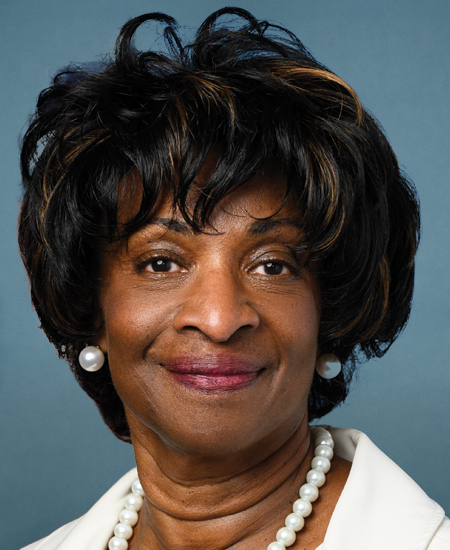
Rep. Valerie P. Foushee
Sponsored bills
Maddy summaryThe SAFE Platforms Act requires large online platforms to implement specific measures to prevent consumer fraud, including mandatory reporting buttons for scams, stricter default privacy settings that hide user information from strangers, and robust identity verification for advertisers in high-risk categories like finance or health. The bill grants the Federal Trade Commission enforcement powers to treat violations as unfair or deceptive practices, while also allowing state attorneys general and individual consumers to file lawsuits for damages. To qualify for legal protection under this law, platforms must review reported fraudulent content within 48 hours and take action within seven days, though they are not required to monitor all content before it is posted.
Maddy summaryHR 1266, the Combating Illicit Xylazine Act, adds xylazine - a veterinary sedative increasingly found in illicit drug mixtures - to Schedule III of the Controlled Substances Act, regulating its use and trafficking. It directly affects veterinarians, animal owners, and manufacturers by allowing xylazine to be legally dispensed for animal use under specific veterinary prescriptions, while prohibiting non-veterinary human use. The bill includes transition periods (60 days for practitioners, 1 year for labeling) to ease compliance for manufacturers and practitioners, and requires the DEA and FDA to expedite necessary applications. It also mandates two congressional reports on xylazine's illicit use and trafficking patterns, and directs the Sentencing Commission to review penalties for offenses involving xylazine.
Maddy summaryThis bill requires all new passenger vehicles manufactured for sale in the U.S. to include AM radio as standard equipment (not an optional add-on) by 2027-2028, depending on manufacturer size. It mandates that AM radio receivers must be easily accessible to drivers and allows compliance through digital AM broadcast technology. During a transition period, manufacturers must clearly label vehicles without AM radio but cannot charge extra for this feature. The bill also mandates a GAO study on AM radio's role in emergency alerts and includes a 10-year sunset provision for the rule. It preempts state laws regarding AM radio access in vehicles.
Maddy summaryThis bill authorizes the Secretary of the Army to transfer approximately 20 acres of land at Fort Bragg in North Carolina to the state government without charge. The property is intended for the construction of a veterans' home under the jurisdiction of the North Carolina Department of Military and Veterans Affairs. The state is required to pay all costs associated with the transfer, including environmental reviews and administrative fees, with any excess prepayments refunded by the federal government. If the land is no longer used for the designated veterans' facility, ownership may revert to the United States at the Secretary's discretion.
Maddy summaryThis House resolution formally recognizes suicide as a serious public health problem in the United States and expresses support for designating September 2026 as National Suicide Prevention Month and September 10, 2026, as World Suicide Prevention Day. The bill cites data from the CDC, SAMHSA, and the VA to highlight that suicide is a leading cause of death among young people, veterans, and during the postpartum period, while also noting the significant economic costs associated with it. It declares suicide prevention a national priority and emphasizes that mental health is as important as physical health. The resolution supports the development of strategies to improve access to quality mental health, substance abuse, and suicide prevention services for all communities.