

Maddy summarySF 1714 requires Minnesota public contracting agencies to provide detailed, timely payment notifications to all contractors and subcontractors on public improvement projects. Agencies must send written notices within three business days of any payment (including progress, retainage, or final payments), including the payment amount, date, recipient details, scope of work, and reasons for any withholding. These notifications must be provided to every tier of contractors and subcontractors at no cost, ensuring transparency about how and when payments are made. The bill directly affects state/local government agencies managing public contracts and the contractors/subcontractors working on those projects. It aims to improve payment clarity without changing payment amounts or timelines.
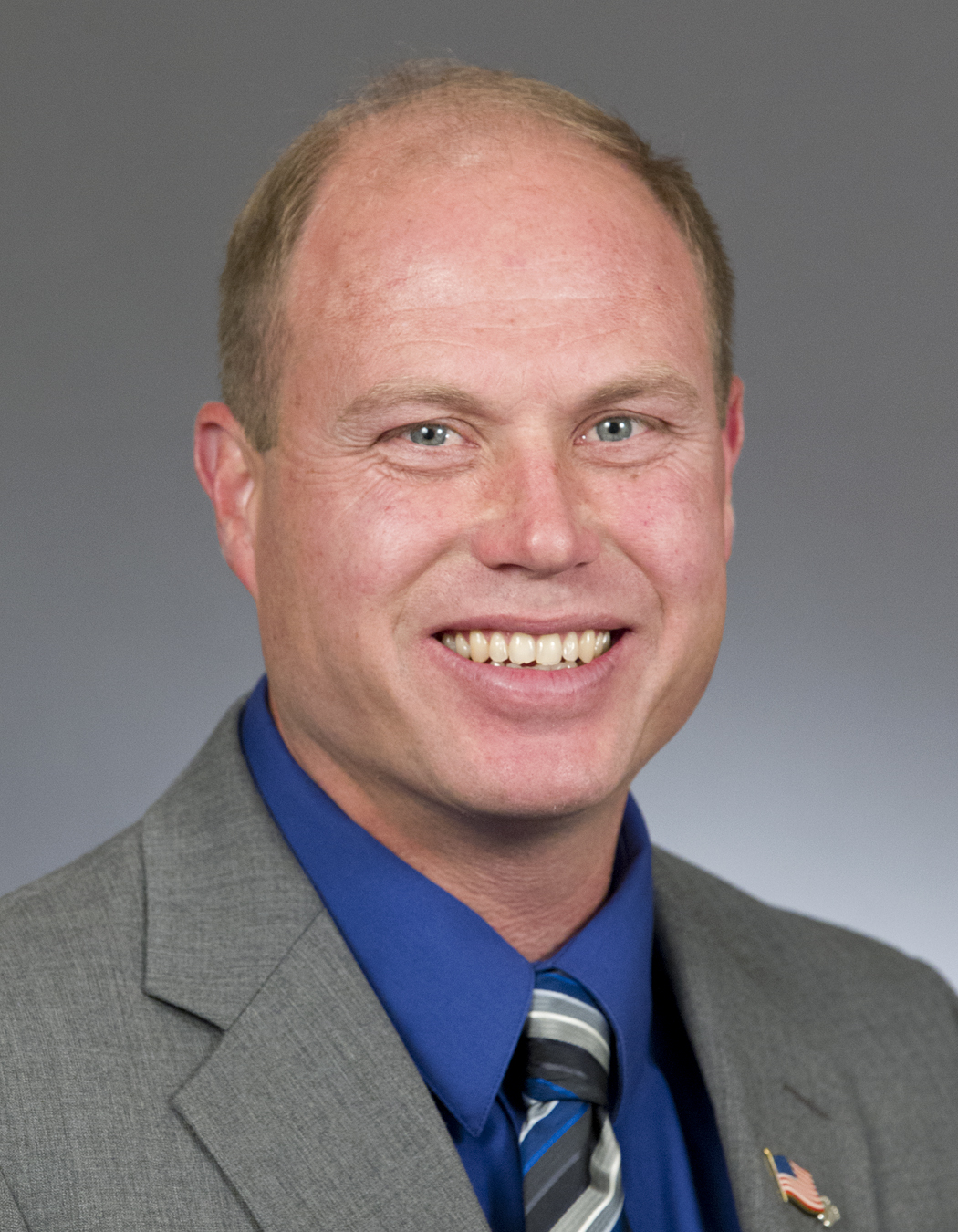
Sen. Jason Rarick
Sponsored bills
Maddy summarySF 3593 proposes a constitutional amendment to change how Minnesota's Permanent School Fund calculates annual distributions to school districts. It replaces the current "investment income" formula with a new "distributable amount" based on 4.5% of the fund's average net asset value over the previous three fiscal years. This change aims to ensure more stable, predictable annual payments while preserving the fund's long-term value for future school funding. The amendment requires voter approval at the 2026 general election and would take effect July 1, 2027. School districts across Minnesota would directly receive these revised annual distributions.
Maddy summaryThis bill allocates $4 million from the state airports fund to the Duluth Airport Authority for upgrading the Duluth International Airport's air traffic control tower and base building. The funding covers the design and construction of new facilities, including office spaces and equipment rooms, as well as site preparation, utility installation, and the replacement of an existing fuel tank. A portion of these funds must be used to match federal contributions for the project, and the money is restricted from being used for administrative costs. This one-time appropriation is available for use until June 30, 2028, and is in addition to previously approved funding for the same initiative.
Maddy summaryThis bill modifies Minnesota's property tax classification system to include certain farm wineries under Class 2 agricultural property. By amending state statutes, the legislation allows wineries that meet specific agricultural criteria to qualify for lower tax rates similar to traditional farming operations. The change directly affects winery owners who currently do not fit the existing definitions of agricultural land use, potentially reducing their property tax assessments. The bill requires wineries to demonstrate compliance with agricultural production standards to receive this new classification status.
Maddy summaryThis bill requires Minnesota public agencies to make specific details about child fatalities and near fatalities publicly available on the Department of Children, Youth, and Families website. Disclosure is mandated when a criminal charge is filed, a county attorney certifies a charge would have occurred but for the suspect's death, or a maltreatment determination is made. The released summaries must include causes of death, the child's age and gender, history of maltreatment reports, investigation results, and actions taken by welfare agencies, while strictly protecting confidential data, private records, and the identities of informants. Additionally, the bill sets a 60-day deadline for the department to publish review team reports and clarifies the timeline for local and joint reviews of critical incidents.
Maddy summaryThis bill modifies how child care providers in Minnesota can challenge correction orders issued by the state's Department of Children, Youth, and Families. It allows licensed family child care providers to request a review of an order within 20 days if they believe it contains errors, requiring them to explain the mistake and provide supporting evidence. The legislation also introduces a new process for providers to ask for official guidance on ambiguous rules before formally appealing an order. Additionally, the bill restricts when the department can publicly post these correction orders online, delaying publication until after the review period or any appeal is resolved. These changes are intended to give providers more clarity and time to address compliance issues, with the new rules taking effect on January 1, 2027.
Maddy summaryThis bill authorizes the state to issue up to $5 million in bonds to fund capital improvements for the Carlton County Transfer Station. The funds will be provided as a grant to the Pollution Control Agency, which will then give the money to Carlton County to upgrade or replace its solid waste management facility. The legislation directs the commissioner of management and budget to sell these state bonds and specifies that the law takes effect immediately upon final passage.
Maddy summaryThis bill allows trucks carrying dry bulk goods in Minnesota to carry up to ten percent more weight on individual axles, provided the total weight of the entire vehicle remains within legal limits. It specifically defines "dry bulk goods" as homogeneous, unpackaged, nonliquid cargo moved in trailers designed for that purpose. The change directly affects transportation companies and drivers who operate these specialized vehicles by permitting higher axle loads.
Maddy summarySenate Resolution 72 is a non-binding statement that reaffirms Minnesota's sister-state relationship with Taiwan and encourages businesses in the state to refer to the region as Taiwan. The resolution highlights economic ties, such as trade and agricultural exchanges, and expresses support for Taiwan's participation in international organizations and negotiations for trade and tax agreements with the United States. It does not change any laws or create new legal obligations but serves to publicly support diplomatic and economic engagement between Minnesota and Taiwan.
Maddy summaryThis bill updates Minnesota law to clarify that eligible postsecondary institutions, including public colleges and private trade schools, are not required to ask students for faith statements or make admission decisions based on race, creed, ethnicity, disability, gender, sexual orientation, or religious beliefs. By removing these specific restrictions from the statute, the legislation ensures that current enrollment options for concurrent enrollment courses remain free of such nondiscrimination mandates. Additionally, the bill provides a one-time appropriation in fiscal year 2026 to cover legal fees and expenses awarded to the plaintiff in the Loe v. Jett lawsuit, should the court grant such an award.