

Restorative practices statements and documents inadmissibility in civil and criminal proceedings establishment and data classification provision
SF 2200 protects communications from restorative justice programs by making statements and documents created during these processes inadmissible as evidence in civil or criminal court cases. It directly affects participants in restorative programs, including victims, offenders, and community facilitators, by shielding their discussions from legal use. The law establishes specific data classification rules for handling these protected materials, ensuring they are stored and managed separately from standard court records. This change aims to encourage open dialogue in restorative processes without fear of legal repercussions.
Bill status
signed
all 5 stages cleared
Introduction
Mar 2025
Committee Review
Apr 2025
Senate Passage
Apr 2025
House Passage
May 2025
Signed into Law
May 2025
Introduced Mar 6, 2025
Signed May 19, 2025
Maddy AI version diff · 2 comparisons
What changed between versions
1st Engrossment
→
2nd Engrossment
·
4 edits
·
Apr 28, 2025
MODERATE
The bill was updated from the 1st to the 2nd engrossment, changing the reporting deadline for restorative practices data from February 15 to November 15. The new requirement shifts the burden of reporting from the state director to the grant recipients, who must now submit specific data on recidivism, public safety impacts, and financial details regarding participant payments. This change aims to improve the timeliness and granularity of data used to evaluate the effectiveness of restorative justice programs.
Scope change
The scope of the reporting requirement was expanded to include specific metrics on participant payments and the purpose of those payments, which were not previously required.
TIMELINE
The deadline for submitting restorative practices status reports was moved from February 15 to November 15 of each year.
REQUIREMENT
Grantees are now required to submit detailed data on program impact, including recidivism rates, public safety effects, and financial investments.
New reporting mandates require grantees to disclose the total amount of grant funds paid to participants and the specific purpose of those payments.
ENFORCEMENT
The responsibility for initiating the annual data collection process shifted from the state director to the individual grant recipients.
Floor votes · House May 12, 2025
How they voted
This bill passed the Senate by voice vote (no roll call recorded).
Full legislative history
Actions timeline
Total actions
22
Key actions
5
Committee
3
Amendments
1
May 19, 2025
Signed into law
Governor's action Approval 05/19/25
executive
May 19, 2025
Introduced
Secretary of State, Filed 05/19/2025
lower
May 19, 2025
Signed into law
Governor approval 05/19/2025
executive
May 12, 2025
Lower · Passed
Bill was passed
lower
Apr 28, 2025
Committee
Senate file first reading, referred for comparison HF104
lower
Apr 28, 2025
Introduced
Received from Senate
lower
Apr 25, 2025
Upper · Passed
Third reading Passed as amended
upper
Apr 25, 2025
Introduced
Special Order: Amended
upper
Apr 1, 2025
Upper · Passed
Comm report: To pass as amended
upper
Mar 6, 2025
Committee
Referred to Judiciary and Public Safety
upper
Mar 6, 2025
Introduced
Introduction and first reading
upper
1 primary · 8 co-sponsors
Sponsors
Role
Legislator
Party
State
District
P

Sandy Pappas
DDemocratic-Farmer-Labor
Co

Bianca Virnig
DDemocratic-Farmer-Labor
Co

Bobbie Harder
RRepublican
Co

Bonnie Westlin
DDemocratic-Farmer-Labor
Co
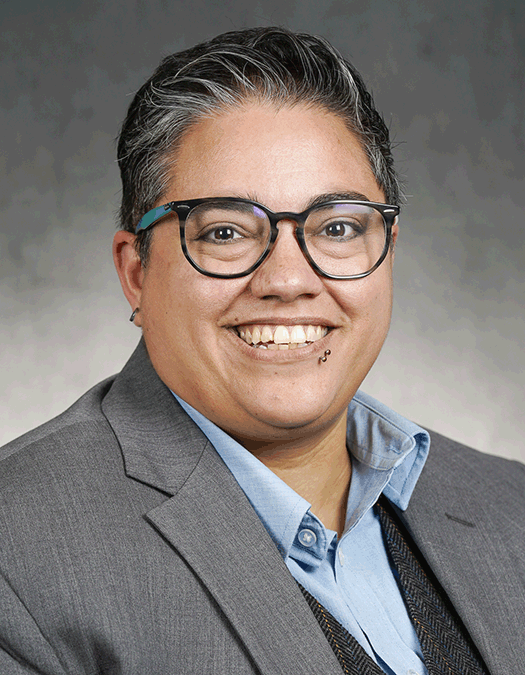
Brion Curran
DDemocratic-Farmer-Labor
Co
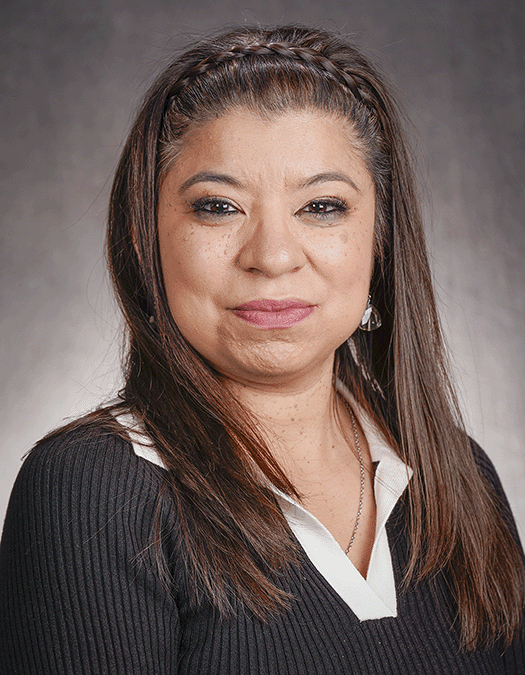
Erica Schwartz
RRepublican
Co

Jim Carlson
DDemocratic-Farmer-Labor
Co

Sandra Feist
DDemocratic-Farmer-Labor
Co

Warren Limmer
RRepublican
Ask Maddy
·
AI policy assistant
Ask Maddy about SF 2200
Scope: MN
Hi! I can help you understand SF 2200. What would you like to know?
Try one of these
i
Maddy answers using official bill text and legislative records. Always verify before sharing.
Sources cited inline