HF 3295 Minnesota House · 2025-2026 Regular Session

Open Meeting Law; meeting broadcasting through social media authorized.

HF 3295 amends Minnesota's Open Meeting Law (Minnesota Statutes 13D.065) to allow public bodies like city councils and school boards to broadcast meetings via social media. It requires advance notice of the broadcast and how to access it, and clarifies that social media comments during broadcasts are not government records unless the notice specifies otherwise. Public bodies that accept online comments as testimony must establish their own rules for handling them. This directly affects local government bodies holding public meetings in Minnesota.
Bill status passed 3 of 5 stages cleared
Introduction
May 2025
Committee Review
May 2026
House Passage
May 2026
Senate Passage
Governor
Introduced May 5, 2025 Last action May 11, 2026
Maddy AI version diff · 1 comparison

What changed between versions

Introduction 1st Engrossment · 4 edits · Apr 9, 2026
MODERATE
The bill was amended to tighten restrictions on social media broadcasting by public bodies. The most significant change is the addition of a ban on offering live comment features during broadcasts, replacing the previous rule that allowed comments only if they were explicitly included in the official meeting record. The amendment also reorganized the statute to clarify that social media broadcasts are permitted only if the platform allows access without an account and all other requirements are met. Additionally, the definition of 'public body' was expanded to explicitly include state agencies and their committees, ensuring they are subject to these new broadcasting rules.
Scope change
The scope of the bill was expanded to explicitly include state agencies, boards, commissions, departments, and their committees within the definition of 'public body' that must follow the new social media broadcasting rules.
REQUIREMENT

Added a prohibition requiring public bodies to not offer social media comment features during live broadcasts, removing the previous option to allow comments if they were designated as part of the meeting record.

Replaced the previous requirement for public bodies to provide information on how to submit remote comments with a mandate to simply provide information on how to access the broadcast.

Added a specific condition that the social media platform used for broadcasting must not require an individual to have an account to access the content.

DEFINITION

Expanded the definition of 'public body' to explicitly list state agencies, boards, commissions, departments, and their respective committees, ensuring they are covered by the new broadcasting restrictions.

Floor votes · House May 7, 2026

How they voted

1245
Passed
Total votes 129
May 7, 2026
D Democratic66
62 Yea 4 Nay
93% Yea
R Republican63
62 Yea 1 Nay
98% Yea
Vote distribution
All Yea All Nay Mixed No data
Full legislative history

Actions timeline

Total actions
13
Key actions
3
Committee
3
Amendments
1
May 11, 2026
Committee
Referred to State and Local Government
upper
May 11, 2026
Introduced
Introduction and first reading
upper
May 11, 2026
Introduced
Received from House
upper
May 7, 2026
Lower · Passed
Bill was passed
lower
May 7, 2026
Introduced
Amendments offered
lower
Apr 9, 2026
Lower · Passed
Committee report, to adopt as amended
lower
Mar 18, 2026
Lower · Passed
Committee report, to adopt and re-refer to Elections Finance and Government Operations
lower
May 5, 2025
Introduced
Introduction and first reading, referred to Judiciary Finance and Civil Law
lower
1 primary · 2 co-sponsors

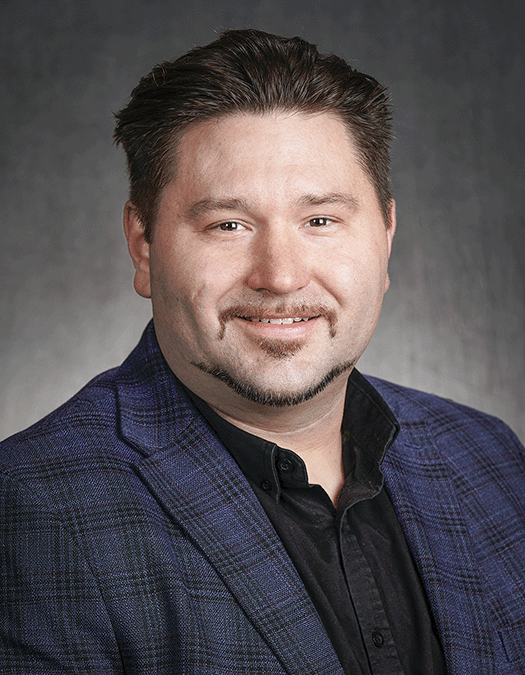
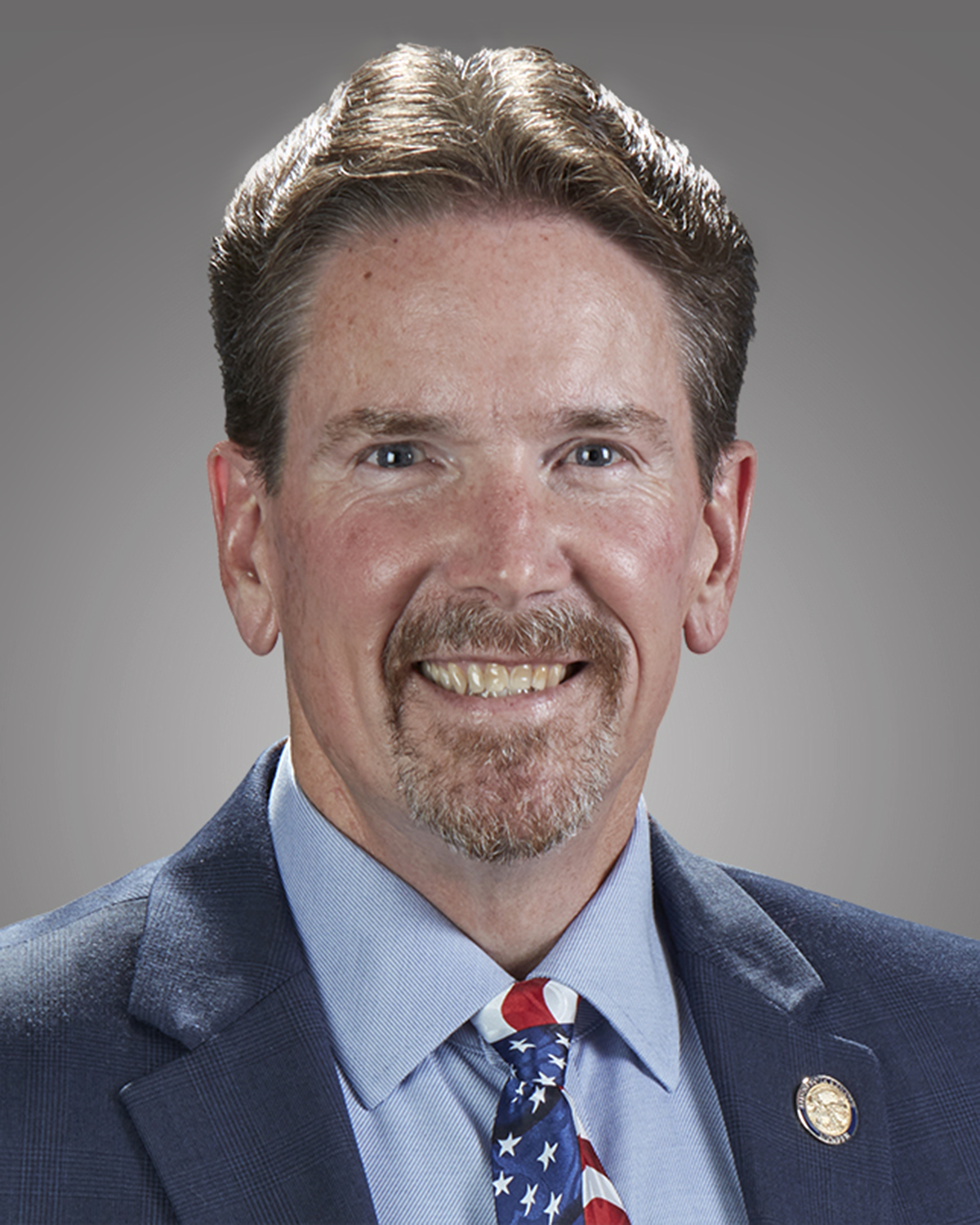
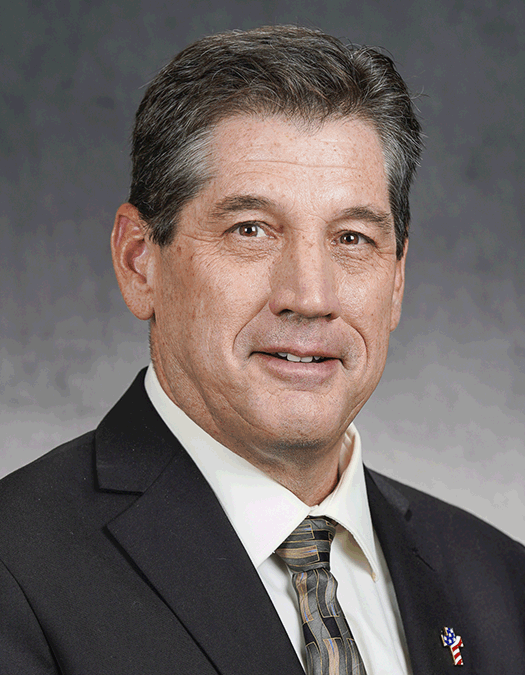
Sponsors