

In committee Sep 16, 2026
0 co-sponsors
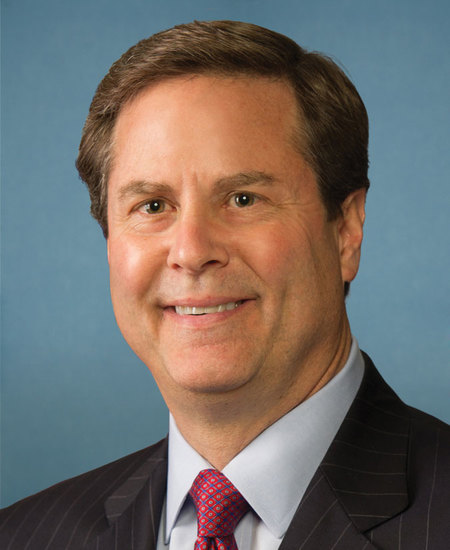
Rep. Donald Norcross
Total votes
2,837
all sessions
Attendance
94%
182 missed
Lower than 95% of chamber peers
With party
97%
of cast votes
Near the chamber average
Bipartisan score
2%
crosses aisle rarely
Near the chamber average
Sponsored
979
bills & resolutions
Near the chamber average
Committees
7
assignments
979 bills and resolutions
Sponsored bills
Total
979
Primary
64
Co-sponsor
915
This page
979
matching current filters
Housing Tariff Exclusion Act
Maddy summaryThe Housing Tariff Exclusion Act directs the Secretary of Commerce to create a process allowing U.S. companies to request exemptions from tariffs on building materials that are not produced in sufficient quantities domestically. The bill specifically targets products used in residential construction, such as lumber, cement, and fixtures, while excluding rare earth elements and antidumping duties. Requests for "critical homebuilding products" must be decided within 15 days, while other covered articles have a 60-day review period, with all decisions published online for transparency. The legislation includes retroactive provisions to refund overpaid tariffs on goods imported before an exemption is granted and sets a sunset date of October 1, 2029, after which no new exclusions can be issued.
In committee Sep 16, 2026
1 co-sponsor
ASAP Act
Maddy summaryThis bill would require Medicare to cover early detection screening tests for Alzheimer's disease and related dementias starting January 1, 2028. It defines eligible tests as FDA-cleared genomic blood tests, blood product analyses, or equivalent medical imaging methods (like protein expression or whole genome sequencing) that detect pre-symptomatic or early-stage conditions. Medicare beneficiaries would receive this coverage without cost-sharing for these specific screenings. The bill amends Medicare coverage rules to explicitly include these tests under Section 1861(nnn) of the Social Security Act.
In committee Sep 16, 2026
1 co-sponsor
Small Business Payment for Performance Act of 2025
Maddy summaryThis bill requires federal agencies to provide small business contractors with interim partial payments of at least 50% of estimated costs when contract terms change without the business's agreement. It directly affects small businesses awarded federal construction contracts and their subcontractors, ensuring they receive upfront funds to cover increased costs from mandated changes. The key mechanism mandates that agencies issue these payments promptly upon valid requests, with small businesses required to pass the funds to relevant subcontractors. The law also specifies that these interim payments do not finalize the adjustment request, preserving the agency's right to review the full claim later.
In committee Sep 16, 2026
1 co-sponsor
Combating Illicit Xylazine Act
Maddy summaryHR 1266, the Combating Illicit Xylazine Act, adds xylazine - a veterinary sedative increasingly found in illicit drug mixtures - to Schedule III of the Controlled Substances Act, regulating its use and trafficking. It directly affects veterinarians, animal owners, and manufacturers by allowing xylazine to be legally dispensed for animal use under specific veterinary prescriptions, while prohibiting non-veterinary human use. The bill includes transition periods (60 days for practitioners, 1 year for labeling) to ease compliance for manufacturers and practitioners, and requires the DEA and FDA to expedite necessary applications. It also mandates two congressional reports on xylazine's illicit use and trafficking patterns, and directs the Sentencing Commission to review penalties for offenses involving xylazine.
Passed Sep 16, 2026
1 co-sponsor
AM Radio for Every Vehicle Act of 2025
Maddy summaryThis bill requires all new passenger vehicles manufactured for sale in the U.S. to include AM radio as standard equipment (not an optional add-on) by 2027-2028, depending on manufacturer size. It mandates that AM radio receivers must be easily accessible to drivers and allows compliance through digital AM broadcast technology. During a transition period, manufacturers must clearly label vehicles without AM radio but cannot charge extra for this feature. The bill also mandates a GAO study on AM radio's role in emergency alerts and includes a 10-year sunset provision for the rule. It preempts state laws regarding AM radio access in vehicles.
Passed Sep 16, 2026
1 co-sponsor
Problem Solvers MAPS Act
Maddy summaryThe Problem Solvers MAPS Act requires states to draw congressional districts that are contiguous, compact in shape, and nearly equal in population. It prohibits mapmakers from creating boundaries intended to advantage or disadvantage specific candidates, incumbents, or political parties. Additionally, the law mandates that state officials consider preserving existing political subdivisions like counties, cities, and tribal land boundaries when establishing new districts. These rules apply to any congressional district created on or after the date the act is signed into law.
In committee Sep 15, 2026
1 co-sponsor
Problem Solvers TRUST Act
Maddy summaryThe Problem Solvers TRUST Act would prohibit states from changing their U.S. House of Representatives district maps during the ten-year period following a census, unless a court orders new lines to comply with federal or state constitutional requirements. If such a court order is issued, the state must make changes that result in the smallest possible alteration to the existing map. The bill also sets a one-year deadline for filing legal challenges against a redistricting plan after it becomes law. These rules would apply to congressional redistricting occurring after the November 2032 federal elections and would not affect how states draw districts for local or state offices.
In committee Sep 15, 2026
1 co-sponsor
Aviation Medication Transparency Act of 2025
Maddy summaryHR 2592, the Aviation Medication Transparency Act of 2025, requires the Federal Aviation Administration (FAA) to create and maintain a public website listing medications approved for use by pilots and aircrew (airmen) during medical certification. The list must be developed with input from pilots' unions, air traffic controllers' representatives, and other stakeholders, and include details like "Do Not Issue" medications, required duty limitations for new medications, and contact information for medical providers. The FAA must publish this list within one year of the bill's enactment and update it annually. This directly affects pilots seeking or holding medical certifications by providing clear, accessible information about medication use in aviation.
In committee Sep 15, 2026
1 co-sponsor
Protecting American Industry and Labor from International Trade Crimes Act of 2026
Maddy summaryHR 1869 creates a new DOJ task force within the Criminal Division to investigate and prosecute international trade crimes, such as customs evasion, smuggling, and trade-based money laundering. It requires the DOJ to hire specialized prosecutors, coordinate with agencies like U.S. Customs and Border Protection, and focus on specific violations covered under statutes like 18 U.S.C. §§ 541-546 and 21 U.S.C. § 331. The bill authorizes $20 million in funding for fiscal year 2026 (with 80% dedicated to criminal prosecutions), mandates annual reports to Congress on enforcement activities, and requires the DOJ to develop multi-agency partnerships to address these crimes. This directly affects federal prosecutors, border enforcement agencies, and industries impacted by trade violations.
Passed Sep 14, 2026
1 co-sponsor
Ask Maddy
·
AI policy assistant
Ask Maddy about Donald Norcross
Scope: california
Hi! I can help you understand Donald Norcross's legislative record. What would you like to know?
Try one of these
i
Maddy answers using official bill text and legislative records. Always verify before sharing.
Sources cited inline