

In committee Sep 16, 2026
1 co-sponsor
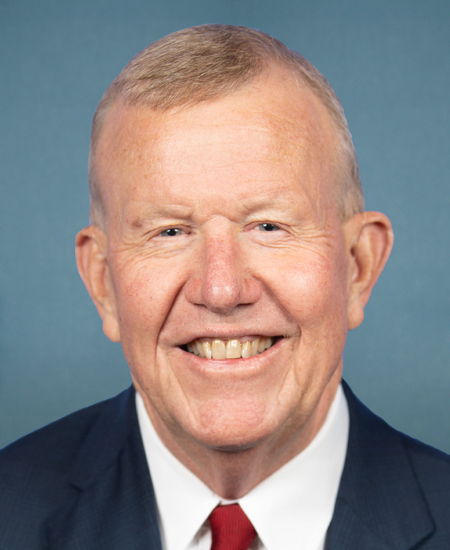
Rep. Mike Ezell
Total votes
1,879
all sessions
Attendance
97%
57 missed
Near the chamber average
With party
95%
of cast votes
Near the chamber average
Bipartisan score
3%
crosses aisle rarely
Near the chamber average
Sponsored
479
bills & resolutions
Near the chamber average
Committees
6
assignments
479 bills and resolutions
Sponsored bills
Total
479
Primary
43
Co-sponsor
436
This page
479
matching current filters
Providing for congressional disapproval under chapter 8 of title 5, United States Code, of the rule issued by the Environmental Protection Agency relating to the "California State Nonroad Engine Pollution Control Standards; Commercial Harbor Craft Regulations; Notice of Decision".
Maddy summaryThis joint resolution seeks to overturn a specific Environmental Protection Agency rule that granted California the authority to enforce its own nonroad engine pollution standards for commercial harbor craft. If enacted, the bill would render the EPA’s decision invalid and prevent it from taking effect. The measure directly affects California by removing its ability to impose stricter local emissions regulations on these vessels.
Passed Sep 16, 2026
1 co-sponsor
ASAP Act
Maddy summaryThis bill would require Medicare to cover early detection screening tests for Alzheimer's disease and related dementias starting January 1, 2028. It defines eligible tests as FDA-cleared genomic blood tests, blood product analyses, or equivalent medical imaging methods (like protein expression or whole genome sequencing) that detect pre-symptomatic or early-stage conditions. Medicare beneficiaries would receive this coverage without cost-sharing for these specific screenings. The bill amends Medicare coverage rules to explicitly include these tests under Section 1861(nnn) of the Social Security Act.
In committee Sep 16, 2026
1 co-sponsor
Transportation Worker Identification Credential Efficiency Act
Maddy summaryHR 5109 requires the Transportation Security Administration (TSA) to create guidelines helping individuals in federal, state, and local prisons prepare for and apply for Transportation Worker Identification Credential (TWIC) cards *before* their release. The bill directs TSA to develop specific procedures for prison staff to assist inmates in pre-applying for TWIC cards and navigating appeals or waivers if initially denied. This aims to streamline access to TWIC cards - required for many port and maritime jobs - allowing returning citizens to secure employment faster after release. The bill cites that 525,000 jobs in Louisiana alone depend on TWIC access, and faster credential acquisition supports reintegration efforts.
Criminal JusticeSupports Criminal JusticeBill aids reentry by helping incarcerated individuals pre-apply for TWIC cards, reducing employment barriers and supporting criminal justice reform to lower recidivism.
Labor & EmploymentSupports Labor & EmploymentFacilitates employment access for returning citizens by streamlining TWIC credential process for transportation jobs, reducing employment barriers.
Passed Sep 16, 2026
1 co-sponsor
AM Radio for Every Vehicle Act of 2025
Maddy summaryThis bill requires all new passenger vehicles manufactured for sale in the U.S. to include AM radio as standard equipment (not an optional add-on) by 2027-2028, depending on manufacturer size. It mandates that AM radio receivers must be easily accessible to drivers and allows compliance through digital AM broadcast technology. During a transition period, manufacturers must clearly label vehicles without AM radio but cannot charge extra for this feature. The bill also mandates a GAO study on AM radio's role in emergency alerts and includes a 10-year sunset provision for the rule. It preempts state laws regarding AM radio access in vehicles.
Passed Sep 16, 2026
1 co-sponsor
Post-Disaster Protection Act
Maddy summaryThis bill, known as the Post-Disaster Protection Act, extends the time limit for appealing federal disaster assistance decisions from 60 to 90 days. It directly affects individuals and communities seeking aid after natural disasters by amending the Robert T. Stafford Disaster Relief and Emergency Assistance Act. The change provides applicants with additional time to contest decisions regarding their eligibility or the amount of assistance they receive. This adjustment aims to give affected parties more time to review and challenge assistance determinations without rushing the appeals process.
In committee Sep 15, 2026
1 co-sponsor
Responsible Cormorant Management and Control Act of 2026
Maddy summaryThis bill establishes a regional management framework for double-crested cormorants across four U.S. flyways, requiring the Secretary of the Interior to develop plans within 180 days that specify allowed hunting methods, time periods, and authorized entities including state and tribal agencies, lake managers, and pond managers. The framework must ensure cormorant populations remain sustainable while addressing impacts on fisheries, vegetation, other bird species, human safety, water quality, and endangered species. The bill mandates population surveys every five years and requires the management plans to be reviewed and updated every five years based on survey results and current data.
In committee Sep 15, 2026
1 co-sponsor
Marine Fisheries Habitat Protection Act
Maddy summaryHR 5745, the Marine Fisheries Habitat Protection Act, allows oil and gas operators to convert decommissioned offshore platforms and pipelines into artificial reefs instead of fully removing them. It establishes a process where operators can apply to leave structures in place (called "Reefing in Place") after completing assessments of marine habitat benefits and economic costs. The bill requires the Director to determine if a structure qualifies as an "Eligible Structure" based on habitat potential and safety, with a three-year window for approval after qualification. It also prohibits federal removal orders during key application and assessment periods and permits states to assume liability for reef sites. This directly affects operators of inactive offshore structures and aims to create new marine habitats while streamlining decommissioning.
In committee Sep 15, 2026
0 co-sponsors
National Law Enforcement Officers Remembrance, Support, and Community Outreach Act
National Law Enforcement Officers Remembrance, Support and Community Outreach Act. [ sic ] This bill temporarily directs the Department of the Interior to award a grant to the National Law Enforcement Officers Memorial Fund for the expenses associated with operating and enhancing the community outreach, public education, and officer safety and wellness programs of the National Law Enforcement Museum.
Passed Sep 15, 2026
1 co-sponsor
Kayleigh’s Law Act of 2026
Maddy summaryThis bill, known as Kayleigh's Law Act of 2026, requires federal courts to issue permanent restraining orders against defendants convicted of certain serious crimes, prohibiting them from contacting their victims for the rest of their lives. The law applies specifically to individuals convicted of violent felonies or felony offenses involving sexual acts, including crimes like child exploitation and human trafficking. Courts must include these orders in sentencing, and violations are treated as contempt of court, while the only way to lift the order is if the conviction is overturned or pardoned. The bill also ensures that victims cannot be charged any fees for obtaining these protective orders and clarifies that the restrictions apply regardless of state laws.
Passed Sep 14, 2026
1 co-sponsor
Ask Maddy
·
AI policy assistant
Ask Maddy about Mike Ezell
Scope: california
Hi! I can help you understand Mike Ezell's legislative record. What would you like to know?
Try one of these
i
Maddy answers using official bill text and legislative records. Always verify before sharing.
Sources cited inline