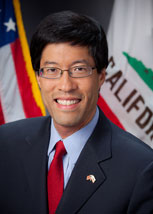
Photo of Richard Pan
D California Senate · District 6

Sen. Richard Pan

Compare
Total votes
26,098
all sessions
Attendance
98%
456 missed
Near the chamber average
With party
99%
of cast votes
Near the chamber average
Bipartisan score
0%
crosses aisle rarely
Lower than 77% of chamber peers
Sponsored
951
bills & resolutions
Lower than 83% of chamber peers
Committees
0
assignments
951 bills and resolutions

Sponsored bills

Total
951
Primary
341
Co-sponsor
610
This page
951
matching current filters
Co-sponsor AB 2098
Signed into law · California House · Co-sponsor
Physicians and surgeons: unprofessional conduct.

Existing law provides for the licensure and regulation of physicians and surgeons by the Medical Board of California and the Osteopathic Medical Board of California. Existing law requires the applicable board to take action against any licensed physician and surgeon who is charged with unprofessional conduct, as provided. This bill would designate the dissemination of misinformation or disinformation related to the SARS-CoV-2 coronavirus, or "COVID-19," as unprofessional conduct. The bill would also make findings and declarations in this regard.

Signed into law Sep 30, 2022 1 co-sponsor
Primary SB 997
Signed into law · California Senate · Lead sponsor
Local control and accountability plans: parent advisory committee: student advisory committee.

Existing law requires the governing board of each school district and each county superintendent of schools to adopt a local control and accountability plan and to annually update its local control and accountability plan, using a template for a local control and accountability plan and an annual update to the local control and accountability plan adopted by the State Board of Education, before July 1 of each year. Existing law requires the governing board of a school district to establish a parent advisory committee to provide advice to the governing board of the school district and the superintendent of the school district, and requires a county superintendent of schools to establish a parent advisory committee to provide advice to the county board of education and the county superintendent of schools, regarding certain requirements pertaining to school accountability. This bill would require, beginning July 1, 2024, the governing board of a school district serving middle school or high school pupils and a county superintendent of schools to either include at least 2 pupils as full members of the parent advisory committee to serve for a renewable term of one full school year, or to establish a student advisory committee as specified. The bill would require a school district and a county superintendent of schools to take into consideration that the pupil members of a parent advisory committee or student advisory committee represent the specified diversity of the school district or county's pupils, and would provide that particular effort should be made to reach out to at-risk or disadvantaged pupils to serve as members of a parent advisory committee or student advisory committee. By imposing additional duties on local educational agencies, the bill would impose a state-mandated local program. The California Constitution requires the state to reimburse local agencies and school districts for certain costs mandated by the state. Statutory provisions establish procedures for making that reimbursement. This bill would provide that, if the Commission on State Mandates determines that the bill contains costs mandated by the state, reimbursement for those costs shall be made pursuant to the statutory provisions noted above.

Signed into law Sep 30, 2022 0 co-sponsors
Primary SB 1018
Vetoed · California Senate · Lead sponsor
Platform Accountability and Transparency Act.

Existing law requires an operator of a commercial internet website or online service that collects personally identifiable information through the internet about individual consumers residing in California who use or visit its commercial internet website or online service to conspicuously post its privacy policy on its internet website, as prescribed. This bill would require a social media platform to disclose to the public, on or before October 1, 2024, and annually thereafter, statistics regarding the extent to which, in the 3rd and 4th quarters of the preceding calendar year and first and 2nd quarters of the current calendar year, items of content that the platform determined violated its policies were recommended or otherwise amplified by platform algorithms, disaggregated by category of policy violated. The bill would define "social media platform" for its purposes to mean a public or semipublic internet-based service or application, a substantial function of which is to connect users, as defined, in order to allow users to interact socially with each other within the service or application, and that meets certain other criteria, including having users in California. The bill would only apply to platforms having at least 1,000,000 discrete monthly users. The bill would also define "content" for its purposes to mean statements or comments made by users and media that are created, posted, shared, or otherwise interacted with by users on an internet-based service or application. This bill would subject a violator of its provisions to a civil penalty of up to $100,000 for each violation that may be recovered only in a civil action brought by, among other specified public attorneys, the Attorney General.

Vetoed Sep 29, 2022 0 co-sponsors
Primary SB 1370
Signed into law · California Senate · Lead sponsor
Alcoholic beverages: licensees.

(1) The Alcoholic Beverage Control Act, which is administered by the Department of Alcoholic Beverage Control, contains various provisions regulating the application for, the issuance of, the suspension of, and the conditions imposed upon, alcoholic beverage licenses by the Department of Alcoholic Beverage Control. Existing law authorizes the department to issue a special on-sale general license to any nonprofit theater company that is exempt from the payment of income taxes, as specified. Existing law specifies that the license shall be for a single specified premises only, and authorizes a theater company that holds the license to sell and serve alcoholic beverages to ticketholders only during, and two hours before and one hour after, a bona fide theater performance of the company. Existing law makes it a misdemeanor for any on- or off-sale licensee, or agent of that licensee, to sell, give, or deliver to any persons any alcoholic beverage between the hours of 2 a.m. and 6 a.m. of the same day. The Alcoholic Beverage Control Act also provides for application fees for a new license and for various annual renewal fees, depending on the type of license. This bill would additionally authorize the department to issue a special on-sale general license to a nonprofit radio broadcasting company. The bill would authorize those nonprofit radio broadcasting companies, subject to the misdemeanor provision described above, to sell and serve alcoholic beverages, as specified, to ticketholders only during, and 2 hours before and one hour after, a bona fide performance. The bill would provide the application fee for a new license and for annual renewal fees for that license type, as specified. By expanding the application of an existing crime, the bill would impose a state-mandated local program. (2) Existing law, known as tied-house restrictions, generally prohibits certain alcoholic beverage licensees, including manufacturers, from holding any ownership interest in an on-sale license, subject to a variety of exceptions. In connection with special on-sale general licenses issued to nonprofit theater companies, existing law creates an exception to tied-house restrictions, by permitting specified licensees, including a licensed manufacturer, to serve on the board of trustees or as an officer, director, or employee of a nonprofit theater company operating in the County of Napa, the City of Livermore, or the City of Modesto. This bill would expand the list of cities to include the City of Sacramento. The bill would extend the exception to tied-house restrictions provided to special on-sale general licenses for the trustees, officers, directors, and employees of nonprofit theater companies, described above, to a nonprofit radio broadcasting company operating a venue in the specified cities and county. (3) This bill would make legislative findings and declarations as to the necessity of a special statute for the City of Sacramento. (4) This bill would incorporate additional changes to Sections 23039 and 24045.7 of the Business and Professions Code proposed by AB 631 to be operative only if this bill and AB 631 are enacted and this bill is enacted last. (5) The California Constitution requires the state to reimburse local agencies and school districts for certain costs mandated by the state. Statutory provisions establish procedures for making that reimbursement. This bill would provide that no reimbursement is required by this act for a specified reason.

Signed into law Sep 29, 2022 0 co-sponsors
Primary SB 1479
Signed into law · California Senate · Lead sponsor
COVID-19 testing in schools: COVID-19 testing plans.

Existing law appropriates funds to the State Department of Public Health for various programs related to the safe reopening of schools during the COVID-19 pandemic, including funds to support COVID-19 testing in schools allocated from the federal American Rescue Plan Act of 2021 and funds from the General Fund for the Safe Schools For All Team to coordinate technical assistance, community engagement, increased transparency, and enforcement by the appropriate entity for public school health and safety during the COVID-19 pandemic. Existing law authorizes certain school apportionments to be used for any purpose consistent with providing in-person instruction for any pupil participating in in-person instruction, including, but not limited to, COVID-19 testing, as provided. Existing law prescribes public health reporting requirements related to COVID-19 for local educational agencies, including the development of a COVID-19 safety plan, as provided. This bill would require the State Department of Public Health to coordinate specified school district, county office of education, and charter school COVID-19 testing programs that are currently federally funded or organized under the California COVID-19 Testing Task Force, as provided. The bill would authorize the department to provide supportive services, including technical assistance, vendor support, guidance, monitoring, and testing education, related to testing programs for teachers, staff, and pupils to help schools reopen and keep schools operating safely for in-person learning. The bill would also encourage the department to expand its contagious, infectious, or communicable disease testing guidance and other public health mitigation efforts to include prekindergarten and childcare centers, as provided. This bill would require each local educational agency, defined to mean a school district, county office of education, or charter school, after consulting with its local health department, as defined, to create a COVID-19 testing plan, or adopt the State Department of Public Health's framework, as defined, that is consistent with guidance from the department, as provided. The bill would require each local educational agency to publish the testing plan on its internet website. The bill would authorize each local educational agency to designate one staff member to report information on its COVID-19 testing program to the department, as provided. The bill would require that all COVID-19 testing data be in a format that facilitates a simple process by which parents and local educational agencies may report data to the department or a local health department, as provided. By imposing new obligations on local educational agencies, and to the extent new duties are imposed on local health departments, the bill would impose a state-mandated local program. The bill would require the department to determine which COVID-19 tests are appropriate for the testing program. The bill would make the implementation of these provisions contingent upon an appropriation by the Legislature, and would repeal these provisions on January 1, 2026. The California Constitution requires the state to reimburse local agencies and school districts for certain costs mandated by the state. Statutory provisions establish procedures for making that reimbursement. This bill would provide that, if the Commission on State Mandates determines that the bill contains costs mandated by the state, reimbursement for those costs shall be made pursuant to the statutory provisions noted above.
Signed into law Sep 29, 2022 0 co-sponsors
Co-sponsor SB 1364
Vetoed · California Senate · Co-sponsor
University of California: vendors.

Existing provisions of the California Constitution provide that the University of California constitutes a public trust and require the university to be administered by the Regents of the University of California (regents) , a corporation in the form of a board, with full powers of organization and government, subject to legislative control only for specified purposes, including any competitive bidding procedures as may be applicable to the university by statute for specified purposes, including the purchasing of materials, goods, and services. Existing law requires the regents, except as provided, to let all contracts involving an expenditure of $100,000 or more annually for goods and materials or services, excepting personal or professional services, to the lowest responsible bidder meeting certain specifications, or to reject all bids. Existing policy of the regents establishes a general prohibition on contracting out for services and functions that can be performed by university staff, with certain exceptions, establishes employment standards for contract employees, and provides for the conversion of contract employees to university employment under prescribed circumstances. This bill would make it unlawful for any vendor, as defined, to accept payment above a specified threshold from the university pursuant to a contract for prescribed services if the vendor is performing services or supplying the university with employees to perform services who are paid less than the higher of the total compensation rate specified in the vendor's contract with the university or as required by university policy. The bill would require a vendor to provide those employees with prescribed written notice relating to compensation. The bill would require a vendor, twice yearly, to provide basic payroll information, as defined, to the university and members of any joint labor-management committee or similar meeting body established with the exclusive representative of university employees who perform the same or similar services. The bill would also require a vendor to provide specified additional written notice, including specific text, relating to the release of basic payroll information, to all employees who agree to perform services for the university or continue doing so. The bill would also require basic payroll information for an individual employee who performs services for the university, on request, to be made available for inspection by that individual employee or that individual employee's designated representative or to be furnished to that individual employee or that individual employee's authorized representative. This bill would authorize an employee or university employee to provide a vendor with written notice of a violation of the bill and the opportunity to correct and cure the violation and thereafter file suit only if the vendor fails to provide prescribed documentation. The bill would establish remedies, including civil penalties and restitution, for prevailing claimants and would provide for the disqualification of the vendor, for a minimum of 5 years, from submitting any bid to the university, or executing, renewing, or extending any contract with or otherwise receiving payment from the university in exchange for services. The bill would make its provisions severable.

Vetoed Sep 29, 2022 1 co-sponsor
Co-sponsor AB 2596
Signed into law · California House · Co-sponsor
Lunar New Year holiday.

Existing law designates specific days as holidays in this state. Existing law requires the Governor annually to proclaim the date corresponding with the second new moon following the winter solstice, or the third new moon following the winter solstice should an intercalary month intervene, as the "Lunar New Year." Existing law entitles state employees, with specified exceptions, to elect to receive 8 hours of holiday credit for "Native American Day," in lieu of receiving 8 hours of personal holiday credit, and to elect to use 8 hours of vacation, annual leave, or compensating time off, consistent with departmental operational needs and collective bargaining agreements, for "Native American Day," as specified. This bill would repeal provisions requiring the Governor to annually proclaim the "Lunar New Year," and would instead recognize the "Lunar New Year" as a state holiday. The bill would authorize state employees, with specified exceptions, to elect to receive 8 hours of holiday credit for the "Lunar New Year" in lieu of receiving 8 hours of personal holiday credit, and to elect to use 8 hours of vacation, annual leave, or compensating time off, consistent with departmental operational needs and collective bargaining agreements, for "Lunar New Year," as specified. Existing law designates specific days designated as holidays in this state, every Saturday and the day after Thanksgiving Day as judicial holidays, except "Admission Day," "Columbus Day," and any other day appointed by the President, but not by the Governor, for a public fast, thanksgiving, or holiday. This bill would additionally exclude "Lunar New Year" from designation as a judicial holiday. This bill would incorporate additional changes to Section 135 of the Code of Civil Procedure proposed by AB 1801 to be operative only if this bill and AB 1801 are enacted and this bill is enacted last. This bill would incorporate additional changes to Sections 6700, 19853, and 19853.1 of the Government Code proposed by AB 1655 and AB 1801 to be operative only if this bill and AB 1655, AB 1801, or both are enacted and this bill is enacted last.

Signed into law Sep 29, 2022 1 co-sponsor
Co-sponsor AB 1655
Signed into law · California House · Co-sponsor
State holidays: Juneteenth.

Existing law designates specific days as holidays in this state. Existing law designates holidays on which community colleges and public schools are required to close, including days appointed by the President. Existing law entitles state employees, with specified exceptions, to be given time off with pay for specified holidays. This bill would add June 19, known as "Juneteenth," to the list of state holidays. The bill would specify that holidays created by federal legislation signed by the President are considered days appointed as holidays for the purposes of the above-described provisions requiring community colleges and public schools to close. The bill would authorize state employees to elect to take time off with pay in recognition of Juneteenth, as specified. This bill would incorporate additional changes to Sections 45203, 79020, and 88203 of the Education Code proposed by AB 1801 to be operative only if this bill and AB 1801 are enacted and this bill is enacted last. This bill would incorporate additional changes to Sections 6700, 19853, and 19853.1 of the Government Code proposed by AB 1801 and AB 2596 to be operative only if this bill and either or both AB 1801 and AB 2596 are enacted and this bill is enacted last.

Signed into law Sep 29, 2022 1 co-sponsor
Primary SB 901
Signed into law · California Senate · Lead sponsor
Flood protection: City of West Sacramento flood risk reduction project.

(1) Unless a city or county within the Sacramento-San Joaquin Valley makes certain findings after the effective date of specified amendments to its general plan, the Planning and Zoning Law prohibits a city or county from entering into a development agreement for property located in a flood hazard zone; approving a discretionary permit, ministerial permit, or other discretionary entitlement for a project that is located within a flood hazard zone, as specified; or approving a tentative map, or a parcel map for which a tentative map was not required, for a subdivision that is located within a flood hazard zone. Those findings include, among others, that the local flood management agency has made adequate progress on the construction of a flood protection system that will result in flood protection equal to or greater than the urban level of flood protection in urban or urbanizing areas. Existing law further requires urban and urbanizing areas protected by any levee that is part of the facilities of the State Plan of Flood Control to achieve the urban level of flood protection by 2025. This bill would instead require the City of West Sacramento, as defined, to achieve the urban level of flood protection by 2030. (2) Existing law provides for state cooperation with the federal government in the construction of specified flood control projects. Existing law adopts and authorizes federally adopted and approved projects, including a project for flood control along the American and Sacramento Rivers, at an estimated cost to the state of the sum that may be appropriated by the Legislature for state participation upon the recommendation and advice of the Department of Water Resources or the Central Valley Flood Protection Board. This bill would adopt and approve the West Sacramento Project for flood risk reduction along the Yolo Bypass, Sacramento Bypass, and Sacramento River, which was adopted and approved by a specific act of the United States Congress in 2016, at an estimated cost to the state of the sum that may be appropriated by the Legislature for state participation, upon the recommendation and advice of the department or the board. (3) Existing law creates, and establishes the boundaries of, Reclamation District Number 900. Under existing law, it is the responsibility, liability, and duty of the district to maintain and operate the works of the project within its boundaries or jurisdiction, except as specified. Existing law authorizes certain local agencies to petition the board or department to dissolve a maintenance area and authorizes the board or department, after a hearing, to dissolve the maintenance area if in its discretion it finds dissolution to be in the best interests of the state. The bill would specify that the district also includes the parcels that compose Maintenance Area 4, as specified. The bill would authorize Maintenance Area 4 to be dissolved only upon the execution of the assurance agreement and assumption of project levee maintenance responsibilities by the district, or by a member agency that is a signatory to the assurance agreement, for the state maintenance area. By increasing the district's boundaries and jurisdiction to include Maintenance Area 4, this bill would impose a state-mandated local program. (4) This bill would make legislative findings and declarations as to the necessity of a special statute for City of West Sacramento. (5) The California Constitution requires the state to reimburse local agencies and school districts for certain costs mandated by the state. Statutory provisions establish procedures for making that reimbursement. This bill would provide that no reimbursement is required by this act for a specified reason.

Signed into law Sep 28, 2022 0 co-sponsors
Primary SB 422
Vetoed · California Senate · Lead sponsor
Personal services contracts: state employees: physician registry for state hospitals.

Existing law, the State Civil Service Act, regulates employment with the state and vests in the Department of Human Resources all powers, duties, and authority necessary to operate the state civil service system. Existing law permits the use of personal services contracts for purposes of cost savings when specified conditions are met, including when the potential economic advantage of contracting is not outweighed by the public's interest in having a particular function performed directly by the state government. Existing law establishes the State Department of State Hospitals within the California Health and Human Services Agency, and provides the department with jurisdiction over specified facilities for the care and treatment of persons with mental health disorders, including the Patton State Hospital. This bill would require the State Department of State Hospitals to establish, by January 1, 2024, a physician registry for the Patton State Hospital to be composed of members of State Bargaining Unit 16, and would establish compensation for registry work. The bill would require the department to conduct and post on its internet website a semiannual survey of managers and employees to determine the efficacy of the registry, and would also require the department, by January 10 of 2025, 2026, and 2027, to submit a report to the Legislature that includes a study of the effectiveness of the registry to determine if the registry compensation rates were successful in addressing the operational needs for flexible services at a lower cost than contract registries. The bill would, if the pilot program is demonstrated to save the state money overall based on the report due to the Legislature by January 10, 2026, require the department to extend and maintain the use of the physician registry for all state hospitals under its jurisdiction commencing January 1, 2027. The bill would make implementation of these provisions subject to an appropriation by the Legislature in the annual Budget Act or another statute for these purposes.

Vetoed Sep 28, 2022 0 co-sponsors
Showing 1 to 10 of 951 bills
1 2 3 96 Next