

Under existing law, the Public Utilities Commission has regulatory authority over public utilities. Existing law allows the commission to charge and collect a fee of $75 for filing each application for a certificate of public convenience and necessity, or for the mortgage, lease, transfer, or assignment of a certificate. This bill would instead require the fee to not exceed the reasonable costs to the commission for filing these applications. The bill would authorize the fee in an amount not to exceed $500 and would authorize the commission to adjust this fee based on the Consumer Price Index. Existing law establishes the Public Utilities Commission Utilities Reimbursement Account and generally provides that all fees and charges collected under the Public Utilities Code from each public utility, except penalties, be paid into the fund. Other existing law provides that specified fees, including, but not limited to, the fee for filing each application for a certificate of public convenience and necessity, or for the mortgage, lease, transfer, or assignment of a certificate, are required to be paid at least once each month into the State Treasury to the credit of the General Fund. This bill would repeal the provision that requires certain fees to be paid at least once each month into the State Treasury to the credit of the General Fund.
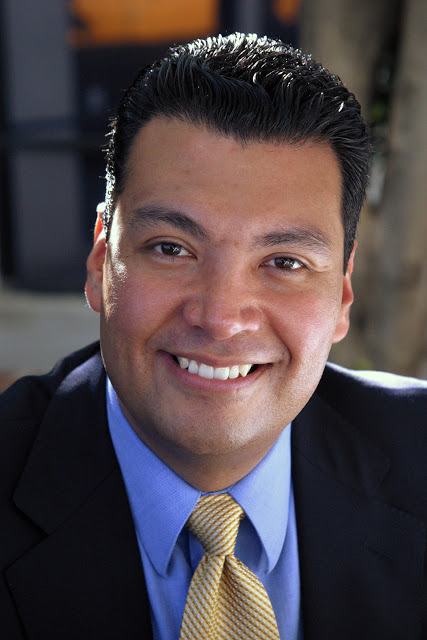
Sponsored bills
This measure would designate Monday, May 5, 2014, as California Peace Officers' Memorial Day, urge all Californians to use that day to honor California peace officers, and recognize specified California peace officers who were killed in defense of their communities.
Existing law, the Political Reform Act of 1974, places limits on the amount of campaign contributions that a person may make to a candidate for elective state office. This bill would prohibit any campaign contribution to a Member of the Legislature during the following periods of time: (1) in each year, a specified period before the enactment of the Budget Bill, (2) in each odd-numbered year, during the 30 days preceding the adjournment of the legislative session, and (3) in each even-numbered year, the period from August 1 to August 31, inclusive. This bill would exempt from these provisions a contribution made to, or solicited or accepted by, a Member of the Legislature for purposes of that Member's candidacy for an elective state office that is to be voted upon at a special election. Existing law makes a knowing or willful violation of the Political Reform Act of 1974 a misdemeanor and subjects offenders to criminal penalties. This bill would impose a state-mandated local program by creating additional crimes. The California Constitution requires the state to reimburse local agencies and school districts for certain costs mandated by the state. Statutory provisions establish procedures for making that reimbursement. This bill would provide that no reimbursement is required by this act for a specified reason. The Political Reform Act of 1974, an initiative measure, provides that the Legislature may amend the act to further the act's purposes upon a 23 vote of each house and compliance with specified procedural requirements. This bill would declare that it furthers the purposes of the act. This bill would declare that it is to take effect immediately as an urgency statute.
Existing law, the federal Patient Protection and Affordable Care Act (PPACA) , requires each state to establish an American Health Benefit Exchange that facilitates the purchase of qualified health plans by qualified individuals and qualified small employers, and meets certain other requirements. PPACA specifies that an individual who is not a citizen or national of the United States or an alien lawfully present in the United States shall not be treated as a qualified individual and may not be covered under a qualified health plan offered through an exchange. Existing law creates the California Health Benefit Exchange for the purpose of facilitating the enrollment of qualified individual and qualified small employers in qualified health plans as required under PPACA. Existing law governs health care service plans and insurers. A violation of the provisions governing health care service plans is a crime. This bill would create the California Health Exchange Program for All Californians within state government and would require that the program be governed by the executive board that governs the California Health Benefit Exchange. The bill would specify the duties of the board relative to the program and would require the board to, by January 1, 2016, facilitate the enrollment into qualified health plans of individuals who are not eligible for full-scope Medi-Cal coverage and would have been eligible to purchase coverage through the Exchange but for their immigration status. The bill would require the board to provide premium subsidies and cost-sharing reductions to eligible individuals that are the same as the premium assistance and cost-sharing reductions the individuals would have received through the Exchange. The bill would create the California Health Trust Fund For All Californians as a continuously appropriated fund, thereby making an appropriation, would require the board to assess a charge on qualified health plans, and would make the implementation of the program's provisions contingent on a determination by the board that sufficient financial resources exist or will exist in the fund. The bill would enact other related provisions. The bill would require health care services plans and health insurers to fairly and affirmatively offer, market, and sell in the Exchange at least one product within each of 5 levels of coverage, as specified. Because a violation of the requirements imposed on health care service plans would be a crime, the bill would impose a state-mandated local program. Existing law provides for the Medi-Cal program, which is administered by the State Department of Health Care Services, under which qualified low-income individuals receive health care services. The Medi-Cal program is, in part, governed and funded by federal Medicaid Program provisions. The federal Medicaid Program provisions prohibit payment to a state for medical assistance furnished to an alien who is not lawfully admitted for permanent residence or otherwise permanently residing in the United States under color of law. This bill would extend eligibility for full-scope Medi-Cal benefits to individuals who are otherwise eligible for those benefits but for their immigration status. The bill would require that benefits for those services be provided with state-only funds only if federal financial participation is not available. Because counties are required to make Medi-Cal eligibility determinations and this bill would expand Medi-Cal eligibility, the bill would impose a state-mandated local program. The California Constitution requires the state to reimburse local agencies and school districts for certain costs mandated by the state. Statutory provisions establish procedures for making that reimbursement. This bill would provide that with regard to certain mandates no reimbursement is required by this act for a specified reason. With regard to any other mandates, this bill would provide that, if the Commission on State Mandates determines that the bill contains costs so mandated by the state, reimbursement for those costs shall be made pursuant to the statutory provisions noted above.
(1) Existing law, the Safe, Clean, and Reliable Drinking Water Supply Act of 2012, if approved by the voters, would authorize the issuance of bonds in the amount of $11,140,000,000 pursuant to the State General Obligation Bond Law to finance a safe drinking water and water supply reliability program. Existing law provides for the submission of the bond act to the voters at the November 4, 2014, statewide general election. This bill would repeal these provisions. (2) Under existing law, various measures have been approved by the voters to provide funds for water supply and protection facilities and programs. Existing law, the Safe Drinking Water, Water Quality and Supply, Flood Control, River and Coastal Protection Bond Act of 2006, an initiative measure approved by the voters as Proposition 84 at the November 7, 2006, statewide general election, authorizes the issuance of bonds in the amount of $5,388,000,000 for the purposes of financing safe drinking water, water quality and supply, flood control, natural resource protection, and park improvements. Existing law, the Disaster Preparedness and Flood Prevention Bond Act of 2006, approved by the voters as Proposition 1E at the November 7, 2006, general statewide election, authorizes the issuance of bonds in the amount of $4,090,000,000 for the purposes of financing disaster preparedness and flood prevention projects. Existing law, the Water Security, Clean Drinking Water, Coastal and Beach Protection Act of 2002, an initiative measure approved by the voters as Proposition 50 at the November 5, 2002, statewide general election, authorizes, for the purposes of financing a safe drinking water, water quality, and water reliability program, the issuance of bonds in the amount of $3,440,000,000. Existing law, the Costa-Machado Water Act of 2000, approved by the voters as Proposition 13 at the March 7, 2000, statewide primary election, authorizes the issuance of general obligation bonds in the amount of $1,970,000,000 for the purposes of financing a safe drinking water, clean water, watershed protection, and flood protection program. Existing law, the Safe, Clean, Reliable Water Supply Act, approved by the voters as Proposition 204 at the November 5, 1996, statewide general election, authorizes the issuance of general obligation bonds in the amount of $995,000,000 for the purposes of financing a safe, clean, reliable water supply program. Existing law, the Water Conservation and Water Quality Bond Law of 1986, approved by the voters as Proposition 44 at the June 3, 1986, statewide primary election, authorizes the issuance of general obligation bonds in the amount of $150,000,000 for the purposes of financing a water conservation and water quality program. This bill would enact the Water Quality, Supply, and Infrastructure Improvement Act of 2014, which, if approved by the voters, would authorize the issuance of bonds in the amount of $7,120,000,000 pursuant to the State General Obligation Bond Law to finance a water quality, supply, and infrastructure improvement program. This bill, upon voter approval, would reallocate $425,000,000 of the unissued bonds authorized for the purposes of Propositions 1E, 13, 44, 50, 84, and 204 to finance the purposes of a water quality, supply, and infrastructure improvement program. This bill would provide for the submission of these provisions to the voters at the November 4, 2014, statewide general election. (3) This bill would declare that it is to take effect immediately as an urgency statute.
Existing law, the California Voting Rights Act of 2001 (CVRA) , prohibits the use of an at-large election in a political subdivision if it would impair the ability of a protected class, as defined, to elect candidates of its choice or otherwise influence the outcome of an election. The CVRA provides that a voter who is a member of a protected class may bring an action in superior court to enforce the provisions of the CVRA, and, if the voter prevails in the case, he or she may be awarded reasonable litigation costs and attorney's fees. The CVRA requires a court to implement appropriate remedies, including the imposition of district-based elections, that are tailored to remedy a violation of the act. This bill would provide parallel provisions that prohibit the use of a district-based election in a political subdivision if it would impair the ability of a protected class, as defined, to elect candidates of its choice or otherwise influence the outcome of an election. The bill would require a court to implement specified remedies upon a finding that a district-based election was imposed or applied in a manner that impaired the ability of a protected class to elect candidates of its choice or otherwise influence the outcome of an election.
Existing law establishes procedures for voters to apply for a vote by mail ballot and use the ballot to vote in an election. Existing law allows a jurisdiction in which vote by mail ballots are cast to begin processing vote by mail ballots 29 days before the election. This bill would require the Secretary of State to provide guidance to local elections officials in performing specified tasks for the purpose of promoting and expanding the practice of early voting, as defined, consistent with specified statutory authority. The bill would define "early voting" to mean voting a vote by mail ballot in person at the office of the elections official or another location designated by the elections official either before or on the day of the election. The bill would allow county elections officials to apply for funding to provide early voting. If a county obtains funding sufficient to satisfy all associated costs, the bill would require an elections official, on at least one Saturday and Sunday on or after the date the elections official first delivers ballots to vote by mail voters for a statewide election, or for any other election as determined by the elections official based on voter demand, to allow voters to vote in the election by means of early voting at the early voting location designated for this purpose, provided that the location is accessible and complies with disability access requirements under federal and state law. The bill would permit the elections official to determine the hours of operation for the designated early voting location or locations for each Saturday and Sunday on which early voting is offered, provided that each location shall be open to voters for a minimum of 6 hours on each designated Saturday and Sunday. These provisions regarding Saturday and Sunday voting would not apply to elections conducted wholly by mail or to precincts in which each voter is furnished with a vote by mail ballot, as specified. This bill would become operative on January 1, 2016.
(1) Existing law contains various provisions relating to contracts by a public entity for the performance of public works of improvement, including provisions for the payment of progress payments and the disbursing and withholding of retention proceeds. This bill would require a public entity that awards a contract for construction, alteration, demolition, installation, repair, or maintenance work after January 1, 2017, that is paid for in whole or in part with state funds, to require contractors and subcontractors performing corrosion prevention and mitigation work to comply with specified standards to be adopted by the Director of the Department of Industrial Relations in consultation with the Department of Toxic Substances Control. The bill would also exempt work on sheet metal and ventilation systems and plumbing and piping systems, and precast concrete work that is performed offsite, when the work is performed by specified persons, from the standards adopted under these provisions. (2) Because this bill would require local entities to comply with additional contracting regulations for these projects, it would impose a state-mandated local program. The California Constitution requires the state to reimburse local agencies and school districts for certain costs mandated by the state. Statutory provisions establish procedures for making that reimbursement. This bill would provide that, if the Commission on State Mandates determines that the bill contains costs mandated by the state, reimbursement for those costs shall be made pursuant to these statutory provisions.
(1) Under existing law, operative when the Secretary of State certifies that the state has a statewide voter registration database that complies with the requirements of the federal Help America Vote Act of 2002, a person who is eligible to register to vote and has a valid California driver's license or state identification card is authorized to submit an affidavit of voter registration electronically on the Internet Web site of the Secretary of State. Existing law, the federal National Voter Registration Act of 1993, requires each state to establish procedures to register voters by application made simultaneously with an application for a motor vehicle driver's license. Existing law requires the Department of Motor Vehicles to perform various duties in connection with voter registration. This bill would require the Department of Motor Vehicles to ensure that any electronic system, as specified, under which a person may electronically submit on the Internet Web site of the Department of Motor Vehicles an application for the issuance or renewal of a driver's license or state identification card, or a change of address form, shall offer the person the opportunity to submit an electronic affidavit of voter registration, or to electronically update his or her voter registration information, on the Internet Web site of the Secretary of State. This bill would require the Department of Motor Vehicles to work jointly with the Secretary of State to ensure that the system provides all required notices and, for each applicant who indicates that he or she would like to apply to register to vote or update his or her voter registration information and consents to the use of his or her motor vehicle records for voter registration purposes, electronically transmits to the Secretary of State the information provided on the person's driver's license or state identification card application, or change of address form, as applicable, in a manner that does not require the person to duplicate or reenter the information. This bill would require the Secretary of State to report to the Legislature, as specified. By requiring local agencies to perform additional duties, this bill would impose a state-mandated local program. (2) The Student Voter Registration Act of 2003 requires the Secretary of State to annually provide every high school, community college, and California State University and University of California campus with voter registration forms. The act also requires every community college and California State University campus that operates an automated class registration system, or within two years of implementing such a system, to permit students, through an automated program in coordination with the Secretary of State, to elect to receive during the class registration process a voter registration form that is preprinted with personal information relevant to voter registration. The act encourages the University of California to comply with that provision. This bill would revise these provisions of the act. This bill would require the Secretary of State to inform every high school, community college, and California State University and University of California campus that voter registration forms are available from the Secretary of State and to provide voter registration forms to each school upon request. This bill would require each community college and California State University campus that operates an automated class registration system, as specified, to permit students, during the class registration process, to apply to register to vote online by submitting an affidavit of voter registration electronically on the Internet Web site of the Secretary of State, and, for each student who indicates that he or she would like to apply to register to vote, to electronically transmit to the Secretary of State information in the student's records that is necessary to register the student to vote, in a manner that does not require the student to duplicate or reenter the information on the electronic affidavit of voter registration. This bill would require each community college and California State University to, at the commencement of an academic term, send to each student a notice by electronic mail that is dedicated exclusively to voter registration and contains information relating to voter registration eligibility and the Internet Web site address of the Secretary of State's electronic voter registration system. This bill would encourage the University of California to comply with these provisions. (3) Existing federal law, the federal National Voter Registration Act of 1993, requires each state to establish procedures to register voters by application in person at certain federal, state, or nongovernmental agencies designated by state law as voter registration agencies. Existing state law requires a designated voter registration agency that allows a person to apply online for service or assistance, or to submit a recertification, renewal, or change of address form relating to the service or assistance online, to implement a process and the infrastructure that allows the person to electronically submit a voter preference form, as defined, and to submit an affidavit of voter registration electronically on the Internet Web site of the Secretary of State. Existing law permits a voter registration agency to take steps to ensure that the information entered into a person's electronic application for service or assistance, or his or her electronic recertification, renewal, or change of address form, will be automatically transferred to the electronic affidavit of voter registration if the person indicates that he or she would like to register to vote. This bill would require a voter registration agency, for each person who indicates that he or she would like to apply to register to vote, to electronically transmit to the Secretary of State, in a format prescribed by the Secretary of State, the information entered on the person's electronic application for service or assistance, or his or her electronic recertification, renewal, or change of address form, as applicable, in a manner that does not require the person to duplicate or reenter the information on the electronic affidavit of voter registration. (4) Existing law specifies various duties of the Secretary of State with regard to the electoral process. This bill would place additional requirements on the Secretary of State to provide the capability for a voter to check online the status of the voter's registration, find the location of the voter's polling place, check the status of a vote by mail ballot, and check the status of a voter's provisional ballot on the Secretary of State's Internet Web site, as specified. (5) Under existing law, if a county elections official receives an affidavit of voter registration that does not include all required information, and the elections official is not able to collect the missing information by telephone, but the mailing address of the affiant is legible, the elections official must inform the affiant of the reason for rejection of the affidavit and must send to the affiant a new voter registration card. This bill would require the elections official under these circumstances to send to the affiant a new voter registration card or any other document, as determined by the elections official, on which the affiant may provide the missing information. (6) The California Constitution requires the state to reimburse local agencies and school districts for certain costs mandated by the state. Statutory provisions establish procedures for making that reimbursement. This bill would provide that, if the Commission on State Mandates determines that the bill contains costs mandated by the state, reimbursement for those costs shall be made pursuant to these statutory provisions. (7) Certain provisions of this bill would become operative on the date on which, or one year after the date on which, the Secretary of State certifies that the state has a statewide voter registration database that complies with the requirements of the federal Help America Vote Act of 2002.
Existing law authorizes the governing board of a school district to allow pupils whom the district has determined would benefit from advanced scholastic or vocational work to attend community college as special part-time or full-time students, subject to parental permission. This bill would authorize the governing board of a school district to authorize a pupil, at the recommendation of a community college dean of a computer science department or other appropriate community college career computer science administrator, and with parental consent, to attend a community college during any session or term and to undertake one or more courses of computer science offered at the community college. Existing law makes the authority of a school principal to recommend a pupil for community college summer session contingent upon a determination that the pupil meets various criteria and prohibits the principal from recommending more than 5% of the total number of pupils from any particular grade level who completed that grade immediately prior to the time of recommendation for summer session attendance, except as specified. This bill would add specified computer science courses to the list of courses exempted from this 5% limitation. This bill would also authorize the governing board of a community college district to enter into a formal partnership with a school district or school districts located within its immediate service area to allow secondary school pupils to undertake one or more courses of computer science at a community college if those pupils have exhausted all opportunities to enroll in an equivalent computer science course at the high school of attendance.