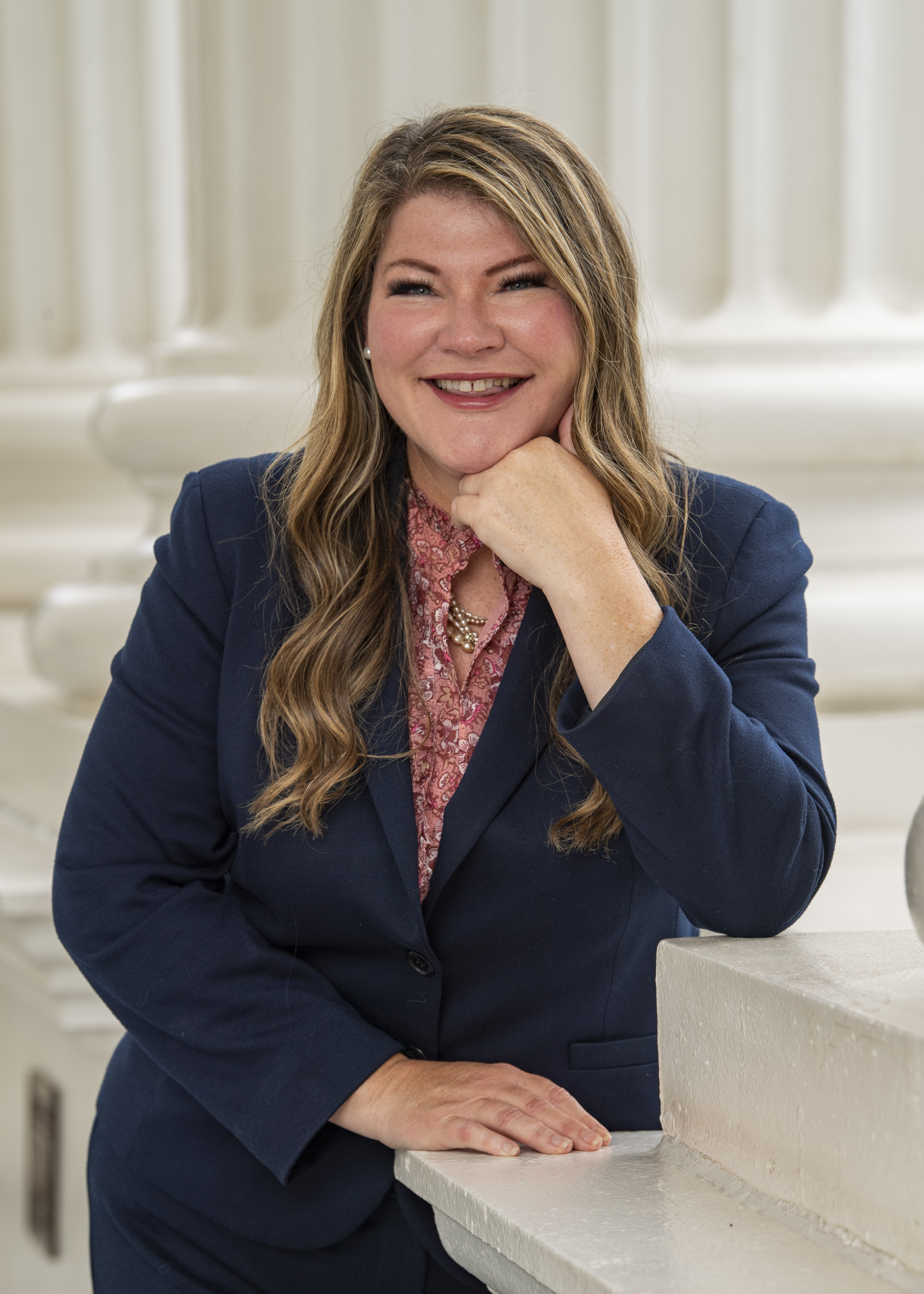
Photo of Tasha Boerner
D California House · District 77 On the 2026 ballot

Rep. Tasha Boerner

Compare
Total votes
16,345
all sessions
Attendance
94%
957 missed
Near the chamber average
With party
98%
of cast votes
Near the chamber average
Bipartisan score
1%
crosses aisle rarely
Near the chamber average
Sponsored
1,554
bills & resolutions
Near the chamber average
Committees
12
assignments
1,554 bills and resolutions

Sponsored bills

Total
1,554
Primary
165
Co-sponsor
1,389
This page
1,554
matching current filters
Co-sponsor AB 2417
Passed · California House · Co-sponsor
State Teachers' Retirement System: community colleges: part-time faculty.

Existing law establishes the California Community Colleges, administered by the Board of Governors of the California Community Colleges, as one of the segments of public postsecondary education in the state. Existing law requires the board to appoint a chief executive officer, known as the Chancellor of the California Community Colleges. Existing law establishes community college districts throughout the state, under the administration of community college district governing boards, and authorizes these districts to provide instruction at the community college campuses they operate. Existing law, the Teachers' Retirement Law, establishes the State Teachers' Retirement System (STRS) and creates the Defined Benefit Program of the State Teachers' Retirement Plan, which provides a defined benefit to members of the program, based on final compensation, credited service, and age at retirement, subject to certain variations. STRS is administered by the Teachers' Retirement Board. Existing law also creates the Cash Balance Benefit Program, which is administered by the board, to provide a retirement plan for the benefit of participating employees who provide creditable service for less than 50% of full time. Existing federal law requires public employers, which includes community college employers, to provide their employees with either social security coverage or membership in a qualified retirement plan. Existing law requires employers subject to STRS, including community college employers, to make available criteria for membership, including optional membership, in a timely manner to persons employed to provide creditable service subject to coverage by the Defined Benefit Program and to inform part-time and substitute employees that they may elect membership in the Defined Benefit Program at any time while employed, as specified. This bill would require STRS, in consultation with the Public Employees' Retirement System, on or before July 1, 2027, to provide on its internet website links to specified information regarding the Defined Benefit Program, the Cash Balance Benefit Program, and social security. The bill would require that information to include, among other things, the differences between membership and contributions made to the Defined Benefit Program and the Cash Balance Benefit Program and covered by social security. The bill would require a community college district, commencing July 1, 2027, to provide the information to a newly hired person who is classified as a temporary employee, as provided. The bill would require a person classified as a temporary employee, as specified, who is employed by a community college district to perform credible service to be provided with the option of membership in the Defined Benefit Program, the Cash Balance Benefit Program, if offered, or social security, as provided. To the extent that the bill would impose new duties on a community college district, the bill would impose a state-mandated local program. The California Constitution requires the state to reimburse local agencies and school districts for certain costs mandated by the state. Statutory provisions establish procedures for making that reimbursement. This bill would provide that, if the Commission on State Mandates determines that the bill contains costs mandated by the state, reimbursement for those costs shall be made pursuant to the statutory provisions noted above.

Passed Aug 30, 2026 1 co-sponsor
Primary AB 2253
Passed · California House · Lead sponsor
Solid waste: products: recycled content claims.

Existing law requires a manufacturer or supplier making an environmental marketing claim relating to the recycled content of a plastic food container product to maintain specified information and documentation in written form in its records in support of that claim and to, upon request, furnish that maintained information to any member of the public, as specified. Existing law requires the maintained information to include that the recycled content for materials has been diverted from the solid waste stream either during the manufacturing process (preconsumer) or after consumer use (postconsumer) and that the recycled content claim conforms to the uniform standards for recycled content contained in the Federal Trade Commission Guides for the Use of Environmental Marketing Claims. Existing law provides for the imposition of a civil penalty by a city, county, or the state for a violation of these provisions. This bill would, beginning January 1, 2030, expand the application of those provisions from plastic food container products to all products making recycled content claims. The bill would revise the reference to the Federal Trade Commission Guides for the Use of Environmental Marketing Claims to specifically refer to those guides as they read on January 1, 2026. The bill would additionally require documentation in written form that the recycled content material claimed does not exceed the amount of third-party certified recycled content introduced into the manufacturer's or supplier's overall supply stream for the material used in that product line. The bill would require the recycled content claim to be based on the actual recycled content used in the production of the material used in the product line using specified methods. The bill would require a manufacturer or supplier making an environmental marketing claim relating to the recycled content of a product other than a plastic food container product to furnish, upon request, the aforementioned maintained information to the Attorney General, as specified. The bill would also keep any confidential, proprietary, or trade secret information provided or obtained regarding a product, other than a plastic food container product, confidential, as provided. Existing constitutional provisions require that a statute that limits the right of access to the meetings of public bodies or the writings of public officials and agencies be adopted with findings demonstrating the interest protected by the limitation and the need for protecting that interest. This bill would make legislative findings to that effect.

Passed Aug 30, 2026 0 co-sponsors
Co-sponsor AB 1709
Passed · California House · Co-sponsor
Covered platforms: age restriction: e-Safety Advisory Commission.

Existing law, the Protecting Our Kids from Social Media Addiction Act, prohibits an operator of an addictive internet-based service or application from providing an addictive feed, as defined, to a user unless the operator does not have actual knowledge that the user is a minor, as specified, or the operator has obtained verifiable parental consent to provide an addictive feed to the user who is a minor. Existing law, the Digital Age Assurance Act, beginning January 1, 2027, requires a person who owns, maintains, or controls a software application, as defined, to request age bracket data sent by a real-time secure application programming interface or operating system with respect to a particular user from an operating system provider or a covered application store when the application is downloaded and launched. This bill would prohibit a covered platform, as defined, from providing an addictive feature, as defined, to a user who is under 16 years of age and would require a covered platform to implement reasonable measures to ensure that users under 16 years of age are not offered or provided any addictive feature on the covered platform. The bill would also authorize the Attorney General to adopt regulations to implement and enforce the bill in order to further the purpose of protecting minors online, including by altering the scope of "covered platform" if the Attorney General determines that doing so is necessary to ensure that "covered platform" applies to internet websites, online services, online applications, or mobile applications that make addictive features, as defined, available to users under 16 years of age. This bill would impose a civil penalty upon a noncompliant platform and would require its provisions to be enforced by a civil action brought only by the Attorney General or a local public prosecutor, as specified. This bill would also establish the e-Safety Advisory Commission within the Department of Justice as an independent advisory body that is only for administrative purposes to advise state government on certain matters related to online safety and would require the commission to, on or before January 1 of each year, report to the Legislature and the Governor on, among other things, its activities under the bill.

Passed Aug 30, 2026 1 co-sponsor
Co-sponsor AB 1540
Passed · California House · Co-sponsor
988 Suicide & Crisis Lifeline: LGBTQ+ youth.

Existing federal law, the National Suicide Hotline Designation Act of 2020, designates the 3-digit telephone number "988" as the universal number within the United States for the purpose of the national suicide prevention and mental health crisis hotline system operating through the 988 Suicide and Crisis Lifeline. Existing law, the Miles Hall Lifeline and Suicide Prevention Act, requires, among other things, the Office of Emergency Services (OES) to verify that technology that allows for transfers between 988 centers, as well as between 988 centers and 911 public safety answering points, is available to 988 centers and 911 public safety answering points throughout the state, to appoint a 988 system director, and to verify interoperability between and across 911 and 988. Existing law establishes the 988 State Suicide and Behavioral Health Crisis Services Fund and provides that 988 surcharge revenue in the fund is available, upon appropriation by the Legislature, for purposes of the act. This bill would require the California Health and Human Services Agency (agency) to annually determine whether an adequate specialized LGBTQ+ suicide prevention hotline is activated by the federal government under 988. When making this determination, the bill would require the agency to consider specified factors, including, among other things, any factor the agency considers relevant to evaluating the adequacy of press 3 operations. The bill would authorize the agency to, no later than 6 months after its determination, request the federal Substance Abuse and Mental Health Services Administration (SAMHSA) to allow the state to implement the press 3 function at the state level for calls originating in the State of California, which would allow callers to dial "988" and press "3" to be automatically routed to a specialized 988 center. The bill would require OES and the agency to, no later than 12 months following the approval by SAMHSA, ensure that press 3 function technologies are available. This bill would require, no later than 12 months following approval by SAMHSA, the agency to identify and contract with a qualified entity or entities that specialize in LGBTQ+ suicide prevention services. The bill would require the agency to determine the eligibility criteria, establish an application process, and administer funds to the qualified entity, as specified. The bill would require a qualified entity to comply with various requirements, including having a primary objective of reducing suicide rates or addressing mental health crises. The bill would make its implementation subject to an appropriation by the Legislature, as specified. This bill would declare that it is to take effect immediately as an urgency statute.

Passed Aug 30, 2026 1 co-sponsor
Co-sponsor SB 905
Passed · California Senate · Co-sponsor
Electricity.

Existing law vests the Public Utilities Commission with regulatory authority over public utilities, including electrical corporations. Existing law authorizes the commission to fix the rates and charges for public utilities and requires that those rates and charges be just and reasonable. This bill would require the commission, for each electrical corporation, to consider assigning a reduced return on equity, as a reduction applied each year to the then current authorized rate of return on equity, for specified types of capital costs included in the electrical corporation's rate base, as specified. This bill would require the commission to initiate a rulemaking proceeding to evaluate opportunities for alternative methods of financing capital investments in electrical distribution, electrical generation, and electrical transmission that reduce costs for ratepayers, as specified. As part of the rulemaking, the bill would require the commission to establish categories of alternative financing mechanisms for each electrical corporation to evaluate and report on with respect to opportunities for alternative financing of electrical distribution, electrical generation, and electrical transmission costs, as specified. The bill would require the commission, on or before December 31, 2028, to submit a report to the Legislature outlining any findings and recommendations resulting from the rulemaking, as specified. This bill would require the commission to require each large electrical corporation to make data available to the public that quantifies the potential for increased utilization of segments of its electrical distribution grid, as specified. Under existing law, a violation of the Public Utilities Act or any order, decision, rule, direction, demand, or requirement of the commission is a crime. Because the above provisions would be a part of the act, and because a violation of a commission action implementing those provisions would be a crime, this bill would impose a state-mandated local program. The California Constitution requires the state to reimburse local agencies and school districts for certain costs mandated by the state. Statutory provisions establish procedures for making that reimbursement. This bill would provide that no reimbursement is required by this act for a specified reason.

Passed Aug 30, 2026 1 co-sponsor
Co-sponsor AB 1383
Passed · California House · Co-sponsor
Public employees' retirement benefits.

The Public Employees' Retirement Law (PERL) establishes the Public Employees' Retirement System (PERS) to provide a defined benefit to members of the system based on final compensation, credited service, and age at retirement, subject to certain variations. Existing law creates the Public Employees' Retirement Fund, which is continuously appropriated for purposes of PERS, including depositing employer and employee contributions. Under the California Constitution, assets of a public pension or retirement system are trust funds. The California Public Employees' Pension Reform Act of 2013 (PEPRA) establishes a variety of requirements and restrictions on public employers offering defined benefit pension plans. In this regard, PEPRA restricts the amount of compensation that may be applied for purposes of calculating a defined pension benefit for a new member, as defined, by restricting it to specified percentages of the contribution and benefit base under a specified federal law with respect to old age, survivors, and disability insurance benefits. Existing law, the Teachers' Retirement Law, establishes the State Teachers' Retirement System (STRS) and creates the Defined Benefit Program of the State Teachers' Retirement Plan, which provides a defined benefit to members of the program, based on final compensation, creditable service, and age at retirement, subject to certain variations. This bill, for service performed on and after January 1, 2027, would prohibit the pensionable compensation for calendar year 2027 used to calculate the defined benefit paid to a new member of a retirement system subject to PEPRA who retires from the system from exceeding specified percentages of the contribution and benefit base under the specified federal law with respect to old age, survivors, and disability insurance benefits. The bill would make related, conforming changes to these provisions on pensionable compensation. The bill also would require a new member of STRS to be subject to specified limits of the Teachers' Retirement Law. PEPRA requires each retirement system that offers a defined benefit plan for safety members of the system to use one of 3 formulas for safety members, 2% at age 57, 2.5% at age 57, or 2.7% at age 57. This bill would establish new retirement formulas, for employees first hired on or after January 1, 2027, as 2.5% at age 55, 2.7% at age 55, or 3% at age 55, subject to certain exceptions. For new members hired on or after January 1, 2013, who are safety members, the bill would require employers to adjust the formulas for service performed on or after January 1, 2027, to offer the formula that has the same fraction at age 55 as the fraction at age 57 in the formula the employer offered pursuant to existing law. The bill would authorize a public employer and a recognized employee organization to negotiate a prospective increase to the retirement benefit formulas for safety members and new safety members, consistent with the formulas permitted under PEPRA, including the new formulas described above. This bill would authorize an employer and its employees to agree in a memorandum of understanding to be subject to a higher safety plan or a lower safety plan, subject to certain requirements, including that the memorandum of understanding is collectively bargained in accordance with applicable laws. By increasing the contribution to continuously appropriated funds, and by increasing expenditures from those funds, this bill would make an appropriation.

Passed Aug 30, 2026 1 co-sponsor
Co-sponsor SB 1167
Passed · California Senate · Co-sponsor
Vehicles: electric bicycles.

Existing law defines an electric bicycle as a bicycle equipped with fully operable pedals and an electric motor that does not exceed 750 watts of power. Existing law classifies electric bicycles into 3 classes with different restrictions for various purposes, and requires, among other things, a class 3 electric bicycle to be equipped with a speedometer. Existing law prohibits certain vehicles that do not meet the definition of an electric bicycle from being advertised, sold, offered for sale, or labeled as an electric bicycle, as specified. A violation of the Vehicle Code is a crime. This bill would amend the type of vehicles that are prohibited from being advertised, sold, offered for sale, or labeled as electric bicycles, including, among others, motor-driven cycles and mopeds. By expanding the application of an existing crime, this bill would impose a state-mandated local program. Existing law defines a motor-driven cycle as any motorcycle with a motor that displaces less than 150 cubic centimeters. This bill would revise the definition of motor-driven cycle to mean any motorcycle propelled by an internal combustion engine that displaces less than 150 cubic centimeters, or by an electric motor that produces 5 gross brake horsepower (3,750 watts) or less, and is designed for highway use, complies with all applicable federal motor safety standards, has a 17-digit vehicle identification number and a safety certification label, and meets all of the equipment requirements of the Vehicle Code. Existing law defines a motorized bicycle or moped as a two-wheeled or three-wheeled device having fully operative pedals for propulsion by human power, or having no pedals if powered solely by electrical energy, and an automatic transmission and a motor that produces less than 4 gross brake horsepower, and is capable of propelling the device at a maximum speed of not more than 30 miles per hour on level ground. This bill would delete references to motorized bicycle in the Vehicle Code and replace the term with "moped." The bill would revise the definition of a moped to mean a two-wheeled or three-wheeled device that has an electric motor or an internal combustion engine that produces less than 4 gross brake horsepower (3,000 watts) , is capable of propelling the device at a maximum speed of not more than 30 miles per hour on level ground, is designed for highway use, complies with all applicable federal motor safety standards, has a 17-digit vehicle identification number and a safety certification label, and meets all of the equipment requirements of the Vehicle Code. The bill would specify that a moped may be equipped with operable pedals for propulsion by human power. Existing law requires every manufacturer of a motorized bicycle or moped to provide a specified disclosure to buyers. This bill would instead require every manufacturer, importer, or seller of a motor-driven cycle, moped, or off-highway electric motorcycle that is powered by an electric motor to provide a specified disclosure to all potential buyers in any advertising, including any online advertising on internet websites or social media. By expanding the application of an existing crime, this bill would impose a state-mandated local program. Existing law requires manufacturers and distributors of electric bicycles to apply a label that is permanently affixed, in a prominent location, to each electric bicycle. Existing law requires the label to contain the classification number, top assisted speed, and motor wattage of the electric bicycle, as specified. For electric bicycles, this bill would additionally require the inclusion of the brand name of the electric bicycle and the manufacturer, importer, or distributor. This bill would require manufacturers and distributors of mopeds and motor-driven cycles to affix a certification label, as specified, on or to the permanent member of the vehicle, as specified. The bill would make it unlawful for a person to sell an electric bicycle, moped, or motor-driven cycle in violation of the labeling and disclosure requirements mentioned above. By expanding the application of an existing crime, this bill would impose a state-mandated local program. This bill would prohibit a person from selling or installing an electric bicycle classification label unless the classification label is sold and installed in a physical retailer or bicycle repair shop. The bill would require a retailer and bicycle repair shop of electric bicycles to verify that the classification label matches the electric bicycle class before installing the classification label on an electric bicycle. By expanding the application of an existing crime, this bill would impose a state-mandated local program. This bill would require any incident report filed by a peace officer for an injury or crash involving an electric bicycle, moped, and motor-driven cycle to include specified information or to indicate that a marking or label was not available. By increasing duties on local law enforcement, this bill would impose a state-mandated local program. Existing law prohibits a person from distributing, selling, or leasing a powered mobility device unless the battery for the powered mobility device has been tested by an accredited testing laboratory for compliance with ANSI/CAN/UL 2272. Existing law requires a charging system advertised, distributed, sold, or leased for use with a particular device, including a powered mobility device, to be certified for use with that device. For these purposes, existing law defines a "powered mobility device" as including, among other devices, a motorized bicycle or moped or an off-highway motorcycle. This bill would remove a motorized bicycle or moped or an off-highway electric motorcycle from the definition of a powered mobility device. The bill would prohibit the distribution, sale, or lease of a moped or off-highway electric motorcycle unless the battery complies with a certain safety standard. The bill would also require a charging system advertised, distributed, sold, or leased for use with a moped or off-highway electric motorcycle to comply with this standard. By expanding the application of an existing crime, this bill would impose a state-mandated local program. Existing law prohibits a person from renting a powered mobility device or its charging system unless the device or charging system has been tested for compliance with ANSI/CAN/UL 2272, as specified. This bill would prohibit a person from renting a moped or off-highway electric motorcycle or its charging system unless the battery for the moped or off-highway electric motorcycle or the charging system complies with a certain safety standard. By expanding the application of an existing crime, this bill would impose a state-mandated local program. Existing law defines an off-highway motor vehicle as a motor vehicle that operates on lands, other than a highway, that are open and accessible to the public, as specified. Existing law establishes rules for the operation of an off-highway vehicle. Existing law requires every off-highway motor vehicle that is not registered under the Vehicle Code to display an identification plate or device issued by the Department of Motor Vehicles, except as specified. This bill would specify that mopeds are subject to identification as off-highway motor vehicles. The bill would also prohibit the use, allowing to use, or operation of an off-highway electric motorcycle, motorcycle, motor-driven cycle, or moped powered by an electric motor on any forest-covered land, brush-covered land, or grass-covered land unless the vehicle complies with standards for mopeds and off-highway electric motorcycles, as specified. By creating new crimes related to the operation of off-highway vehicles, this bill would impose a state-mandated local program. Existing law requires a manufacturer, importer, distributor, or retailer of an electric bicycle, powered mobility device, charging system, or storage battery subject to certain testing to provide, upon request, a true and accurate copy of the test report for the product issued by the accredited testing laboratory. This bill would require a manufacturer, importer, distributor, or retailer of a moped, off-highway electric motorcycle, charging system, or storage battery used on a moped or off-highway electric motorcycle to retain documentation and information supporting compliance with any standard required, as specified. By expanding the application of an existing crime, this bill would impose a state-mandated local program. Existing law authorizes a peace officer to remove a vehicle that (1) has fewer than 4 wheels, but that does not meet the definition of an electric bicycle, if that vehicle is powered by an electric motor capable of exclusively propelling the vehicle in excess of 20 miles per hour on a highway and is being operated by an operator without a current license to operate the vehicle, or (2) is a class 3 electric bicycle being operated by a person under 16 years of age. This bill would additionally prohibit a person from operating a 2-wheeled or 3-wheeled device powered by an electric motor that is capable of propelling the device at a speed greater than 20 miles per hour on level ground on a highway or public right-of-way when powered solely by the motor unless the device meets the definition of a device that is explicitly defined in, and authorized for use on a highway or public right-of-way by, the Vehicle Code. The bill would authorize a peace officer to remove the vehicle if the vehicle is a 2-wheeled or 3-wheeled unauthorized device being operated by a person on a highway or public right-of-way. Because a violation of these provisions would be a crime, the bill would impose a state-mandated local program. This bill would make other clarifying and conforming changes. This bill would incorporate additional changes to Section 4442 of the Public Resources Code proposed by AB 2075 to be operative only if this bill and AB 2075 are enacted and this bill is enacted last. This bill would incorporate additional changes to Section 12804.9 of the Vehicle Code proposed by AB 1913 to be operative only if this bill and AB 1913 are enacted and this bill is enacted last. The California Constitution requires the state to reimburse local agencies and school districts for certain costs mandated by the state. Statutory provisions establish procedures for making that reimbursement. This bill would provide that no reimbursement is required by this act for a specified reason. This bill would make certain provisions described above operative only if AB 2346 is enacted.

Passed Aug 28, 2026 1 co-sponsor
Co-sponsor SB 1098
Passed · California Senate · Co-sponsor
Public Utilities Commission: memorandum and balancing accounts.

Existing law vests the Public Utilities Commission with regulatory authority over public utilities, including electrical corporations and gas corporations. Existing law authorizes the commission to fix the rates and charges for every public utility and requires that those rates and charges be just and reasonable. Existing law requires the commission, whenever the commission authorizes a change in rates reflecting and passing through to customers specific changes in costs, to require a public utility to establish and maintain a balancing account to reflect the balance between the related costs and revenues. Existing law further directs the commission to authorize public utilities to establish catastrophic event memorandum accounts, as provided. Existing law authorizes each electrical corporation to establish a memorandum account to track costs incurred for wildfire risk mitigation that are unforeseen and incremental to the wildfire risk mitigation programs and activities authorized in the electrical corporation's revenue requirements, as specified. This bill would provide that it is the policy of the state that the regularly scheduled general rate case process is the preferred and primary method of establishing authorized revenue requirements for electrical corporations and gas corporations. The bill would require the commission, in exercising its ratemaking authority, to apply specified principles and requirements, including a requirement that memorandum accounts and balancing accounts, as defined, be authorized and maintained only when necessary to address costs that cannot reasonably be anticipated in the general rate case process, as provided. The bill would require each memorandum account or balancing account authorized by statute, or by the commission, before January 1, 2027, to be included and reviewed in the subsequent general rate case proceeding cycle or at a similar cyclical review interval to the general rate case proceeding, as provided. The bill would require the commission, as part of its review, to close any memorandum account or balancing account if the commission determines that the account is no longer necessary, as specified. The bill would authorize the commission to establish exceptions to those principles and requirements for categories of costs not reviewed pursuant to that requirement, as provided. The bill would require the commission to prepare a report to post on its public website about the process and outcome of the review of each utility's memorandum accounts and balancing accounts. The bill would further require that the ratemaking treatment of memorandum accounts or balancing accounts that are in effect on January 1, 2027, remain unchanged until the commission reviews the account pursuant to that requirement. Under existing law, a violation of the Public Utilities Act or any order, decision, rule, direction, demand, or requirement of the commission is a crime. Because the above requirements would be a part of the act, and a violation of a commission action implementing those requirements would be a crime, this bill would impose a state-mandated local program. The California Constitution requires the state to reimburse local agencies and school districts for certain costs mandated by the state. Statutory provisions establish procedures for making that reimbursement. This bill would provide that no reimbursement is required by this act for a specified reason.

Passed Aug 28, 2026 1 co-sponsor
Primary AB 1789
Passed · California House · Lead sponsor
Political Reform Act of 1974: candidate trainings.

The Political Reform Act of 1974 provides for the comprehensive regulation of campaign financing, including requiring the reporting of campaign contributions and expenditures and imposing other reporting and recordkeeping requirements on campaign committees. This bill would, commencing January 1, 2029, require a candidate for elective office with a candidate controlled committee to complete a training course on the requirements of the Political Reform Act of 1974 with respect to campaigns for the office for which they intend to be a candidate. For a candidate who does not complete the training, the bill would prohibit the candidate controlled committee from receiving contributions until the candidate completes the training. The bill would, commencing January 1, 2029, also require the treasurer for a candidate controlled committee to complete a training course on the requirements of the act that apply to the committee. The bill would prohibit a committee whose treasurer does not complete the training course from accepting contributions until the training course is completed. The bill would exempt from these requirements an individual who is required to complete, and has completed, a similar training offered by a local government ethics agency. By prohibiting a committee's receipt of contributions if specified conditions are not satisfied, as set forth above, the bill would create a new crime and thereby establish a state-mandated local program. The California Constitution requires the state to reimburse local agencies and school districts for certain costs mandated by the state. Statutory provisions establish procedures for making that reimbursement. This bill would provide that no reimbursement is required by this act for a specified reason. The Political Reform Act of 1974, an initiative measure, provides that the Legislature may amend the act to further the act's purposes upon a 23 vote of each house of the Legislature and compliance with specified procedural requirements. This bill would declare that it furthers the purposes of the act.

Passed Aug 28, 2026 0 co-sponsors
Showing 1 to 10 of 1,554 bills
1 2 3 156 Next