

Existing law, the California Age-Appropriate Design Code Act, requires a business that provides an online service, product, or feature likely to be accessed by children to comply with certain requirements, including, among other things, prohibiting the business from collecting, selling, sharing, or retaining any personal information that is not necessary to provide the online service, product, or feature, except as specified. Existing law imposes specified civil penalties upon a business that violates these provisions. This bill would repeal the above-described act and would instead impose similar provisions without the above-referenced exceptions and would impose civil penalties for a violation of these provisions. The bill would require a business that provides an online product or service likely to be accessed by children to take reasonable steps to prevent specified risks of harm to children. The bill would authorize a child to void any provision of a contract that was entered into by the child or their parent or guardian as a result of a design feature of the online product or service. The bill would authorize the Attorney General or a public prosecutor to bring a civil action for a violation of these provisions, as specified.
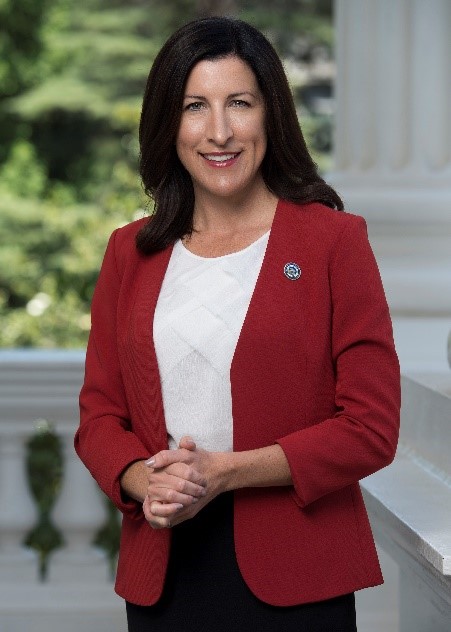
Rep. Cottie Petrie-Norris
Sponsored bills
This measure would call on Congress to enact legislation that restores and strengthens the full protections of the Voting Rights Act of 1965, and it would call on the President to sign the legislation.
Existing law establishes, until January 1, 2028, the Prescribed Fire Liability Pilot Program, to be administered by the Department of Forestry and Fire Protection, to increase the pace and scale of the use of prescribed fire and cultural burning and to reduce barriers for conducting prescribed fires and cultural burning. Existing law creates the Prescribed Fire Claims Fund in the State Treasury to support coverage for losses from prescribed fires and cultural burning by nonpublic entities, such as cultural fire practitioners, private landowners, and nongovernmental entities. Under existing law, moneys in the fund are under the control of the department, and the department or a contracted third-party administrator is authorized to direct payments for claims from the fund, consistent with specified guidelines adopted by the department. These guidelines include, among other things, (1) a requirement that an eligible claim relate to either a prescribed fire conducted or supervised by a burn boss, as defined, or a cultural burn conducted or supervised by a cultural fire practitioner, and (2) a requirement that a claim shall not be paid from the fund unless the department reviewed and approved a burn plan before the prescribed fire or cultural burning. Existing law requires, upon order of the Department of Finance, the $20,000,000 appropriated to the Department of Forestry and Fire Protection by the Legislature in the Budget Act of 2021 be transferred into the fund, and provides that all moneys deposited or transferred into the fund be continuously appropriated to the department for these purposes. By Executive Order N-35-25, Governor Gavin Newsom suspended the limitation on public and governmental agencies enrolling in the Prescribed Fire Liability Pilot Program to the extent that the limitation would prohibit resource conservation districts and volunteer fire departments or districts from such enrollment. This bill would establish the Good Fire Act, which would indefinitely extend the Prescribed Fire Liability Program. The bill would explicitly state that the Prescribed Fire Claims Fund shall support coverage for losses from prescribed fires and cultural burning on any lands within the state. The bill would also expand program eligibility by changing the entities who may receive coverage for losses from prescribed fires and cultural burning from nonpublic entities to individuals and entities other than the department or the federal government, as provided. By extending the term of a continuous appropriation and authorizing the expenditure of continuously appropriated funds for new purposes, the bill would make an appropriation. This bill would eliminate the requirement for department approval for a plan reviewed and approved by a burn boss, and would require a burn plan to be submitted to the claims fund portal before ignition. The bill would also require the guidelines to include methods for prioritizing broadcast burns and burns by non-public individuals or entities or California Native American tribes in the event the fund is oversubscribed. Within one year of a claim being paid from the fund, the bill would require the department to submit a report to the Legislature regarding the claim process and propose statutory changes related to the fund, as provided. Existing law requires the State Fire Marshal, with the involvement of the Statewide Training and Education Advisory Committee, to develop a curriculum for, or amend into an existing curriculum, a certification program for burn bosses who possess authority to engage in a prescribed burning operation and to enter into the necessary contracts related to a prescribed burning operation. Existing law requires this curriculum to provide for the initial certification as well as the continuing education of burn bosses. Under existing law, specified civil liability protections and eligibility for claims from the Prescribed Fire Claims Fund extend to prescribed burns that, among other things, are reviewed and approved by a burn boss certified pursuant to these provisions, as provided. This bill would require, as part of the continuing education of burn bosses, the State Fire Marshal to require recertification no sooner than every 3 years. The bill would also require the department to consider methods to increase the pool of available instructors for the certification program, including the use of non-department instructors. The bill would require the department, in consultation with the Statewide Training and Education Advisory Committee, to develop a mechanism to allow specified individuals to be designated as a burn boss. The bill would authorize these individuals certified pursuant to this process to use the above-described recertification process to maintain currency. Existing law authorizes an entity that owns or controls brush-covered land, forest lands, woodland, grassland, shrubland, or a combination of those types of land within a state responsibility area to apply to the Department of Forestry and Fire Protection for permission to use prescribed burning for certain public purposes. Existing law requires the department, upon receipt of an application, to inspect the land in company with the applicant to determine whether a permit shall be granted, as provided. By Executive Order N-35-25, Governor Gavin Newsom suspended the above-described requirement that the department conduct a site visit or inspection before issuing a state burn permit for projects undertaken by burn bosses or cultural fire practitioners. This bill would authorize the department to waive the inspection requirement or modify the standard precautions for an application submitted by specified individuals. The California Environmental Quality Act (CEQA) requires a lead agency, as defined, to prepare, or cause to be prepared, and certify the completion of an environmental impact report on a project that it proposes to carry out or approve that may have a significant effect on the environment or to adopt a negative declaration if it finds that the project will not have that effect. CEQA also requires a lead agency to prepare a mitigated negative declaration for a project that may have a significant effect on the environment if revisions in the project would avoid or mitigate that effect and there is no substantial evidence that the project, as revised, would have a significant effect on the environment. Existing law exempts from CEQA specified wildfire risk reduction projects, including, among other projects, projects consisting of a prescribed fire or fuel reduction to reduce wildfire risk by reestablishing the fire return interval appropriate to the ecosystem for biodiversity or other benefits, excluding projects located on coastal sage scrub habitat or any other sensitive habitat. By Executive Order N-35-25, Governor Gavin Newsom suspended the requirements of CEQA as applied to the Department of Forestry and Fire Protection to the extent necessary for the department to assist local agencies and beneficial fire practitioners to complete beneficial fire projects that limit dangerous wildfire conditions to the greatest extent feasible. This bill would exempt from CEQA those actions taken by the department to assist in the implementation of prescribed fire or cultural burning projects that do not otherwise require compliance with CEQA. Existing law establishes various grant programs for purposes of wildfire prevention. This bill would require a state agency, department, board, or commission that has awarded grant funds for a project that includes the preparation for, or implementation of, a beneficial fire project to include as an allowable expense of the grant the payment of overtime or double rates of pay to employees or contractors who prepare for or implement the beneficial fire project when such expenses are necessary for the implementation of the beneficial fire project. Existing law authorizes the Director of Forestry and Fire Protection to provide grants to, or enter contracts or other cooperative agreements with, specified entities for the implementation and administration of projects and programs to improve forest health and reduce greenhouse gas emissions. Existing law authorizes the director to authorize advance payments and requires grantees who receive advance payments to file an accountability report with the department 4 months from the date of receiving the funds and every 4 months thereafter. This bill would instead require grantees who receive advance payments to file an accountability report within 6 months from the date of receiving the funds and every 6 months thereafter. This bill would incorporate additional changes to Section 4799.05 of the Public Resources Code proposed by AB 2513 to be operative only if this bill and AB 2513 are enacted and this bill is enacted last. This bill would declare that it is to take effect immediately as an urgency statute.
Existing law vests the Public Utilities Commission with regulatory authority over public utilities, including electrical corporations. Existing law requires the commission, if it determines that the rules, practices, equipment, appliances, facilities, or service of a public utility, or the methods of manufacture, distribution, transmission, storage, or supply used by the public utility, are unjust, unreasonable, unsafe, improper, inadequate, or insufficient, to determine and fix the rules, practices, equipment, appliances, facilities, service, or methods to be observed, furnished, constructed, enforced, or employed. This bill would, within one year following the adoption of a transmission plan by the Independent System Operator through the transmission planning process, or a successor process, or within one year following the execution of a generator interconnection agreement, except as specified, require each large electrical corporation, as defined, or transmission owner, as defined, that is assigned or obligated to construct a project that requires approval by the commission to submit to the below-described transmission development monitor a project-specific schedule for the project, as provided. This bill would require the commission, on or before October 1, 2027, to establish a transmission development monitor within the commission. The bill would require the transmission development monitor to monitor and review certain information regarding transmission- and interconnection-related facilities submitted by the large electrical corporation or transmission owner, the large electrical corporation's or transmission owner's progress on completing network upgrades following approval in a generator interconnection agreement or transmission plan approved by the Independent System Operator, the large electrical corporation's or transmission owner's compliance with the above-described schedule submitted to the transmission development monitor, and the large electrical corporation's or transmission owner's compliance with any remedial actions ordered by the commission, as specified. The bill would require the transmission development monitor, among other things, to prepare and submit an annual report, as provided, and to notify the commission within 15 days of identifying a material deficiency, as defined. The bill would require the commission, within 90 days of receiving an annual report or notification of a material deficiency, to issue a resolution directing the large electrical corporation or transmission owner to take remedial actions to address material deficiencies identified by the transmission development monitor, as specified. Existing constitutional provisions require that a statute that limits the right of access to the meetings of public bodies or the writings of public officials and agencies be adopted with findings demonstrating the interest protected by the limitation and the need for protecting that interest. This bill would make legislative findings to that effect. Under existing law, a violation of the Public Utilities Act or any order, decision, rule, direction, demand, or requirement of the commission is a crime. Because the above-described provisions would be part of the act and a violation of a commission action implementing the above-described provisions would be a crime, this bill would impose a state-mandated local program. The California Constitution requires the state to reimburse local agencies and school districts for certain costs mandated by the state. Statutory provisions establish procedures for making that reimbursement. This bill would provide that no reimbursement is required by this act for a specified reason.
Existing law requires the Department of Motor Vehicles to immediately revoke the driving privilege of a person upon receipt of a duly certified abstract of the record of a court showing that the person has been convicted of, among other things, gross vehicular manslaughter while intoxicated. Existing law requires a person who has been convicted of driving a motor vehicle while intoxicated, as specified, to install an interlock ignition device on the vehicle they operate for a mandatory period of time as ordered by the court. This bill, Irene's Law, would require the department, commencing on January 1, 2031, to revoke the driving privilege of a person upon a showing that the person has been convicted of a violation of driving while intoxicated that proximately causes bodily injury to any person other than the driver and has 4 or more prior convictions within a 10-year period for, among other things, driving while under the influence of an alcoholic beverage. The bill would additionally prohibit the department from reinstating that person's driving privileges until the expiration of 72 months after the date of revocation, subject to certain requirements, including, among others, agreeing to maintain a functioning, certified ignition interlock device, for a mandatory term of 72 months.
Existing law vests the Public Utilities Commission with regulatory authority over public utilities, including electrical corporations. Existing law authorizes the commission to fix the rates and charges for every public utility and requires that those rates and charges be just and reasonable. Existing law authorizes the commission to investigate a single rate, classification, rule, contract, practice, or the entire schedule of rates, classifications, rules, contracts, and practices, of any public utility, and to establish new rates, classifications, rules, contracts, practices, or schedules. This bill would require, as part of a new or existing proceeding, the commission to require each electrical corporation to file a transmission and distribution service tariff and a generation service tariff for participating customers, as defined, that meet certain requirements, as specified. The bill would also require, on or before January 1, 2028, each community choice aggregator or electric service provider to adopt a tariff for generation service for data centers, as defined, consistent with certain requirements, as specified. By imposing new duties on community choice aggregators, the bill would impose a state-mandated local program. Under existing law, a violation of the Public Utilities Act or any order, decision, rule, direction, demand, or requirement of the commission is a crime. Because the above provisions would be a part of the act, and because a violation of a commission action implementing the above provisions would be a crime, the bill would impose a state-mandated local program. The California Constitution requires the state to reimburse local agencies and school districts for certain costs mandated by the state. Statutory provisions establish procedures for making that reimbursement. This bill would provide that no reimbursement is required by this act for specified reasons.
Existing law requires the Wildfire and Forest Resilience Task Force, including the Natural Resources Agency, the California Environmental Protection Agency, the Office of Planning and Research, and the Department of Forestry and Fire Protection, in coordination with certain public agencies, to develop a comprehensive implementation strategy to track and ensure the achievement of the goals and key actions identified in California's Wildfire and Forest Resilience Action Plan, as provided. Existing law requires the task force, on or before March 1, 2026, and every 5 years thereafter, to update that action plan, as provided. Existing law establishes, in the Department of Conservation, a Regional Forest and Fire Capacity Program to support regional leadership to build local and regional capacity and develop, prioritize, and implement strategies and projects that create fire-adapted communities and landscapes, as provided. Existing law requires the department to, upon appropriation by the Legislature for purposes of the program, provide block grants to regional entities, as defined, to develop regional strategies that develop governance structures, identify wildfire risks, foster collaboration, and prioritize and implement projects within the region to achieve the goals of the program, as specified. Existing law authorizes the regional entities, as defined, to implement activities pursuant to this program, directly or by providing subgrants or contracts, and collaborative planning efforts with local entities to accomplish development of regional priority strategies, among other objectives. Existing law authorizes the department to, until July 1, 2025, authorize advance payments of grants awarded pursuant to the program. This bill would authorize the Director of the Department of Conservation to directly award regional landscape grants to regional entities to implement the above-described regional priority strategies to contribute to the achievement of the goals of California's Wildfire and Forest Resilience Action Plan, as specified. The bill would extend the authorization for the department to award advance payments of grants awarded pursuant to the program indefinitely. Existing law authorizes the Director of Forestry and Fire Protection to provide grants to, or enter contracts or other cooperative agreements with, specified entities for the implementation and administration of projects and programs to improve forest health and reduce greenhouse gas emissions. Existing law requires moneys appropriated to the Department of Forestry and Fire Protection for landscape-scale projects to be allocated to subsidize the removal of small-diameter material and dead trees, for multiple benefit projects, and for activities on national forest lands, as provided. This bill would additionally require moneys appropriated to the department for landscape-scale projects to be allocated for projects that improve ecosystem health and for regional landscape grants that the director would be authorized to directly award to regional entities, as defined, to implement the above-described regional priority strategies. The bill would also require the director, in collaboration with the Wildfire and Forest Resilience Task Force, to, before the issuance of these grants, establish guidelines for funding the grants to contribute to the achievement of the goals of California's Wildfire and Forest Resilience Action Plan, as specified. Existing law requires the Department of Forestry and Fire Protection to establish a local assistance grant program for fire prevention and home hardening education activities in the state and extends eligibility for grants to, among others, local agencies, resource conservation districts, fire safe councils, the California Conservation Corps, certified community conservation corps, Native American tribes, and qualified nonprofit organizations. Existing law requires eligible activities under the local assistance grant program to include, but not be limited to, vegetation management along roadways and driveways to reduce fire risk, as provided. Existing law authorizes the department to, until July 1, 2025, authorize advance payments from grants awarded pursuant to the local assistance grant program. This bill would expand eligible activities to include vegetation modification and specify that the vegetation management and modification along roadways and driveways includes wildfire ignition risk. The bill would also add ignition prevention, as defined, to the eligible activities. The bill would extend the authorization for the department to award advance payments from grants awarded pursuant to the program indefinitely. The Wildlife Conservation Law of 1947 establishes the Wildlife Conservation Board within the Department of Fish and Wildlife to investigate, study, and determine what areas within the state are most essential and suitable for wildlife production and preservation, among other things. Under existing law, the board administers various habitat conservation programs. This bill would authorize the Wildlife Conservation Board to award regional landscape grants to local entities, as defined, to implement regional priority strategies as described above. The bill would also require, before the issuance of these grants, the board, in collaboration with the Wildfire and Forest Resilience Task Force, to establish guidelines for funding these regional landscape grants to contribute to the achievement of the goals of California's Wildfire and Forest Resilience Action Plan, as specified. This bill would incorporate additional changes to Section 4799.05 of the Public Resources Code proposed by AB 1699 to be operative only if this bill and AB 1699 are enacted and this bill is enacted last.
Under existing law, if a person is convicted of either driving under the influence (DUI) of any alcoholic beverage or drug, or under the combined influence of any alcoholic beverage and drug or driving while having 0.08% or more, by weight, of alcohol in the person's blood within 10 years of 2 separate violations of specified DUI offenses, or any combination thereof, that resulted in convictions, that person has committed an offense punishable by imprisonment in the county jail for not less than 120 days nor more than one year and by a fine, as specified. This bill would, instead, make the above DUI conviction punishable as a wobbler by imprisonment in the county jail for not less than 120 days nor more than one year and by a fine, as specified, or by imprisonment in the county jail for 16 months or 2 or 3 years and a fine, as specified. By increasing the punishment of a crime, this bill would impose a state-mandated local program. Under existing law, if a person is convicted of DUI and the offense occurred within 10 years of 3 or more separate violations for driving under the influence that resulted in specified convictions, that person has committed an offense punishable as either a misdemeanor or a felony. This bill would, instead, make the above DUI conviction punishable as a wobbler if the offense occurred within 10 years of 3 separate violations for driving under the influence that resulted in specified convictions, and punishable as a felony by imprisonment in the county jail for 16 months or 2 or 3 years and a fine, as specified, if the offense occurred within 10 years of 4 or more separate violations for driving under the influence that resulted in specified convictions. By increasing the punishment of a crime, this bill would impose a state-mandated local program. This bill would make conforming changes. This bill would incorporate additional changes to Sections 23546, 23550, and 23550.5 of the Vehicle Code proposed by AB 1830 to be operative only if this bill and AB 1830 are enacted and this bill is enacted last. The California Constitution requires the state to reimburse local agencies and school districts for certain costs mandated by the state. Statutory provisions establish procedures for making that reimbursement. This bill would provide that no reimbursement is required by this act for a specified reason.
Existing law makes it a crime to operate a vehicle while under the influence of alcohol or drugs, and sets forth the penalties for a violation of these provisions. Existing law requires the driver of a vehicle involved in an accident resulting in injury or death to a person, other than that driver, to immediately stop the vehicle at the scene of the accident and provide specified personal information to the injured person or the occupants of the other vehicle and to any traffic or police officer at the scene of the accident. Existing law makes failing to comply with these requirements a crime, punishable as a misdemeanor for an accident resulting in injury and punishable as a misdemeanor or a felony for an accident resulting in death or serious injury, as defined. This bill would make the above-described violation for an accident resulting injury punishable as a misdemeanor or a felony and would impose an increased felony penalty for the above-described violation for an accident resulting in death or serious injury, if either of those violations occurred within 10 years of a separate driving under the influence, reckless driving, or gross vehicular manslaughter violation, as specified. By increasing the potential time of imprisonment, the bill would impose a state-mandated local program. Existing law requires a person who is convicted of specified crimes related to driving under the influence to be advised by the court of the dangerousness of their actions and that if that behavior in the future results in a person's death, they may be charged with murder. This bill would additionally require this advisement to be given if a person enters a plea to a different or lesser offense, as described. The California Constitution requires the state to reimburse local agencies and school districts for certain costs mandated by the state. Statutory provisions establish procedures for making that reimbursement. By imposing an increased term of imprisonment, this bill would create a state-mandated local program. This bill would provide that no reimbursement is required by this act for a specified reason.
(1) Existing law establishes the Department of Forestry and Fire Protection in the Natural Resources Agency and requires the department to coordinate programs of fire protection, fire prevention, pest control, and forest and range maintenance and enhancement. This bill would require the department, on or before July 1, 2029, in consultation with the Department of Insurance, the Natural Resources Agency, the Office of Emergency Services, and other relevant departments, to develop standards for state and local agencies to aggregate and make available data related to parcel-, neighborhood-, and community-level wildfire risk for the purpose of enabling a wildfire data sharing platform, as provided. The bill would require the department to incorporate those data standards into community wildfire risk reduction metrics. (2) Existing law creates the Department of Insurance, headed by the Insurance Commissioner, and prescribes their powers and duties. Existing law requires, on or before April 1, 2026, and every 2 years thereafter, an admitted insurer with written California premiums totaling $12,000,000 or more to submit a report to the Insurance Commissioner on its residential property experience data for the previous 2 years for policies written in California, as specified. Existing law requires this information submitted to the commissioner to be confidential, exempt from the California Public Records Act, and not subject to subpoena, as provided. This bill would authorize the Department of Insurance to provide information submitted to the department, including, among other things, the property experience data described above, to researchers and government agencies for the purpose of evaluating California wildfire risk, insurance protection gaps, or wildfire risk mitigation, as provided. The bill would require any published data product collected pursuant to the above-described authority that is provided to a researcher or government agency to be anonymized and aggregated sufficiently to avoid identification of individual company losses, claims data, or information on confidential business practices, as specified, and would prohibit subsequent reports from identifying an individual respondent or insurer. (3) Existing law requires the Department of Forestry and Fire Protection to annually provide to the Legislature a report detailing the department's fire prevention efforts and annually post on its internet website information regarding hazardous fuel reduction and vegetation management projects funded or conducted by the department, as provided. Existing law requires the department to develop a standardized protocol for monitoring implementation and evaluating the positive and negative ecological and fire behavior impacts from vegetation management projects undertaken by the state, as provided. This bill would repeal those requirements and would instead require the department, on or before March 1 of each year, to prepare and submit a report to the Legislature on the detailed efforts made in California towards wildfire prevention and community preparedness, as provided. Existing law requires the Wildfire and Forest Resilience Task Force, including the Natural Resources Agency and the department, among others, in coordination with certain public agencies, to develop a comprehensive implementation strategy to track and ensure the achievement of the goals and key actions identified in California's Wildfire and Forest Resilience Action Plan, as provided. This bill would require, on or before July 1, 2027, and every 5 years thereafter, the Secretary of the Natural Resources Agency, in consultation with the State Fire Marshal, the Wildfire and Forest Resilience Task Force, the Wildfire County Coordinator Program, and the State Hazard Mitigation Officer to prepare a comprehensive statewide community wildfire preparedness strategy, as provided. The bill would require the State Fire Marshal to support communities in the development of optional county-level community wildfire protection plans that align with the community wildfire preparedness strategy, as provided. The bill would require a local entity, in order to receive state funding to implement its community wildfire protection plan, to provide annual updates and progress on its efforts to meet the goals of its plan. (4) Existing law establishes the Continuation Account in the Wildfire Fund, to be administered by the Wildfire Fund Administrator, and continuously appropriates moneys in the Continuation Account for purposes of payment of eligible claims arising from wildfires ignited on or after September 19, 2025, as provided. Existing law requires each large electrical corporation to provide to the Public Utilities Commission a written notification of its election to participate, or not to participate, in the Continuation Account, and requires the commission, if all participating electrical corporations have provided their election to participate in the Continuation Account, to provide the administrator and other entities notification of their elections. Existing law authorizes the administrator, on or after the date the commission provides that notification, but not later than December 31, 2028, to determine if annual contributions from large electrical corporations are needed to enable the Continuation Account to fund the timely payment of eligible claims, as provided. Existing law requires the commission, within 15 days of receiving notification from the administrator that additional annual contributions are required, to initiate a rulemaking proceeding to consider using its authority to require the large electrical corporations to collect a nonbypassable charge from ratepayers to support the Continuation Account, including the payment of any bond issued for the support of the Continuation Account, as provided. Existing law authorizes the Department of Water Resources to issue bonds, in an aggregate amount up to $9,000,000,000, as provided, to support the Continuation Account. If the commission imposes the nonbypassable charge to support the Continuation Account, existing law requires the large electrical corporations, from calendar years 2029 to 2045, inclusive, to provide to the administrator their annual contributions, as specified, for deposit into the Continuation Account. This bill would, if the administrator provides that notification, additionally authorize the administrator to incur indebtedness and issue bonds solely for purposes of supporting the Continuation Account and other related expenses incurred by the administrator, provided that bonds authorized under this provision are payable solely from annual contributions and additional contributions, as provided. The bill would authorize bonds issued by the department, at the discretion of the administrator, to be secured solely by ratepayer contributions, as specified. The bill would prohibit the Wildfire Fund or Continuation Account from being terminated while bonds issued by the department remain outstanding, unless an amount sufficient to pay remaining debt service on those bonds has been irrevocably set aside for those purposes, as specified. Upon the determination of the administrator that the Wildfire Fund should be terminated, the bill would require any remaining Wildfire Fund assets to be transferred to the Continuation Account, and upon the determination of the administrator that the Continuation Account should be terminated, the bill would require any remaining funds to be transferred to the General Fund. By transferring those moneys into a continuously appropriated account, the bill would make an appropriation. The bill would make additional technical and conforming changes. Existing law requires revenues and bond proceeds received by the department to be deposited in the Department of Water Resources Charge Fund and continuously appropriates the moneys in the Department of Water Resources Charge Fund to the department for specified purposes, including transfers to the Wildfire Fund and payment of the bonds. This bill would require revenues and bond proceeds received by the department pursuant to the provisions related to the Continuation Account to be deposited into an account or subaccount within the Department of Water Resources Charge Fund, and to be held separate and apart from amounts held in the Department of Water Resources Charge Fund pursuant to provisions related to the Wildfire Fund, as specified. (5) This bill would create the California Wildfire Relief Fast-Pay Program and would require the California Catastrophe Response Council to appoint a fast-pay administrator to administer the fast-pay program. The bill would require the fast-pay administrator to establish and approve procedures for the review, approval, and timely payment of claims by individual claimants for damages as a result of an activating wildfire, as defined. If the eligible entity, defined as an electric utility or public agency that has a wildfire mitigation plan approved by the Office of Energy Infrastructure Safety (office) , is a participating electrical corporation, as defined, the bill would require settlements pursuant to the fast-pay program to count as settlements of eligible claims and to be paid from the account, as specified. If the eligible entity is not a participating electrical corporation, the bill would require the eligible entity to be solely responsible for directly paying amounts to satisfy settlement offers pursuant to the fast-pay program. This bill would, among other things, prohibit an individual, business corporation, or other entity from selling, assigning, or transferring any wildfire claim, or any right of recovery on a wildfire claim, to a private equity group, and would prohibit an individual, wildfire attorney, corporation, or other entity from selling, assigning, or transferring, in whole or in part, any contingency fee on an interest in a contingency fee, except as provided. This bill would prohibit a private equity group from paying any wildfire expenses with respect to a wildfire claim and from funding wildfire advertising costs with respect to any applicable wildfire that damages or destroys (1) more than 100 structures, or (2) more than 10,0000 acres of land, and would authorize the Attorney General or any district attorney to bring a civil action to enforce that prohibition, as specified. (6) Existing law regulates, among other things, fee agreements, legal advertising and referral services, the sale of financial products to a client, and unlawful solicitation. This bill would require an attorney who contracts to represent a client involving a claim against an electric utility involving an applicable wildfire shall provide a disclosure to the client the options and requirements involving the fast-pay program, as provided. The bill would prohibit a person, firm, partnership, association, or corporation from making an unsolicited targeted communication to solicit any business for any attorneys concerning a potential action for wrongful death, personal injury, or property damage within 30 days of an event, defined as an incident resulting in the proclamation of a state of emergency, as specified. The bill would prohibit, for any claim based on inverse condemnation against an electrical corporation arising from a covered wildfire caused by an electrical corporation, the fee for an attorney representing an insurer involving a subrogated claim from exceeding 10% of the settlement or judgment. (7) Existing law, the Bagley-Keene Open Meeting Act, requires, with specified exceptions, that all meetings of a state body be open and public and all persons be permitted to attend. Existing law authorizes certain state bodies to hold closed session meetings for certain purposes, including authorizing the governing board or advisory panel of the California Earthquake Authority (CEA) to hold closed sessions when addressing the development of rates, reinsurance, and strategy when discussion in open session concerning those matters would prejudice the position of the CEA. This bill would additionally authorize the California Catastrophe Response Council to hold closed sessions when addressing either the administration or evaluation of individual claims submitted for reimbursement from the Wildfire Fund or the Continuation Account, or the development of strategy related to reinsurance or other mechanisms to extend the durability of the Wildfire Fund or Continuation Account, as specified. The California Public Records Act requires a public agency, defined to mean a state or local agency, to make its public records available for public inspection and to make copies available upon request and the payment of a fee, unless the public records are exempt from disclosure. This bill would exempt records held by the California Catastrophe Response Council, or the California Earthquake Authority as the Wildfire Fund Administrator, that relate to the administration or evaluation of claims submitted for reimbursement from the Wildfire Fund or Continuation Account from the California Public Records Act, as specified. (8) Existing constitutional provisions require that a statute that limits the right of access to the meetings of public bodies or the writings of public officials and agencies be adopted with findings demonstrating the interest protected by the limitation and the need for protecting that interest. This bill would make legislative findings to that effect. (9) Existing law requires the Director of the Office of Energy Infrastructure Safety to issue a certificate to an electrical corporation if the electrical corporation provided documentation of certain conditions, including a condition that the electrical corporation has established (1) an executive incentive compensation structure approved by the Office of Energy Infrastructure Safety and structured to promote safety as a priority to ensure public safety and utility financial stability with performance metrics for all executive officers, which may include denying all incentive compensation if the electrical corporation causes a catastrophic wildfire that results in one or more fatalities and (2) a compensation structure that meets certain principles. This bill would revise the recast the requirement related to the executive incentive compensation structure, among other things, to require the electrical corporation to file the approved written executive incentive compensation structure with the office at least one year before the executive incentive compensation structure would become effective. The bill would require the office to approve an electrical corporation's executive incentive compensation structure if it is structured to promote safety as a priority and to ensure public safety and utility stability with performance metrics, includes a provision denying all short-term incentive compensation, as defined, to the chief executive officer, or the officer holding an equivalent position, for a calendar year in which the electrical corporation causes a catastrophic wildfire that results in one or more fatalities, and meets the principles specified in existing law for the compensation structure. For a large electrical corporation, as defined, the bill would additionally require the executive incentive compensation structure to meet certain requirements, including a requirement for the structure to include a written presumption that 35% of the total incentive compensation for each executive officer will be denied for at least one year in the event the electrical corporation causes a catastrophic wildfire that result in one or more fatalities. (10) Under existing law, a violation of an order, decision, rule, direction, demand, or requirement of the commission is a crime. Because a violation of a commission action implementing the bill's requirements would be a crime, this bill would impose a state-mandated local program. The California Constitution requires the state to reimburse local agencies and school districts for certain costs mandated by the state. Statutory provisions establish procedures for making that reimbursement. This bill would provide that no reimbursement is required by this act for a specified reason. (11) This bill would declare that it is to take effect immediately as an urgency statute.