

Under existing law, a candidate for the United States House of Representatives or local elective office may purchase space in the county voter information guide to make a candidate statement. A candidate for United States Senate may purchase space for a candidate statement in the state voter information guide. A candidate for state elective office may also purchase space to make a candidate statement in the state voter information guide, but only if the candidate accepts certain voluntary campaign expenditure limits. Existing law prohibits these candidate statements from making any reference to the candidate's opponents. This bill would limit a candidate statement to a recitation of the candidate's own education, professional experience, public service, community involvement, and qualifications. The bill would prohibit a candidate statement from including, in addition to references to other candidates, a link or other reference to external content other than the candidate's campaign website; content that is vulgar or profane, or that threatens or incites violence; false statements or misleading claims; or any other content that is unrelated to the candidate's qualifications. The candidate would be required to submit a declaration with the candidate statement that attests that the statement is true and correct. Because a person who willfully makes a false statement in that declaration would be guilty of the crime of perjury, this bill expands the scope of that crime and thereby creates a state-mandated local program. The bill would require the Secretary of State and county elections officials to omit from the voter information guide any portion of a candidate statement that does not comply with the bill, except false statements and misleading claims, and it would require them to print the remainder of the statement if it can stand independently and does not mislead voters. The bill would make a fee paid by a candidate for the printing or inclusion of a candidate statement nonrefundable if any part of the statement is printed in the voter information guide, but the fee would be refunded if the statement is omitted. By increasing the duties of county elections officials, this bill would create a state-mandated local program. Existing law provides for the public examination of state and county voter information guides. During the 20-day examination period for the state guide, an elector may seek a writ of mandate or an injunction requiring any or all of the materials to be amended or deleted. During the 10-day examination period for the county guide, a voter of the relevant jurisdiction in which an election is being held, or the relevant local elections official themselves, may seek a writ of mandate or an injunction requiring any or all of the materials to be amended or deleted. A court will issue such a writ of mandate or injunction only upon clear and convincing proof that the material in question is false, misleading, or inconsistent with law, and that issuance of the writ or injunction will not substantially interfere with the printing or distribution of official election materials as provided by law. This bill would similarly allow any registered voter to seek a writ of mandate or an injunction requiring any or all of the material in a candidate statement in the state or a county voter information guide to be amended or deleted, as specified. This bill would require that, as in current law, the writ of mandate or an injunction only be issued upon clear and convincing proof that the material in question is false, misleading, or inconsistent with the requirements of the bill, and that issuance of the writ or injunction will not substantially interfere with the printing or distribution of official election materials as provided by law. This bill would additionally allow a county elections official to bring such an action for a writ or injunction challenging a candidate statement in the county voter information guide over which they have jurisdiction. The California Constitution requires the state to reimburse local agencies and school districts for certain costs mandated by the state. Statutory provisions establish procedures for making that reimbursement. This bill would provide that with regard to certain mandates no reimbursement is required by this act for a specified reason. With regard to any other mandates, this bill would provide that, if the Commission on State Mandates determines that the bill contains costs mandated by the state, reimbursement for those costs shall be made pursuant to the statutory provisions noted above.
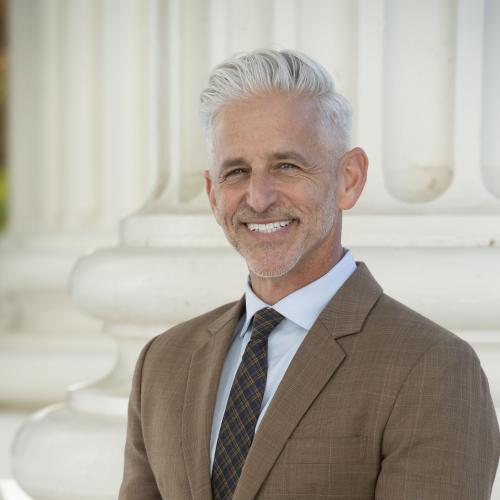
Rep. Josh Lowenthal
Sponsored bills
This measure would call on Congress to enact legislation that restores and strengthens the full protections of the Voting Rights Act of 1965, and it would call on the President to sign the legislation.
(1) The Personal Income Tax Law and the Corporation Tax Law allow various credits against the taxes imposed by those laws, including a credit for specified new hiring and employment. Existing law establishes the continuously appropriated Tax Relief and Refund Account and provides that payments required to be made to taxpayers or other persons from the Personal Income Tax Fund are to be paid from that account. Existing law also establishes the continuously appropriated Corporation Tax Fund in the State Treasury for the purpose of making refunds pursuant to existing law. This bill would, for taxable years beginning on or after January 1, 2027, and before January 1, 2032, allow a credit against those taxes to a qualified taxpayer, as defined, equal to $20,000 for each qualifying journalist, as defined, continuously employed on a full-time basis by the taxpayer, not to exceed 5 qualifying journalists. The bill would also allow a credit of $15,000 for each qualifying journalist continuously employed on a full-time basis by the taxpayer in excess of 5 qualifying journalists, and a credit of $7,500 for each qualifying journalist employed on a part-time basis by the taxpayer. The bill would allow an additional credit of $15,000 for each qualifying journalist employed on a full-time basis in a new journalism position, as defined. The bill would require the amount of the credit exceeding the taxpayer's liability to be credited against other amounts due, if any, and would require the balance to be paid from the Tax Relief and Refund Account or the Corporation Tax Fund, as specified, and refunded to the taxpayer. By increasing the payments from the Tax Relief and Refund Account and the Corporation Tax Fund, which are continuously appropriated funds, the bill would make an appropriation. The bill would allow the credit to organizations that are exempt from income taxation, as specified, and would allow the refund provisions to apply for those organizations. Existing law requires any bill authorizing a new tax expenditure, as defined, to include tax credits, to contain, among other things, specific goals that the tax credit will achieve, detailed performance indicators, and data collection requirements. This bill also would include additional information required for any bill authorizing a new tax expenditure. The bill would also require the Franchise Tax Board to publish a report on its internet website detailing the total number of taxpayers allowed the credit, the total dollar value of credits allowed, and the average dollar amount per qualified taxpayer allowed a credit. The bill would require the Franchise Tax Board to submit a report to the Legislature providing guidance on potential administration and enforcement of a refundable tax credit for organizations exempt from federal income tax, as provided. (2) Under the Personal Income Tax Law and the Corporation Tax Law, various provisions of the federal Internal Revenue Code, as enacted as of a specified date, are referenced in various sections of the Revenue and Taxation Code. Those laws provide that, for taxable years beginning on or after January 1, 2025, the specified date of those referenced Internal Revenue Code sections is January 1, 2025, unless otherwise specifically provided. The Personal Income Tax Law and the Corporation Tax Law, in modified conformity with federal income tax laws, allow various deductions from gross income in calculating adjusted gross income, including a deduction for the ordinary and necessary expenses paid or incurred during the taxable year in carrying on any trade or business. Existing law does not allow a deduction as an ordinary and necessary business expense for the wages or other remuneration of a covered employee, as defined, to the extent that remuneration exceeds $1,000,000. Existing federal income tax law, enacted after January 1, 2025, amends the application of the limitations relating to covered employees in the case of taxpayers that are members of a controlled group. This bill would specifically conform to the federal application of the limitations relating to covered employees in the case of taxpayers that are members of a controlled group for state tax purposes. The bill would also further conform to the federal definition of a covered employee. This bill would incorporate additional changes to Sections 17039 and 23036 of the Revenue and Taxation Code proposed by AB 2319 to be operative only if this bill and AB 2319 are enacted and this bill is enacted last.
Existing law generally regulates artificial intelligence, including companion chatbots, as defined. Existing law requires an operator, as defined, to prevent a companion chatbot on its companion chatbot platform from engaging with users unless the operator maintains a protocol for preventing the production of suicidal ideation, suicide, or self-harm content to the user. Existing law requires an operator, for a user the operator knows is a minor, to, among other things, notify the user that the user is interacting with artificial intelligence and to disclose that companion chatbots may not be suitable for some minors, as specified. The Digital Age Assurance Act requires a person who owns, maintains, or controls a software application, as defined, to request age bracket data sent by a real-time secure application programming interface or operating system with respect to a particular user from an operating system provider or a covered application store when the application is downloaded and launched. This bill would require an operator, as defined, of a companion chatbot to, on or before July 1, 2027, do various things with respect to child safety and companion chatbots, including annually perform and document a comprehensive risk assessment to identify any child safety risk, as defined, posed by the design, configuration, and operation of the companion chatbot that assesses, among other things, the likelihood of a covered harm, as defined, occurring to child users. The bill would require an operator to submit to an independent audit of its compliance with those provisions, as specified, and would require, within 90 days of completing an independent audit, the auditor to submit an AI child safety audit report to the Attorney General for any audited companion chatbot. The bill would, except as specified, require those audit reports to be kept confidential. This bill would, beginning January 1, 2028, require the Attorney General to issue an annual public report on the audits submitted pursuant to the above-described provision, as specified. The bill would authorize a public prosecutor to bring a certain civil action to enforce the bill's provisions and would authorize a child who suffers actual harm as a result of a violation of this chapter, or a parent or guardian acting on behalf of that child, to bring a civil action against the operator to obtain, among other relief, punitive damages. Existing constitutional provisions require that a statute that limits the right of access to the meetings of public bodies or the writings of public officials and agencies be adopted with findings demonstrating the interest protected by the limitation and the need for protecting that interest. This bill would make legislative findings to that effect.
Existing law, the Unfair Competition Law (UCL) , makes various practices unlawful and provides that a person who engages, has engaged, or proposes to engage in unfair competition is liable for a civil penalty and subject to injunction, as specified. The UCL authorizes actions prosecuted under its provisions to be brought by certain public attorneys, including by the Attorney General, a city attorney of a city having a population in excess of 750,000, or by a county counsel of any county within which a city has a population in excess of 750,000. The UCL prohibits the distribution, as provided, of any handbill, as defined, to any individual guest rooms in any hotel where the innkeeper has expressed objection to handbill distribution, as specified. The UCL provides that these provisions do not prohibit the distribution of a handbill to guest rooms in any hotel where the distribution has been requested or approved in writing by the innkeeper, or to any individual guest room when the occupant thereof has affirmatively requested or approved the distribution of the handbill during the duration of the guest's occupancy. This bill would require, under the UCL, the operator of a hotel, as defined, with actual knowledge of a reservation with the United States Customs and Border Protection or United States Immigration and Customs Enforcement to post a prescribed notice in a prominent and accessible place where it can be seen by all workers, as provided. The bill would also require an operator of a hotel with the above-described knowledge to disclose, upon request of a guest with a reservation at the time of check-in, the potential presence of the United States Customs and Border Protection or United States Immigration and Customs Enforcement on its premises during the guest's reservation. The bill would prohibit the liability of a hotel for violations of these provisions from exceeding $5,000, as provided. The bill would repeal its own provisions on January 1, 2029.
Existing law requires each law enforcement agency, on or before January 1, 2021, to maintain a policy that provides a minimum standard on the use of force. Existing law requires that the policy include, among other things, training standards and requirements relating to demonstrated knowledge and understanding of the law enforcement agency's use of force policy by officers, investigators, and supervisors. Existing law prohibits a law enforcement agency from authorizing the use of a carotid restraint or choke hold by any peace officer employed by that agency. This bill would, until January 1, 2030, prohibit a law enforcement agency, including a federal law enforcement agency, from using a wearable electroshock device within the State of California. The bill would also prohibit a law enforcement agency from using state funds to purchase a wearable electroshock device. The bill would require a law enforcement agency to update their use of force policies to prohibit the use of a wearable electroshock device. By increasing the duties on local law enforcement, the bill would impose a state-mandated local program. The bill would require the Division of Law Enforcement within the Department of Justice to conduct a study on the safety and community impacts of wearable electroshock devices and provide recommendations for appropriate standards and safeguards for their use, and would require the department to report to the Legislature on the findings and recommendations of the study on or before January 1, 2029. The California Constitution requires the state to reimburse local agencies and school districts for certain costs mandated by the state. Statutory provisions establish procedures for making that reimbursement. This bill would provide that, if the Commission on State Mandates determines that the bill contains costs mandated by the state, reimbursement for those costs shall be made pursuant to the statutory provisions noted above.
Existing law authorizes, until January 1, 2032, the Cities of Los Angeles, San Jose, Oakland, Glendale, and Long Beach, and the City and County of San Francisco to establish a program for speed enforcement that utilizes speed safety systems if the systems meet specified requirements, including limits on the number of speed safety systems operated by a participating city or city and county at any time based on population. Existing law requires the speed safety system, to the extent feasible, to be angled and focused so as to only capture photographs of speeding violations and prohibits the speed safety system from capturing identifying images of other drivers, vehicles, or pedestrians. Existing law prohibits speed safety systems in a participating city or city and county from being operated on any California state route, including all freeways and expressways, United States highways, interstate highways, or any public road in unincorporated areas of any county where the Commissioner of the California Highway Patrol has full responsibility and primary jurisdiction for the administration and enforcement of the laws, and for the investigation of traffic accidents. This bill would require speed safety systems to blur any images that are unavoidably captured of other drivers, vehicles, or pedestrians who are not the subject of a notice of violation, and would require speed safety systems to blur these images, only to the extent feasible, for cameras that were installed before January 1, 2027. The bill would authorize, until January 1, 2032, the City of Long Beach to have 2 additional speed safety systems on the Pacific Coast Highway. This bill would make legislative findings and declarations as to the necessity of a special statute for the City of Long Beach.
Existing law, the Protecting Our Kids from Social Media Addiction Act, prohibits an operator of an addictive internet-based service or application from providing an addictive feed, as defined, to a user unless the operator does not have actual knowledge that the user is a minor, as specified, or the operator has obtained verifiable parental consent to provide an addictive feed to the user who is a minor. Existing law, the Digital Age Assurance Act, beginning January 1, 2027, requires a person who owns, maintains, or controls a software application, as defined, to request age bracket data sent by a real-time secure application programming interface or operating system with respect to a particular user from an operating system provider or a covered application store when the application is downloaded and launched. This bill would prohibit a covered platform, as defined, from providing an addictive feature, as defined, to a user who is under 16 years of age and would require a covered platform to implement reasonable measures to ensure that users under 16 years of age are not offered or provided any addictive feature on the covered platform. The bill would also authorize the Attorney General to adopt regulations to implement and enforce the bill in order to further the purpose of protecting minors online, including by altering the scope of "covered platform" if the Attorney General determines that doing so is necessary to ensure that "covered platform" applies to internet websites, online services, online applications, or mobile applications that make addictive features, as defined, available to users under 16 years of age. This bill would impose a civil penalty upon a noncompliant platform and would require its provisions to be enforced by a civil action brought only by the Attorney General or a local public prosecutor, as specified. This bill would also establish the e-Safety Advisory Commission within the Department of Justice as an independent advisory body that is only for administrative purposes to advise state government on certain matters related to online safety and would require the commission to, on or before January 1 of each year, report to the Legislature and the Governor on, among other things, its activities under the bill.
Existing law, subject to an appropriation, requires the Department of Justice, on a monthly basis, to review the records in the statewide criminal justice databases and identify persons who are eligible for arrest record relief and automatic conviction record relief. Commencing on October 1, 2024, existing law makes arrest record relief available to an eligible person if the arrest occurred on or after January 1, 1973. Under existing law, a person is eligible for arrest record relief under these provisions if, among other things, the arrest was for a misdemeanor offense and the charge was dismissed. This bill, on and after October 1, 2029, additionally makes a person eligible for that relief if the arrest was for a felony offense, all charges arising from the arrest were dismissed, one year has elapsed since the date on which the most recent charge arising from the arrest was dismissed, and no charge arising from the arrest was refiled or is pending during that period. Under existing law, a person is eligible for automatic conviction record relief if the person meets certain requirements, including that it does not appear, based upon information available in the Department of Justice's record, that the person is currently serving a sentence of an offense and there is no indication of pending criminal charges. This bill would, on and after October 1, 2029, require, in determining whether there is a pending criminal charge based on the department's records, the department to conclude that there is no indication of pending criminal charges if at least 3 years have elapsed with no new activity related to that record. The bill would require, in determining whether a person is currently serving a sentence for an offense, the department to conclude that the person is no longer serving a sentence if the department is unable to determine whether a sentence is complete and at least 7 years have passed since the date of conviction. Existing law, subject to an appropriation, on a monthly basis, requires the department to electronically submit a notice to the superior court having jurisdiction over the criminal case and inform the court of all cases for which a complaint was filed and for which relief was granted pursuant to the provisions above. Existing law, for any certain record retained by the court, prohibits the court from disclosing information concerning a conviction granted relief pursuant to specified provisions, including the above provisions, to any person or entity, in any format, except to the person whose conviction was granted relief or a criminal justice agency. This bill would, on and after October 1, 2029, expand the above-described prohibition to include other provisions that authorize relief from a conviction. By placing additional duties on court staff, this bill would create a state-mandated local program. This bill would, on and after October 1, 2029, also require a court, upon the request of the subject of a record granted relief, to furnish a register of action confirming the court's receipt of notification and compliance with a grant of relief for a specified record granted relief under the above provisions. This bill would incorporate additional changes to Section 1203.425 of the Penal Code proposed by SB 1395 to be operative only if this bill and SB 1395 are enacted and this bill is enacted last. The California Constitution requires the state to reimburse local agencies and school districts for certain costs mandated by the state. Statutory provisions establish procedures for making that reimbursement. This bill would provide that, if the Commission on State Mandates determines that the bill contains costs mandated by the state, reimbursement for those costs shall be made pursuant to the statutory provisions noted above.
Existing law makes it a crime to, by force, threat of force, or physical obstruction that is a crime of violence, intentionally injure, intimidate, interfere with, or attempt to injure, intimidate, or interfere with any person lawfully exercising or seeking to exercise the First Amendment right of religious freedom at a place of religious worship. This bill would make it unlawful for a person to, within a radius of 100 feet from an entrance or exit of a place of religious worship, as defined, intentionally approach another person seeking to enter or exit a place of religious worship within 8 feet of that person to either pass a leaflet or handbill to, display a sign to, or engage in oral protest or education or to harass, obstruct, threaten, or intimidate the person or occupant. The bill would, for the purposes of determining that distance, measure from the body of the person seeking to enter or exit, or the exterior of a motor vehicle they occupy, to the body of, or any sign or object held by, the other person. The bill would prescribe specified fines, imprisonment, or fine and imprisonment for a violation of these provisions. By creating a new crime, the bill would impose a state-mandated local program. The California Constitution requires the state to reimburse local agencies and school districts for certain costs mandated by the state. Statutory provisions establish procedures for making that reimbursement. This bill would provide that no reimbursement is required by this act for a specified reason.