

Existing law establishes, until January 1, 2028, the Prescribed Fire Liability Pilot Program, to be administered by the Department of Forestry and Fire Protection, to increase the pace and scale of the use of prescribed fire and cultural burning and to reduce barriers for conducting prescribed fires and cultural burning. Existing law creates the Prescribed Fire Claims Fund in the State Treasury to support coverage for losses from prescribed fires and cultural burning by nonpublic entities, such as cultural fire practitioners, private landowners, and nongovernmental entities. Under existing law, moneys in the fund are under the control of the department, and the department or a contracted third-party administrator is authorized to direct payments for claims from the fund, consistent with specified guidelines adopted by the department. These guidelines include, among other things, (1) a requirement that an eligible claim relate to either a prescribed fire conducted or supervised by a burn boss, as defined, or a cultural burn conducted or supervised by a cultural fire practitioner, and (2) a requirement that a claim shall not be paid from the fund unless the department reviewed and approved a burn plan before the prescribed fire or cultural burning. Existing law requires, upon order of the Department of Finance, the $20,000,000 appropriated to the Department of Forestry and Fire Protection by the Legislature in the Budget Act of 2021 be transferred into the fund, and provides that all moneys deposited or transferred into the fund be continuously appropriated to the department for these purposes. By Executive Order N-35-25, Governor Gavin Newsom suspended the limitation on public and governmental agencies enrolling in the Prescribed Fire Liability Pilot Program to the extent that the limitation would prohibit resource conservation districts and volunteer fire departments or districts from such enrollment. This bill would establish the Good Fire Act, which would indefinitely extend the Prescribed Fire Liability Program. The bill would explicitly state that the Prescribed Fire Claims Fund shall support coverage for losses from prescribed fires and cultural burning on any lands within the state. The bill would also expand program eligibility by changing the entities who may receive coverage for losses from prescribed fires and cultural burning from nonpublic entities to individuals and entities other than the department or the federal government, as provided. By extending the term of a continuous appropriation and authorizing the expenditure of continuously appropriated funds for new purposes, the bill would make an appropriation. This bill would eliminate the requirement for department approval for a plan reviewed and approved by a burn boss, and would require a burn plan to be submitted to the claims fund portal before ignition. The bill would also require the guidelines to include methods for prioritizing broadcast burns and burns by non-public individuals or entities or California Native American tribes in the event the fund is oversubscribed. Within one year of a claim being paid from the fund, the bill would require the department to submit a report to the Legislature regarding the claim process and propose statutory changes related to the fund, as provided. Existing law requires the State Fire Marshal, with the involvement of the Statewide Training and Education Advisory Committee, to develop a curriculum for, or amend into an existing curriculum, a certification program for burn bosses who possess authority to engage in a prescribed burning operation and to enter into the necessary contracts related to a prescribed burning operation. Existing law requires this curriculum to provide for the initial certification as well as the continuing education of burn bosses. Under existing law, specified civil liability protections and eligibility for claims from the Prescribed Fire Claims Fund extend to prescribed burns that, among other things, are reviewed and approved by a burn boss certified pursuant to these provisions, as provided. This bill would require, as part of the continuing education of burn bosses, the State Fire Marshal to require recertification no sooner than every 3 years. The bill would also require the department to consider methods to increase the pool of available instructors for the certification program, including the use of non-department instructors. The bill would require the department, in consultation with the Statewide Training and Education Advisory Committee, to develop a mechanism to allow specified individuals to be designated as a burn boss. The bill would authorize these individuals certified pursuant to this process to use the above-described recertification process to maintain currency. Existing law authorizes an entity that owns or controls brush-covered land, forest lands, woodland, grassland, shrubland, or a combination of those types of land within a state responsibility area to apply to the Department of Forestry and Fire Protection for permission to use prescribed burning for certain public purposes. Existing law requires the department, upon receipt of an application, to inspect the land in company with the applicant to determine whether a permit shall be granted, as provided. By Executive Order N-35-25, Governor Gavin Newsom suspended the above-described requirement that the department conduct a site visit or inspection before issuing a state burn permit for projects undertaken by burn bosses or cultural fire practitioners. This bill would authorize the department to waive the inspection requirement or modify the standard precautions for an application submitted by specified individuals. The California Environmental Quality Act (CEQA) requires a lead agency, as defined, to prepare, or cause to be prepared, and certify the completion of an environmental impact report on a project that it proposes to carry out or approve that may have a significant effect on the environment or to adopt a negative declaration if it finds that the project will not have that effect. CEQA also requires a lead agency to prepare a mitigated negative declaration for a project that may have a significant effect on the environment if revisions in the project would avoid or mitigate that effect and there is no substantial evidence that the project, as revised, would have a significant effect on the environment. Existing law exempts from CEQA specified wildfire risk reduction projects, including, among other projects, projects consisting of a prescribed fire or fuel reduction to reduce wildfire risk by reestablishing the fire return interval appropriate to the ecosystem for biodiversity or other benefits, excluding projects located on coastal sage scrub habitat or any other sensitive habitat. By Executive Order N-35-25, Governor Gavin Newsom suspended the requirements of CEQA as applied to the Department of Forestry and Fire Protection to the extent necessary for the department to assist local agencies and beneficial fire practitioners to complete beneficial fire projects that limit dangerous wildfire conditions to the greatest extent feasible. This bill would exempt from CEQA those actions taken by the department to assist in the implementation of prescribed fire or cultural burning projects that do not otherwise require compliance with CEQA. Existing law establishes various grant programs for purposes of wildfire prevention. This bill would require a state agency, department, board, or commission that has awarded grant funds for a project that includes the preparation for, or implementation of, a beneficial fire project to include as an allowable expense of the grant the payment of overtime or double rates of pay to employees or contractors who prepare for or implement the beneficial fire project when such expenses are necessary for the implementation of the beneficial fire project. Existing law authorizes the Director of Forestry and Fire Protection to provide grants to, or enter contracts or other cooperative agreements with, specified entities for the implementation and administration of projects and programs to improve forest health and reduce greenhouse gas emissions. Existing law authorizes the director to authorize advance payments and requires grantees who receive advance payments to file an accountability report with the department 4 months from the date of receiving the funds and every 4 months thereafter. This bill would instead require grantees who receive advance payments to file an accountability report within 6 months from the date of receiving the funds and every 6 months thereafter. This bill would incorporate additional changes to Section 4799.05 of the Public Resources Code proposed by AB 2513 to be operative only if this bill and AB 2513 are enacted and this bill is enacted last. This bill would declare that it is to take effect immediately as an urgency statute.
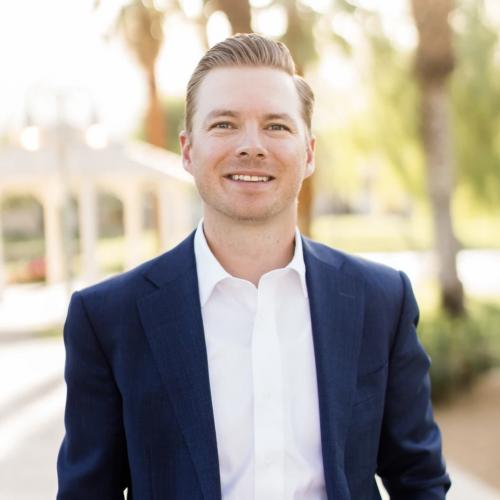
Rep. Greg Wallis
Sponsored bills
Existing law, the Western Joshua Tree Conservation Act, prohibits a person or public agency from importing into the state, exporting out of the state, or taking, possessing, purchasing, or selling within the state, a western Joshua tree or any part or product of the tree, except as provided. Under existing law, the Department of Fish and Wildlife may authorize, by permit, the taking of a western Joshua tree if certain conditions are met, including, among other conditions, that the permittee mitigates all impacts to, and the taking of, the western Joshua tree. Existing law authorizes the department to enter into an agreement with a county or city to delegate to the county or city the ability to authorize the taking of a western Joshua tree associated with developing single-family residences, multifamily residences, accessory structures, and public works projects concurrent with its approval of the project if certain conditions are met. Existing law authorizes a person or public agency receiving a take authorization for a project to pay specified fees in lieu of satisfying the mitigation obligation on several bases, including if the project receives a permit issued by a county or city. Existing law requires the department to annually adjust those fees and, by December 31, 2026, and every 3 years thereafter, to adopt and subsequently amend specified regulations adjusting the fees. This bill would additionally authorize the department to enter into an agreement with a city to delegate to the city the ability to authorize the taking of a western Joshua tree associated with developing commercial and industrial projects. This bill would additionally authorize a person or public agency receiving a take authorization from the department to pay specified fees in lieu of satisfying the mitigation obligation for (1) the removal of no more than 10, or the trimming of, western Joshua trees by an owner-occupant of an existing single-family residence if the western Joshua trees are within 30 feet of the existing single-family residence or 15 feet of an existing accessory structure, or within the construction footprint, or 15 feet of the construction footprint, of a new accessory structure that is proposed to be constructed for the existing single-family residence or (2) the removal of no more than 40, or the trimming of, western Joshua trees by the proponent of a public works project if the western Joshua trees are within the construction footprint, or 15 feet of the construction footprint, of a public works project to repair, rehabilitate, replace, or maintain an existing structure. The bill would authorize a county or city operating under an agreement with the department to authorize, by permit, without mitigation and subject to a fee to cover the administrative costs of issuing the permit, a project described above in (1) or (2) . The bill would require a property owner or proponent of a public works project seeking a permit to submit a request to the county or city, as applicable, that includes specified information. The bill would require, within 60 days of receipt of a request for a permit, the county or city, as applicable, to either notify the property owner or proponent of the public works project that the county or city will issue the permit or to deny the request if it does not meet the above-described requirements. The bill would, until the department certifies a certain programmatic environmental impact report, as specified, or until January 1, 2032, whichever occurs first, exempt from the California Environmental Quality Act the issuance of a permit by the department, a county, or a city for a project described above in (1) . This bill would delay from December 31, 2026, to June 30, 2027, the date by which the department is required to adopt regulations adjusting the fees for the taking of a western Joshua tree paid in lieu of mitigation. This bill would incorporate additional changes to Section 1927.8 of the Fish and Game Code proposed by SB 1062 to be operative only if this bill and SB 1062 are enacted and this bill is enacted last. This bill would declare that it is to take effect immediately as an urgency statute.
Existing law vests the Public Utilities Commission with regulatory authority over public utilities, including electrical corporations. Existing law authorizes the commission to fix the rates and charges for every public utility and requires that those rates and charges be just and reasonable. Existing law authorizes the commission to investigate a single rate, classification, rule, contract, practice, or the entire schedule of rates, classifications, rules, contracts, and practices, of any public utility, and to establish new rates, classifications, rules, contracts, practices, or schedules. This bill would require, as part of a new or existing proceeding, the commission to require each electrical corporation to file a transmission and distribution service tariff and a generation service tariff for participating customers, as defined, that meet certain requirements, as specified. The bill would also require, on or before January 1, 2028, each community choice aggregator or electric service provider to adopt a tariff for generation service for data centers, as defined, consistent with certain requirements, as specified. By imposing new duties on community choice aggregators, the bill would impose a state-mandated local program. Under existing law, a violation of the Public Utilities Act or any order, decision, rule, direction, demand, or requirement of the commission is a crime. Because the above provisions would be a part of the act, and because a violation of a commission action implementing the above provisions would be a crime, the bill would impose a state-mandated local program. The California Constitution requires the state to reimburse local agencies and school districts for certain costs mandated by the state. Statutory provisions establish procedures for making that reimbursement. This bill would provide that no reimbursement is required by this act for specified reasons.
Existing law, the Protecting Our Kids from Social Media Addiction Act, prohibits an operator of an addictive internet-based service or application from providing an addictive feed, as defined, to a user unless the operator does not have actual knowledge that the user is a minor, as specified, or the operator has obtained verifiable parental consent to provide an addictive feed to the user who is a minor. Existing law, the Digital Age Assurance Act, beginning January 1, 2027, requires a person who owns, maintains, or controls a software application, as defined, to request age bracket data sent by a real-time secure application programming interface or operating system with respect to a particular user from an operating system provider or a covered application store when the application is downloaded and launched. This bill would prohibit a covered platform, as defined, from providing an addictive feature, as defined, to a user who is under 16 years of age and would require a covered platform to implement reasonable measures to ensure that users under 16 years of age are not offered or provided any addictive feature on the covered platform. The bill would also authorize the Attorney General to adopt regulations to implement and enforce the bill in order to further the purpose of protecting minors online, including by altering the scope of "covered platform" if the Attorney General determines that doing so is necessary to ensure that "covered platform" applies to internet websites, online services, online applications, or mobile applications that make addictive features, as defined, available to users under 16 years of age. This bill would impose a civil penalty upon a noncompliant platform and would require its provisions to be enforced by a civil action brought only by the Attorney General or a local public prosecutor, as specified. This bill would also establish the e-Safety Advisory Commission within the Department of Justice as an independent advisory body that is only for administrative purposes to advise state government on certain matters related to online safety and would require the commission to, on or before January 1 of each year, report to the Legislature and the Governor on, among other things, its activities under the bill.
The California Environmental Quality Act (CEQA) requires a lead agency, as defined, to prepare, or cause to be prepared, and certify the completion of, an environmental impact report (EIR) on a project that it proposes to carry out or approve that may have a significant effect on the environment or to adopt a negative declaration if it finds that the project will not have that effect. CEQA also requires a lead agency to prepare a mitigated negative declaration for a project that may have a significant effect on the environment if revisions in the project would avoid or mitigate that effect and there is no substantial evidence that the project, as revised, would have a significant effect on the environment. Existing law authorizes the Governor to certify projects meeting certain requirements as infrastructure projects and provide those certified projects with certain streamlining benefits, including requiring the lead agency to prepare the record of proceedings concurrently with the environmental review process and requiring the resolution of an action or proceeding challenging the certification of an EIR for certified projects or the granting of any project approvals, to the extent feasible, within 270 days of the filing of the record of proceedings with the court, as specified. Existing law requires the lead agency, within 10 days of the certification of an infrastructure project, to provide a public notice of the certification, as provided. If a lead agency fails to approve a project certified as an infrastructure project before January 1, 2033, existing law specifies that the certification is no longer valid. Existing law requires the Office of Land Use and Climate Innovation to make evidence and materials submitted for the certification of a project available to the public on its internet website at least 15 days before the certification of the project. This bill would also authorize the Governor to certify an essential local fire station project for streamlining as an infrastructure project if the Governor ensures that the project meets specified requirements, including, among others, that the applicant agrees to pay the costs of the trial court and the court of appeal in hearing and deciding any case challenging a lead agency's action on the project, and the applicant agrees to pay the costs of preparing the record of proceedings for the project, as specified. The bill would require a project to meet specified requirements to be eligible for certification as an essential local fire station project, including, among other things, (1) that the project is being undertaken by a city, county, city and county, or local fire agency, as provided, (2) that the project is not located on specified sensitive or hazardous sites, as described, and (3) that the project will employ best practices to avoid or mitigate significant environmental effects, as provided. The bill would require the Office of Land Use and Climate Innovation, for an essential local fire station project, to provide the Governor's office with evidence and materials to support consideration of the application no later than 45 days after the Office of Land Use and Climate Innovation posts the evidence and materials submitted for certification on its internet website.
Existing federal law, the National Suicide Hotline Designation Act of 2020, designates the 3-digit telephone number "988" as the universal number within the United States for the purpose of the national suicide prevention and mental health crisis hotline system operating through the 988 Suicide and Crisis Lifeline. Existing law, the Miles Hall Lifeline and Suicide Prevention Act, requires, among other things, the Office of Emergency Services (OES) to verify that technology that allows for transfers between 988 centers, as well as between 988 centers and 911 public safety answering points, is available to 988 centers and 911 public safety answering points throughout the state, to appoint a 988 system director, and to verify interoperability between and across 911 and 988. Existing law establishes the 988 State Suicide and Behavioral Health Crisis Services Fund and provides that 988 surcharge revenue in the fund is available, upon appropriation by the Legislature, for purposes of the act. This bill would require the California Health and Human Services Agency (agency) to annually determine whether an adequate specialized LGBTQ+ suicide prevention hotline is activated by the federal government under 988. When making this determination, the bill would require the agency to consider specified factors, including, among other things, any factor the agency considers relevant to evaluating the adequacy of press 3 operations. The bill would authorize the agency to, no later than 6 months after its determination, request the federal Substance Abuse and Mental Health Services Administration (SAMHSA) to allow the state to implement the press 3 function at the state level for calls originating in the State of California, which would allow callers to dial "988" and press "3" to be automatically routed to a specialized 988 center. The bill would require OES and the agency to, no later than 12 months following the approval by SAMHSA, ensure that press 3 function technologies are available. This bill would require, no later than 12 months following approval by SAMHSA, the agency to identify and contract with a qualified entity or entities that specialize in LGBTQ+ suicide prevention services. The bill would require the agency to determine the eligibility criteria, establish an application process, and administer funds to the qualified entity, as specified. The bill would require a qualified entity to comply with various requirements, including having a primary objective of reducing suicide rates or addressing mental health crises. The bill would make its implementation subject to an appropriation by the Legislature, as specified. This bill would declare that it is to take effect immediately as an urgency statute.
Existing law requires the Governor to proclaim various days as days of remembrance or recognition. This bill would require the Governor to annually proclaim September 25 as Dolly Parton Day. This bill would declare that it is to take effect immediately as an urgency statute.
The Western Joshua Tree Conservation Act prohibits any person or public agency from importing into the state, exporting out of the state, or taking, possessing, purchasing, or selling within the state, a western Joshua tree or any part or product of the tree, except as specified. The act authorizes the Department of Fish and Wildlife to permit the taking of a western Joshua tree if specified conditions are met, including, but not limited to, that the permittee mitigates all impacts to, and taking of, the western Joshua tree through measures that are roughly proportional in extent to the authorized taking of the western Joshua tree. The act authorizes, in lieu of completing the mitigation measures, a permittee to elect to satisfy the mitigation obligation by paying fees pursuant to a specified fee schedule, as provided. The act authorizes the department to permit the removal or trimming of a dead western Joshua tree or trimming of a live western Joshua tree, without payment of fees or other mitigation, provided that the dead western Joshua tree or any limb to be removed satisfies a specified condition. The act requires a property owner seeking a permit to submit a permit request to the department with specified information, including a signed attestation or certification, as provided. This bill would alternatively allow the agent of a property owner to submit the permit request and to satisfy other related requirements imposed on a property owner. The bill would delete the requirement for the permit request to include a signed attestation or certification. The act authorizes the department to enter into memoranda of understanding with California Native American tribes to provide for the taking and possession of western Joshua trees for tribal cultural purposes. This bill would instead authorize the memoranda to include the taking, possession, purchase, or sale of western Joshua trees for tribal cultural purposes.
(1) Existing law requires a local agency to declare land either "surplus land" or "exempt surplus land," as supported by written findings, before the local agency may take any action to dispose of it consistent with an agency's policies or procedures and defines terms for these purposes. Existing law generally requires a local agency, before disposing or negotiating to dispose of surplus land, to provide a written notice of the availability of the surplus land to specified entities and housing sponsors. Existing law provides that an agency is not required to follow the requirements for the disposal of surplus land for "exempt surplus land." Existing law defines "exempt surplus land" to include certain types of land, including, surplus land totaling 10 or more acres, consisting of either a single parcel, or 2 or more adjacent or nonadjacent parcels combined for disposition to one or more buyers pursuant to a plan or ordinance adopted by the legislative body of the local agency, or a state statute and certain surplus land that is a former military base, known as the Alameda Naval Air Station, if specified conditions are met. Existing law, the Planning and Zoning Law, requires each county and each city to adopt a comprehensive, long-term general plan for the physical development of the county or city, and specified land outside its boundaries, that includes, among other specified mandatory elements, a housing element. That law requires the planning agency of a city or county to provide by April 1 of each year an annual report to, among other entities, the Office of Land Use and Climate Innovation. This bill would revise the definition of "exempt surplus land" to remove the reference to buyers and instead mean 2 or more adjacent or nonadjacent parcels combined for disposition to one or more persons or entities, as specified. The bill would also exempt surplus land that is a former military base that was conveyed by the federal government to a local agency or a local reuse authority, and that is all or any portion of the Concord Naval Weapons Station, if certain requirements are met, including that the former military base has an aggregate area greater than 5 acres and that before disposition of the land, the local agency or local reuse authority has entered into a disposition and development agreement that stipulates that at least 25% of the aggregate residential units permitted to be developed will be restricted to lower income households with an affordable housing cost or affordable rent for a minimum of 55 years for rental housing and 45 years for owner-occupied housing, as specified. The bill would regulate actions challenging the disposition and would prescribe penalties for violations of these provisions. The bill would also regulate the actions of the local agency or local reuse authority, including, among other things, requiring the local agency or local reuse authority to include in the annual report the status of development of residential units on the former military base, as specified. (2) The California Environmental Quality Act (CEQA) requires a lead agency, as defined, to prepare, or cause to be prepared, and certify the completion of an environmental impact report on a project that it proposes to carry out or approve that may have a significant effect on the environment or to adopt a negative declaration if it finds that the project will not have that effect. CEQA also requires a lead agency to prepare a mitigated negative declaration for a project that may have a significant effect on the environment if revisions in the project would avoid or mitigate that effect and there is no substantial evidence that the project, as revised, would have a significant effect on the environment. This bill would provide that specified environmental review documents satisfy the requirements of CEQA for any project within the portion of the Concord Naval Weapons Station included within the boundaries of the area plan for the Concord Community Reuse Project, as provided, that has land use types that are consistent with the area plan land use types and locations for those land use types that are consistent with the area plan diagram and the project does not cause the aggregate development in the area plan to exceed the area plan maximum planning areawide total, as specified. The bill would further provide that a project that contains land use types that are consistent with the area plan land use types in locations that are not consistent with the area plan diagram would be subject to review pursuant to CEQA, and would be limited to review of the location of land use types that are not consistent with the area plan diagram, as provided. In any action or proceeding challenging a project described above, the bill would require a project applicant to pay any additional costs incurred by the courts in hearing cases relating to the challenge of the project and would require a lead agency to lodge a copy of the certified record of proceedings with the superior court within 10 calendar days after being served with a complaint or a petition for a writ of mandate. Because the bill imposes new duties on local agencies, the bill would impose a state-mandated local program. The bill would require the Judicial Council, on or before July 1, 2027, to adopt rules of court that require any action or proceeding brought to attack, review, set aside, void, or annul the approval of any project within the plan area or any environmental impact review for any project within the plan area, including any potential appeals to the court of appeal or the California Supreme Court, to be resolved to the extent feasible within 270 calendar days of the filing of the certified record of proceedings with the court. The bill would make these provisions severable. (3) This bill would make legislative findings and declarations as to the necessity of a special statute for the City of Concord. (4) The California Constitution requires the state to reimburse local agencies and school districts for certain costs mandated by the state. Statutory provisions establish procedures for making that reimbursement. This bill would provide that no reimbursement is required by this act for a specified reason. (5) This bill would declare that it is to take effect immediately as an urgency statute.
The California FAIR Plan Association is a joint reinsurance association in which all insurers licensed to write basic property insurance participate to administer a program for the equitable apportionment of basic property insurance for persons who are unable to obtain that coverage through normal channels. Existing law requires the association to implement programs to help reduce the number of existing FAIR Plan policies, including clearinghouse programs in which a participating insurer offers homeowners or commercial insurance to FAIR Plan policyholders. Existing law requires an agent or broker transacting basic property insurance to assist a person in obtaining basic property insurance coverage by one of several specified methods, including making an application for insurance through the FAIR Plan. On and after January 1, 2028, this bill would authorize the association to share policyholder information with insurers participating in the clearinghouse program, as specified, to allow a participating insurer to offer a policy to a FAIR Plan policyholder and, if there is an agent or broker of record listed on the policy, would require the insurer to make the offer simultaneously to the agent or broker of record and the FAIR Plan policyholder. Commencing May 1, 2027, the bill would require a participating insurer to report to the association on a quarterly basis the number of policies it has issued to FAIR Plan policyholders. The bill would require the association to report aggregated numbers within 30 days, as specified, and post and quarterly update on its internet website a list of participating insurers in the clearinghouse programs. The bill would require the association to provide all policyholders with a notice regarding their coverage options at least annually, including with the initial policy issuance and upon each renewal. The bill would require an agent or broker transacting basic property insurance to assist a person in obtaining basic property insurance coverage by providing the person with information on the clearinghouse programs, among other specified assistance. The bill would require the association to require registered agents and brokers to complete the association's department-approved training on the association's and the broker's responsibility to advise policyholders on the voluntary market options. This bill would incorporate additional changes to Section 10095 of the Insurance Code proposed by AB 1680 to be operative only if this bill and AB 1680 are enacted and this bill is enacted last. This bill would incorporate additional changes to Section 10095.5 of the Insurance Code proposed by AB 2061 to be operative only if this bill and AB 2061 are enacted and this bill is enacted last.