

Existing law entitles state employees to a paid holiday on specific days, including the 3rd Monday in February, except as specified. Existing law, in addition, authorizes state employees to elect to use 8 hours of vacation, annual leave, compensating time off, or personal holiday credit corresponding with specific dates, including the 4th Friday in September, known as "Native American Day," as specified. This bill would, upon appropriation by the Legislature, entitle state employees to a holiday on the 4th Friday in September, known as "Native American Day," as specified, in lieu of the above-described election. The bill would authorize any state bargaining unit to negotiate for a paid holiday on Native American Day, as specified. This bill would incorporate additional changes to Sections 19853 and 19853.1 of the Government Code proposed by AB 2017 and SB 1394 to be operative only if this bill and either or both of those bills are enacted and this bill is enacted last.
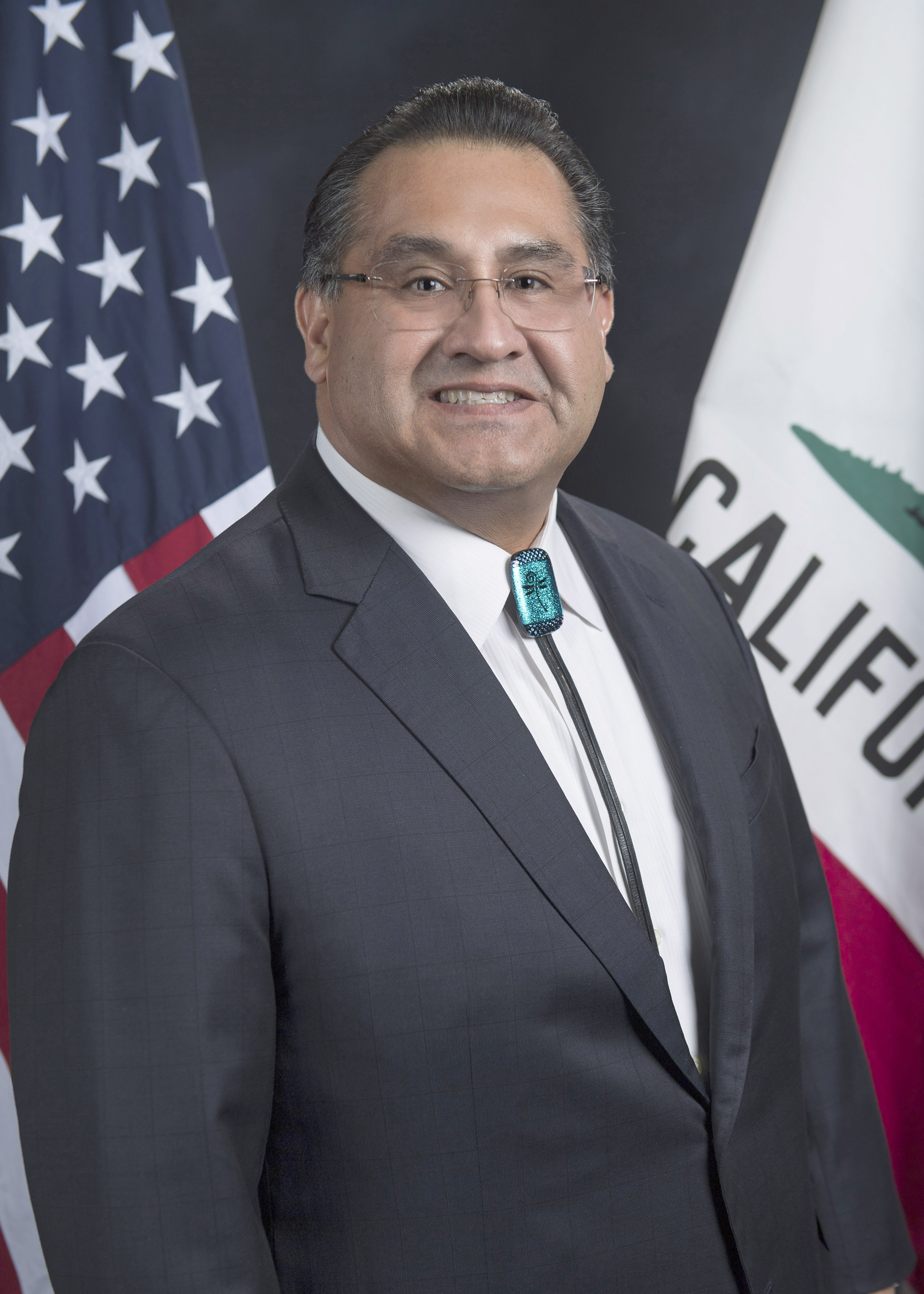
Rep. James Ramos
Sponsored bills
This measure would call on Congress to enact legislation that restores and strengthens the full protections of the Voting Rights Act of 1965, and it would call on the President to sign the legislation.
Existing law authorizes a peace officer, humane society officer, or animal control officer to take possession of a stray or abandoned animal in specified circumstances, including when the animal is kept without proper care and attention, as specified. Existing law provides that if an animal is seized pursuant to those provisions or pursuant to a warrant, the owner is personally liable to the seizing agency for the cost of the seizure and care of the animal. Existing law deems the animal to then be abandoned by the owner under specified circumstances, including if the owner, within 14 days of notice of availability of the animal to be returned, fails to pay charges and take possession of the animal. This bill would make those provisions apply to animals seized pursuant to any provision of California law.
Existing law requires the Board of Parole Hearings, among other responsibilities, to conduct parole suitability hearings and determine whether an individual is suitable for parole. Existing law establishes the Elderly Parole Program for the purpose of reviewing parole suitability of inmates who are 50 years of age or older and who have served a minimum of 20 years of continuous incarceration on their sentence. Existing law requires the Board of Parole Hearings, when considering the release of qualifying inmates, to give special consideration to whether certain criteria have reduced the elderly inmate's risk for future violence. Existing law excludes various persons from these provisions, including persons sentenced pursuant to existing sentencing provisions commonly known as the 3 strikes law. Under an existing court order, although statutorily excluded, an individual may be eligible for parole under the Elderly Parole Program when they are 60 years of age or older and have been continuously incarcerated for at least 25 years. This bill would instead specify that persons convicted of various sexual offenses, including rape, sodomy, or aggravated sexual assault of a child, or sentenced pursuant to a provision applicable where the crimes involved had multiple victims, as specified, are not eligible for parole under the Elderly Parole Program, unless the person is 65 years of age or older and has served a minimum of 25 years of continuous incarceration on their current sentence. The bill would require the board to review a sexual dangerousness screening of an individual sentenced to an indeterminate sentence for a sexually violent offense, as defined, and would require the board to refer a person whose sexual dangerousness screening indicates that they may qualify as a sexually violent predator to the State Department of State Hospitals for further evaluation, as described. The bill would require commissioners who conduct hearings to undergo training in sex offender behaviors and risks. Existing law defines a sexually violent predator to mean a person who has been convicted of a sexually violent offense against one or more victims and who has a diagnosed mental disorder that makes the person a danger to the health and safety of others in that it is likely that the person will engage in sexually violent criminal behavior. For purposes of this definition, a conviction for a sexually violent offense includes convictions that resulted in either a determinate or an indeterminate prison sentence, as specified. Existing law requires the Secretary of the Department of Corrections and Rehabilitation to refer a person who is in custody under that department's jurisdiction, and who is serving a determinate sentence or whose parole has been revoked, for evaluation by the State Department of State Hospitals at least 6 months prior to that individual's scheduled date for release from prison if the secretary determines that the person may be a sexually violent predator. Existing law requires a petition for commitment as a sexually violent predator to be filed in the county in which the person was convicted of the sexual offense for which the person was committed to the jurisdiction of the Department of Corrections and Rehabilitation. This bill would also require the Executive Officer of the Board of Parole Hearings to make that referral and revise the criteria for referral to additionally apply to a person who is serving an indeterminate prison sentence. The bill would also authorize the secretary, or the Executive Officer of the Board of Parole Hearings, to refer the person for evaluation if the person's scheduled release date is less than 4 months after the date of the decision to grant parole, or if the person will be scheduled for a parole hearing in the next 6 months. By imposing additional duties on counties regarding commitment of persons as sexually violent predators, this bill would impose a state-mandated local program. The California Constitution requires the state to reimburse local agencies and school districts for certain costs mandated by the state. Statutory provisions establish procedures for making that reimbursement. This bill would provide that, if the Commission on State Mandates determines that the bill contains costs mandated by the state, reimbursement for those costs shall be made pursuant to the statutory provisions noted above.
Existing law establishes various protections for California Native American tribes, including prohibiting a public agency or private party using or occupying public property or operating on public property from interfering with the free expression or exercise of Native American religion as provided in the United States Constitution and the California Constitution. Existing law also requires a local government to provide formal notification to each California Native American tribe that is traditionally and culturally affiliated with the project site as an invitation to consult on the proposed project, as provided. Existing law requires the local government, during the consultation, to give deference to the tribal information, tribal knowledge and customs, and the significance of the resource to the California Native American tribe. Existing law prohibits any information, as described, that is submitted by a California Native American tribe during the environmental review process from being included in the environmental document or otherwise disclosed by the lead agency or any other public agency to the public, as specified, without the prior consent of the tribe that provided the information. Existing law, the California Public Records Act, requires each state and local agency, as defined, to make its records open to public inspection at all times during office hours, except as specifically exempted from disclosure by law. The act specifically exempts from disclosure records that are exempted or prohibited from disclosure by federal or state law and lists records subject to that exemption, specifying that the listed exemptions are not inclusive of all exemptions under the act. This bill, the California Indian Freedom Act of 2026, would, commencing January 1, 2028, prohibit a governmental agency from substantially burdening a California Indian or California Native American tribe's exercise of religious beliefs or spiritual practices on state lands, except as necessary to protect public safety and security, including their access to and use of sacred sites and objects, and their ability to perform religious ceremonies and rites, even if the burden results from a rule of general applicability, unless the governmental agency demonstrates that application of the burden is in furtherance of a compelling governmental interest and is in the least restrictive means of furthering that interest. The bill would provide that a California Native American tribe has exclusive standing to assert a violation of these provisions and would authorize a California Native American tribe to assert a violation of these provisions as a claim or defense in any judicial or administrative proceeding, as specified. The bill would require a governmental agency to allow California Indians access to sacred sites on state lands, as specified. The bill would require a governmental agency to seek and document free, prior, and informed consent from affected tribes before undertaking any physical change to a state land, as described, which the agency has actual knowledge is a sacred site where the action may pose a risk to sacred sites, as specified. The bill would require the affirmation of consent from the governing body of the affected tribe to be in writing, as described. This bill would require the Department of General Services, in coordination with the Capitol Protective Section and the Joint Rules Committee, to the greatest extent possible, to uphold the religious freedom, ceremonial practices, sacred sites, cultural patrimony, and cultural landscapes of tribes when accessing the State Capitol grounds. The bill would require the Joint Rules Committee, in coordination with the Capitol Protective Section and the State Senate Capitol Security Program, to the greatest extent possible, to uphold the religious freedom, ceremonial practices, sacred sites, cultural patrimony, and cultural landscapes of tribes when accessing the State Capitol Building, as specified. This bill would provide that the application of the act is strictly limited to a governmental agency's management actions that involve only state lands, as specified. The bill would declare that specified provisions of the bill do not apply to the authority of the State Water Resources Control Board to authorize, curtail, or otherwise regulate the diversion and use of water, or to the Porter-Cologne Water Quality Control Act. This bill would require information identifying sacred sites, cultural landscapes, or religious practices obtained by a governmental agency for the purposes of the California Indian Freedom Act of 2026 to be confidential and would exempt this information from public record laws, including the California Public Records Act. The bill would revise the list of exempted records under the California Public Records Act to add the above-described exemption. The bill would prohibit the provisions of the act from being construed to limit or restrict the authority of the state or any state agency to enter into an agreement, memorandum of understanding, or other arrangement with any tribe to allow access to any state lands for the purpose of conducting religious, cultural, or ceremonial practices. The bill would define various terms for these purposes and would make related legislative findings. Existing constitutional provisions require that a statute that limits the right of access to the meetings of public bodies or the writings of public officials and agencies be adopted with findings demonstrating the interest protected by the limitation and the need for protecting that interest. This bill would make legislative findings to that effect.
Existing law requires the Governor to proclaim various days as days of remembrance or recognition. This bill would require the Governor to annually proclaim September 25 as Dolly Parton Day. This bill would declare that it is to take effect immediately as an urgency statute.
The Public Employees' Retirement Law (PERL) establishes the Public Employees' Retirement System (PERS) to provide a defined benefit to members of the system based on final compensation, credited service, and age at retirement, subject to certain variations. Existing law creates the Public Employees' Retirement Fund, which is continuously appropriated for purposes of PERS, including depositing employer and employee contributions. Under the California Constitution, assets of a public pension or retirement system are trust funds. The California Public Employees' Pension Reform Act of 2013 (PEPRA) establishes a variety of requirements and restrictions on public employers offering defined benefit pension plans. In this regard, PEPRA restricts the amount of compensation that may be applied for purposes of calculating a defined pension benefit for a new member, as defined, by restricting it to specified percentages of the contribution and benefit base under a specified federal law with respect to old age, survivors, and disability insurance benefits. Existing law, the Teachers' Retirement Law, establishes the State Teachers' Retirement System (STRS) and creates the Defined Benefit Program of the State Teachers' Retirement Plan, which provides a defined benefit to members of the program, based on final compensation, creditable service, and age at retirement, subject to certain variations. This bill, for service performed on and after January 1, 2027, would prohibit the pensionable compensation for calendar year 2027 used to calculate the defined benefit paid to a new member of a retirement system subject to PEPRA who retires from the system from exceeding specified percentages of the contribution and benefit base under the specified federal law with respect to old age, survivors, and disability insurance benefits. The bill would make related, conforming changes to these provisions on pensionable compensation. The bill also would require a new member of STRS to be subject to specified limits of the Teachers' Retirement Law. PEPRA requires each retirement system that offers a defined benefit plan for safety members of the system to use one of 3 formulas for safety members, 2% at age 57, 2.5% at age 57, or 2.7% at age 57. This bill would establish new retirement formulas, for employees first hired on or after January 1, 2027, as 2.5% at age 55, 2.7% at age 55, or 3% at age 55, subject to certain exceptions. For new members hired on or after January 1, 2013, who are safety members, the bill would require employers to adjust the formulas for service performed on or after January 1, 2027, to offer the formula that has the same fraction at age 55 as the fraction at age 57 in the formula the employer offered pursuant to existing law. The bill would authorize a public employer and a recognized employee organization to negotiate a prospective increase to the retirement benefit formulas for safety members and new safety members, consistent with the formulas permitted under PEPRA, including the new formulas described above. This bill would authorize an employer and its employees to agree in a memorandum of understanding to be subject to a higher safety plan or a lower safety plan, subject to certain requirements, including that the memorandum of understanding is collectively bargained in accordance with applicable laws. By increasing the contribution to continuously appropriated funds, and by increasing expenditures from those funds, this bill would make an appropriation.
(1) The California Integrated Waste Management Act of 1989, administered by the Department of Resources Recycling and Recovery (CalRecycle) , generally regulates the disposal, management, and recycling of solid waste, as defined. The act authorizes CalRecycle to certify a local enforcement agency and requires CalRecycle and certified local enforcement agencies to perform specified functions with regard to the regulation of solid waste management, including issuing and enforcing solid waste facility permits. The act prohibits a person from operating a solid waste facility without a solid waste facilities permit, as provided. The California Global Warming Solutions Act of 2006 charges the State Air Resources Board with monitoring and regulating sources of emissions of greenhouse gases that cause global warming in order to reduce emission of greenhouse gases. The act requires the state board to adopt rules and regulations to achieve the maximum technologically feasible and cost-effective greenhouse gas emissions reductions, as provided. This bill would require the owner or operator of a solid waste landfill, as defined, to, among other things, notify the Department of Resources Recycling and Recovery if a subsurface elevated temperature event occurs. The bill would define "subsurface elevated temperature event" to mean an event where subsurface gas or waste temperatures at a solid waste landfill persistently exceed 131 degrees Fahrenheit over a substantial area and meets other performance criteria, as determined by the department. The bill would authorize the department to require the owner or operator of a solid waste landfill experiencing a subsurface elevated temperature event to create a corrective action plan that includes, but is not limited to, a cost assessment for fully implementing the corrective action plan. The bill would authorize the department or a local enforcement agency to impose an administrative civil penalty of $100,000 per day for failing to comply with these requirements, as provided. The bill would require all penalties collected to be deposited into the Landfill Subsurface Fire Mitigation Community Fund, which the bill would create in the State Treasury. The bill would continuously appropriate moneys in the fund to the California Alternative Energy and Advanced Transportation Financing Authority, to be paid to counties in which a subsurface elevated temperature event occurred to mitigate harm to a person or community affected by a subsurface elevated temperature event and to be paid to the authority for its costs of implementation. The bill would require the authority to develop guidelines for dispersing these funds, as specified. The bill would authorize the department to become the enforcement agency for a solid waste landfill experiencing a subsurface elevated temperature event, as specified. This bill would authorize the Secretary for Environmental Protection to select and coordinate a multiagency coordination group to investigate and provide recommendations on how to achieve resolution of a subsurface elevated temperature event, as specified. The bill would require a local health department to initiate community health needs assessments to identify and collect information regarding the effects of a subsurface elevated temperature event on an affected community and to share the findings, as provided. By requiring a local health department and a local air pollution control district to perform additional duties, the bill would impose a state-mandated local program. The bill would, upon request by a multiagency coordination group, require the owner or operator of a solid waste landfill that experiences a subsurface elevated temperature event to implement an air monitoring and sampling plan, as specified. The bill would require the owner and operator of a solid waste landfill that experiences a subsurface elevated temperature event to reimburse the members of a multiagency coordination group and the local health department for all reasonable and necessary expenses incurred, as specified. The bill would authorize the department to adopt regulations to implement and enforce them as emergency regulations, as specified. (2) This bill would declare its provisions to be severable. (3) The California Constitution requires the state to reimburse local agencies and school districts for certain costs mandated by the state. Statutory provisions establish procedures for making that reimbursement. This bill would provide that no reimbursement is required by this act for a specified reason.
Existing law authorizes the State Department of Public Health to establish the Office of Suicide Prevention within the department. Existing law authorizes the office, if established, to perform certain functions, including, among others, conducting state-level assessment of regional and statewide suicide prevention policies and practices and reporting on progress to reduce rates of suicide. Existing law authorizes the office, if established, to focus activities on groups with the highest risk, including youth, Native American youth, older adults, veterans, and LGBTQ people. This bill would authorize the office's activities focused on youth to pay special attention to boys. The bill would additionally authorize the office to focus activities on young men. The bill would require the office, if established, to report to the Legislature, on or before July 1, 2028, on strategies to implement the activities focused on boys and young men.
Existing law generally punishes the willful disobedience of a court order as contempt of court by imprisonment in a county jail for a term not exceeding 6 months, a fine not exceeding $1,000, or both that imprisonment and fine. Existing law makes the willful and knowing violation of specified protective orders or stay-away court orders punishable by imprisonment in a county jail for not more than one year, by a fine of not more than $1,000, or by both that imprisonment and fine for a first offense, and makes a 2nd or subsequent conviction for a violation of these specified protective orders or stay-away court orders occurring within 7 years of a prior conviction and involving an act of violence or credible threat of violence punishable as either a misdemeanor or a felony. If a violation of specified protective orders or stay-away court orders results in a physical injury, the individual is required to be in a county jail for at least 48 hours, whether a fine or imprisonment is imposed, or the sentence suspended. This bill would make a willful and knowing violation of specified criminal protective orders or stay-away orders punishable as either a misdemeanor or a felony if the subject of the criminal protective order was charged with, or convicted of, a felony for the conduct upon which the criminal protective order was based. The bill would make a second or subsequent conviction for a violation of specified protective orders or stay-away orders a felony. If a violation of specified protective orders or stay-away orders alleges a physical injury, the bill would require the court to consider the violation of the protective order or stay-away order and alleged injury when considering the seriousness of the offense charged and the protection of the public for purposes of setting, reducing, or denying bail. By increasing the punishment for a crime, this bill would impose a state-mandated local program. The California Constitution requires the state to reimburse local agencies and school districts for certain costs mandated by the state. Statutory provisions establish procedures for making that reimbursement. This bill would provide that no reimbursement is required by this act for a specified reason.