

Existing law designates specific days as holidays in this state, including, among others, Dr. Martin Luther King, Jr. Day and Cesar Chavez Day. Existing law designates certain days as judicial holidays and exempts others including, Lunar New Year, Diwali, and Genocide Remembrance Day. This bill would designate Sylvia Mendez Day as a state holiday, but would exempt the holiday from being a judicial holiday. The bill would include related legislative findings and declarations. This bill would incorporate additional changes to Section 135 of the Code of Civil Procedure proposed by AB 2017 to be operative only if this bill and AB 2017 are enacted and this bill is enacted last. The bill would also incorporate additional changes to Section 6700 of the Government Code proposed by AB 2017 and SB 1394 to be operative only if this bill and either or both of those bills are enacted and this bill is enacted last.
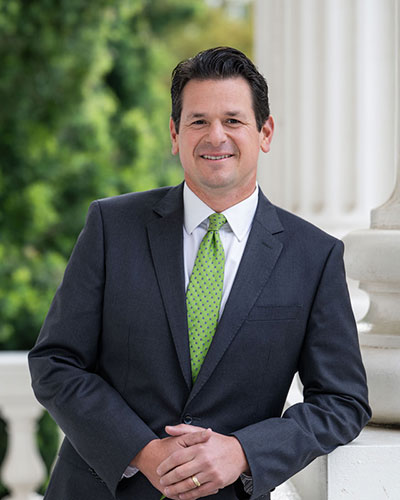
Rep. John Harabedian
Sponsored bills
This measure would call on Congress to enact legislation that restores and strengthens the full protections of the Voting Rights Act of 1965, and it would call on the President to sign the legislation.
Existing law requires the Office of the State Fire Marshal to develop and make available on its internet website a Wildland-Urban Interface Fire Safety Building Standards Compliance training intended for use in the training of local building officials, builders, and fire service personnel, as specified. Existing law authorizes the Office of the State Fire Marshal to allow certification of contractors who conduct defensible space, home hardening, fuel reduction, roadside clearance, and other contracting activities for wildlife resiliency efforts and who have completed specified training programs. Existing law requires the Office of the State Fire Marshal to develop and update a Wildland-Urban Interface Products listing of products and construction assemblies that comply with prescribed regulations regarding building in a wildland-urban interface area. Existing law authorizes the Office of the State Fire Marshal to expend funds from the Building Standards Administration Special Revolving Fund, upon an appropriation by the Legislature, for the purposes of researching and developing the products listing and the educational and training provisions. Existing law requires the Office of the State Fire Marshal to establish the State Fire Marshal's Wildfire Mitigation Advisory Committee. This bill would require, on or before January 1, 2028, the State Fire Marshal's Wildfire Mitigation Advisory Committee to develop an implementation plan for a home hardening certification program that identifies home hardening measures, including defensible space, that can be voluntarily implemented during renovation or property improvement projects, or both, to substantially reduce the risk of loss during a fire and bring existing building stock into alignment with state building standards for wildland-urban interface areas. The bill would require the committee, in developing the implementation plan for the home hardening certification program, to provide specified recommendations. The bill would authorize the Office of the State Fire Marshal to expend funds from the Building Standards Administration Special Revolving Fund, upon an appropriation by the Legislature, for the purposes of developing the implementation plan for the home hardening certification program. The bill would require the committee, on or before January 1, 2028, to provide a report to specified legislative committees on its findings and recommendations pursuant to these provisions. The bill would require, on or before January 1, 2029, the State Fire Marshal to establish the home hardening certification program based on the recommendations made by the Wildfire Mitigation Advisory Committee.
Existing law specifies the rights and requirements of a claimant or homeowner to bring a civil action for construction defects of a dwelling, including applicable standards for home construction, detailed prelitigation procedures, statute of limitations, burden of proof, and the damages recoverable. Existing law specifies the rights and prohibitions for a builder to defend against a civil action for construction defects, including a prohibition against a builder obtaining a release or waiver in exchange for repair work mandated by law. This bill would modify specific rights, requirements, and prohibitions for the parties to a civil action for construction defects of a dwelling by revising, among other things, the requirements for a prelitigation notice from the claimant to the builder and the evidence a claimant is required to affirmatively demonstrate to make a claim. Among other changes, the bill would repeal the prohibition on, and, instead, authorize, a builder to obtain a release or waiver in exchange for certain repair work, as specified. Commencing July 1, 2027, the bill would prohibit an insurer from asserting repairs as a voluntary payment or as a payment made without the insurer's consent, or denying counting the costs associated with those repairs, against a deductible or self-insured retention. The bill would provide that its provisions apply to structures subject to the provisions governing the rights of a claimant or homeowner to bring a civil action for construction defects of a dwelling, except as provided. The bill would further provide that its provisions are severable.
Existing law, the California Building Standards Law, establishes the California Building Standards Commission within the Government Operations Agency. Existing law requires the commission to approve and adopt building standards and to codify those standards in the California Building Standards Code. Existing law, the California Factory-Built Housing Law, generally regulates the design, manufacture, and installation of factory-built housing, as defined and specified. That law specifically and entirely reserves to local jurisdictions certain local requirements, including local use zone requirements, snow load requirements, and wind pressure requirements. That law provides that any person who violates any of those provisions and other specified law is guilty of a misdemeanor, as specified. This bill also would prohibit a city, county, city and county, or district from imposing or enforcing local building standards applicable to a factory-built housing structure, as defined, that exceed or differ from the applicable mandatory standards contained in the California Building Standards Code. The bill would authorize a city or county to make changes or modifications in the requirements contained in the provisions published in the California Building Standards Code that are reasonably necessary to maintain minimum health and safety because of local climatic, geological, or topographical conditions, subject to the city or county making a specified finding. The bill would create a rebuttable presumption in favor of a determination that facilitates the use of factory-built housing and allows a project to qualify as a factory-built housing structure. This bill would define certain key terms for purposes of the California Factory-Built Housing Law. In this regard, the bill would define "building assembly" to mean assembled construction materials, components, subsystems, subassemblies or other systems designed for use in, or as part of, factory-built housing, and "factory-built housing structure" as a residential building where at least 23 of the new or converted square footage is designated for residential use and in which at least 30% of the residential use portion of the building is built using factory-built housing. The bill would recast the definition of "factory-built housing" to mean, among other things, a residential building, dwelling unit, building component, building assembly, or building system that is manufactured in a specified manner. The bill would make other conforming changes to definitions in the California Factory-Built Housing Law, the Sales and Use Tax Law, and the Vehicle Code. By adding to the duties of local officials, and expanding the scope of a crime, this bill would impose a state-mandated local program. The bill would include findings that certain changes proposed by this bill address a matter of statewide concern rather than a municipal affair and, therefore, apply to all cities, including charter cities. The California Constitution requires the state to reimburse local agencies and school districts for certain costs mandated by the state. Statutory provisions establish procedures for making that reimbursement. This bill would provide that no reimbursement is required by this act for specified reasons.
Existing law requires the Department of Forestry and Fire Protection to establish a local assistance grant program for fire prevention and home hardening education activities in California and extends eligibility for grants to, among others, local agencies, resource conservation districts, fire safe councils, the California Conservation Corps, certified community conservation corps, Native American tribes, and qualified nonprofit organizations. Existing law requires the department, on or before December 31, 2023, and annually thereafter, to post on its internet website certain information regarding hazardous fuel reduction and vegetation management projects funded or conducted by the department for the preceding fiscal year, including projects funded under the department's Wildfire Prevention Grants Program, as provided. Existing law requires the Director of Forestry and Fire Protection to establish a statewide program to allow qualified entities, as defined, who have completed a specific training program developed and administered by the department to support and augment the department in its defensible space and home hardening assessment and education efforts. This bill would require the department, in consultation with the State Fire Marshal's Wildfire Mitigation Advisory Committee, to establish a wildfire mitigation validation program to provide voluntary official recognition to a community that achieves progress toward community-scale wildfire preparedness and mitigations. The bill would require the department, in consultation with the committee, to (1) set the wildfire mitigations, including, among other things, home hardening and defensible space requirements, and (2) set the minimum percentage of mitigations required to achieve recognition and set increases in those percentages, as provided. The bill would authorize the department, commencing with the 2028–29 fiscal year, to disburse funds appropriated for the Wildfire Prevention Grants Program to recognized communities that partner with fire safe councils or other eligible groups, as provided. The bill would authorize the department to prioritize disadvantaged recognized fire communities pursuant to its established procedures for prioritizing disadvantaged applicants for the Wildfire Prevention Grants Program.
Existing law, the Protecting Our Kids from Social Media Addiction Act, prohibits an operator of an addictive internet-based service or application from providing an addictive feed, as defined, to a user unless the operator does not have actual knowledge that the user is a minor, as specified, or the operator has obtained verifiable parental consent to provide an addictive feed to the user who is a minor. Existing law, the Digital Age Assurance Act, beginning January 1, 2027, requires a person who owns, maintains, or controls a software application, as defined, to request age bracket data sent by a real-time secure application programming interface or operating system with respect to a particular user from an operating system provider or a covered application store when the application is downloaded and launched. This bill would prohibit a covered platform, as defined, from providing an addictive feature, as defined, to a user who is under 16 years of age and would require a covered platform to implement reasonable measures to ensure that users under 16 years of age are not offered or provided any addictive feature on the covered platform. The bill would also authorize the Attorney General to adopt regulations to implement and enforce the bill in order to further the purpose of protecting minors online, including by altering the scope of "covered platform" if the Attorney General determines that doing so is necessary to ensure that "covered platform" applies to internet websites, online services, online applications, or mobile applications that make addictive features, as defined, available to users under 16 years of age. This bill would impose a civil penalty upon a noncompliant platform and would require its provisions to be enforced by a civil action brought only by the Attorney General or a local public prosecutor, as specified. This bill would also establish the e-Safety Advisory Commission within the Department of Justice as an independent advisory body that is only for administrative purposes to advise state government on certain matters related to online safety and would require the commission to, on or before January 1 of each year, report to the Legislature and the Governor on, among other things, its activities under the bill.
(1) Existing law requires a court to determine whether a minor in custody will be released from, or detained in, custody, considering, among other things, whether it is a matter of immediate and urgent necessity for the protection of the minor or reasonably necessary for the protection of the person or property of another and whether continuance in the home is contrary to the minor's welfare. This bill would prohibit the court from ordering that a minor be detained in a juvenile hall unless it makes a finding that a less restrictive alternative to detention in the juvenile hall is unsuitable. The bill would also require the court, upon request, to reconsider whether continued detention in the juvenile hall is necessary based on new or current information and consistent with these provisions. (2) Existing law prohibits a ward or dependent child from being taken from the physical custody of a parent or guardian unless the court makes specified findings. Under existing law, if a minor is removed from the physical custody of the minor's parent or guardian as a result of an order of wardship pursuant to specified provisions, the order is required to specify the period of imprisonment. Existing law authorizes the court to commit a minor to a juvenile hall, juvenile home, ranch, camp, or forestry camp. This bill would prohibit a minor from being committed to physical confinement, unless the court finds that a less restrictive alternative disposition for the ward is unsuitable. The bill would require the court to consider, prior to removing a minor from the physical custody of the minor's parent or guardian, whether reasonable efforts were made to prevent or eliminate the need for removal or continued removal from the home, and whether services could be provided to enable the child's parent or legal guardian to effectively provide the care and control necessary for the child to return home.
Existing law establishes various protections for California Native American tribes, including prohibiting a public agency or private party using or occupying public property or operating on public property from interfering with the free expression or exercise of Native American religion as provided in the United States Constitution and the California Constitution. Existing law also requires a local government to provide formal notification to each California Native American tribe that is traditionally and culturally affiliated with the project site as an invitation to consult on the proposed project, as provided. Existing law requires the local government, during the consultation, to give deference to the tribal information, tribal knowledge and customs, and the significance of the resource to the California Native American tribe. Existing law prohibits any information, as described, that is submitted by a California Native American tribe during the environmental review process from being included in the environmental document or otherwise disclosed by the lead agency or any other public agency to the public, as specified, without the prior consent of the tribe that provided the information. Existing law, the California Public Records Act, requires each state and local agency, as defined, to make its records open to public inspection at all times during office hours, except as specifically exempted from disclosure by law. The act specifically exempts from disclosure records that are exempted or prohibited from disclosure by federal or state law and lists records subject to that exemption, specifying that the listed exemptions are not inclusive of all exemptions under the act. This bill, the California Indian Freedom Act of 2026, would, commencing January 1, 2028, prohibit a governmental agency from substantially burdening a California Indian or California Native American tribe's exercise of religious beliefs or spiritual practices on state lands, except as necessary to protect public safety and security, including their access to and use of sacred sites and objects, and their ability to perform religious ceremonies and rites, even if the burden results from a rule of general applicability, unless the governmental agency demonstrates that application of the burden is in furtherance of a compelling governmental interest and is in the least restrictive means of furthering that interest. The bill would provide that a California Native American tribe has exclusive standing to assert a violation of these provisions and would authorize a California Native American tribe to assert a violation of these provisions as a claim or defense in any judicial or administrative proceeding, as specified. The bill would require a governmental agency to allow California Indians access to sacred sites on state lands, as specified. The bill would require a governmental agency to seek and document free, prior, and informed consent from affected tribes before undertaking any physical change to a state land, as described, which the agency has actual knowledge is a sacred site where the action may pose a risk to sacred sites, as specified. The bill would require the affirmation of consent from the governing body of the affected tribe to be in writing, as described. This bill would require the Department of General Services, in coordination with the Capitol Protective Section and the Joint Rules Committee, to the greatest extent possible, to uphold the religious freedom, ceremonial practices, sacred sites, cultural patrimony, and cultural landscapes of tribes when accessing the State Capitol grounds. The bill would require the Joint Rules Committee, in coordination with the Capitol Protective Section and the State Senate Capitol Security Program, to the greatest extent possible, to uphold the religious freedom, ceremonial practices, sacred sites, cultural patrimony, and cultural landscapes of tribes when accessing the State Capitol Building, as specified. This bill would provide that the application of the act is strictly limited to a governmental agency's management actions that involve only state lands, as specified. The bill would declare that specified provisions of the bill do not apply to the authority of the State Water Resources Control Board to authorize, curtail, or otherwise regulate the diversion and use of water, or to the Porter-Cologne Water Quality Control Act. This bill would require information identifying sacred sites, cultural landscapes, or religious practices obtained by a governmental agency for the purposes of the California Indian Freedom Act of 2026 to be confidential and would exempt this information from public record laws, including the California Public Records Act. The bill would revise the list of exempted records under the California Public Records Act to add the above-described exemption. The bill would prohibit the provisions of the act from being construed to limit or restrict the authority of the state or any state agency to enter into an agreement, memorandum of understanding, or other arrangement with any tribe to allow access to any state lands for the purpose of conducting religious, cultural, or ceremonial practices. The bill would define various terms for these purposes and would make related legislative findings. Existing constitutional provisions require that a statute that limits the right of access to the meetings of public bodies or the writings of public officials and agencies be adopted with findings demonstrating the interest protected by the limitation and the need for protecting that interest. This bill would make legislative findings to that effect.
The California Environmental Quality Act (CEQA) requires a lead agency, as defined, to prepare, or cause to be prepared, and certify the completion of, an environmental impact report (EIR) on a project that it proposes to carry out or approve that may have a significant effect on the environment or to adopt a negative declaration if it finds that the project will not have that effect. CEQA also requires a lead agency to prepare a mitigated negative declaration for a project that may have a significant effect on the environment if revisions in the project would avoid or mitigate that effect and there is no substantial evidence that the project, as revised, would have a significant effect on the environment. Existing law authorizes the Governor to certify projects meeting certain requirements as infrastructure projects and provide those certified projects with certain streamlining benefits, including requiring the lead agency to prepare the record of proceedings concurrently with the environmental review process and requiring the resolution of an action or proceeding challenging the certification of an EIR for certified projects or the granting of any project approvals, to the extent feasible, within 270 days of the filing of the record of proceedings with the court, as specified. Existing law requires the lead agency, within 10 days of the certification of an infrastructure project, to provide a public notice of the certification, as provided. If a lead agency fails to approve a project certified as an infrastructure project before January 1, 2033, existing law specifies that the certification is no longer valid. Existing law requires the Office of Land Use and Climate Innovation to make evidence and materials submitted for the certification of a project available to the public on its internet website at least 15 days before the certification of the project. This bill would also authorize the Governor to certify an essential local fire station project for streamlining as an infrastructure project if the Governor ensures that the project meets specified requirements, including, among others, that the applicant agrees to pay the costs of the trial court and the court of appeal in hearing and deciding any case challenging a lead agency's action on the project, and the applicant agrees to pay the costs of preparing the record of proceedings for the project, as specified. The bill would require a project to meet specified requirements to be eligible for certification as an essential local fire station project, including, among other things, (1) that the project is being undertaken by a city, county, city and county, or local fire agency, as provided, (2) that the project is not located on specified sensitive or hazardous sites, as described, and (3) that the project will employ best practices to avoid or mitigate significant environmental effects, as provided. The bill would require the Office of Land Use and Climate Innovation, for an essential local fire station project, to provide the Governor's office with evidence and materials to support consideration of the application no later than 45 days after the Office of Land Use and Climate Innovation posts the evidence and materials submitted for certification on its internet website.