

Under existing law, a candidate for the United States House of Representatives or local elective office may purchase space in the county voter information guide to make a candidate statement. A candidate for United States Senate may purchase space for a candidate statement in the state voter information guide. A candidate for state elective office may also purchase space to make a candidate statement in the state voter information guide, but only if the candidate accepts certain voluntary campaign expenditure limits. Existing law prohibits these candidate statements from making any reference to the candidate's opponents. This bill would limit a candidate statement to a recitation of the candidate's own education, professional experience, public service, community involvement, and qualifications. The bill would prohibit a candidate statement from including, in addition to references to other candidates, a link or other reference to external content other than the candidate's campaign website; content that is vulgar or profane, or that threatens or incites violence; false statements or misleading claims; or any other content that is unrelated to the candidate's qualifications. The candidate would be required to submit a declaration with the candidate statement that attests that the statement is true and correct. Because a person who willfully makes a false statement in that declaration would be guilty of the crime of perjury, this bill expands the scope of that crime and thereby creates a state-mandated local program. The bill would require the Secretary of State and county elections officials to omit from the voter information guide any portion of a candidate statement that does not comply with the bill, except false statements and misleading claims, and it would require them to print the remainder of the statement if it can stand independently and does not mislead voters. The bill would make a fee paid by a candidate for the printing or inclusion of a candidate statement nonrefundable if any part of the statement is printed in the voter information guide, but the fee would be refunded if the statement is omitted. By increasing the duties of county elections officials, this bill would create a state-mandated local program. Existing law provides for the public examination of state and county voter information guides. During the 20-day examination period for the state guide, an elector may seek a writ of mandate or an injunction requiring any or all of the materials to be amended or deleted. During the 10-day examination period for the county guide, a voter of the relevant jurisdiction in which an election is being held, or the relevant local elections official themselves, may seek a writ of mandate or an injunction requiring any or all of the materials to be amended or deleted. A court will issue such a writ of mandate or injunction only upon clear and convincing proof that the material in question is false, misleading, or inconsistent with law, and that issuance of the writ or injunction will not substantially interfere with the printing or distribution of official election materials as provided by law. This bill would similarly allow any registered voter to seek a writ of mandate or an injunction requiring any or all of the material in a candidate statement in the state or a county voter information guide to be amended or deleted, as specified. This bill would require that, as in current law, the writ of mandate or an injunction only be issued upon clear and convincing proof that the material in question is false, misleading, or inconsistent with the requirements of the bill, and that issuance of the writ or injunction will not substantially interfere with the printing or distribution of official election materials as provided by law. This bill would additionally allow a county elections official to bring such an action for a writ or injunction challenging a candidate statement in the county voter information guide over which they have jurisdiction. The California Constitution requires the state to reimburse local agencies and school districts for certain costs mandated by the state. Statutory provisions establish procedures for making that reimbursement. This bill would provide that with regard to certain mandates no reimbursement is required by this act for a specified reason. With regard to any other mandates, this bill would provide that, if the Commission on State Mandates determines that the bill contains costs mandated by the state, reimbursement for those costs shall be made pursuant to the statutory provisions noted above.
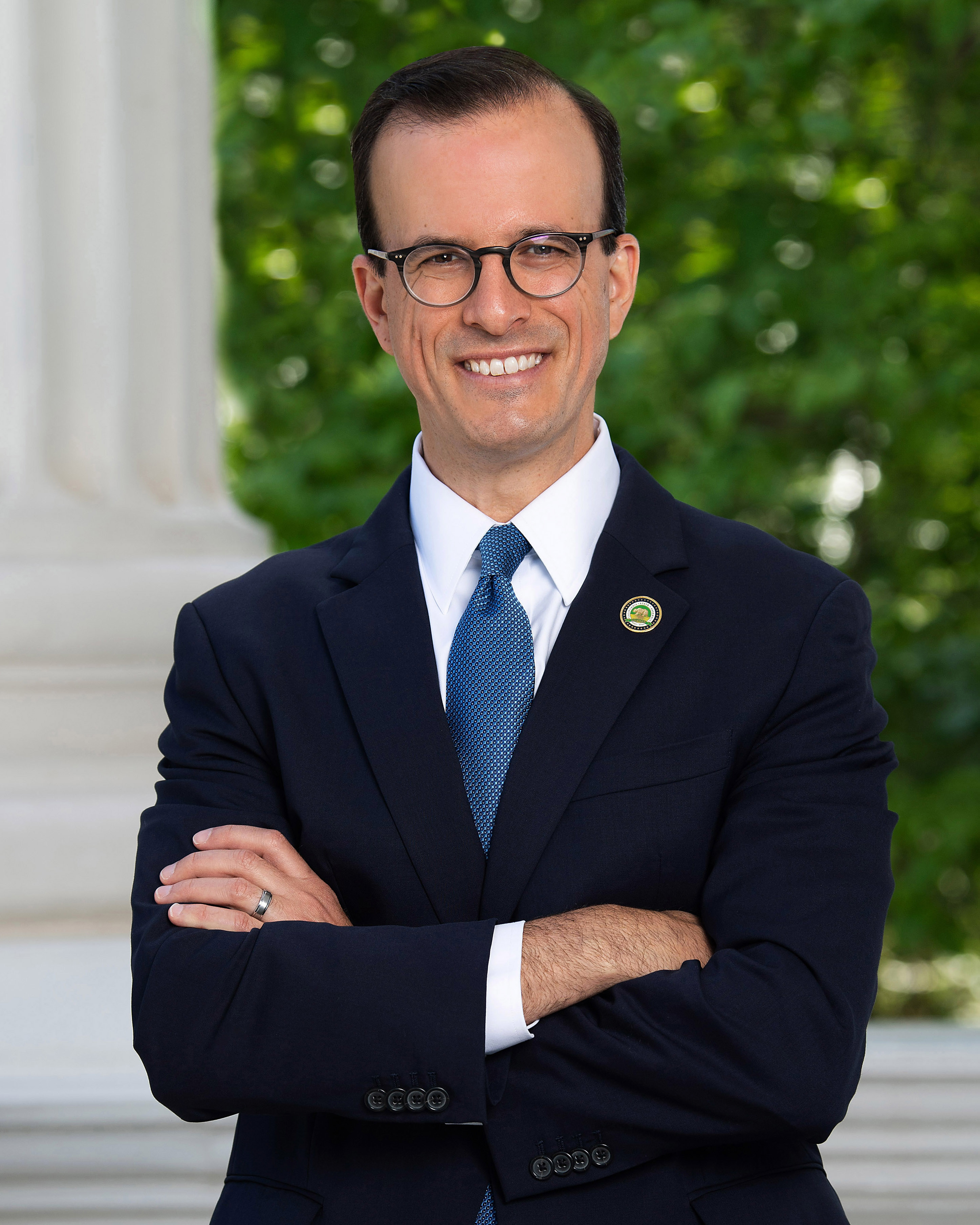
Rep. Marc Berman
Sponsored bills
This measure would call on Congress to enact legislation that restores and strengthens the full protections of the Voting Rights Act of 1965, and it would call on the President to sign the legislation.
Existing law requires the Office of the State Fire Marshal to develop and make available on its internet website a Wildland-Urban Interface Fire Safety Building Standards Compliance training intended for use in the training of local building officials, builders, and fire service personnel, as specified. Existing law authorizes the Office of the State Fire Marshal to allow certification of contractors who conduct defensible space, home hardening, fuel reduction, roadside clearance, and other contracting activities for wildlife resiliency efforts and who have completed specified training programs. Existing law requires the Office of the State Fire Marshal to develop and update a Wildland-Urban Interface Products listing of products and construction assemblies that comply with prescribed regulations regarding building in a wildland-urban interface area. Existing law authorizes the Office of the State Fire Marshal to expend funds from the Building Standards Administration Special Revolving Fund, upon an appropriation by the Legislature, for the purposes of researching and developing the products listing and the educational and training provisions. Existing law requires the Office of the State Fire Marshal to establish the State Fire Marshal's Wildfire Mitigation Advisory Committee. This bill would require, on or before January 1, 2028, the State Fire Marshal's Wildfire Mitigation Advisory Committee to develop an implementation plan for a home hardening certification program that identifies home hardening measures, including defensible space, that can be voluntarily implemented during renovation or property improvement projects, or both, to substantially reduce the risk of loss during a fire and bring existing building stock into alignment with state building standards for wildland-urban interface areas. The bill would require the committee, in developing the implementation plan for the home hardening certification program, to provide specified recommendations. The bill would authorize the Office of the State Fire Marshal to expend funds from the Building Standards Administration Special Revolving Fund, upon an appropriation by the Legislature, for the purposes of developing the implementation plan for the home hardening certification program. The bill would require the committee, on or before January 1, 2028, to provide a report to specified legislative committees on its findings and recommendations pursuant to these provisions. The bill would require, on or before January 1, 2029, the State Fire Marshal to establish the home hardening certification program based on the recommendations made by the Wildfire Mitigation Advisory Committee.
Existing law establishes the California Community Colleges, under the administration of the Board of Governors of the California Community Colleges, as one of the segments of public postsecondary education in this state. Existing law establishes community college districts throughout the state and authorizes these districts to provide instruction at community college campuses. Existing law requires the expenditure, during each fiscal year, for the payment of salaries of classroom instructors by a community college district, of 50% of the district's current expense of education. Existing law defines "current expense of education" as the gross total expended for certain expenses that include academic salaries, classified salaries, employee benefits, and books, supplies, and equipment replacement, but that generally exclude expenses for student transportation, food services, and community services. This bill, notwithstanding the above-described provisions, would authorize a community college district, for a period of 5 fiscal years following the 2025–26 fiscal year, or until specified federal funding is fully restored to every community college district, whichever occurs first, to exclude from its current expense of education any local unrestricted expenditures from the community college district's unrestricted general fund, as provided, and not to exceed a specified amount, that maintain student support functions that were previously funded though federal discretionary grants that have been terminated, nonrenewed, or defunded due to federal action on or after September 10, 2025. If a community college district exercises its authority pursuant to these provisions, the bill would require the community college district to annually certify eligibility to the office of the Chancellor of the California Community Colleges, as specified, and would require the chancellor's office to maintain documentation and include as part of another specified report, any certifications it receives, as provided. The bill would require the above-described action to exclude local unrestricted expenditures from a community college district's current expense of education to be taken at a regular public meeting of the governing board of the community college district, as specified. The bill would make its provisions inoperative on July 1, 2031, or on the first day of the fiscal year following the full restoration of specified federal funding to every community college district, whichever occurs first, and would repeal them on January 1 of the year following the inoperative date.
Existing law establishes the Office of Elections Cybersecurity within the Secretary of State's office to coordinate efforts between the Secretary of State and local elections officials to reduce the likelihood and severity of cyber incidents and to monitor and counteract false or misleading information regarding the electoral process. Existing law requires the Office of Elections Cybersecurity, among other things, to develop best practices for protecting against threats to election cybersecurity in consultation with federal, state, and local agencies and private organizations. This bill would also authorize the office to consult with academic researchers for that purpose. The bill would require the office to assess whether additional state resources are needed to replace election cybersecurity resources previously provided by the federal government.
Existing law requires an elections official, upon receiving a vote by mail ballot, to compare the signature on the identification envelope with either the signature appearing on the voter's affidavit or signature appearing on a form that is part of the voter's registration record. Existing law requires an elections official, if it is determined that the signatures do not compare, to notify the voter of the opportunity to verify the voter's signature. Under existing law, if an elections official has a telephone number or email address on file for a voter whose signature does not compare, the elections official is required to notify the voter by telephone, text message, or email, as specified. Existing law requires a county elections official to establish a free access system that allows a vote by mail voter to learn if the voter's vote by mail ballot was counted, as specified. Existing law requires the Secretary of State to maintain a system to allow a vote by mail voter to track the voter's vote by mail ballot through the mail system, as specified. This bill would require the Secretary of State to implement and make available to county elections officials a system that allows voters to access electronic signature curing, as defined. The bill would require the Secretary of State to make available on its internet website specified data regarding voters' use of the system.
Existing law, the Protecting Our Kids from Social Media Addiction Act, prohibits an operator of an addictive internet-based service or application from providing an addictive feed, as defined, to a user unless the operator does not have actual knowledge that the user is a minor, as specified, or the operator has obtained verifiable parental consent to provide an addictive feed to the user who is a minor. Existing law, the Digital Age Assurance Act, beginning January 1, 2027, requires a person who owns, maintains, or controls a software application, as defined, to request age bracket data sent by a real-time secure application programming interface or operating system with respect to a particular user from an operating system provider or a covered application store when the application is downloaded and launched. This bill would prohibit a covered platform, as defined, from providing an addictive feature, as defined, to a user who is under 16 years of age and would require a covered platform to implement reasonable measures to ensure that users under 16 years of age are not offered or provided any addictive feature on the covered platform. The bill would also authorize the Attorney General to adopt regulations to implement and enforce the bill in order to further the purpose of protecting minors online, including by altering the scope of "covered platform" if the Attorney General determines that doing so is necessary to ensure that "covered platform" applies to internet websites, online services, online applications, or mobile applications that make addictive features, as defined, available to users under 16 years of age. This bill would impose a civil penalty upon a noncompliant platform and would require its provisions to be enforced by a civil action brought only by the Attorney General or a local public prosecutor, as specified. This bill would also establish the e-Safety Advisory Commission within the Department of Justice as an independent advisory body that is only for administrative purposes to advise state government on certain matters related to online safety and would require the commission to, on or before January 1 of each year, report to the Legislature and the Governor on, among other things, its activities under the bill.
Existing law makes it a crime to, by force, threat of force, or physical obstruction that is a crime of violence, intentionally injure, intimidate, interfere with, or attempt to injure, intimidate, or interfere with any person lawfully exercising or seeking to exercise the First Amendment right of religious freedom at a place of religious worship. This bill would make it unlawful for a person to, within a radius of 100 feet from an entrance or exit of a place of religious worship, as defined, intentionally approach another person seeking to enter or exit a place of religious worship within 8 feet of that person to either pass a leaflet or handbill to, display a sign to, or engage in oral protest or education or to harass, obstruct, threaten, or intimidate the person or occupant. The bill would, for the purposes of determining that distance, measure from the body of the person seeking to enter or exit, or the exterior of a motor vehicle they occupy, to the body of, or any sign or object held by, the other person. The bill would prescribe specified fines, imprisonment, or fine and imprisonment for a violation of these provisions. By creating a new crime, the bill would impose a state-mandated local program. The California Constitution requires the state to reimburse local agencies and school districts for certain costs mandated by the state. Statutory provisions establish procedures for making that reimbursement. This bill would provide that no reimbursement is required by this act for a specified reason.
Existing law requires the Governor to proclaim various days as days of remembrance or recognition. This bill would require the Governor to annually proclaim September 25 as Dolly Parton Day. This bill would declare that it is to take effect immediately as an urgency statute.
Existing law prohibits a person or entity from knowingly distributing an election communication containing materially deceptive content that portrays specified candidates and officials as doing or saying something that the candidate or official did not do or say if the content is reasonably likely to harm the reputation or electoral prospects of a candidate or is reasonably likely to falsely undermine confidence in the outcome of an election. Existing law applies this prohibition within 120 days of an election in California and, for content involving elections officials and voting machines and related equipment, up to 60 days after an election. Existing law exempts an election communication from this prohibition if the content includes a disclosure stating that the communication has been manipulated. Existing law requires, for visual media, that the text of this disclosure appear in a size that is easily readable by the average viewer and no smaller than the largest font size of other text appearing in the visual media. This bill would instead prohibit the distribution of materially deceptive content that is material to a voter's electoral decisions or to public confidence in an election's process or outcome, as specified. The bill would set forth additional requirements relating to the color and font size of the disclosure's text. The bill would specify that the prohibition applies within the 30 days before an election in California with regard to candidates for any federal, state, or local elected office and elected officials and, with regard to elections officials and voting machines and related equipment, beginning 30 days before an election through 38 days after the election. Under existing law, the prohibition does not apply to an advertisement or other election communication containing materially deceptive content that constitutes satire or parody if the communication includes a specified disclosure. This bill would also exempt an advertisement or other election communication from these prohibitions if a reasonable person would understand that the content was satire or parody. Existing law authorizes a recipient of materially deceptive content, among others, to seek an injunction or to bring an action for general or special damages against the person, committee, or other entity that distributed or republished the materially deceptive content. This bill would instead authorize the individual depicted in the materially deceptive content to seek the injunction or to bring the action for general or special damages. This bill would declare that it is to take effect immediately as an urgency statute.