

Existing law, the California Age-Appropriate Design Code Act, requires a business that provides an online service, product, or feature likely to be accessed by children to comply with certain requirements, including, among other things, prohibiting the business from collecting, selling, sharing, or retaining any personal information that is not necessary to provide the online service, product, or feature, except as specified. Existing law imposes specified civil penalties upon a business that violates these provisions. This bill would repeal the above-described act and would instead impose similar provisions without the above-referenced exceptions and would impose civil penalties for a violation of these provisions. The bill would require a business that provides an online product or service likely to be accessed by children to take reasonable steps to prevent specified risks of harm to children. The bill would authorize a child to void any provision of a contract that was entered into by the child or their parent or guardian as a result of a design feature of the online product or service. The bill would authorize the Attorney General or a public prosecutor to bring a civil action for a violation of these provisions, as specified.
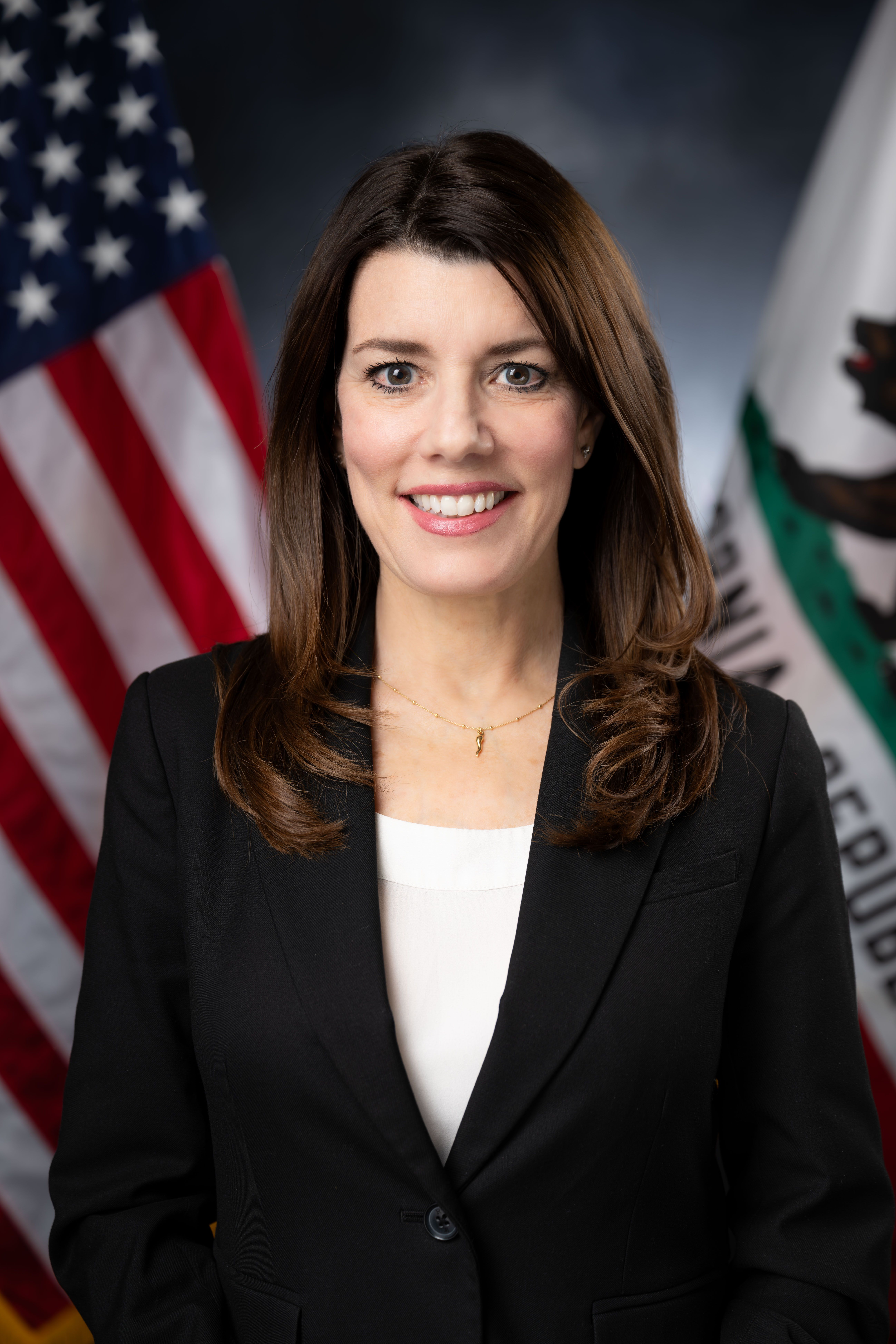
Rep. Catherine Stefani
Sponsored bills
This measure would call on Congress to enact legislation that restores and strengthens the full protections of the Voting Rights Act of 1965, and it would call on the President to sign the legislation.
Existing law makes it a crime to knowingly or willfully cause another person to engage in the unlawful manufacture of firearms or knowingly or willfully aiding, abetting, prompting, or facilitating the unlawful manufacture of firearms, including the manufacture of assault weapons or .50 BMG rifles or the manufacture of any firearm using a 3-dimensional printer, as specified. Existing law authorizes a civil action against a person who knowingly distributes or causes to be distributed any digital firearm manufacturing code to any person, except as specified. Existing law authorizes the Attorney General, county counsel, or city attorney to bring an action against this person and seek a civil penalty, as specified, for each violation, as well as injunctive relief. This bill would require the Department of Justice to check on a quarterly basis beginning no later than July 1, 2027, whether ASTM International has published industry standards for equipping 3-dimensional printers with firearm blocking technology. The bill would require, if the department determines that ASTM International has published or adopted industry standards for firearm blocking technology for 3-dimensional printers, that the department publish written guidance or regulations within 24 months after making that determination. The bill would require, among other things, the written guidance or regulations to describe minimum performance standards for 3-dimensional printer firearm blocking technology before a printer can lawfully be sold or offered for sale in the state. If, as of July 1, 2029, the department determines that ASTM International has not published industry standards for firearm blocking technology for 3-dimensional printers, the bill would relieve the department of any further responsibility to ascertain whether ASTM International has published or adopted industry standards. The bill would make it unlawful to sell, offer for sale, or transfer for consideration, a 3-dimensional printer in the State of California that is not equipped with firearm blocking technology that also meets the above-described industry standards. The bill would exempt printers used exclusively for the manufacturing of properties (props) in the entertainment industry, and would authorize the department to adopt regulations that provide for additional exceptions to these provisions. This bill would also exempt a person who distributes, or causes the distribution of, digital firearm manufacturing code, solely for the bona fide purpose of, among other things, developing, refining, and testing the functionality of a firearm blocking technology from civil liability. This bill would make these provisions severable.
Existing law establishes the California Community Colleges, under the administration of the Board of Governors of the California Community Colleges, the California State University, under the administration of the Trustees of the California State University, and the University of California, under the administration of the Regents of the University of California, as the 3 segments of public postsecondary education in the state. Existing law requires, on and after January 1, 2023, a student health center on a California State University or University of California campus to offer abortion by medication techniques, as specified. Existing law establishes the College Student Health Center Sexual and Reproductive Health Preparation Fund to be administered by the Commission on the Status of Women and Girls and continuously appropriates the moneys in that fund to the commission for specified activities related to providing abortion by medication techniques at student health centers. This bill would require a student health center on a California State University or University of California campus, on or before January 1, 2028, to promote awareness of the services for abortion by medication techniques that the student health center offers, provide information on those services to students, and post the availability of those services on its internet website. This bill would require a community college that has a student health center, upon appropriation by the Legislature, to, on and after January 1, 2029, offer access to abortion by medication techniques, promote awareness of those services, provide information on those services to students, and post the availability of those services on its internet website. The bill would require the commission to submit a report to the Legislature, on or before January 1, 2030, that includes, but is not limited to, specified information relating to abortion by medication techniques at or through community college student health centers. The bill would require the commission, in consultation with the office of the Chancellor of the California Community Colleges, to develop a standardized reporting framework that minimizes administrative burden and protects student privacy. The bill would authorize funds appropriated for these provisions to be used for implementation readiness activities and ongoing operational costs, as specified.
Existing law requires a person, who claims title to a firearm that is in the custody of a court or law enforcement agency and wishes to have it returned, to make an application for a determination by the Department of Justice as to whether the applicant is eligible to possess a firearm. Under existing law, a law enforcement agency or court that has taken custody of a firearm is prohibited from returning the firearm to an individual unless specified requirements are met, including, but not limited to, requiring the person to be eligible to possess a firearm and verifying that the firearm is not listed as stolen and the firearm has been recorded in the Automated Firearms System in the name of the person, as specified. Existing law requires any weapon that was carried unlawfully for specified crimes to be surrendered to specified law enforcement entities. Existing law requires weapons surrendered pursuant to these provisions to be destroyed by the law enforcement entity. This bill would authorize a law enforcement agency, as defined, to create a voluntary firearm storage program that allows a person to voluntarily transfer custody of their firearm to the local law enforcement agency for temporary safekeeping purposes to prevent firearm violence, suicide, and other injury. The bill would require a law enforcement agency adopting this program to provide clear instructions on the procedure to voluntarily transfer custody of a firearm and to provide clear instructions on the process for requesting return of the firearm, as specified. Upon receipt of a firearm, the bill would require a law enforcement agency to, among other things, check a certain database to ensure the firearm has not previously been reported lost, stolen, or involved in a crime and ensure that the requesting person is eligible to possess firearms when the firearm is returned to the person. The bill would require a law enforcement agency to destroy a firearm that a person failed to retrieve at the end of a time period specified by the law enforcement agency, except as provided. Existing law prohibits the carrying of a concealed firearm or the open carrying of a firearm, as specified. Existing law provides certain exemptions to these prohibitions, including exemptions for peace officers, retired peace officers, and persons possessing a valid license to carry a concealed firearm. Existing law generally regulates the sale and transfer of firearms, including, among other requirements and subject to exceptions, that the transfer of a firearm be conducted through a firearms dealer. This bill would exempt the voluntary transfer of a firearm to a local law enforcement agency pursuant to the provisions above from these prohibitions and regulations.
Existing law provides for the licensure and regulation of health facilities, including general acute care hospitals and skilled nursing facilities, by the State Department of Public Health. A violation of these provisions is generally a crime. Under existing law, if a person dies in a hospital, convalescent hospital, or board and care facility without known next of kin, the person in charge of the hospital or facility is required to give immediate notice of that fact to the public administrator of the county in which the hospital or facility is located, and if the person in charge fails to do so, the hospital or facility is liable for the cost of internment, as specified, and specified losses incurred by the estate or beneficiaries as a result of the failure to notify. This bill would instead require the licensee in charge of a general acute care hospital or a skilled nursing facility to make a reasonable attempt to notify any known next of kin, as specified. The bill would state that this requirement is met if a skilled nursing facility notifies the person's resident representative or has the body transferred to a hospital after death, or if the person notified the hospital or facility, prior to death and in writing, that they do not want their known next of kin to be notified of their presence or death. The bill would require, if a reasonable attempt is made or the person expressed a desire that next of kin not be notified, as specified, that the hospital or facility give notice to the public administrator as described above. The bill would make a hospital or facility that fails to notify any known next of kin liable for a continuing civil penalty of $200 per day, up to a maximum of $50,000, measured from the time it would take to make a reasonable attempt to notify the next of kin until the actual knowledge by the next of kin of the decedent's death. The bill would also make a hospital or facility that fails to notify the county public administrator, as specified, liable for a continuing civil penalty of up to $200 per day, up to a maximum of $50,000, measured from the 5th business day following a person's death until the county public administrator is notified. The bill would authorize a licensee that disputes the assessment of a civil penalty to, within 10 working days of the notification of the penalty, request a hearing pursuant to specified law.
Existing law, the Protecting Our Kids from Social Media Addiction Act, prohibits an operator of an addictive internet-based service or application from providing an addictive feed, as defined, to a user unless the operator does not have actual knowledge that the user is a minor, as specified, or the operator has obtained verifiable parental consent to provide an addictive feed to the user who is a minor. Existing law, the Digital Age Assurance Act, beginning January 1, 2027, requires a person who owns, maintains, or controls a software application, as defined, to request age bracket data sent by a real-time secure application programming interface or operating system with respect to a particular user from an operating system provider or a covered application store when the application is downloaded and launched. This bill would prohibit a covered platform, as defined, from providing an addictive feature, as defined, to a user who is under 16 years of age and would require a covered platform to implement reasonable measures to ensure that users under 16 years of age are not offered or provided any addictive feature on the covered platform. The bill would also authorize the Attorney General to adopt regulations to implement and enforce the bill in order to further the purpose of protecting minors online, including by altering the scope of "covered platform" if the Attorney General determines that doing so is necessary to ensure that "covered platform" applies to internet websites, online services, online applications, or mobile applications that make addictive features, as defined, available to users under 16 years of age. This bill would impose a civil penalty upon a noncompliant platform and would require its provisions to be enforced by a civil action brought only by the Attorney General or a local public prosecutor, as specified. This bill would also establish the e-Safety Advisory Commission within the Department of Justice as an independent advisory body that is only for administrative purposes to advise state government on certain matters related to online safety and would require the commission to, on or before January 1 of each year, report to the Legislature and the Governor on, among other things, its activities under the bill.
Existing federal law, the National Suicide Hotline Designation Act of 2020, designates the 3-digit telephone number "988" as the universal number within the United States for the purpose of the national suicide prevention and mental health crisis hotline system operating through the 988 Suicide and Crisis Lifeline. Existing law, the Miles Hall Lifeline and Suicide Prevention Act, requires, among other things, the Office of Emergency Services (OES) to verify that technology that allows for transfers between 988 centers, as well as between 988 centers and 911 public safety answering points, is available to 988 centers and 911 public safety answering points throughout the state, to appoint a 988 system director, and to verify interoperability between and across 911 and 988. Existing law establishes the 988 State Suicide and Behavioral Health Crisis Services Fund and provides that 988 surcharge revenue in the fund is available, upon appropriation by the Legislature, for purposes of the act. This bill would require the California Health and Human Services Agency (agency) to annually determine whether an adequate specialized LGBTQ+ suicide prevention hotline is activated by the federal government under 988. When making this determination, the bill would require the agency to consider specified factors, including, among other things, any factor the agency considers relevant to evaluating the adequacy of press 3 operations. The bill would authorize the agency to, no later than 6 months after its determination, request the federal Substance Abuse and Mental Health Services Administration (SAMHSA) to allow the state to implement the press 3 function at the state level for calls originating in the State of California, which would allow callers to dial "988" and press "3" to be automatically routed to a specialized 988 center. The bill would require OES and the agency to, no later than 12 months following the approval by SAMHSA, ensure that press 3 function technologies are available. This bill would require, no later than 12 months following approval by SAMHSA, the agency to identify and contract with a qualified entity or entities that specialize in LGBTQ+ suicide prevention services. The bill would require the agency to determine the eligibility criteria, establish an application process, and administer funds to the qualified entity, as specified. The bill would require a qualified entity to comply with various requirements, including having a primary objective of reducing suicide rates or addressing mental health crises. The bill would make its implementation subject to an appropriation by the Legislature, as specified. This bill would declare that it is to take effect immediately as an urgency statute.
Existing law prohibits a person from, among other things, engaging in, aiding, or abetting a motor vehicle exhibition of speed on a highway or in an offstreet parking facility. Under existing law, a violation of this prohibition is punishable by imprisonment in a county jail for not more than 90 days, by a fine of not more than five hundred dollars ($500) , or by both that fine and imprisonment. Existing law, beginning on January 1, 2029, authorizes a court to suspend the privilege to operate a vehicle for 90 days to 6 months for a person who engages in, aids, or abets a motor vehicle exhibition of speed that occurred as part of a sideshow. For these purposes, existing law defines "sideshow" as an event in which 2 or more persons block or impede traffic on a highway or in an offstreet parking facility for the purpose of performing motor vehicle stunts, motor vehicle speed contests, motor vehicle exhibitions of speed, or reckless driving for spectators. This bill would revise the definition of sideshow to include the use or operation of any motor vehicle, including, but not limited to, motorcycles or off-highway motor vehicles, as specified, to barricade, block, impede, or otherwise obstruct traffic. The bill would also provide enhanced penalties for engaging in, aiding, or abetting a motor vehicle exhibition of speed as part of a sideshow, including, as specified, increasing fines, requiring a mandatory minimum jail sentence, and making the offense punishable as a misdemeanor or felony if the offense proximately causes injury to another person. By increasing the punishment for an existing crime, the bill would create a state-mandated local program. This bill would incorporate additional changes to Section 23109 of the Vehicle Code proposed by AB 1830 to be operative only if this bill and AB 1830 are enacted and this bill is enacted last. The California Constitution requires the state to reimburse local agencies and school districts for certain costs mandated by the state. Statutory provisions establish procedures for making that reimbursement. This bill would provide that no reimbursement is required by this act for a specified reason.
Existing law makes it a crime to operate a vehicle while under the influence of alcohol or drugs, and sets forth the penalties for a violation of these provisions. Existing law requires the driver of a vehicle involved in an accident resulting in injury or death to a person, other than that driver, to immediately stop the vehicle at the scene of the accident and provide specified personal information to the injured person or the occupants of the other vehicle and to any traffic or police officer at the scene of the accident. Existing law makes failing to comply with these requirements a crime, punishable as a misdemeanor for an accident resulting in injury and punishable as a misdemeanor or a felony for an accident resulting in death or serious injury, as defined. This bill would make the above-described violation for an accident resulting injury punishable as a misdemeanor or a felony and would impose an increased felony penalty for the above-described violation for an accident resulting in death or serious injury, if either of those violations occurred within 10 years of a separate driving under the influence, reckless driving, or gross vehicular manslaughter violation, as specified. By increasing the potential time of imprisonment, the bill would impose a state-mandated local program. Existing law requires a person who is convicted of specified crimes related to driving under the influence to be advised by the court of the dangerousness of their actions and that if that behavior in the future results in a person's death, they may be charged with murder. This bill would additionally require this advisement to be given if a person enters a plea to a different or lesser offense, as described. The California Constitution requires the state to reimburse local agencies and school districts for certain costs mandated by the state. Statutory provisions establish procedures for making that reimbursement. By imposing an increased term of imprisonment, this bill would create a state-mandated local program. This bill would provide that no reimbursement is required by this act for a specified reason.