

(1) Existing law requires a pupil to complete designated coursework while in grades 9 to 12, inclusive, in order to receive a diploma of graduation from high school. These graduation requirements include, among others, the completion of 3 years of courses in English and 3 years of courses in social studies, including one-year courses in United States history and geography and world history, culture, and geography, a one-semester course in American government and civics, and a one-semester course in economics. Existing law requires the Instructional Quality Commission to develop, and the State Board of Education to adopt, modify, or revise, a model curriculum in ethnic studies. Existing law also encourages each school district and charter school that maintains any of grades 9 to 12, inclusive, and that does not otherwise offer a standards-based ethnic studies curriculum to offer, beginning in the school year following the adoption of the model curriculum, a course of study in ethnic studies based on the model curriculum. This bill would add the completion of a one-semester course in ethnic studies, meeting specified requirements, to the high school graduation requirements commencing with pupils graduating in the 2029–30 school year, including for pupils enrolled in a charter school. The bill would expressly authorize local educational agencies, including charter schools, to require a full-year course in ethnic studies at their discretion. The bill would require local educational agencies, including charter schools, to offer an ethnic studies course commencing with the 2025–26 school year, as specified. The bill would authorize, subject to the course offerings of a local educational agency, including a charter school, a pupil to satisfy the ethnic studies course requirement by completing either (A) a course based on the model curriculum in ethnic studies developed by the commission, (B) an existing ethnic studies course, (C) an ethnic studies course taught as part of a course that has been approved as meeting the A-G requirements of the University of California and the California State University, except as specified, or (D) a locally developed ethnic studies course approved by the governing board of the school district or the governing body of the charter school. The bill would require a pupil who completes a course described above to also accrue credit for coursework in the subject that the course is offered, including, if applicable, credit towards satisfying a course required for a diploma of graduation from high school. The amendments made by the bill, as described above, would become operative only upon an appropriation of funds by the Legislature for purposes of the amendments in the annual Budget Act or another statute. Because the bill would add new duties to local educational agencies, it would constitute a state-mandated local program. (2) The California Constitution requires the state to reimburse local agencies and school districts for certain costs mandated by the state. Statutory provisions establish procedures for making that reimbursement. This bill would provide that, if the Commission on State Mandates determines that the bill contains costs mandated by the state, reimbursement for those costs shall be made pursuant to the statutory provisions noted above.
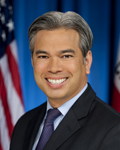
Sponsored bills
Existing law generally prescribes the procedure for the prosecution of persons arrested for committing a crime, including pleadings, bail, pretrial proceedings, trial, judgment, sentencing, and appeals. Existing law allows a person who is unlawfully imprisoned or restrained of their liberty to prosecute a writ of habeas corpus to inquire into the cause of their imprisonment or restraint. Existing law allows a writ of habeas corpus to be prosecuted for, among other things, relief based on the use of false evidence that is substantially material or probative to the issue of guilt or punishment that was introduced at trial. This bill would prohibit the state from seeking a criminal conviction or sentence on the basis of race, ethnicity, or national origin, as specified. The bill would allow a writ of habeas corpus to be prosecuted on the basis of that prohibition, and would require the defendant to appear at the evidentiary hearing by video unless their presence in court is needed. The bill would permit a defendant to file a motion requesting disclosure of all evidence relevant to a potential violation of that prohibition that is in the possession or control of the prosecutor and would require a court, upon a showing of good cause, to order those records to be released. The bill would authorize a court that finds a violation of that prohibition to impose a remedy specified in the bill. The bill would apply its provisions to adjudications and dispositions in the juvenile delinquency system. The bill would apply its provisions only prospectively to cases in which judgment has not been entered prior to January 1, 2021. Existing law creates an explicit right for a person no longer imprisoned or restrained to file a motion to vacate a conviction or sentence based on a prejudicial error damaging to the moving party's ability to meaningfully understand, defend against, or knowingly accept the actual or potential adverse immigration consequences of a plea of guilty or nolo contendere, or based on newly discovered evidence of actual innocence, as specified. This bill would additionally allow for a person no longer imprisoned or restrained to file a motion to vacate a conviction or sentence based on a conviction or sentence that was sought, obtained, or imposed on the basis of race, ethnicity, or national origin in violation of the bill's provisions. This bill would state that its provisions are severable.
(1) Existing law makes certain publications and communications, including certain communications in a legislative proceeding, judicial proceeding, any other official proceeding authorized by law, or in the initiation or course of any other proceeding authorized by law and reviewable pursuant to a writ of mandate, privileged, and therefore protected from civil action, subject to certain exceptions. These exceptions include any communication made in a judicial proceeding knowingly concealing the existence of an insurance policy or policies. This bill would additionally create an exception to the privilege provisions for any communication between a person and a law enforcement agency in which the person knowingly or recklessly makes a false report that another person has committed, or is in the act of committing, a criminal act or is engaged in an activity requiring law enforcement intervention. (2) Existing law, the Ralph Civil Rights Act of 1976, provides that all persons within the jurisdiction of this state have the right to be free from any violence, or intimidation by threat of violence, committed against their persons or property because of political affiliation, or on account of position in a labor dispute, or sex, race, color, religion, ancestry, national origin, disability, medical condition, genetic information, marital status, sexual orientation, citizenship, primary language, or immigration status, or because another person perceives them to have one or more of those characteristics. Existing law provides civil remedies for violations of those provisions. This bill would provide that intimidation by threat of violence includes knowingly or recklessly making or threatening to make a false claim or report to a peace officer or law enforcement agency alleging that another person has engaged in unlawful activity or in an activity that requires law enforcement intervention. (3) Existing law makes it an infraction for a person to knowingly allow the use of or use the 911 emergency system for any reason other than because of an emergency. A violation of this prohibition is punishable by a warning for a first violation and specified, graduated fines for subsequent violations, including a fine of up to $250 for a 4th or subsequent violation. This bill would increase the penalty for a violation of that provision if a person knowingly allows the use of or uses the 911 emergency system for the purpose of harassing another. The bill would make a first violation of that prohibition an infraction punishable by a $250 fine or a misdemeanor punishable by up to 6 months in a county jail, a fine of up to $1,000, or both that imprisonment and fine. The bill would make a 2nd or subsequent violation a misdemeanor punishable by up to 6 months in a county jail, a fine of up to $1,000, or both that imprisonment and fine. The bill would also provide that if a person knowingly allows the use of or uses the 911 emergency system for the purpose of harassing a person and that act is a hate crime or other, specified crime committed against another person on the basis of the other person's actual or perceived characteristics, including race, religion, gender, or sexual orientation, the crime would be a misdemeanor punishable by up to one year in a county jail, a fine of not less than $500 nor more than $2,000, or both that imprisonment and fine. By increasing the penalty for certain crimes to make them punishable by imprisonment in a county jail, this bill would impose a state-mandated local program. (4) The California Constitution requires the state to reimburse local agencies and school districts for certain costs mandated by the state. Statutory provisions establish procedures for making that reimbursement. This bill would provide that no reimbursement is required by this act for a specified reason.
Existing law creates the Office of Emergency Services within the office of the Governor. The office is responsible for the state's emergency and disaster response services for natural, technological, or man-made disasters and emergencies. Existing law requires the office to establish by rule and regulation various classes of disaster service workers, the scope of the duties of each class, and to adopt rules and regulations for the registration of each class of these workers. Existing law requires the office to work with advocacy groups representing the deaf and hard of hearing for the purpose of improving accessibility to emergency information and services for the populations that they serve. Existing law requires the office to develop a plan for state and local utilization of volunteers during a state of emergency. This bill would, until January 1, 2024, enact the Community Response Initiative to Strengthen Emergency Systems Act or the C.R.I.S.E.S. Act for the purpose of creating, implementing, and evaluating the C.R.I.S.E.S. Act Grant Pilot Program, which the act would establish. The bill would require the Office of Emergency Services to establish rules and regulations for the act with the goal of making grants to community organizations, over 3 years, for the purpose of expanding the participation of community organizations in emergency response for specified vulnerable populations. The bill would require that grantees receive a minimum award of $250,000 per year. The bill would require a community organization receiving funds pursuant to the program to use the grant to stimulate and support involvement in emergency response activities that do not require a law enforcement officer, as specified. The bill would require the director of the office to assemble staff and resources to carry out certain duties in support of the program. The bill would require the office to support an 11-member C.R.I.S.E.S. Advisory Committee, selected by the Governor, the Chair of the Senate Rules Committee, and the Speaker of the Assembly, as specified, to be inclusive of community organizations with a proven history of leadership and partnership on emergency response. The committee would establish grant application criteria and parameters for eligible community organizations, review and decide upon grant proposals, ensure grants are adhering to standards, and make recommendations to the office, among other things. The bill would establish the Community Response Initiative to Strengthen Emergency Systems Act Fund in the State Treasury in support of the program, to be administered by the director. The bill would require that the act be implemented only if appropriate funding is made available to the office, which would make a determination to this effect, to be published on its internet website. The bill would provide that if the appropriation was not made, the office would bear no responsibility for implementing the act. The bill would make findings and declarations in regard to innovative approaches to emergency responses.
Existing law requires the Department of Corrections and Rehabilitation to establish parole reentry and assessment programs for inmates in state prison, in order to assess the inmate prior to release and to assist with the inmate's reentry into the community while on parole. Existing law establishes the California Reentry and Enrichment Grant Program to provide grants to community-based programs that provide rehabilitative services to incarcerated individuals. This bill would, subject to an appropriation by the Legislature for these purposes, establish the California Reentry Commission within the department, to be cochaired by the Secretary of the Department of Corrections and Rehabilitation and a formerly incarcerated individual to be appointed to the commission by the Governor. The bill would specify the members of the commission and require the commission to meet once every 2 months. The bill would require the commission to prepare and develop a new health and safety agenda for those returning home from prison or jail, coordinate with the Department of Corrections and Rehabilitation and the Board of State and Community Corrections to develop a grant program to provide grants to reentry service providers, conduct a review of reentry barriers, review current state criminal justice policies, and report to the Legislature on the impact of COVID-19 on the reentry population, among other duties.
(1) Existing law creates the Division of Labor Standards Enforcement, which is headed by the Labor Commissioner, and commits to it the general authority to enforce the requirements of the Labor Code. Existing law generally authorizes people who believe that they have been discharged or otherwise discriminated against in violation of any law enforced by the Labor Commissioner to file a complaint with the Division of Labor Standards Enforcement within 6 months after the occurrence of the violation. Existing law generally requires the Labor Commissioner to commence actions to enforce labor standards within 3 years of their accrual, as specified. This bill would extend the period of time within which people may file complaints subject to the 6-month deadline, described above, to within one year after the occurrence of the violations. (2) Existing law prohibits employers and their agents from making, adopting, or enforcing a rule, regulation, or policy preventing an employee from disclosing information to certain entities or from providing information to, or testifying before, any public body conducting an investigation, hearing, or inquiry if the employee has reasonable cause to believe that the information discloses a violation of a law, as specified. Existing law also prohibits retaliation against an employee for various reasons. This bill would authorize a court to award reasonable attorney's fees to a plaintiff who brings a successful action for a violation of the provisions described above.
Existing law authorizes a peace officer to make an arrest pursuant to a warrant or based upon probable cause, as specified. Under existing law, an arrest is made by the actual restraint of the person or by submission to the custody of the arresting officer. Existing law authorizes a peace officer to use reasonable force to effect the arrest, to prevent escape, or to overcome resistance. Existing law requires law enforcement agencies to maintain a policy on the use of force, as specified. Existing law requires the Commission on Peace Officer Standards and Training to implement courses of instruction for the regular and periodic training of law enforcement officers in the use of force. This bill would prohibit a law enforcement agency from authorizing the use of a carotid restraint or a choke hold, as defined. By requiring local agencies to amend use of force policies, this bill would impose a state-mandated local program. The California Constitution requires the state to reimburse local agencies and school districts for certain costs mandated by the state. Statutory provisions establish procedures for making that reimbursement. This bill would provide that, if the Commission on State Mandates determines that the bill contains costs mandated by the state, reimbursement for those costs shall be made pursuant to the statutory provisions noted above.
Existing law authorizes a defendant to apply, prior to the commencement of trial, for an order directing that a hearing to determine intellectual disability be conducted when the prosecution in a criminal case seeks the death penalty. Existing law requires the court to order a hearing to determine whether the defendant has an intellectual disability upon the submission of a declaration by a qualified expert stating the expert's opinion that the defendant is a person with an intellectual disability. Existing law defines "intellectual disability" for these purposes as a condition of significantly subaverage general intellectual functioning existing concurrently with deficits in adaptive behavior and manifested before 18 years of age. This bill would change the definition of "intellectual disability" to include conditions that manifest before the end of the developmental period, as defined by clinical standards. The bill would also prohibit the results of a test measuring intellectual functioning to be changed or adjusted based on race, ethnicity, national origin, or socioeconomic status. The bill would require the court to order a hearing to determine whether the defendant is a person with an intellectual disability upon a prima facie showing, as defined, that the defendant is a person with an intellectual disability. The bill would authorize a person in custody pursuant to a judgment of death to apply for an order directing that a hearing to determine intellectual disability be conducted as part of a petition for a writ of habeas corpus and would specify the procedure for making the determination as to whether the defendant is a person with an intellectual disability.
Existing law requires law enforcement agencies to maintain a policy on the use of force, as specified. Existing law requires the Commission on Peace Officer Standards and Training to implement courses of instruction for the regular and periodic training of law enforcement officers in the use of force. Existing law requires law enforcement agencies to report to the Department of Justice, as specified, any incident in which a peace officer is involved in a shooting or use of force that results in death or serious bodily injury. This bill would create a division within the Department of Justice to, upon the request of a law enforcement agency, review the use-of-force policy of the agency and make recommendations, as specified. This bill would require a state prosecutor to investigate incidents of an officer-involved shooting resulting in the death of an unarmed civilian, as defined. The bill would make the Attorney General the state prosecutor unless otherwise specified or named. The bill would authorize the state prosecutor to prepare a written report, and would require the state prosecutor to post any reports made on a public internet website. The bill would require, commencing July 1, 2023, the Attorney General to operate a Police Practices Division within the department to review, upon the request of a local law enforcement agency, the use of deadly force policies of that law enforcement agency and make recommendations, as specified. The bill would require the department to implement these provisions subject to an appropriation for this purpose.
(1) Existing law establishes the state prisons under the jurisdiction of the Department of Corrections and Rehabilitation. Under existing law, a female prisoner has the right to summon and receive the services of any physician and surgeon to determine whether they are pregnant. If the prisoner is found to be pregnant, existing law entitles the prisoner to services from the physician and surgeon of the prisoner's choice. Existing law prohibits an inmate known to be pregnant or in recovery after delivery from being restrained by the use of leg irons, waist chains, or handcuffs behind the body and prohibits restraints by the wrist, ankles, or both, unless deemed necessary for safety purposes, during labor, delivery, and recovery. Existing law requires an incarcerated person in state prison who menstruates to have access to materials necessary for personal hygiene with regard to their menstrual cycle and reproductive system. Existing law places county jails under the jurisdiction of the sheriff for the confinement of persons sentenced to imprisonment for the conviction of a crime. Existing law gives an inmate who is pregnant in a local detention facility the right to summon and receive the services of a physician or surgeon to determine if the inmate is pregnant and to receive medical services. Existing law requires the Board of State and Community Corrections to establish minimum standards for local correctional facilities to require that inmates who are received by the facility while they are pregnant are provided a balanced, nutritious diet approved by a doctor, prenatal and postpartum information and healthcare, information pertaining to childbirth education and infant care, and a dental cleaning. Existing law requires that these standards also prohibit the restraining of an inmate known to be pregnant or in recovery after delivery, except as specified. This bill would require an incarcerated person in a county jail or the state prison who is identified as possibly pregnant or capable of becoming pregnant during an intake health examination or at any time during incarceration to be offered a test upon intake or request, and in the case of a county jail, within 72 hours of arrival at the jail. The bill would require an incarcerated person who is confirmed to be pregnant to be scheduled for pregnancy examination with a physician, nurse practitioner, certified nurse midwife, or physician assistant within 7 days. The bill would require incarcerated pregnant persons to be scheduled for prenatal care visits, as specified. The bill would require incarcerated pregnant persons to be provided specified prenatal services and a referral to a social worker. The bill would require incarcerated pregnant persons to be given access to community-based programs serving pregnant, birthing, or lactating inmates. The bill would allow an incarcerated pregnant person to elect to have a support person present during childbirth. The bill would require an incarcerated pregnant person to be provided with a postpartum examination one week, and as needed up to 12 weeks postpartum. The bill would prohibit the use of tasers, pepper spray, or other chemical weapons against incarcerated pregnant persons. By imposing new duties on county jails, this bill would impose a state-mandated local program. (2) Existing law provides an inmate in a prison or local detention facility with the right to summon and receive the services of any physician to determine whether they are pregnant. This bill would provide an incarcerated person in a local detention facility with the right to summon a physician, nurse practitioner, certified nurse midwife, or physician assistant. The bill would make conforming changes. (3) Existing law requires that any female person confined in a local detention facility be allowed to continue to use materials necessary for personal hygiene with regard to their menstrual cycle and reproductive system. This bill would specify that this includes, but is not limited to, sanitary pads and tampons, and would require those items to be provided at no cost to the incarcerated person. By imposing additional duties on local detention facilities, this bill would impose a state-mandated local program. (4) Existing law requires local detention facilities to furnish every female person confined in the facility with information and education regarding the availability of family planning services and requires that family planning services be offered at least 60 days prior to a scheduled release. This bill would make these requirements applicable to all incarcerated persons. By imposing additional duties on local detention facilities, this bill would impose a state-mandated local program. (5) The California Constitution requires the state to reimburse local agencies and school districts for certain costs mandated by the state. Statutory provisions establish procedures for making that reimbursement. This bill would provide that, if the Commission on State Mandates determines that the bill contains costs mandated by the state, reimbursement for those costs shall be made pursuant to the statutory provisions noted above.