




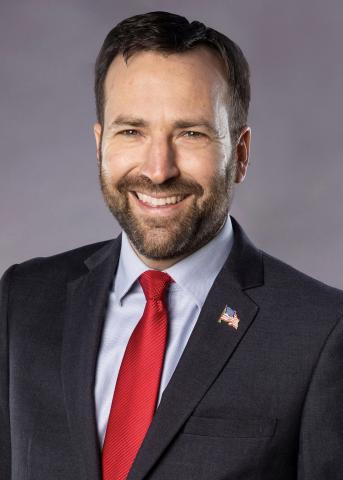




SB 828: Fireworks licenses and permits: disqualifying conditions: local jurisdictions.
(1) The State Fireworks Law requires the State Fire Marshal to adopt regulations relating to fireworks as may be necessary for the protection of life and property. Existing law requires these regulations to include, among other things, provisions for the granting of licenses and permits for the manufacture, wholesale, import, export, and sale of all classes of fireworks. A violation of the State Fireworks Law or the regulations issued pursuant thereto is a misdemeanor. This bill would require the State Fire Marshal to adopt regulations that include provisions for determining license requirements specific to importing fireworks that will not be sold within California, as provided. (2) Existing law makes the possession of dangerous fireworks, except when the person possessing the dangerous fireworks holds and is operating within the scope of a valid license or permit, subject to various penalties depending on the amount of gross weight in possession. Existing law defines dangerous fireworks for these purposes to include, among other things, fireworks kits and fireworks examined and tested by the State Fire Marshal and determined by the State Fire Marshal to be unsafe for use by any person not specially qualified or trained in the use of fireworks. The State Fireworks Law does not apply to specified objects, including, among other things, paper caps that contain less than 0.25 grain of pyrotechnic composition per unit load. This bill would revise and recast the definition of a fireworks kit, as provided, and expand the definition of dangerous fireworks to include any types of fireworks not examined and tested by the State Fire Marshal, excluding fireworks with a pending application for approval. This bill would repeal the above-described exemption for paper caps. By expanding the scope of a crime, the bill would impose a state-mandated local program. (3) Existing law requires fireworks licensees seeking authorization for specified activities related to fireworks to submit a written application for a permit to the chief of the fire department or the chief fire prevention officer of the city or county, or to another issuing authority that may be designated by the governing body of the city or county, or, in the event there is no officer or person appointed within the area, to the State Fire Marshal or the State Fire Marshal's deputy, as provided. This bill would require applicants for a wholesaler's, manufacturer's, importer's, or exporter's license to disclose the complete street addresses of all storage facilities on their initial application, and to advise the State Fire Marshal of new, relocated, or nonoperational facilities. The bill would also require holders of those licenses to notify the Office of the State Fire Marshal and specified local entities of the complete street addresses of intended storage facilities for any fireworks. By expanding the scope of a crime, the bill would impose a state-mandated local program. The bill would subject licensees who violate that notification requirement to a fine of no less than $10,000, and would authorize the State Fire Marshal to revoke their license. The bill would require the Office of the State Fire Marshal, upon approval of an application for any of these licenses, to notify specified local entities of any storage site reported on the application. This bill would require the above-described fireworks licensees to provide to the State Fire Marshal documentation affirming the possession of applicable local permits or other entitlements, information about the storage sites for the fireworks, and a Federal Explosives License, as provided. By expanding the scope of a crime, the bill would impose a state-mandated local program. The bill would authorize the State Fire Marshal to revoke the fireworks license of a licensee who fails to provide this documentation or information and to deny a license to a license applicant who fails to provide this documentation or information, as provided. The bill would also require the State Fire Marshal to both allow the applicable public agency an opportunity to validate the permit or entitlement assertions of the licensee and to furnish a copy of any applicable license to the public agency, as provided. This bill would authorize a public agency to adopt by ordinance or resolution a schedule of fees to recover the reasonable costs incurred in administering, processing, inspecting, and enforcing the conditions of permits for fireworks activities or storage within its jurisdiction, as provided. (4) Existing law provides that if dangerous fireworks are seized pursuant to a local ordinance that provides for administrative fines or penalties and these fines or penalties are collected, the local governmental entity collecting the fines or penalties shall forward 65% of the collected moneys to the Controller for deposit in the State Fire Marshal Fireworks Enforcement and Disposal Fund. This bill would repeal the requirement that the local governmental entity collecting the fines or penalties forward 65% of the collected moneys to the Controller for deposit in the State Fire Marshal Fireworks Enforcement and Disposal Fund. (5) Existing law authorizes the legislative body of a city or a county to make, by ordinance, any violation of an ordinance subject to an administrative fine or penalty and limits the maximum fine or penalty amounts for infractions, to $100 for the first violation, $200 for a 2nd violation of the same ordinance within one year of the first violation, and $500 for each additional violation of the same ordinance within one year of the first violation. This bill would, notwithstanding those provisions, raise the maximum fines for violation of an ordinance relating to fireworks that is an infraction to $1,000 for a first violation, $2,000 for a 2nd violation of the same ordinance within 5 years, and $5,000 for each additional violation of the same ordinance within 5 years of the first violation. (6) Existing law requires a fireworks licensee or permittee to permit the chief of the issuing authority, or the chief's authorized representatives, to enter and inspect any building or other premises subject to the control of or used by the licensee or permittee for any purpose related to fireworks at any time for the purpose of enforcing the State Fireworks Law. This bill would authorize the chief of the fire department, fire marshal, or chief fire prevention officer of the public agency having jurisdiction, or their authorized representative, to enter and inspect, at reasonable times, any premises, facility, or storage site used for the manufacture, storage, sale, or display of fireworks to determine compliance with specified portions of the State Fireworks Law, the regulations of the State Fire Marshal, and applicable local fire codes. The bill would require the public agency to inspect each fireworks facility or storage site within its jurisdiction at least once every 12 months, as provided. By imposing new duties on local jurisdictions, the bill would impose a state-mandated local program. The bill would authorize a local public agency to require correction of any unsafe or noncompliant condition identified during inspection and suspend or revoke the local permit until compliance is achieved. The bill would require a public agency that suspends or revokes the local permit to notify the State Fire Marshal. (7) Existing law requires an import or export fireworks licensee to file a notice containing specified information with the State Fire Marshal before the arrival of any class of fireworks subject to the license held by the licensee. This bill would additionally require that notice to include the street address and county of the facilities in which the fireworks will be stored. The bill would also require an import or export fireworks licensee to additionally provide this notice to the local jurisdiction listed as the destination for the fireworks. By expanding the scope of a crime, the bill would impose a state-mandated local program. (8) Existing law authorizes the State Fire Marshal, their salaried deputies, or any chief of a fire department, or their authorized representatives, any fire protection agency, or any other public agency authorized by statute to enforce the State Fire Marshal's regulations, to seize any fireworks and to charge any person, firm, or corporation whose fireworks are seized pursuant to this authority an amount that is sufficient to cover the cost of transporting, storing, and handling the seized fireworks. This bill would additionally authorize local law enforcement agencies to seize any fireworks and to charge any person, firm, or corporation whose fireworks are seized pursuant to this authority an amount that is sufficient to cover the cost of transporting, storing, and handling the seized fireworks. (9) Existing law authorizes the State Fire Marshal to deny or revoke a fireworks license for specified reasons. Existing law authorizes the State Fire Marshal to deny, without hearing, an application for a license or renewal of a license, if within one year before the date of application, the State Fire Marshal has denied or revoked a license after a proceeding conducted in accordance with the Administrative Procedure Act for the same applicant on the ground of violation of the State Fireworks Law. This bill would instead authorize the State Fire Marshal to deny, without hearing, an application for a license or renewal of a license, if within 5 years before the date of application, the State Fire Marshal has denied or revoked a license as provided. (10) Existing law authorizes the State Fire Marshal to suspend, upon 3 days' notice, any license for a period not exceeding 30 days pending investigation of any violation of the provisions of the State Fireworks Law. Under existing law, an applicant who has been denied a license or a renewal of a license, or any licensee who has had a license suspended, is entitled to a hearing conducted in accordance with the Administrative Procedure Act. This bill would extend to not more than 90 days the period the State Fire Marshal may suspend any license pending investigation of any violation of the provisions of the State Fireworks Law and would establish that the above-described entitlement to a hearing conducted in accordance with the Administrative Procedure Act does not apply during the suspensions. (11) Existing law authorizes the State Fire Marshal to deny the application for a license or the application for renewal of a license filed by a person who has been convicted of a felony involving explosives or dangerous fireworks or who has been convicted as a principal or accessory in a crime against property involving arson or any other fire-related offenses, as provided. This bill would instead authorize the State Fire Marshal to deny the application for a license or the application for renewal of a license to a person who has been convicted of a felony. The bill would also authorize the State Fire Marshal to deny the application for a license or the application for renewal of a license to a person under indictment or information for a crime punishable by imprisonment for a term exceeding one year, a person prohibited from handling explosives under federal law, a person ineligible for a Federal Explosives License issued by the United States Bureau of Alcohol, Tobacco, Firearms and Explosives, or a person subject to a previous federal or state seizure action related to fireworks or a previous denial or revocation of a federal or state fireworks license. The bill would retain the authorization for the State Fire Marshal to deny the application for a license or the application for renewal of a license if the person has been convicted as a principal or accessory in a crime against property involving arson or any other fire-related offenses, as provided. (12) This bill would incorporate additional changes to Sections 25132 and 36900 of the Government Code proposed by SB 716 to be operative only if this bill and SB 716 are enacted and this bill is enacted last. (13) The California Constitution requires the state to reimburse local agencies and school districts for certain costs mandated by the state. Statutory provisions establish procedures for making that reimbursement. This bill would provide that with regard to certain mandates no reimbursement is required by this act for a specified reason. With regard to any other mandates, this bill would provide that, if the Commission on State Mandates determines that the bill contains costs so mandated by the state, reimbursement for those costs shall be made pursuant to the statutory provisions noted above.