

Fire and residential property insurance.
Summary
(1) Existing law generally regulates classes of insurance, including fire and residential property insurance. Existing law prohibits a policy from limiting or denying a payment of building code upgrade cost on the basis that the insured has decided to rebuild at a new location or to purchase an already built home at a new location. If there is a total loss of the insured structure, this bill would require the building code upgrade cost payable to include all costs that would have been incurred if the insured structure been completely rebuilt at its original location. (2) Existing law requires a disclosure to be provided upon an offer of a residential property insurance policy that states policies offering extended replacement cost coverage of at least 50% may be available for that property and that includes the internet website address of the Homeowners Coverage Comparison Tool. Existing law exempts specified insurers, agents, and brokers from this requirement. This bill would instead prohibit a residential property insurance policy from being issued or renewed unless the applicant or insured is offered extended replacement cost coverage in an amount of no less than 50% of coverage above the policy limits for the primary dwelling if the property is eligible for replacement cost coverage. If an applicant or policyholder declines this offer, the bill would require the insurer to record acknowledgment of the declination, as specified. (3) Existing law requires an insurer that provides replacement cost coverage to provide a cost estimate for rebuilding or replacing the structure at specified intervals, but exempts an insurer that meets specified criteria from this requirement. This bill would delete those exemptions and would extend the cost estimate requirements to a policy provided by the California FAIR Plan Association if replacement cost coverage is available under the policy and the policy limit being offered or provided is less than the maximum combined policy limit available under this program. (4) Existing law requires an insurer to provide an insured with a list of items that the insurer believes may be covered under the policy as additional living expenses if there is a loss under a homeowners' insurance policy for which the insured has made a claim for additional living expenses. If there is a covered loss relating to a state of emergency, existing law requires additional living expense coverage to be for a period of no less than 24 months from the inception of the loss. This bill would require the above-described list to be written, and would authorize the list to be transmitted as an electronic document. The bill would require additional living expense coverage to include all reasonable additional expenses incurred by the insured for the insured to maintain a comparable standard of living for the time the insured dwelling is not habitable due to a covered loss, as specified. The bill would authorize an insurer to offer the ability to the insured to choose to collect the monthly fair rental value of the dwelling in lieu of reimbursement for itemized expenses under additional living expense coverage, as specified. If there is a covered total loss relating to a state of emergency, the bill would require loss of use, fair rental value, or similar coverage to be for a period of no less than 24 months from the inception of the loss and would extend additional living expenses 15 calendar days beyond the date upon which the premises is deemed habitable. The bill would prohibit issuing or renewing a homeowners' insurance policy that contains a dollar policy limit for additional living expense coverage without offering extended additional living expense, loss of use, or fair rental value, or similar coverage in an amount of no less than 50% of coverage above the underlying policy limits for additional living expenses. (5) Existing law requires a residential property insurer to provide a written status report to the insured if the insurer assigns a 3rd or subsequent first-party claims adjuster within a 6-month period for a claim arising as a result of a state of emergency. Existing law prescribes the standard form for fire insurance policies covering property and requires the form to include specified statements regarding this status report. Under existing law, it is a misdemeanor to issue or countersign a fire policy that varies from the standard form fire insurance policy. This bill would require an insurer to assign a primary point of contact within 30 calendar days from the date the notice of claim is provided to the insurer to be primarily responsible for a claim that involves one or more coverages under a policy of residential property insurance and is for a loss relating to a state of emergency, and would require an insurer to provide a written report within 15 calendar days of the assignment of a subsequent point of contact. The bill would make conforming changes to the standard form for fire insurance, thus expanding the scope of an existing crime and imposing a state-mandated local program. (6) Existing law prescribes the standard form of the California Residential Insurance Disclosure, which sets forth a description of certain types of insurance coverage. Existing law requires a residential property insurance policy to include specified information about coverage on its declarations page. Existing law requires the disclosure and declarations page to explain that building code upgrade coverage covers additional costs to comply with building codes and zoning laws in effect at the time of loss or rebuilding. This bill would instead require the above-described disclosure and declarations page to explain that building code upgrade coverage covers additional costs to comply with building codes and zoning laws in effect at the time of rebuilding and required for rebuilding. (7) Existing law creates the Department of Insurance, headed by the Insurance Commissioner, and prescribes the commissioner's powers and duties. Existing law requires an admitted insurer to submit various reports and documents to the commissioner or department upon request or at specified intervals and authorizes the commissioner to conduct an examination of an insurer at the commissioner's discretion. This bill would require a residential property insurer to submit a detailed disaster response plan to the department before April 1, 2028, and would require the plan to be updated every 2 years or upon the commissioner's request. The bill would also require a residential property insurer to report to the commissioner the losses, claims, and estimate of total incurred losses no later than 30 calendar days from the date a state of emergency was declared if there is a related covered loss. The bill would make information submitted pursuant to these provisions confidential. (8) Existing law defines certain actions as unfair methods of competition and unfair and deceptive acts or practices in the business of insurance. Under existing law, a person who engages in an unfair method of competition or an unfair or deceptive act or practice is liable to the state for a civil penalty to be fixed by the commissioner, not to exceed $5,000 for each act, or, if the act or practice was willful, a civil penalty not to exceed $10,000 for each act. Existing law authorizes the commissioner to order a respondent to provide restitution for a loss arising from the respondent's conduct, but exempts specified surplus line brokers, production agencies, and administrators from those restitution orders. This bill would additionally make a person who engages in an unfair method of competition or an unfair or deceptive act or practice relating to a state of emergency liable to the state for a civil penalty to be fixed by the commissioner, not to exceed $10,000 for each act, or, if the act or practice was willful, a civil penalty not to exceed $20,000 for each act. The bill would authorize the commissioner to order a person who engages in an unfair claims settlement practice to provide restitution, as specified. The bill would eliminate the restitution order exemption for surplus line brokers, production agencies, and administrators. (9) Existing law requires an admitted insurer with written California premiums totaling $10,000,000 or more to submit a report with specified fire risk information on its residential property policies to the commissioner on or before April 1, 2020, and every 2 years thereafter. This bill would instead require an admitted insurer with written California premiums totaling $20,000,000 or more to submit a report on or before April 1, 2028, and every 2 years thereafter, on its residential property experience data for the previous 3 years for policies written in California, reported by individual policy. (10) This bill would make its provisions operative on January 1, 2028. (11) Existing constitutional provisions require that a statute that limits the right of access to the meetings of public bodies or the writings of public officials and agencies be adopted with findings demonstrating the interest protected by the limitation and the need for protecting that interest. This bill would make legislative findings to that effect. (12) This bill would incorporate additional changes to Section 2051.5 of the Insurance Code proposed by SB 878 to be operative only if this bill and SB 878 are enacted and this bill is enacted last. The bill would incorporate additional changes to Section 2071 of the Insurance Code proposed by SB 877 to be operatively only if this bill and SB 877 are enacted and this bill is enacted last. The bill would incorporate additional changes to Section 12928.7 of the Insurance Code proposed by SB 1206 to be operative only if this bill and SB 1206 are enacted and this bill is enacted last. (13) The California Constitution requires the state to reimburse local agencies and school districts for certain costs mandated by the state. Statutory provisions establish procedures for making that reimbursement. This bill would provide that no reimbursement is required by this act for a specified reason.
Bill status
passed
3 of 5 stages cleared
Introduction
Jan 2026
Committee Review
Jul 2026
Senate Passage
May 2026
Assembly Passage
Governor
Introduced Jan 6, 2026
Last action Aug 20, 2026
Maddy AI version diff · 7 comparisons
What changed between versions
08/20/26 - Amended Assembly
→
SB876
·
2 edits
MINOR
The diff reflects a change in document format rather than substantive policy content. The previous version was a cleanly formatted legislative text with line numbers and section references, while the new version appears to be a web page capture of the California legislature's bill information page, including navigation elements (skip to content, home, accessibility, FAQ, sitemap, login) and metadata (date published, version history). The underlying bill content - SB 876 on fire and residential property insurance - appears unchanged based on the visible portions.
TECHNICAL
Document format changed from a clean legislative text extraction to a web page capture that includes website navigation chrome (links, search boxes, version selectors) surrounding the bill content.
Website metadata was added including publication date (08/20/2026 09:00 PM), a list of all amendment versions with dates, and navigation links to related pages like Bill Information, Votes, History, and Bill Analysis.
Floor votes · Senate May 27, 2026
How they voted
30–9
Passed · 1 other
Total votes 40
May 27, 2026
D
Democratic30
100% Yea
R
Republican10
90% Nay
Vote distribution
All Yea
All Nay
Mixed
No data
Full legislative history
Actions timeline
Total actions
28
Key actions
13
Committee
4
Amendments
10
Aug 20, 2026
Lower · Passed
Read third time and amended.
lower
Aug 13, 2026
Lower · Passed
Read second time and amended. Ordered to second reading.
lower
Aug 13, 2026
Lower · Passed
From committee: Do pass as amended. (Ayes 11. Noes 4.) (August 13).
lower
Jul 1, 2026
Lower · Passed
From committee: Do pass and re-refer to Com. on APPR. (Ayes 9. Noes 3.) (June 30). Re-referred to Com. on APPR.
lower
Jun 25, 2026
Lower · Passed
Read second time and amended. Re-referred to Com. on JUD.
lower
Jun 24, 2026
Lower · Passed
From committee: Do pass as amended and re-refer to Com. on JUD. (Ayes 13. Noes 4.) (June 24).
lower
Jun 18, 2026
Lower · Passed
From committee with author's amendments. Read second time and amended. Re-referred to Com. on INS.
lower
Jun 4, 2026
Committee
Referred to Coms. on INS. and JUD.
lower
May 27, 2026
Upper · Passed
Read third time. Passed. (Ayes 30. Noes 9. Page 4496.) Ordered to the Assembly.
upper
May 14, 2026
Upper · Passed
Read second time and amended. Ordered to second reading.
upper
May 14, 2026
Upper · Passed
From committee: Do pass as amended. (Ayes 5. Noes 2. Page 4255.) (May 14).
upper
Apr 22, 2026
Upper · Passed
From committee: Do pass and re-refer to Com. on APPR. (Ayes 11. Noes 2. Page 3976.) (April 21). Re-referred to Com. on APPR.
upper
Apr 13, 2026
Upper · Passed
Read second time and amended. Re-referred to Com. on JUD.
upper
Apr 9, 2026
Upper · Passed
From committee: Do pass as amended and re-refer to Com. on JUD. (Ayes 5. Noes 2. Page 3794.) (April 8).
upper
Feb 11, 2026
Committee
Referred to Coms. on INS. and JUD.
upper
Jan 6, 2026
Introduced
Introduced. Read first time. To Com. on RLS. for assignment. To print.
upper
1 primary · 2 co-sponsors
Sponsors
Role
Legislator
Party
State
District
P

Steve Padilla
DDemocratic
Co
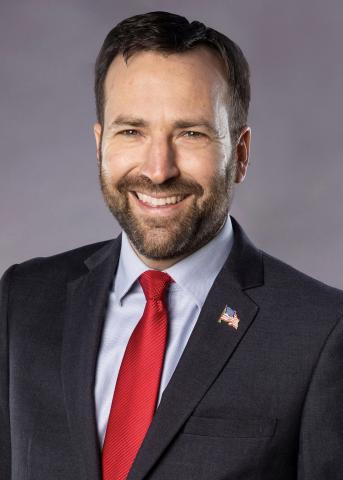
Ben Allen
DDemocratic
Co

Dawn Addis
DDemocratic
Ask Maddy
·
AI policy assistant
Ask Maddy about SB 876
Scope: CA
Hi! I can help you understand SB 876. What would you like to know?
Try one of these
i
Maddy answers using official bill text and legislative records. Always verify before sharing.
Sources cited inline