

Hazardous materials: metal shredding facilities.
Summary
Existing law authorizes the Department of Toxic Substances Control (DTSC) , in consultation with the Department of Resources Recycling and Recovery, the State Water Resources Control Board, and affected local air quality management districts, to adopt regulations to establish management standards for metal shredding facilities for hazardous waste management activities within the DTSC's jurisdiction, as provided. Existing law provides that treated metal shredder waste that is managed in accordance with those regulations is deemed to be solid waste, and not hazardous waste, as provided. This bill would repeal those provisions. The bill would establish a comprehensive scheme for the regulation of metal shredding facilities that would be administered by the DTSC pursuant to authority separate from laws governing the control of hazardous waste. The bill would prohibit an owner or operator from operating a metal shredding facility, as defined, in the state unless they have a permit from the DTSC or are deemed to have a permit. The bill would prescribe the requirements for obtaining a permit, for being deemed to have a permit, for operating a metal shredding facility, and for transporting certain materials related to metal shredding, as specified. The bill would require, before a decision is made to approve or deny a permit application, the DTSC to hold a public meeting, as provided. The bill would require the DTSC to take final action on a permit application by an existing facility within 3 years, as provided. The bill would require the DTSC to post on its internet website general information about each metal shredding facility that has applied for or obtained a permit, and to conduct at least one site visit to the applicant's facility after receipt of the permit application. The bill would provide that certain materials related to metal shredding are not hazardous waste if they meet specified requirements. The bill would require any report required to be submitted by a metal shredding facility pursuant to a permit issued to be signed by the owner or operator and certified under penalty of law, including criminal penalties, as specified. The bill would require the DTSC to have primary responsibility for enforcing these provisions, would require the DTSC to conduct an annual compliance evaluation inspection of each metal shredding facility, and would authorize the DTSC to refer violations to a district attorney or the Attorney General for prosecution. The bill would also require the DTSC to inform the local health officer and the director of environmental health of a county, city, or district within 15 days after the DTSC becomes aware of any unlawful disposal of materials, as provided, and of any enforcement action against a metal shredding facility as a result of that unlawful disposal. Because the bill would expand the scope of a crime, the bill would impose a state-mandated local program. The bill would require an owner or operator of a metal shredding facility to report to the DTSC certain emergency situations, as specified. The bill would require an owner or operator of a metal shredding facility to submit to the DTSC a closure plan and a cost estimate for closing the metal shredding facility, as specified. The bill would also require the owner or operator of a metal shredding facility to provide written notice to the DTSC at least 60 days before transferring ownership or operation of the facility. The bill would authorize the DTSC to enforce these provisions by revoking permits and by other specified means. The bill would authorize the DTSC to adopt regulations for the operation of metal shredding facilities as necessary to implement the requirements of the bill. The bill would require the DTSC to post information provided by owners and operators regarding a metal shredding facility on the DTSC's internet website in a manner that is readily accessible to the public, except as otherwise required pursuant to existing law. Existing law authorizes the DTSC to collect an annual fee from all metal shredding facilities subject to the requirements of hazardous waste control laws or the DTSC's management standards for metal shredding facilities, as provided. Existing law requires the DTSC to adopt regulations necessary to administer the fee and authorizes the DTSC to adopt those regulations using emergency procedures, as provided. Existing law requires the Controller to establish a separate subaccount in the Hazardous Waste Control Account and for all fees collected to be placed into that subaccount, to be available for expenditure by the DTSC upon appropriation by the Legislature. This bill would make the requirement to collect an annual fee inoperative on July 1, 2027, and would repeal it as of January 1, 2028. This bill would instead require the DTSC to impose an annual fee on all metal shredding facilities subject to the provisions of the bill, as specified. The bill would require, beginning in the 2027–28 fiscal year, the rates established by the DTSC to be reviewed and increased or decreased annually, as provided. The bill would require the DTSC to adopt regulations necessary to administer the fee and would authorize the DTSC to adopt the regulations using emergency procedures, as specified. The bill would require a person who applies for a metal shredding facility permit to enter into a written agreement with the DTSC pursuant to which that person would be required to reimburse the DTSC for the direct costs reasonably incurred by the DTSC in processing the application, as provided. The bill would require the Controller to establish a new and separate Metal Shredding Facility Subaccount to be administered by the Director of Toxic Substances Control and would require all fees collected to be placed into that subaccount and made available for expenditure by the DTSC solely for the purpose of implementation and administration of these provisions, upon appropriation by the Legislature. Existing law establishes the Board of Environmental Safety in the Department of Toxic Substances Control with specified duties. This bill would require, on or before July 1, 2030, the Board of Environmental Safety, at a specially scheduled public meeting, to hear from the DTSC and receive input from the public, metal shredding facilities, and other stakeholders about the implementation of the bill, as provided. The bill would require the fees established pursuant to the bill to be sufficient to cover the reasonable costs incurred by the Board of Environmental Safety in administering and implementing its duties and responsibilities established by the bill. Existing law requires the DTSC to require metal shredding facilities to monitor hazardous waste constituents requested by the DTSC and to report the results of that monitoring to the DTSC. Existing law also requires the DTSC to collect and analyze light fibrous material at the fence lines to determine the potential for release of hazardous waste. Existing law requires, on or before July 1, 2027, the DTSC to develop a procedure for community notification of the public for the area in which the metal shredding facility is located if that monitoring indicates any release of light fibrous material. In addition, existing law requires, on or before January 1, 2027, an air pollution control district or an air quality management district the jurisdiction of which includes metal shredding facilities, in consultation with the DTSC and the Office of Environmental Health Hazard Assessment (OEHHA) , to develop requirements for facilitywide fence-line air quality monitoring at metal shredding facilities. Existing law authorizes any reasonable regulatory costs incurred by the DTSC in implementing, and requires that the OEHHA's costs to implement, the above-described duties be reimbursed from a subaccount established in the Hazardous Waste Control Account for the deposit of fees from metal shredding facilities. This bill would limit the scope of those provisions to metal shredding facilities that are subject to the other provisions of the bill and would provide for the reimbursement of those costs from the Metal Shredding Facility Subaccount. Existing law establishes in the General Fund the Toxic Substances Control Account for specified purposes, including the removal or remediation of toxic substances. This bill would require the DTSC to deposit all penalties collected pursuant to the provisions of the bill into the Toxic Substances Control Account. The bill would include findings that changes proposed by this bill address a matter of statewide concern rather than a municipal affair and, therefore, apply to all cities, including charter cities. The California Constitution requires the state to reimburse local agencies and school districts for certain costs mandated by the state. Statutory provisions establish procedures for making that reimbursement. This bill would provide that no reimbursement is required by this act for a specified reason.
Bill status
passed both
4 of 5 stages cleared
Introduction
Feb 2025
Committee Review
Jul 2026
Senate Passage
Jan 2026
Assembly Passage
Aug 2026
Governor
Introduced Feb 21, 2025
Last action Aug 30, 2026
Maddy AI version diff · 5 comparisons
What changed between versions
01/22/26 - Amended Senate
→
06/25/26 - Amended Assembly
·
3 edits
·
Jun 25, 2026
MINOR
The Assembly amendment to SB 811 adds a new requirement for the Board of Environmental Safety to hold a specially scheduled public meeting by July 1, 2030 to hear from DTSC and stakeholders about implementation of the metal shredding facility regulations. It also makes a technical consolidation by removing redundant subdivision (b) from Section 25095.8 (which duplicated language already in Section 25095.5) and fixes a typo. The remaining changes are formatting and pagination adjustments.
REQUIREMENT
New requirement that the Board of Environmental Safety, at a specially scheduled public meeting on or before July 1, 2030, must hear from DTSC and receive input from the public, metal shredding facilities, and other stakeholders about implementation of the bill's provisions.
TECHNICAL
Subdivision (b) of Section 25095.8 was removed because it duplicated language already present in Section 25095.5 regarding how references to hazardous waste regulations apply to metal shredding facility materials notwithstanding their exclusion from waste definitions.
Fixed a typo in Section 25095.8(a) where 'meanings meaning' was corrected to 'meaning'.
Floor votes · Senate Jan 27, 2026 · Assembly Aug 28, 2026
How they voted
40–0
Passed
Total votes 40
Jan 27, 2026
D
Democratic30
100% Yea
R
Republican10
100% Yea
Vote distribution
All Yea
All Nay
Mixed
No data
Full legislative history
Actions timeline
Total actions
28
Key actions
11
Committee
5
Amendments
8
Aug 30, 2026
Upper · Passed
Assembly amendments concurred in. (Ayes 35. Noes 1.) Ordered to engrossing and enrolling.
upper
Aug 28, 2026
Introduced
In Senate. Concurrence in Assembly amendments pending.
upper
Aug 28, 2026
Lower · Passed
Read third time. Passed. Ordered to the Senate.
lower
Aug 13, 2026
Lower · Passed
Read second time and amended. Ordered to second reading.
lower
Aug 13, 2026
Lower · Passed
From committee: Do pass as amended. (Ayes 10. Noes 1.) (August 13).
lower
Jul 1, 2026
Lower · Passed
From committee: Do pass and re-refer to Com. on APPR. (Ayes 4. Noes 1.) (June 30). Re-referred to Com. on APPR.
lower
Jun 25, 2026
Lower · Passed
From committee with author's amendments. Read second time and amended. Re-referred to Com. on E.S & T.M.
lower
May 4, 2026
Committee
Referred to Com. on E.S & T.M.
lower
Jan 27, 2026
Upper · Passed
Read third time. Passed. (Ayes 40. Noes 0. Page 3302.) Ordered to the Assembly.
upper
Jan 22, 2026
Upper · Passed
Read second time and amended. Ordered to second reading.
upper
Jan 22, 2026
Upper · Passed
From committee: Do pass as amended. (Ayes 7. Noes 0. Page 3270.) (January 22).
upper
Jan 13, 2026
Upper · Passed
From committee: Do pass and re-refer to Com. on APPR. (Ayes 5. Noes 0. Page 3213.) (January 13). Re-referred to Com. on APPR.
upper
Jan 5, 2026
Committee
Re-referred to Com. on E.Q.
upper
Jan 5, 2026
Upper · Passed
From committee with author's amendments. Read second time and amended. Re-referred to Com. on RLS.
upper
Mar 12, 2025
Committee
Referred to Com. on RLS.
upper
Feb 21, 2025
Introduced
Introduced. To Com. on RLS. for assignment. To print.
upper
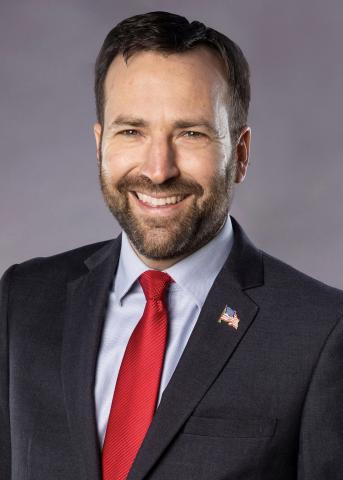
1 primary · 1 co-sponsor
Sponsors

Ask Maddy
·
AI policy assistant
Ask Maddy about SB 811
Scope: CA
Hi! I can help you understand SB 811. What would you like to know?
Try one of these
i
Maddy answers using official bill text and legislative records. Always verify before sharing.
Sources cited inline