

CalFresh: student eligibility.
Summary
Existing federal law provides for the Supplemental Nutrition Assistance Program (SNAP) , known in California as CalFresh, under which supplemental nutrition assistance benefits allocated to the state by the federal government are distributed to eligible individuals by each county. Under existing state law, households are eligible to receive CalFresh benefits to the extent permitted by federal law. Existing federal law provides that students who are enrolled in college or other institutions of higher education at least half time are not eligible for SNAP benefits unless they meet one of several specified exemptions, including participating in an employment and training program for low-income households that is operated by a state or local government, as specified. Existing law requires the State Department of Social Services, on or before May 31, 2022, to issue a guidance letter to counties, the office of the Chancellor of the California Community Colleges, the office of the Chancellor of the California State University, and the office of the President of the University of California that clarifies the state and federal eligibility requirements for a campus-based program to be a state-approved local educational program that increases employability that qualifies for the CalFresh student eligibility exemption and that clarifies the application and approval process for a campus-based program to be approved by the department as a state-approved local educational program that increases employability. This bill would repeal the existing approval process for a campus-based program to be approved by the department as a state-approved local educational program that increases employability, and would, commencing on or before July 1, 2026, instead require that any campus-based program of study at a public institution of higher education be considered as a state-approved local educational program that increases employability, as specified. The bill would require the office of the Chancellor of the California Community Colleges and the office of the Chancellor of the California State University to, and would request the office of the President of the University of California to, submit to the department a list of their offered campus-based programs of study, and would require the department to approve those programs, as specified. The bill would require the department to implement these provisions through all-county letters or similar instruction, and would require the department to issue a guidance letter to the office of the Chancellor of the California Community Colleges, the office of the Chancellor of the California State University, and the office of the President of the University of California to notify them of these changes. To the extent the bill would increase the duties of counties, the bill would impose a state-mandated local program. Existing law, the Cal Grant Program, establishes the Cal Grant A Entitlement Awards, the Cal Grant B Entitlement Awards, the California Community College Expanded Entitlement Awards, the California Community College Transfer Entitlement Awards, the Competitive Cal Grant A and B Awards, the Cal Grant C Awards, and the Cal Grant T Awards under the administration of the Student Aid Commission. Existing law requires the commission to prescribe the use of standardized student financial aid applications to be used for the Cal Grant Program, among other financial aid programs. The Cal Grant Reform Act revises and recasts the provisions establishing and governing the existing Cal Grant Program into a new Cal Grant Program. Existing law specifies that the act becomes operative only if General Fund moneys over the multiyear forecasts beginning in the 2024–25 fiscal year are available to support ongoing augmentations and actions, and if funding is provided in the annual Budget Act to implement the act. The act requires the commission to determine the timelines and procedures for the application process for awards, as provided. This bill would require the State Department of Social Services and the commission to develop a data-sharing agreement under which the commission is required to share student contact information with the department for the sole purpose of identifying, supporting, and linking students to on- and off-campus basic needs services and resources, including CalFresh direct outreach. The bill would also authorize the department to share student information, pursuant to that data agreement, with the appropriate county human services agency and the appropriate public postsecondary education systemwide office of the campus in which the student is enrolled for the same purpose. The bill would require each campus of the California Community Colleges and the California State University, and would request each campus of the University of California, if data has been shared, commencing with the 2027–28 academic year, to contact those students who opted in to have their information shared with the department for the previously described purpose. This bill would require the commission, upon entering into the above-described data-sharing agreement, to amend the commission's Grant Delivery System to ensure (1) students that might be eligible for the CalFresh program are identified and (2) identified students are able to provide their separate and distinct consent for their contact information to be shared, as specified, for the previously described purpose. The California Constitution requires the state to reimburse local agencies and school districts for certain costs mandated by the state. Statutory provisions establish procedures for making that reimbursement. This bill would provide that, if the Commission on State Mandates determines that the bill contains costs mandated by the state, reimbursement for those costs shall be made pursuant to the statutory provisions noted above.
Bill status
vetoed
4 of 5 stages cleared
Introduction
Feb 2025
Committee Review
Aug 2025
Senate Passage
Jun 2025
Assembly Passage
Sep 2025
Vetoed
Mar 2026
Introduced Feb 21, 2025
Vetoed Mar 2, 2026
Maddy AI version diff · 8 comparisons
What changed between versions
09/03/25 - Amended Assembly
→
09/18/25 - Enrolled
·
1 edit
·
Sep 18, 2025
MINOR
The enrolled version of SB 761 removes the phrase 'meaningful and informed' from the student consent standard throughout the bill, changing the requirement from 'meaningful and informed separate and distinct consent' to simply 'separate and distinct consent.' This lowers the threshold for how students must consent to having their contact information shared with the State Department of Social Services for CalFresh outreach purposes. All other changes are formatting-related (removal of line numbers, page headers, and reformatting for the enrolled bill).
REQUIREMENT
Removed 'meaningful and informed' from the consent standard in Sections 69408.5, 69432.93, and 18901.13 of the Welfare and Institutions Code. Students now only need to provide 'separate and distinct consent' rather than 'meaningful and informed separate and distinct consent' for their contact information (name, email, ZIP code, phone number) to be shared with the State Department of Social Services and county human services agencies for CalFresh outreach.
Floor votes · Senate Jun 4, 2025 · Assembly Sep 11, 2025
How they voted
39–0
Passed · 1 other
Total votes 40
Jun 4, 2025
D
Democratic30
96% Yea
R
Republican10
100% Yea
Vote distribution
All Yea
All Nay
Mixed
No data
Full legislative history
Actions timeline
Total actions
38
Key actions
15
Committee
5
Amendments
12
Mar 2, 2026
Vetoed
Veto sustained.
upper
Oct 13, 2025
Vetoed
In Senate. Consideration of Governor's veto pending.
upper
Oct 13, 2025
Vetoed
Vetoed by the Governor.
upper
Sep 12, 2025
Upper · Passed
Assembly amendments concurred in. (Ayes 38. Noes 0. Page 2997.) Ordered to engrossing and enrolling.
upper
Sep 12, 2025
Introduced
In Senate. Concurrence in Assembly amendments pending.
upper
Sep 11, 2025
Lower · Passed
Read third time. Passed. (Ayes 80. Noes 0. Page 3275.) Ordered to the Senate.
lower
Sep 3, 2025
Lower · Passed
Read third time and amended.
lower
Aug 29, 2025
Lower · Passed
From committee: Do pass. (Ayes 15. Noes 0.) (August 29).
lower
Jul 17, 2025
Lower · Passed
Read second time and amended. Re-referred to Com. on APPR.
lower
Jul 16, 2025
Lower · Passed
From committee: Do pass as amended and re-refer to Com. on APPR. (Ayes 6. Noes 0.) (July 15).
lower
Jul 10, 2025
Lower · Passed
Read second time and amended. Re-referred to Com. on HUM. S.
lower
Jul 9, 2025
Lower · Passed
From committee: Do pass as amended and re-refer to Com. on HUM. S. (Ayes 10. Noes 0.) (July 8).
lower
Jun 16, 2025
Committee
Referred to Coms. on HIGHER ED. and HUM. S.
lower
Jun 4, 2025
Upper · Passed
Read third time. Passed. (Ayes 39. Noes 0. Page 1523.) Ordered to the Assembly.
upper
May 23, 2025
Upper · Passed
Read second time and amended. Ordered to second reading.
upper
May 23, 2025
Upper · Passed
From committee: Do pass as amended. (Ayes 6. Noes 0. Page 1212.) (May 23).
upper
Apr 22, 2025
Upper · Passed
From committee: Do pass and re-refer to Com. on APPR. with recommendation: To consent calendar. (Ayes 5. Noes 0. Page 812.) (April 21). Re-referred to Com. on APPR.
upper
Apr 11, 2025
Upper · Passed
Read second time and amended. Re-referred to Com. on HUMAN S.
upper
Apr 11, 2025
Upper · Passed
From committee: Do pass as amended and re-refer to Com. on HUMAN S. (Ayes 7. Noes 0. Page 736.) (April 9).
upper
Apr 2, 2025
Committee
Re-referred to Coms. on ED. and HUMAN S.
upper
Mar 26, 2025
Upper · Passed
From committee with author's amendments. Read second time and amended. Re-referred to Com. on RLS.
upper
Mar 12, 2025
Committee
Referred to Com. on RLS.
upper
Feb 21, 2025
Introduced
Introduced. To Com. on RLS. for assignment. To print.
upper
1 primary · 2 co-sponsors
Sponsors
Role
Legislator
Party
State
District
P
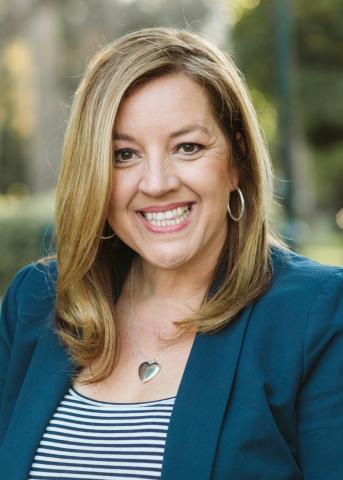
Angelique Ashby
DDemocratic
Co
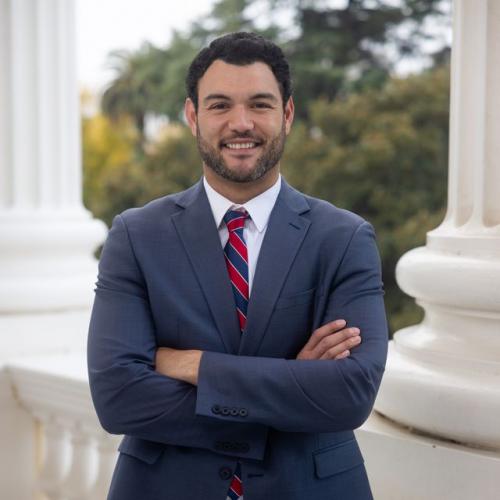
David Tangipa
RRepublican
Co
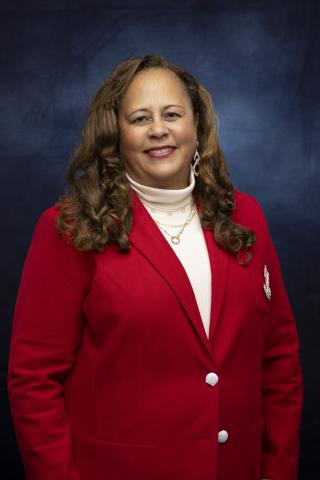
Laura Richardson
DDemocratic
Ask Maddy
·
AI policy assistant
Ask Maddy about SB 761
Scope: CA
Hi! I can help you understand SB 761. What would you like to know?
Try one of these
i
Maddy answers using official bill text and legislative records. Always verify before sharing.
Sources cited inline