

Security services.
Summary
Existing law, the Proprietary Security Services Act, prohibits a person from engaging in the business of a proprietary private security officer or a proprietary private security employer unless registered with the Department of Consumer Affairs. Existing law makes a violation of these provisions an infraction, as specified. Existing law requires a person who is registered and hired as a proprietary private security officer to complete training in security officer skills within 6 months from the date upon which registration is issued, or within 6 months of their employment with a proprietary private security employer, as specified. Existing law prohibits a proprietary private security employer from engaging in specified acts and authorizes the Director of Consumer Affairs to issue a citation, which may include an order to pay specified administrative fines for a violation of these provisions. This bill, commencing January 1, 2029, would recast those training provisions to require the training to be 42 hours, to require an applicant for a proprietary private security officer registration to complete, within the first 6 months of their employment date, a course in the exercise of the power to arrest and the appropriate use of force as a condition of issuance of the registration, and to require that the training be conducted through traditional classroom instruction, as defined. The bill would require 2 hours of training to be dedicated to training employees on specified workers' rights contained in a notice employers are required to provide employees, as specified. The bill would require the Bureau of Security and Investigative Services to administer certain provisions governing the approval of training providers, and would create a certificate authorizing a labor organization that represents security guards of a proprietary private security employer to provide the 2-hour training, as specified. The bill would also require a registered proprietary private security employee annually to complete a minimum of 12 hours of security officer skills training, with at least 4 hours of training dedicated to practicing deescalation skills, as specified, and that the time spent attending the annual training be compensated by the employer. The bill would require the bureau to determine the criteria to evaluate whether the deescalation trainings conform to the required principles and methods, as specified. This bill, commencing January 1, 2029, would increase the administrative fine that the director may impose upon a proprietary private security employer for failure to properly maintain accurate and current employment and training records or failure to administer to registered employees of the licensee the review or practice training, as specified, from $500 to $1,000, and would specify that the fine is for each violation. The bill would require a private security employer to ensure that the security skills training occurs and to compensate employees for training, as specified. The bill would authorize the director to impose an administrative fine for a violation of these provisions not exceeding $5,000 per violation and $2,500 per violation, respectively. Existing law requires a person registered as a proprietary private security employer to deliver to the director a written report describing the circumstances surrounding any physical altercation by a registered proprietary private security officer with a member of the public while on duty and while acting within the course and scope of their employment within 7 business days after the qualifying incident. The report is required only for certain physical altercations, including those resulting in a member of the public requiring first aid or other medical attention. This bill, commencing January 1, 2029, would expand the circumstances requiring a report to include those in which the physical altercation resulted in a security officer requiring first aid or other medical attention. The bill would expand the information required in the report to include the apparent race and gender of the member of the public and whether the security officer involved had received all required training at the time of the incident. The bill would require the bureau to release a report annually with respect to these reports describing the circumstances surrounding the physical altercations with members of the public containing specified information. Existing law, the Private Security Services Act, requires the director to administer its provisions. Existing law prohibits a person licensed as a private patrol operator from engaging in specified acts. Existing law requires a person registered as a security guard or patrolperson, and their employer, to deliver to the director a written report fully describing the circumstances surrounding any discharge of any firearm or physical altercation with a member of the public in which they were involved while acting within the course and scope of their employment within 7 days after the incident, as specified. Existing law makes any person who violates any of these provisions relating to private patrol operator licensure guilty of a misdemeanor. This bill, commencing January 1, 2029, would require the firearm discharge or altercation report to include the apparent race and gender of the member of the public and whether the security officer involved had received all required training at the time of the incident. The bill would also require the altercation report to specify whether a security officer required first aid or other medical attention. Because the bill would change the definition of a crime, it would impose a state-mandated local program. The bill would require the Bureau of Security and Investigative Services to release a report annually with respect to these reports describing the circumstances surrounding the discharge of any firearm, or physical altercation with a member of the public containing specified information. Existing law requires persons licensed under these provisions and persons who are employed and compensated by a licensee as a security guard or patrolperson, and who in the course of that employment or business carries a firearm, to undergo specified training in the exercise of the power to arrest and the appropriate use of force and a course of training in the carrying and use of firearms. This bill, commencing January 1, 2029, would require the department to develop and establish a standard course and curriculum that includes a minimum number of hours of instruction for training individuals on the role of implicit and explicit bias on racial profiling and the use of firearms in various settings. Existing law requires each applicant for a security guard registration to complete a course in the exercise of the power to arrest and the appropriate use of force as a condition for the issuance of the registration. Existing law requires a security guard registrant to, as specified, complete 32 hours of training in security officer skills within 6 months from the date of an initial registration, 16 of which are required to be completed within 30 days from the date that the registration is issued. This bill, commencing January 1, 2029, would recast these training provisions, increase the required hours of security guard training to 42, and require that the training be conducted through traditional in-person classroom instruction, as defined. The bill would increase the requirement that a registrant annually complete 8 hours of review or practice of security officer skills to 12 hours, require that 4 of those hours be dedicated to deescalation skills, as specified, and make other conforming changes. The bill would require 2 hours of training to be dedicated to training employees on specified workers' rights contained in a notice employers are required to provide employees, as specified. The bill would require the bureau to administer certain provisions governing the approval of training providers, and would create a certificate authorizing a labor organization that represents security guards of a proprietary private security employer to provide the 2-hour training, as specified. The bill would require a person licensed as a private patrol operator to ensure that security skills training occurs and to compensate employees for this training. The bill would require the bureau to determine the criteria to evaluate whether the deescalation trainings conform to the required principles and methods, as specified. This bill, commencing January 1, 2029, would revise provisions that describe those entities that are qualified to administer, test, and certify the course of training in the exercise of the power to arrest and the appropriate use of force. This bill, commencing January 1, 2029, would require the Bureau of Security and Investigative Services to annually solicit feedback from representatives from the security industry, as specified, regarding possible changes to a rule or regulation relating to the provisions described above for private patrol operators. Existing law authorizes the director to issue a citation to a licensee or registrant for violation of specified provisions which may contain an assessment of an administrative fine not exceeding $2,500. This bill would increase the amount of the administrative fine that may be assessed by the director to $10,000 per violation. Existing law authorizes the director to impose fines on licensed private patrol operators in the amount of $500 for each violation relating to a failure to properly maintain employment records or proof of completion of required training, as specified. Existing law also authorizes the director to impose fines on licensed private patrol operators in the amount of $250 for each violation relating to a failure to administer required security skills training, as specified. This bill, commencing January 1, 2029, would increase these fine amounts to $1,000 for each violation. Existing law authorizes the director to impose fines on licensed private patrol operators in the amount of $5,000 for each violation relating to a failure to deliver to the director a report describing the circumstances surrounding the discharge of any firearm or physical altercation with a member of the public while on duty, as specified. This bill, commencing January 1, 2029, would reduce the fine for violating these provisions to $2,500 per violation. This bill would declare the severability of its provisions. This bill would incorporate additional changes to Sections 7574.18 and 7583.6 of the Business and Professions Code proposed by SB 1148 to be operative only if this bill and SB 1148 are enacted and this bill is enacted last. The California Constitution requires the state to reimburse local agencies and school districts for certain costs mandated by the state. Statutory provisions establish procedures for making that reimbursement. This bill would provide that no reimbursement is required by this act for a specified reason.
Bill status
passed
3 of 5 stages cleared
Introduction
Feb 2026
Committee Review
Jul 2026
Senate Passage
May 2026
Assembly Passage
Governor
Introduced Feb 19, 2026
Last action Aug 28, 2026
Maddy AI version diff · 6 comparisons
What changed between versions
08/28/26 - Amended Assembly
→
SB1203
·
1 edit
MINOR
The diff shows the full text of the Amended Assembly version (dated August 28, 2026) being replaced with what appears to be a web page rendering of the bill, including navigation elements such as 'skip to content,' 'home,' 'accessibility,' and 'Quick Search.' The diff is truncated at 886 of 2994 lines, so the remainder may contain the actual bill text in its new format. Based on the visible portion, this appears to be a source or formatting change rather than a substantive policy amendment.
TECHNICAL
The document was replaced from a formatted legislative bill text (with line numbers, page headers, and section numbering) to what appears to be a web page capture of the bill's online listing, including site navigation elements like 'skip to content,' 'home,' 'accessibility,' 'FAQ,' 'feedback,' 'sitemap,' 'login,' and search fields.
Floor votes · Senate May 27, 2026
How they voted
25–8
Passed · 7 other
Total votes 40
May 27, 2026
D
Democratic30
83% Yea
R
Republican10
80% Nay
Vote distribution
All Yea
All Nay
Mixed
No data
Full legislative history
Actions timeline
Total actions
34
Key actions
13
Committee
9
Amendments
6
Aug 28, 2026
Lower · Passed
Read third time and amended.
lower
Aug 17, 2026
Lower · Passed
Read second time and amended. Ordered to second reading.
lower
Aug 17, 2026
Lower · Passed
From committee: Do pass as amended. (Ayes 10. Noes 3.) (August 13).
lower
Jul 1, 2026
Lower · Passed
From committee: Do pass and re-refer to Com. on APPR. (Ayes 5. Noes 2.) (June 30). Re-referred to Com. on APPR.
lower
Jun 25, 2026
Lower · Passed
From committee: Do pass and re-refer to Com. on PUB. S. (Ayes 5. Noes 2.) (June 24). Re-referred to Com. on PUB. S.
lower
Jun 16, 2026
Lower · Passed
From committee: Do pass and re-refer to Com. on L. & E. (Ayes 11. Noes 4.) (June 16). Re-referred to Com. on L. & E.
lower
Jun 4, 2026
Committee
Referred to Coms. on B. & P., PUB. S., and L. & E.
lower
May 27, 2026
Upper · Passed
Read third time. Passed. (Ayes 25. Noes 8. Page 4487.) Ordered to the Assembly.
upper
May 19, 2026
Upper · Passed
Read third time and amended.
upper
May 14, 2026
Upper · Passed
From committee: Do pass. (Ayes 5. Noes 2. Page 4269.) (May 14).
upper
Apr 22, 2026
Upper · Passed
From committee: Do pass and re-refer to Com. on APPR. (Ayes 4. Noes 1. Page 3983.) (April 21). Re-referred to Com. on APPR.
upper
Apr 13, 2026
Upper · Passed
From committee: Do pass and re-refer to Com. on PUB. S. (Ayes 6. Noes 0. Page 3841.) (April 13). Re-referred to Com. on PUB. S.
upper
Apr 9, 2026
Upper · Passed
From committee with author's amendments. Read second time and amended. Re-referred to Com. on B. P. & E.D.
upper
Apr 8, 2026
Committee
Re-referred to Coms. on B. P. & E.D. and PUB. S.
upper
Mar 23, 2026
Upper · Passed
From committee with author's amendments. Read second time and amended. Re-referred to Com. on RLS.
upper
Mar 4, 2026
Committee
Referred to Com. on RLS.
upper
Feb 19, 2026
Introduced
Introduced. Read first time. To Com. on RLS. for assignment. To print.
upper
1 primary · 4 co-sponsors
Sponsors
Role
Legislator
Party
State
District
P

Lola Smallwood-Cuevas
DDemocratic
Co

Alex Lee
DDemocratic
Co
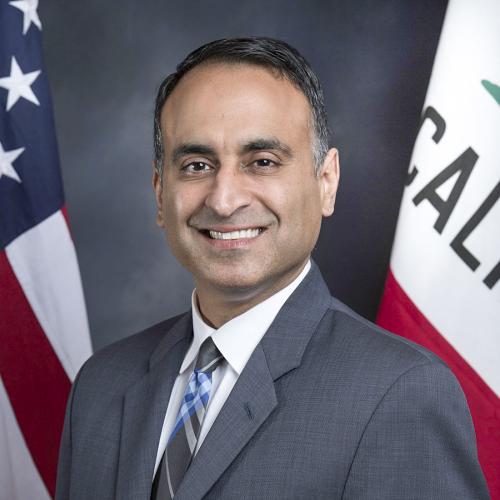
Ash Kalra
DDemocratic
Co
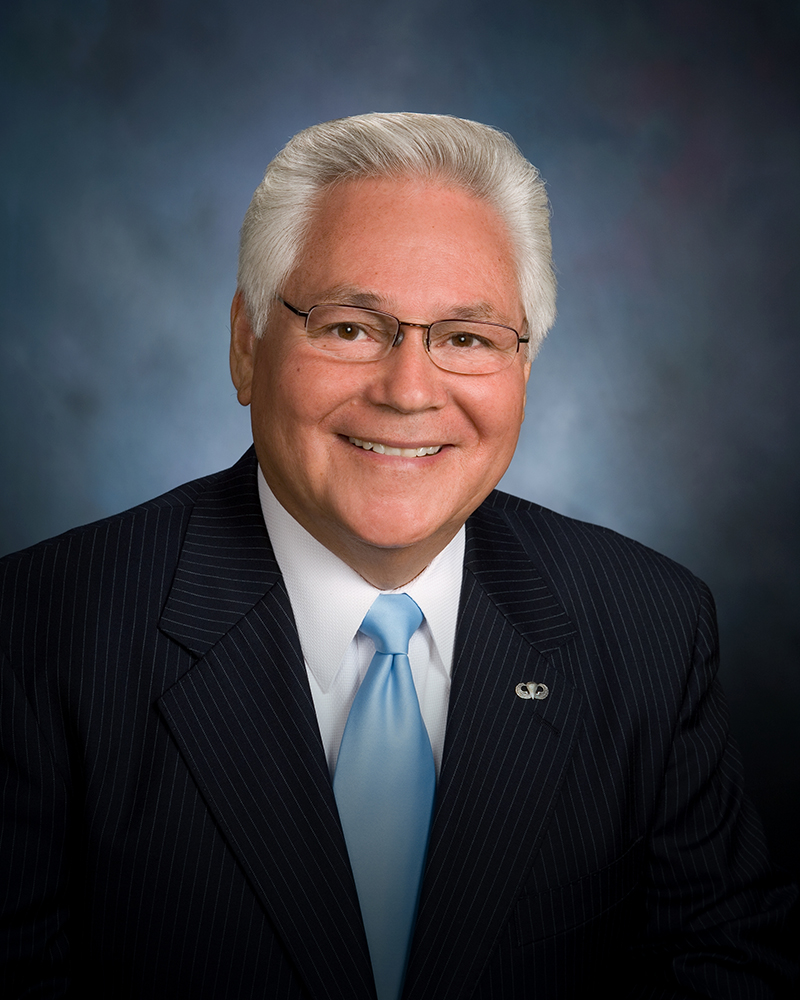
Bob Archuleta
DDemocratic
Co

Dawn Addis
DDemocratic
Ask Maddy
·
AI policy assistant
Ask Maddy about SB 1203
Scope: CA
Hi! I can help you understand SB 1203. What would you like to know?
Try one of these
i
Maddy answers using official bill text and legislative records. Always verify before sharing.
Sources cited inline