

Vehicles: electric bicycles.
Summary
Existing law defines an electric bicycle as a bicycle equipped with fully operable pedals and an electric motor that does not exceed 750 watts of power. Existing law classifies electric bicycles into 3 classes with different restrictions for various purposes, and requires, among other things, a class 3 electric bicycle to be equipped with a speedometer. Existing law prohibits certain vehicles that do not meet the definition of an electric bicycle from being advertised, sold, offered for sale, or labeled as an electric bicycle, as specified. A violation of the Vehicle Code is a crime. This bill would amend the type of vehicles that are prohibited from being advertised, sold, offered for sale, or labeled as electric bicycles, including, among others, motor-driven cycles and mopeds. By expanding the application of an existing crime, this bill would impose a state-mandated local program. Existing law defines a motor-driven cycle as any motorcycle with a motor that displaces less than 150 cubic centimeters. This bill would revise the definition of motor-driven cycle to mean any motorcycle propelled by an internal combustion engine that displaces less than 150 cubic centimeters, or by an electric motor that produces 5 gross brake horsepower (3,750 watts) or less, and is designed for highway use, complies with all applicable federal motor safety standards, has a 17-digit vehicle identification number and a safety certification label, and meets all of the equipment requirements of the Vehicle Code. Existing law defines a motorized bicycle or moped as a two-wheeled or three-wheeled device having fully operative pedals for propulsion by human power, or having no pedals if powered solely by electrical energy, and an automatic transmission and a motor that produces less than 4 gross brake horsepower, and is capable of propelling the device at a maximum speed of not more than 30 miles per hour on level ground. This bill would delete references to motorized bicycle in the Vehicle Code and replace the term with "moped." The bill would revise the definition of a moped to mean a two-wheeled or three-wheeled device that has an electric motor or an internal combustion engine that produces less than 4 gross brake horsepower (3,000 watts) , is capable of propelling the device at a maximum speed of not more than 30 miles per hour on level ground, is designed for highway use, complies with all applicable federal motor safety standards, has a 17-digit vehicle identification number and a safety certification label, and meets all of the equipment requirements of the Vehicle Code. The bill would specify that a moped may be equipped with operable pedals for propulsion by human power. Existing law requires every manufacturer of a motorized bicycle or moped to provide a specified disclosure to buyers. This bill would instead require every manufacturer, importer, or seller of a motor-driven cycle, moped, or off-highway electric motorcycle that is powered by an electric motor to provide a specified disclosure to all potential buyers in any advertising, including any online advertising on internet websites or social media. By expanding the application of an existing crime, this bill would impose a state-mandated local program. Existing law requires manufacturers and distributors of electric bicycles to apply a label that is permanently affixed, in a prominent location, to each electric bicycle. Existing law requires the label to contain the classification number, top assisted speed, and motor wattage of the electric bicycle, as specified. For electric bicycles, this bill would additionally require the inclusion of the brand name of the electric bicycle and the manufacturer, importer, or distributor. This bill would require manufacturers and distributors of mopeds and motor-driven cycles to affix a certification label, as specified, on or to the permanent member of the vehicle, as specified. The bill would make it unlawful for a person to sell an electric bicycle, moped, or motor-driven cycle in violation of the labeling and disclosure requirements mentioned above. By expanding the application of an existing crime, this bill would impose a state-mandated local program. This bill would prohibit a person from selling or installing an electric bicycle classification label unless the classification label is sold and installed in a physical retailer or bicycle repair shop. The bill would require a retailer and bicycle repair shop of electric bicycles to verify that the classification label matches the electric bicycle class before installing the classification label on an electric bicycle. By expanding the application of an existing crime, this bill would impose a state-mandated local program. This bill would require any incident report filed by a peace officer for an injury or crash involving an electric bicycle, moped, and motor-driven cycle to include specified information or to indicate that a marking or label was not available. By increasing duties on local law enforcement, this bill would impose a state-mandated local program. Existing law prohibits a person from distributing, selling, or leasing a powered mobility device unless the battery for the powered mobility device has been tested by an accredited testing laboratory for compliance with ANSI/CAN/UL 2272. Existing law requires a charging system advertised, distributed, sold, or leased for use with a particular device, including a powered mobility device, to be certified for use with that device. For these purposes, existing law defines a "powered mobility device" as including, among other devices, a motorized bicycle or moped or an off-highway motorcycle. This bill would remove a motorized bicycle or moped or an off-highway electric motorcycle from the definition of a powered mobility device. The bill would prohibit the distribution, sale, or lease of a moped or off-highway electric motorcycle unless the battery complies with a certain safety standard. The bill would also require a charging system advertised, distributed, sold, or leased for use with a moped or off-highway electric motorcycle to comply with this standard. By expanding the application of an existing crime, this bill would impose a state-mandated local program. Existing law prohibits a person from renting a powered mobility device or its charging system unless the device or charging system has been tested for compliance with ANSI/CAN/UL 2272, as specified. This bill would prohibit a person from renting a moped or off-highway electric motorcycle or its charging system unless the battery for the moped or off-highway electric motorcycle or the charging system complies with a certain safety standard. By expanding the application of an existing crime, this bill would impose a state-mandated local program. Existing law defines an off-highway motor vehicle as a motor vehicle that operates on lands, other than a highway, that are open and accessible to the public, as specified. Existing law establishes rules for the operation of an off-highway vehicle. Existing law requires every off-highway motor vehicle that is not registered under the Vehicle Code to display an identification plate or device issued by the Department of Motor Vehicles, except as specified. This bill would specify that mopeds are subject to identification as off-highway motor vehicles. The bill would also prohibit the use, allowing to use, or operation of an off-highway electric motorcycle, motorcycle, motor-driven cycle, or moped powered by an electric motor on any forest-covered land, brush-covered land, or grass-covered land unless the vehicle complies with standards for mopeds and off-highway electric motorcycles, as specified. By creating new crimes related to the operation of off-highway vehicles, this bill would impose a state-mandated local program. Existing law requires a manufacturer, importer, distributor, or retailer of an electric bicycle, powered mobility device, charging system, or storage battery subject to certain testing to provide, upon request, a true and accurate copy of the test report for the product issued by the accredited testing laboratory. This bill would require a manufacturer, importer, distributor, or retailer of a moped, off-highway electric motorcycle, charging system, or storage battery used on a moped or off-highway electric motorcycle to retain documentation and information supporting compliance with any standard required, as specified. By expanding the application of an existing crime, this bill would impose a state-mandated local program. Existing law authorizes a peace officer to remove a vehicle that (1) has fewer than 4 wheels, but that does not meet the definition of an electric bicycle, if that vehicle is powered by an electric motor capable of exclusively propelling the vehicle in excess of 20 miles per hour on a highway and is being operated by an operator without a current license to operate the vehicle, or (2) is a class 3 electric bicycle being operated by a person under 16 years of age. This bill would additionally prohibit a person from operating a 2-wheeled or 3-wheeled device powered by an electric motor that is capable of propelling the device at a speed greater than 20 miles per hour on level ground on a highway or public right-of-way when powered solely by the motor unless the device meets the definition of a device that is explicitly defined in, and authorized for use on a highway or public right-of-way by, the Vehicle Code. The bill would authorize a peace officer to remove the vehicle if the vehicle is a 2-wheeled or 3-wheeled unauthorized device being operated by a person on a highway or public right-of-way. Because a violation of these provisions would be a crime, the bill would impose a state-mandated local program. This bill would make other clarifying and conforming changes. This bill would incorporate additional changes to Section 4442 of the Public Resources Code proposed by AB 2075 to be operative only if this bill and AB 2075 are enacted and this bill is enacted last. This bill would incorporate additional changes to Section 12804.9 of the Vehicle Code proposed by AB 1913 to be operative only if this bill and AB 1913 are enacted and this bill is enacted last. The California Constitution requires the state to reimburse local agencies and school districts for certain costs mandated by the state. Statutory provisions establish procedures for making that reimbursement. This bill would provide that no reimbursement is required by this act for a specified reason. This bill would make certain provisions described above operative only if AB 2346 is enacted.
Bill status
passed both
4 of 5 stages cleared
Introduction
Feb 2026
Committee Review
Aug 2026
Senate Passage
May 2026
Assembly Passage
Aug 2026
Governor
Introduced Feb 18, 2026
Last action Aug 28, 2026
Maddy AI version diff · 7 comparisons
What changed between versions
08/20/26 - Amended Assembly
→
SB1167
·
2 edits
MINOR
The diff shows the full text of the Amended Assembly version of SB 1167 being replaced with website navigation elements (header links, search fields) from the California Legislature website. This is a data capture artifact, not a substantive legislative change. No policy content was added or removed.
TECHNICAL
The entire body of the Amended Assembly version of SB 1167 (covering electric bicycle definitions, moped regulations, battery safety standards, labeling requirements, and off-highway vehicle rules) was removed from the document.
Website navigation elements were added in place of the bill text, including header links (home, accessibility, FAQ, feedback, sitemap, login), a search field, and the page title 'Bill Text - SB-1167 Vehicles: electric bicycles.'
Floor votes · Senate May 26, 2026 · Assembly Aug 25, 2026
How they voted
37–0
Passed · 3 other
Total votes 40
May 26, 2026
D
Democratic30
96% Yea
R
Republican10
80% Yea
Vote distribution
All Yea
All Nay
Mixed
No data
Full legislative history
Actions timeline
Total actions
33
Key actions
15
Committee
5
Amendments
11
Aug 28, 2026
Upper · Passed
Assembly amendments concurred in. (Ayes 39. Noes 0.) Ordered to engrossing and enrolling.
upper
Aug 25, 2026
Introduced
In Senate. Concurrence in Assembly amendments pending.
upper
Aug 25, 2026
Lower · Passed
Read third time. Passed. Ordered to the Senate.
lower
Aug 20, 2026
Lower · Passed
Read third time and amended.
lower
Aug 13, 2026
Lower · Passed
From committee: Do pass. (Ayes 15. Noes 0.) (August 13).
lower
Jul 1, 2026
Lower · Passed
Read second time and amended. Re-referred to Com. on APPR.
lower
Jun 30, 2026
Lower · Passed
From committee: Do pass as amended and re-refer to Com. on APPR. (Ayes 15. Noes 0.) (June 29).
lower
Jun 22, 2026
Lower · Passed
From committee with author's amendments. Read second time and amended. Re-referred to Com. on TRANS.
lower
Jun 8, 2026
Committee
Referred to Com. on TRANS.
lower
May 26, 2026
Upper · Passed
Read third time. Passed. (Ayes 37. Noes 0. Page 4449.) Ordered to the Assembly.
upper
May 14, 2026
Upper · Passed
Read second time and amended. Ordered to second reading.
upper
May 14, 2026
Upper · Passed
From committee: Do pass as amended. (Ayes 7. Noes 0. Page 4267.) (May 14).
upper
Apr 27, 2026
Upper · Passed
April 27 hearing postponed by committee.
upper
Apr 14, 2026
Upper · Passed
From committee: Do pass and re-refer to Com. on APPR. with recommendation: To consent calendar. (Ayes 7. Noes 0. Page 3870.) (April 14). Re-referred to Com. on APPR.
upper
Apr 9, 2026
Upper · Passed
Read second time and amended. Re-referred to Com. on N.R. & W.
upper
Apr 8, 2026
Upper · Passed
From committee: Do pass as amended and re-refer to Com. on N.R. & W. (Ayes 12. Noes 0. Page 3760.) (April 7).
upper
Mar 26, 2026
Upper · Passed
From committee with author's amendments. Read second time and amended. Re-referred to Com. on TRANS.
upper
Feb 26, 2026
Committee
Referred to Coms. on TRANS. and N.R. & W.
upper
Feb 18, 2026
Introduced
Introduced. Read first time. To Com. on RLS. for assignment. To print.
upper
1 primary · 14 co-sponsors
Sponsors
Role
Legislator
Party
State
District
P

Catherine Blakespear
DDemocratic
Co

Buffy Wicks
DDemocratic
Co
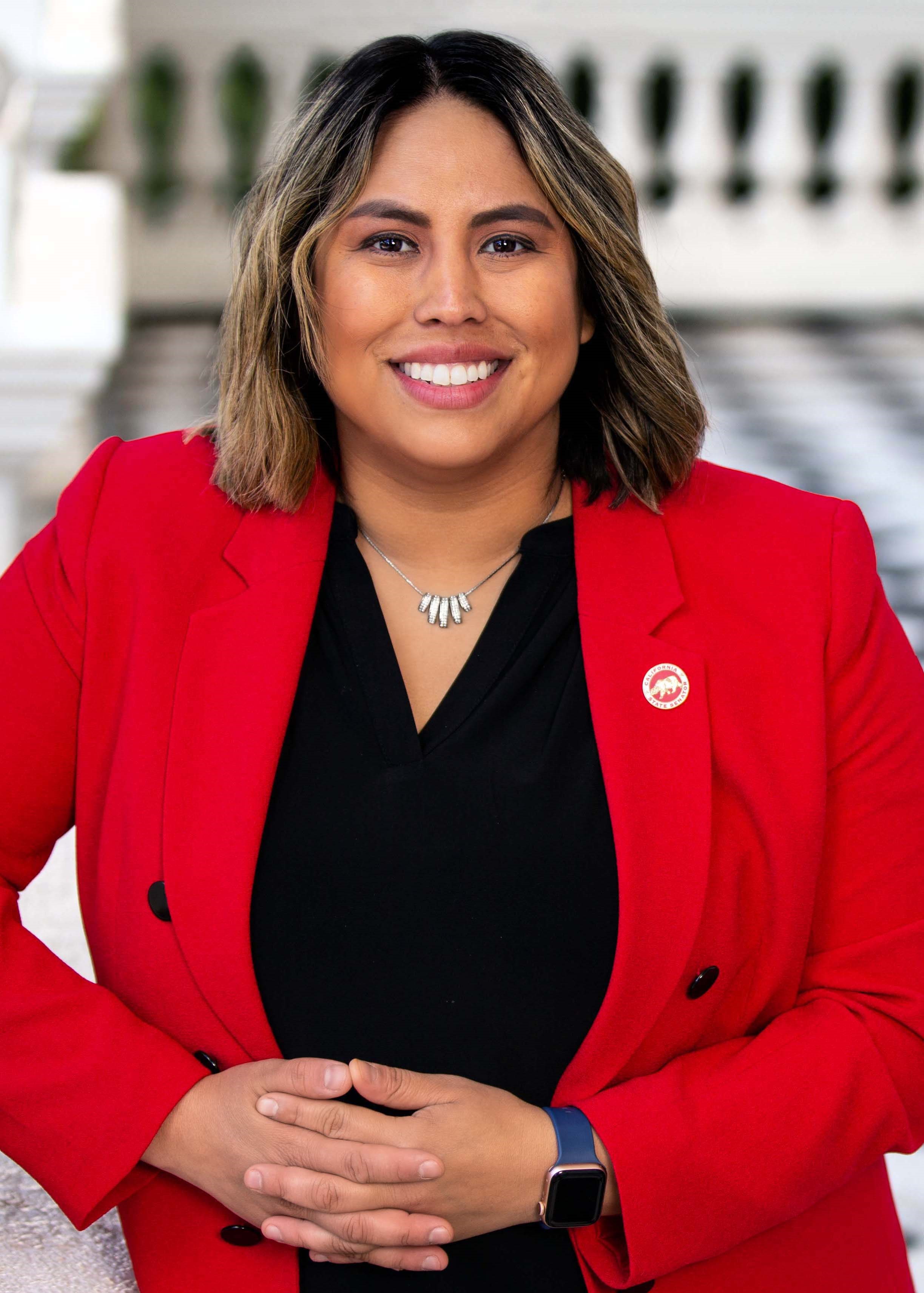
Caroline Menjivar
DDemocratic
Co

Damon Connolly
DDemocratic
Co

Diane Dixon
RRepublican
Co

LaShae Sharp-Collins
DDemocratic
Co
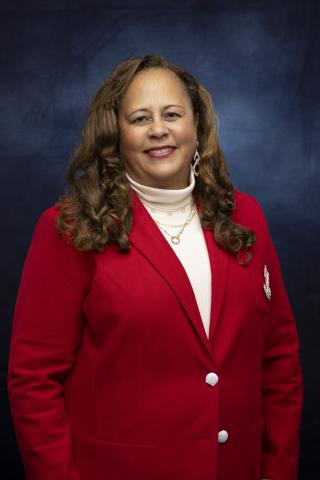
Laura Richardson
DDemocratic
Co

Laurie Davies
RRepublican
Co

Lena Gonzalez
DDemocratic
Co

Megan Dahle
RRepublican
Co

Scott Wiener
DDemocratic


Ask Maddy
·
AI policy assistant
Ask Maddy about SB 1167
Scope: CA
Hi! I can help you understand SB 1167. What would you like to know?
Try one of these
i
Maddy answers using official bill text and legislative records. Always verify before sharing.
Sources cited inline