

Health care: legally protected health care activity.
Summary
(1) Existing law authorizes reproductive health care service providers, employees, volunteers, and patients, and individuals who face threats of violence or violence or harassment from the public because of their affiliation with a reproductive health care services facility, to complete an application to be approved by the Secretary of State for the purposes of enabling state and local agencies to respond to requests for public records without disclosing a program participant's residence address contained in any public record and otherwise provide for confidentiality of identity for that person, subject to specified conditions. Under existing law, any person who makes a false statement in an application is guilty of a misdemeanor. This bill would expand the address confidentiality program to a gender-affirming health care provider, employee, or volunteer, as defined, who faces threats of violence or harassment from the public because of their affiliation with a gender-affirming health care services facility. The bill would also make conforming changes. By imposing new duties on local agencies and expanding the scope of a crime, this bill would create a state-mandated local program. (2) Existing law prohibits a person, business, or association from knowingly publicly posting or publicly displaying, disclosing, or distributing on internet websites or on social media, the personal information or image of any reproductive health care services patient, provider, or assistant, or other individuals residing at the same home address, with the intent to incite a 3rd person to cause imminent great bodily harm to the person identified in the posting or display, or to a coresident of that person, as specified, or to threaten the person identified in the posting or display, or a coresident of that person, as specified. Existing law additionally prohibits a person, business, or association from soliciting, selling, or trading on the internet or social media the personal information or image of a reproductive health care services patient, provider, or assistant with the intent described above. Existing law establishes a cause of action for injunctive or declarative relief for a violation of these prohibitions. Existing law prohibits a person from posting on the internet or social media, with the intent that another person imminently use that information to commit a crime involving violence or a threat of violence against a reproductive health care services patient, provider, or assistant, or other individuals residing at the same home address, the personal information or image of a reproductive health care services patient, provider, or assistant, or other individuals residing at the same home address. Existing law makes a violation of this prohibition punishable by a fine of up to $10,000 per violation, imprisonment, as specified, or by both that fine and imprisonment. This bill would additionally prohibit a person, business, or association from soliciting, selling, or trading on the internet or social media the personal information or image of a gender-affirming health care services provider, employee, volunteer, or patient with the intent described above. The bill would also prohibit a person from posting on the internet or social media, as described above, the personal information or image of a gender-affirming health care services provider, employee, volunteer, or patient, or other individuals residing at the same home address. The bill would define various terms for these purposes. By expanding the scope of a crime, this bill would create a state-mandated local program. (3) Existing law, the California Uniform Controlled Substances Act (the act) , classifies controlled substances into 5 designated schedules, with the most restrictive limitations generally placed on controlled substances classified in Schedule I, and the least restrictive limitations generally placed on controlled substances classified in Schedule V. The act requires the Department of Justice to maintain the Controlled Substances Utilization Review and Evaluation System (CURES) for the electronic monitoring of the prescribing and dispensing of certain controlled substances by a health care practitioner authorized to prescribe, order, administer, furnish, or dispense those controlled substances. Existing law limits the entities to which data may be provided from CURES, as well as the type of data that may be released and the uses to which it may be put. Existing law makes a violation of the act a crime. Existing law defines the term "legally protected health care activity" to include the exercise of, or an act undertaken to aid a person to exercise, the provision of reproductive health care services, gender-affirming health care services, or gender-affirming mental health care services. This bill would prohibit a prescription for or the dispensing of testosterone or mifepristone from being reported to the department, CURES, or a contractor, as specified. The bill would require the department, on or before January 1, 2027, to remove certain existing records that were created or maintained prior to January 1, 2026, and make other conforming changes. By creating a new crime, the bill would establish a state-mandated local program. (4) Existing law authorizes a court to issue various orders relating to criminal investigations, including the interception of wire or electronic communications, the installation and use of a pen register or trap and trace device, or a search warrant upon specified grounds. Existing law prohibits the issuance of any orders or warrants for the purpose of investigating or recovering evidence of a prohibited violation. Existing law defines "prohibited violation" for this purpose as a violation of a law that creates liability for, or arising out of, either providing, facilitating, or obtaining an abortion or intending or attempting to provide, facilitate, or obtain an abortion that is lawful under the laws of this state. This bill would instead define a prohibited violation as a violation of a law that creates liability for, or arising out of, either providing, facilitating, or obtaining a legally protected health care activity or intending or attempting to provide, facilitate, or obtain a legally protected health care activity, as defined. (5) Existing law requires superior court judges in each county to prepare, adopt, and annually revise a uniform countywide schedule of bail for all bailable offenses, as specified. Existing law requires a uniform countywide schedule of bail to set $0 bail for an individual who has been arrested in connection with a proceeding in another state regarding an individual performing, supporting, or aiding in the performance of an abortion in this state, or an individual obtaining an abortion in this state, if the abortion is lawful under California law. This bill would instead require a uniform countywide schedule of bail to set $0 bail for an individual who has been arrested in connection with a proceeding in another state regarding an individual performing, supporting, or aiding in the performance of a legally protected health care activity in this state, or an individual obtaining a legally protected health care activity in this state, as specified. (6) Existing law prohibits a state or local law enforcement agency or officer from knowingly arresting or knowingly participating in the arrest of any person for performing, supporting, or aiding in the performance of an abortion or for obtaining an abortion, if the abortion is lawful in this state. Existing law prohibits a state or local public agency from cooperating with or providing information to an individual or agency from another state or a federal law enforcement agency, as specified, regarding a lawful abortion. Existing law prohibits specified persons, including a judicial officer, a court employee, or an authorized attorney, among others, from issuing a subpoena in connection with a proceeding in another state regarding an individual performing, supporting, or aiding in the performance of an abortion in this state, or an individual obtaining an abortion in this state, if the abortion is lawful in this state. Existing law does not prohibit the investigation of criminal activity that may involve an abortion, provided that no information relating to any medical procedure performed on a specific individual is shared with an agency or individual from another state for the purpose of enforcing another state's abortion law. This bill would instead expand those above-described provisions to apply to legally protected health care activity, as defined. (7) Existing law prohibits a state or local government employee or a person acting on behalf of the local or state government, among others, from providing information or expending resources in furtherance of an investigation that seeks to impose civil or criminal liability or professional sanctions on an individual for a legally protected health care activity, as defined, that occurred in this state or that would be legal if it occurred in this state. Existing law requires any out-of-state subpoena, warrant, wiretap order, pen register trap and trace order, or other legal process to include an affidavit or declaration under penalty of perjury that the discovery request is not in connection with an out-of-state proceeding relating to a legally protected health care activity, except as specified. This bill would authorize the Attorney General to bring a civil action against a person or entity that submitted a false affidavit under these provisions and would make submission of a false affidavit punishable by a civil penalty of $15,000, in addition to any other penalties or remedies provided by law. (8) Existing constitutional provisions require that a statute that limits the right of access to the meetings of public bodies or the writings of public officials and agencies be adopted with findings demonstrating the interest protected by the limitation and the need for protecting that interest. This bill would make legislative findings to that effect. (9) This bill would incorporate additional changes to Section 11165 of the Health and Safety Code proposed by SB 497 to be operative only if this bill and SB 497 are enacted and this bill is enacted last. (10) The California Constitution requires the state to reimburse local agencies and school districts for certain costs mandated by the state. Statutory provisions establish procedures for making that reimbursement. This bill would provide that with regard to certain mandates no reimbursement is required by this act for a specified reason. With regard to any other mandates, this bill would provide that, if the Commission on State Mandates determines that the bill contains costs so mandated by the state, reimbursement for those costs shall be made pursuant to the statutory provisions noted above.
Bill status
signed
all 5 stages cleared
Introduction
Dec 2024
Committee Review
Aug 2025
Assembly Passage
Jun 2025
Senate Passage
Sep 2025
Signed into Law
Oct 2025
Introduced Dec 20, 2024
Signed Oct 13, 2025
Maddy AI version diff · 10 comparisons
What changed between versions
10/13/25 - Chaptered
→
AB82
·
1 edit
MINOR
No substantive policy changes occurred between these two versions. The 'From' version is the full chaptered text of AB 82 as approved by the Governor on October 13, 2025, while the 'To' version is a web page capture of the bill's information page on a legislative tracking site, showing navigation menus, version history, and metadata rather than the full statutory text.
TECHNICAL
The document changed from the complete chaptered bill text (including all amended sections of Government Code, Health and Safety Code, and Penal Code) to a website view showing only the bill title, version history list, and site navigation elements. No legislative language was added, removed, or altered.
Floor votes · Senate Sep 9, 2025 · Assembly Jun 3, 2025
How they voted
29–8
Passed · 3 other
Total votes 40
Sep 9, 2025
D
Democratic30
96% Yea
R
Republican10
80% Nay
Vote distribution
All Yea
All Nay
Mixed
No data
Full legislative history
Actions timeline
Total actions
37
Key actions
13
Committee
10
Amendments
12
Oct 13, 2025
Signed into law
Approved by the Governor.
legislature
Sep 10, 2025
Lower · Passed
Senate amendments concurred in. To Engrossing and Enrolling. (Ayes 61. Noes 12. Page 3212.).
lower
Sep 9, 2025
Introduced
In Assembly. Concurrence in Senate amendments pending.
lower
Sep 9, 2025
Upper · Passed
Read third time. Passed. Ordered to the Assembly. (Ayes 29. Noes 8. Page 2655.).
upper
Sep 5, 2025
Upper · Passed
Read third time and amended. Ordered to second reading.
upper
Aug 29, 2025
Upper · Passed
Read second time and amended. Ordered returned to second reading.
upper
Aug 29, 2025
Introduced
From committee: Amend, and do pass as amended. (Ayes 5. Noes 2.) (August 29).
upper
Aug 18, 2025
Committee
In committee: Referred to suspense file.
upper
Jul 10, 2025
Upper · Passed
Read second time and amended. Re-referred to Com. on APPR.
upper
Jul 9, 2025
Introduced
From committee: Amend, and do pass as amended and re-refer to Com. on APPR. (Ayes 11. Noes 0.) (July 8).
upper
Jul 2, 2025
Upper · Passed
From committee: Do pass and re-refer to Com. on JUD. (Ayes 5. Noes 1.) (July 1). Re-referred to Com. on JUD.
upper
Jun 19, 2025
Introduced
From committee chair, with author's amendments: Amend, and re-refer to committee. Read second time, amended, and re-referred to Com. on PUB. S.
upper
Jun 11, 2025
Committee
Referred to Coms. on PUB. S. and JUD.
upper
Jun 3, 2025
Assembly · Passed
Assembly Vote: pass (61-5-12)
assembly
Jun 2, 2025
Lower · Passed
Read third time. Passed. Ordered to the Senate. (Ayes 62. Noes 5. Page 1896.)
lower
May 23, 2025
Lower · Passed
Read second time and amended. Ordered returned to second reading.
lower
May 23, 2025
Introduced
From committee: Amend, and do pass as amended. (Ayes 11. Noes 0.) (May 23).
lower
May 14, 2025
Committee
In committee: Set, first hearing. Referred to suspense file.
lower
Apr 30, 2025
Lower · Passed
From committee: Do pass and re-refer to Com. on APPR. (Ayes 9. Noes 0.) (April 29). Re-referred to Com. on APPR.
lower
Apr 23, 2025
Lower · Passed
From committee: Do pass and re-refer to Com. on JUD. (Ayes 8. Noes 0.) (April 22). Re-referred to Com. on JUD.
lower
Apr 21, 2025
Committee
Re-referred to Com. on PUB. S.
lower
Apr 10, 2025
Introduced
From committee chair, with author's amendments: Amend, and re-refer to Com. on PUB. S. Read second time and amended.
lower
Apr 1, 2025
Committee
Re-referred to Com. on PUB. S.
lower
Mar 28, 2025
Introduced
From committee chair, with author's amendments: Amend, and re-refer to Com. on PUB. S. Read second time and amended.
lower
Mar 28, 2025
Committee
Referred to Coms. on PUB. S. and P. & C.P.
lower
Dec 21, 2024
Lower · Passed
From printer. May be heard in committee January 20.
lower
Dec 20, 2024
Introduced
Introduced. To print.
lower
1 primary · 16 co-sponsors
Sponsors
Role
Legislator
Party
State
District
P
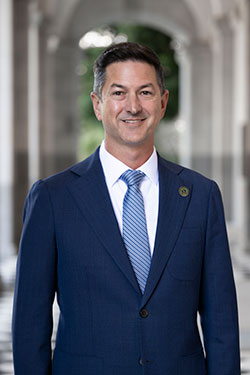
Chris Ward
DDemocratic
Co

Ash Kalra
DDemocratic
Co
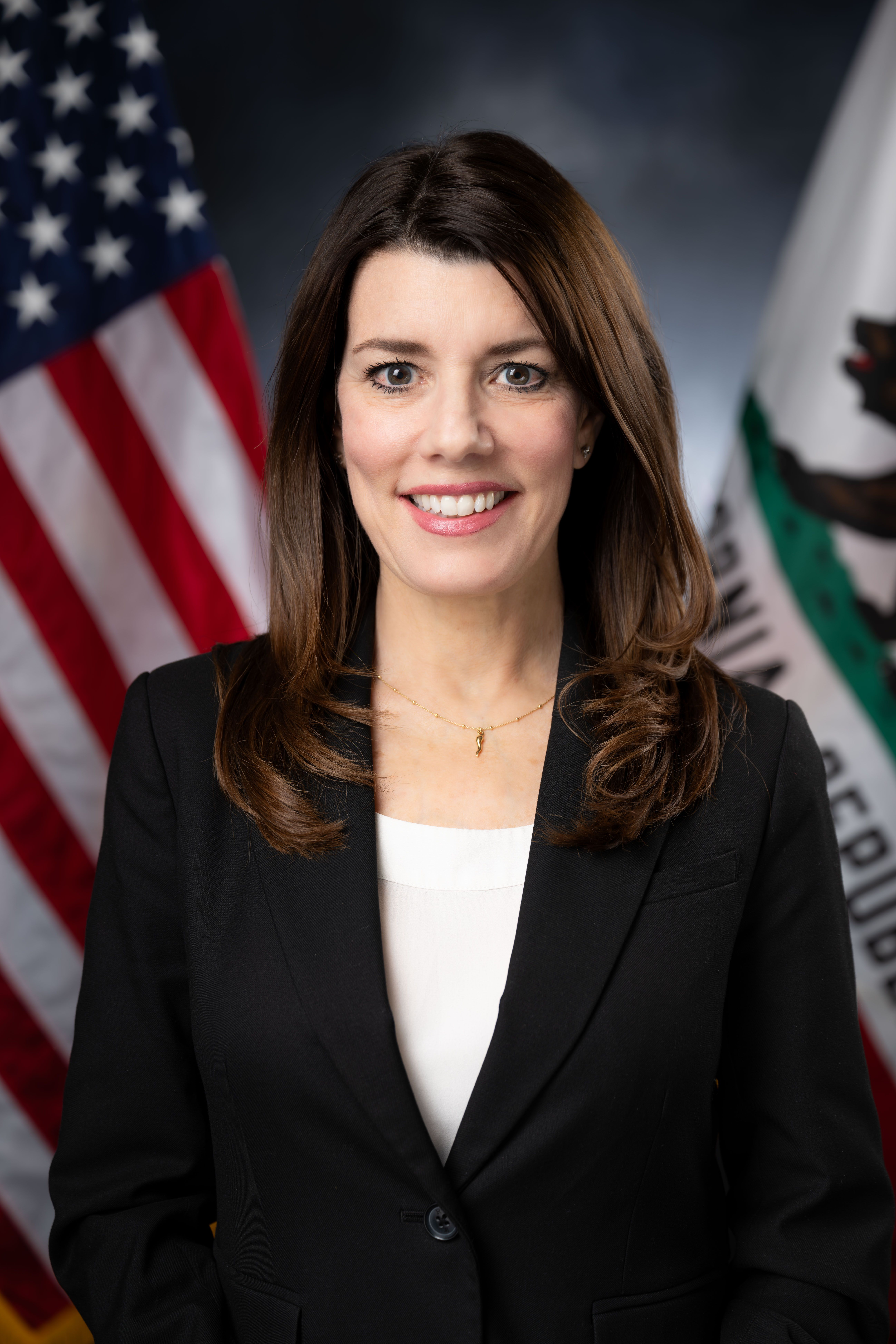
Catherine Stefani
DDemocratic
Co

Chris Rogers
DDemocratic
Co

Christopher Cabaldon
DDemocratic
Co

Corey Jackson
DDemocratic
Co

Damon Connolly
DDemocratic
Co

Jeff Gonzalez
RRepublican
Co
JA
Jesse Arreguín
DDemocratic
Co

John Laird
DDemocratic
Co

Maggy Krell
DDemocratic



Ask Maddy
·
AI policy assistant
Ask Maddy about AB 82
Scope: CA
Hi! I can help you understand AB 82. What would you like to know?
Try one of these
i
Maddy answers using official bill text and legislative records. Always verify before sharing.
Sources cited inline